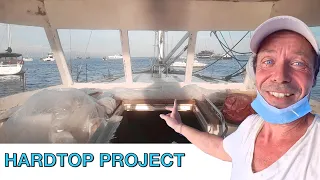
Sailing Around the World on My PRODUCTION YACHT - My honest review of my BAVARIA 55 Cruiser
With heavy monsoon winds shifting toward the west-northwest, Thomas Skarstad secures his 2012 Bavaria 55 Cruiser, Be Free, to a pair of mooring balls provided by Serangan Yacht Service in Bali, tucking the yacht close to the mangroves to ride out incoming storms. Sitting inside the mooring field allows him to conserve battery power on his 17-kilowatt storage bank by switching off his masthead illumination, saving 10 amps overnight while heavy rain sweeps across the anchorage.
Documenting his journey on Sailing with Thomas through his seventh season of circumnavigating, Skarstad steps through the vessel to deliver a candid assessment of mass-production yacht engineering. Having logged more miles in a single year than average sailors complete in a lifetime, he addresses long-standing rumors regarding production boats, outlining where manufacturers trim construction expenses and where structural engineering remains seaworthy.
Heavy Ground Tackle and Bow Locker Engineering
Skarstad replaced the original ground tackle with a 57-kilogram anchor after his earlier upgrade failed to hold securely in challenging bottoms. Mass-production vessels frequently leave the factory with lightweight gear designed for casual weekend cruising rather than worldwide voyaging. As Skarstad noted, “mass production Yachts comes with only a toy of an anchor an equally undersized windless and chain”. Installing an undersized anchor and windlass allows boatbuilders to reduce base retail pricing by 10 to $15,000, shifting the financial burden onto long-distance voyagers who must finance substantial replacements independently. Because the broad hull of Be Free tends to sail back and forth while anchored in severe winds, heavy ground tackle is essential to avoid dragging. Facing a foul anchorage bed filled with discarded plastic, Skarstad opted for two mooring balls, securing the bow with 28 mm lines secured to reinforced metal deck bollards.
The anchor chain locker reveals several manufacturing compromises. The large deck hatch secures with only a single latch rather than two, preventing a watertight seal along the rubber gasket during heavy spray. Inside the locker, the anchor chain rests directly in the bilge rather than on an elevated drainage platform, leaving links submerged in corrosive saltwater. Although Bavaria engineered two separate bilge drain holes—with the secondary drain set higher to function if the primary opening clogs—the absence of an isolated draining tray shortens chain longevity.
Hull Lamination, Watertight Bulkheads, and Keel Fasteners
Despite cosmetic and hardware cost-cutting, Skarstad commends the fundamental naval architecture developed by Farr Yacht Design. The fiberglass hull exhibits considerable laminate thickness, supported by a heavy internal grid structure and double the standard quantity of keel bolts. Forward of the owner stateroom, an extensive watertight collision bulkhead isolates the bow storage compartment and chain locker. This barrier provides sufficient buoyancy that the yacht could absorb a major bow strike against a half-submerged shipping container without foundering.
The mechanical steering configuration employs twin rudders linked by direct mechanical connections rather than steering cables, chains, or Dyneema lines. The design incorporates built-in redundancy, enabling a single helm or rudder blade to be decoupled while retaining steering authority over the remaining assembly.
Steering Linkages and Lewmar Equipment Reliability
While Bavaria’s hull and rudder shafts proved robust, deck fittings and ancillary equipment supplied by Lewmar demonstrated repeated mechanical shortcomings. Underway in the Atlantic, the vessel suffered an autopilot failure when the Lewmar electric drive gearbox disintegrated, forcing an emergency replacement that cost $3,500. Connecting pins within the steering mechanism sheared repeatedly every few thousand miles under offshore loading. To eliminate the persistent failure point, Skarstad redesigned the entire mechanical geometry, distributing mechanical stresses across a heavy structural metal beam linking the two lower rudder quadrants. Today, the yacht relies on dual Lecomble & Schmitt hydraulic steering pumps.
Lewmar flush deck hatches also displayed fragile engineering. The perimeter frames lacked underlying structural support beneath the corners, causing the acrylic to crack if crew members stepped near the edges. Cabin portlights presented additional maintenance burdens; painted coatings on aluminum frames deteriorated under ultraviolet exposure, and one window developed an active leak when the bonding adhesive between the lexan panel and aluminum frame separated. Reflecting on the countless modifications required across the platform, Skarstad remarked, “if you buy a mass production yacht is basically buying a half fabricated boat”.
Interior Joinery, Modular Assembly, and Living Quarters
Down below, mass-production assembly relies heavily on modular furniture to reduce shipyard labor. Bavaria utilized open shelving rather than custom enclosed cabinets throughout the living spaces. While this choice creates an airy contemporary ambiance, it leaves valuable storage space unutilized behind the salon settee. The cabin soles consist of non-marine grade flooring that offers few inspection hatches to monitor the underlying bilge.
Hardware omissions extended to interior joinery. The yacht features 10 interior cabin and head doors that initially lacked magnetic retaining catches to secure them while heeled underway, saving the builder an estimated $1,500. Along with door latches, the five-step companionway staircase was mounted on only three small hinges, producing an annoying squeak as the structural joinery worked against the hull in rolling seas.
Cockpit Living, Offshore Performance, and Ownership Costs
The broad beam accommodates an expansive cockpit with a sliding aft bench that can be repositioned or removed entirely to clear the deck for gatherings, though its locking pins are undersized for violent heeling. Aft, a transom tender garage houses the dinghy, protecting the inflatable from sun degradation and boarders. As Skarstad noted, “my gigantic swimming platform is my happy place”. Nonetheless, housing the tender consumes substantial volume, leaving the aft cabins smaller than those on many 45-foot yachts.
Under sail, Be Free delivers powerful performance, routinely averaging 10 knots over ground on offshore passages. Reaching against steep seas, the wide-stern monohull reaches speeds between 12 and 14 knots. However, slamming into head seas at high velocity produces uncomfortable pounding, prompting Skarstad to reduce sail area to match the softer ride of traditional hulls cruising at 6 to 7 knots.
Mechanical propulsion centers on a reliable Yanmar diesel, which has operated without issue throughout seven seasons. Routine maintenance for a 55-foot yacht remains demanding, with shipyard haulout and antifouling application costing up to $6,000 every two years. Skarstad affirmed that “end of the day I know my yacht could cost between 2 and $300,000 more without being more Blue Water worthy or even safer”.
| System or component | Details and observations | Metric or cost |
|---|---|---|
| Ground tackle upgrade | Primary anchor replacement | 57 kg |
| Mooring bridle | Mooring line thickness | 28 mm |
| Autopilot drive | Lewmar electric drive gearbox | $3,500 |
| Interior doors | Missing magnetic door catches on 10 doors | $1,500 |
| Shipyard haulout | Antifouling and haulout every 2 years | $6,000 |
| Cruising speed | Average passage speed over ground | 10 knots |
| Reaching performance | Speed against waves on close reach | 12 to 14 knots |
Frequently Asked Questions
Skarstad upgraded to a 57-kilogram anchor after finding standard production ground tackle inadequate for blue-water voyaging. Production boatbuilders often supply lightweight anchors to lower the base price by 10 to $15,000, which leaves offshore sailors vulnerable when riding out severe storms.
In the Atlantic, the original Lewmar electric drive autopilot gearbox failed, requiring a $3,500 replacement. Additionally, linkage pins sheared every few thousand miles until Skarstad redesigned the mechanical geometry across a structural metal beam connecting the lower rudder quadrants.
Although the transom garage protects the dinghy from sun degradation and opportunistic thieves, it encroaches heavily on the interior staterooms. Because of the garage and hydraulic swim platform mechanism, the aft cabins have less volume than those found on many 45-foot sailing yachts.
Be Free averages 10 knots over ground on passage and reaches speeds between 12 and 14 knots on a close reach. Because high speeds create hard slamming into head seas, Skarstad depowers to achieve comfort similar to traditional hulls sailing at 6 to 7 knots.
Lewmar flush hatches lacked structural support beneath the corners of the frame, causing the acrylic to crack when stepped on. In addition, aluminum portlight paint deteriorated, and one cabin window leaked when the adhesive between the lexan panel and frame separated.
Hauling out the 55-foot hull and applying fresh antifouling paint costs up to $6,000 every two years, an essential operational cost for maintaining the underwater surfaces during a global circumnavigation.
Book a trip where this was filmed — near Seminyak
Support Sailing with Thomas
At WeBoating.com, we profoundly acknowledge the unwavering dedication that Sailing with Thomas invests in crafting each and every video or voyage. Their passion for delivering exceptional ocean content shines through every frame, and it's a labor of love that deserves your attention.
We invite you to watch their captivating videos here and actively engage with their content, including their social media links above. Liking, commenting, and sharing their work goes a long way in fueling their creative fire.
We're also inviting you to explore the gear, sponsorships, and boat partnerships highlighted in the "Sailing Around the World on My PRODUCTION YACHT - My honest review of my BAVARIA 55 Cruiser" video description, or directly on YouTube. By engaging with these offerings or purchasing services and items, you directly support Sailing with Thomas, their collaborators, and the brands they're associated with.
To ensure you never miss an offshore update, consider visiting their official YouTube Channel to subscribe, like, and join their community directly.
If you have any feedback, corrections, or additional information about Sailing with Thomas or their videos, please use the comment form below to share your thoughts with us.
Thank you for being a part of our community and supporting the creators we cherish. Your time and support truly matter!
Sailing around the world on a mass-production yacht Bavaria 55 Cruiser in my seventh season. This is my honest review and experience with all the challenges regarding failing products and building quality. How is my real-life experience versus repeated misinformation, rumors, and parrots repeating BS from small sailors? Why do I love wide cockpits and will this destroy the secondhand market for old-school-designed yachts? Catamarans can be expensive but a modern production yacht with a wide body and huge cockpit can be a good compromise. I am busting some myths and even explaining how it's possible to build a Bavaria 55 Cruiser for a third of what high-end competitors are selling for. Is it still worth it and is it value for money? Or is this not a safe yacht on which to circumnavigate the world? I believe this video will surprise many as based on my experience things are not always what people like to believe. Sailors with old yachts are spreading misinformation not only about brands but even design qualities. In this video, I hope to broaden your perspective on what to look for and how to understand not only Bavaria but mass production yachts in general.
Thank you so much for tagging along, and for the patron's support in making this video possible.
Patreon: https://www.patreon.com/Sailingwiththomas
You can even tip me https://sailingwiththomascom.wpcomstaging.com/how-to-support-and-share-your-love/
Please also check out my brand new channel @PracticalThomas where the full version with more details is shared every time I have some practical topics in my videos https://youtu.be/DoamO6EUeAI
THANK YOU SO MUCH FOR WATCHING AND SUBSCRIBING!
You can also follow sailing with Thomas on other platforms for almost daily updated pics and videos, and even find yourself a new T-Shirt:
Facebook: https://www.facebook.com/sailingwiththomas
Instagram: https://www.instagram.com/sailingwiththomas
Shop: https://sailingwiththomascom.wpcomstaging.com/shop/
ABOUT THIS CHANNEL:
I'm a sailor with a YouTube channel and not a YouTuber. Sailing around the world in a Bavaria 55 Cruiser mostly solo, making videos whenever we have time for it.
Comfortable at sea with 4 decades of sailing experience and hundreds of thousands of miles behind me.
Even though this is season 7 on YouTube I did not make that many videos in the beginning, and obviously not from my entire sailing life. Before full-time sailing 6 years ago, I sailed several seasons in the Mediterranean, and obviously also in Scandinavia. I had my first sailboat at age 7 and have been sailing and racing ever since. I also have more than 10 years of experience as a captain in search and rescue at sea in Norway.
Sailing with Thomas
Join Thomas Skarstad of Sailing with Thomas as he documents his high-authority transition from rescue captain to mastering solo circumnavigation aboard his Bavaria 55.
Channel Information:
Social Media Links:
Sailing Around the World on My PRODUCTION YACHT - My honest review of my BAVARIA 55 Cruiser Location
- Serangan Yacht Service, Bali, Indonesia (-8.7231,115.2443)
Latest Episodes from Sailing with Thomas
Explore the most recent voyages. Subscribe to the channel to never miss an update!
Finally Done with Fiberglass! | Boat Hardtop Project
My hardtop project update covers the final stages of the build. See the completed fiberglass work and the new electrical panel installation. The fiberglass work is finally finished, marking a major milestone for this custom build. I have wrapped up all the necessary design changes and error correct...
Building my Perfect HardTop: Aft Section re Design and lamp Complete
Hardtop built on a Bavaria 55 Cruiser, all done at a mooring where the cockpit is the only workshop. Finally, the dry season is here, and I can make good progress. Redesigning the aft section to gain more headroom at the helm stations. This is not a how-to guide for building a HARD DODGER or HARDTO...
Finally fixing the aft section #boat #diyproject
The weather is unbelievable, and I'm pushing forward with my current diy projects. This week, we're making good progress on the boat, focusing on boat maintenance and essential repair work. It's a journey of how I approach this diy boat project, showing the build in my own way.
My Favorite Escape: The Best Moments From The Road 🏍️✨ #bikerlife
Clip from my latest upload. I work on my Hardtop project and are having great progress. Beautiful weather in Bali, so I even take you with me on a Sunday Fun day roadtrip visiting the production of hand made vintage cars.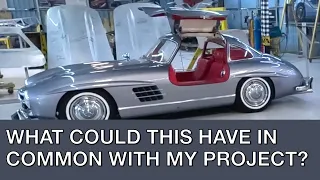
Sailing, Choppers, and Classic Cars | A Sunday Fun Day
Hardtop hard dodger built on a Bavaria 55 Cruiser, all done at a mooring where the cockpit is the only workshop. Visiting Tuksedo Studio, where they handcraft vintage cars like Mercedes 300 SL, Porsche 365, Aston Martin, Toyota GT and more. We ride a nice chopper motorcycle on our Sunday fun day ro...