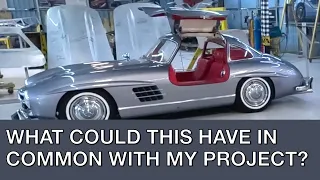
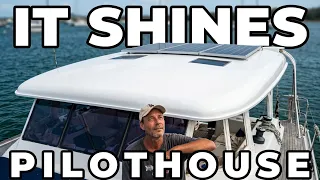
HARDTOP OR IS IT A PILOT HOUSE?
Thomas Skarstad is navigating a series of logistical and environmental hurdles in Bali while refining the superstructure of his Bavaria 55 Cruiser, Be Free. As detailed by Sailing with Thomas, the project is currently at the mercy of intense rain and thunderstorms, which create a significant technical problem: fiberglass dust becomes sticky and difficult to remove once wet. This weather dependency, combined with a local shortage of propane, diesel, and petrol, has tested the skipper’s patience. The environmental conditions in Bali have turned the refit into a battle against the elements, where timing is everything. Amidst these challenges, a personal setback occurred when Thomas had his phone stolen while playing pool, forcing him to visit a local bank to freeze his digital wallet and secure a new SIM card and phone to regain access to his security codes.
Fuel Crises and Surface Finishing
The petrol crisis in Bali has reached a point where gas stations have gone days without stock, and authorities have limited petrol purchases to 3 L for motorbikes. To secure fuel for his generator without appearing greedy to local fishing boats who need the resource more, Thomas utilized a small jerrycan. Despite this, he was stopped by police who questioned him regarding the container. Regarding his choice of equipment, Thomas Skarstad explains, “I only bought my smallest jerrycan as I don’t need much and I don’t want to look greedy”. This interaction highlighted the tension in the region caused by the fuel shortage, making simple errands a complex logistical exercise.
| Specification | Measurement |
|---|---|
| Petrol allowance for motorbikes | 3 L |
| Jerrycan capacity | 10 L |
| Top coat layers applied | 4 layers |
| Intermediate sanding grit | 240 |
| Final sanding grit | 2000 |
| Minimum cyclone strength rating | category 2 |
While managing these external pressures, Thomas has focused on the aesthetic and structural finish of the hardtop. The exterior has already received 4 layers of top coat, with the skipper sanding in between using 240 grit. He plans to move through a progression of finer grits, starting at 540 and working up to 2000 before performing a final machine polish. This careful sanding process is essential for achieving a high-end, professional finish that can withstand the harsh marine environment. Reflecting on the labor involved, Thomas Skarstad notes, “The amount of work getting everything from this to this level has been almost overwhelming”. He often continues this grueling work late into the evening, typically wrapping up around 10:00.
Precision Engineering and Structural Reinforcement
The transition from a standard hardtop to a pilot house requires extreme accuracy, particularly regarding the forward window frames. To ensure the windows are flush yet still capable of opening, Thomas employed a Dremel with a cutting blade for millimeter precision. This level of detail is necessary because any misalignment would prevent the windows from sealing correctly against the elements. Regarding these requirements, Thomas Skarstad explains, “The forward windows are being able to open and at the same time flush, the frames here requires millimeter precision”. To combat the rain entering the cabin while awaiting final window installation, he has implemented a temporary, non-glued skylight made from a leftover piece of material. This makeshift solution provides immediate protection for the interior of the Be Free, preventing water damage during the frequent Bali thunderstorms.
Beyond the cosmetics, the build addresses critical structural failures experienced during a previous storm. Thomas analyzed a previous incident where the oversized stainless frames holding his solar panels were compromised. He discovered that corrosion in the aluminum frame allowed the wind to get a grip under the panels, causing them to lift. This failure served as a catalyst for a complete redesign of the support system to ensure the vessel remains seaworthy in extreme conditions. To prevent a recurrence and avoid the aesthetic of an Eiffel Tower, he integrated a beam made of honeycomb and fiberglass into the hardtop superstructure. This design increases stiffness and reduces the overhang compared to traditional support legs, creating a more streamlined and robust profile.
Safety is a primary driver for these reinforcements. The arch was specifically engineered to be cyclone safe, ensuring that the solar panels do not need to be removed if the vessel is forced to ride out a storm. The goal was to create a structure capable of withstanding significant wind loads without compromising the integrity of the hardtop. As Thomas Skarstad states, “I wanted it strong enough to handle at least a category two”. By designing for a category 2 storm, he eliminates the panic and labor of dismantling the solar array during a sudden weather emergency.
The final integration of the platform resting on the cockpit arch now forms a cohesive part of the superstructure. This layout allows for the integration of both old and new technology while ensuring that no visual cables run from below, maintaining a clean and organized aesthetic. The use of the honeycomb beam provides the necessary rigidity to support this infrastructure without adding excessive weight to the vessel’s center of gravity. Despite the lack of advanced tools and the isolation of the project, Thomas Skarstad concludes, “I’m truly enjoying the look of what I have created alone out here with no advanced tools”.
Frequently Asked Questions
He wanted a lower profile with less overhang for better aesthetics and increased stiffness by fiberglassing the beam to the superstructure.
Corrosion in the aluminum frame in the forward part allowed the wind to get under the panels, causing them to lift from the frame.
He uses 240 grit between the first four layers of top coat, then moves from 540 grit up to 2000 grit before machine polishing.
Book a trip where this was filmed — near Ubud
Support Sailing with Thomas
At WeBoating.com, we profoundly acknowledge the unwavering dedication that Sailing with Thomas invests in crafting each and every video or voyage. Their passion for delivering exceptional ocean content shines through every frame, and it's a labor of love that deserves your attention.
We invite you to watch their captivating videos here and actively engage with their content, including their social media links above. Liking, commenting, and sharing their work goes a long way in fueling their creative fire.
We're also inviting you to explore the gear, sponsorships, and boat partnerships highlighted in the "HARDTOP OR IS IT A PILOT HOUSE?" video description, or directly on YouTube. By engaging with these offerings or purchasing services and items, you directly support Sailing with Thomas, their collaborators, and the brands they're associated with.
To ensure you never miss an offshore update, consider visiting their official YouTube Channel to subscribe, like, and join their community directly.
If you have any feedback, corrections, or additional information about Sailing with Thomas or their videos, please use the comment form below to share your thoughts with us.
Thank you for being a part of our community and supporting the creators we cherish. Your time and support truly matter!
My hardtop project update covers the final stages of the build. See the modifications made for the solar panels, flush skylights, and overall finishing touches that are in progress.
The fiberglass work is finally finished, marking a major milestone for this custom build. I have wrapped up all the necessary design changes and error corrections that caused recent delays, ensuring the structure is solid before moving forward.
Installing a custom hardtop requires patience, but seeing these components come together makes the extra time worth it. Getting the electrical panel set up properly is a critical step to ensure the electronics function reliably once the hardtop is completed.
This is not a how-to guide for building a HARD DODGER or HARDTOP. It is a journey showing how I do it in my way. Without claiming this is the way to do it.
Thank you so much for tagging along and for the patrons' support in making this video possible.
Patreon: https://www.patreon.com/Sailingwiththomas
You can even tip me https://paypal.me/SailingwithThomas
THANK YOU SO MUCH FOR WATCHING AND SUBSCRIBING!
You can also follow sailing with Thomas on other platforms for almost daily updated pics and videos, and even find yourself a new T-Shirt:
Facebook: https://www.facebook.com/sailingwiththomas
Instagram: https://www.instagram.com/sailingwiththomas
Shop: https://sailingwiththomascom.wpcomstaging.com/shop/
ABOUT THIS CHANNEL:
I'm a sailor with a YouTube channel and not a YouTuber. Sailing around the world in a Bavaria 55 Cruiser, mostly solo, making videos whenever we have time for it.
Comfortable at sea with 4 decades of sailing experience and hundreds of thousands of miles behind me.
Even though this is season 8 on YouTube, I did not make that many videos in the beginning, and obviously not from my entire sailing life. Before full-time sailing 7 years ago, I sailed several seasons in the Mediterranean, and obviously also in Scandinavia. I had my first sailboat at age 7 and have been sailing and racing ever since. I also have more than 10 years of experience as a captain in search and rescue at sea in Norway.
Sailing with Thomas
Join Thomas Skarstad of Sailing with Thomas as he documents his high-authority transition from rescue captain to mastering solo circumnavigation aboard his Bavaria 55.
Channel Information:
Social Media Links:
HARDTOP OR IS IT A PILOT HOUSE? Location
- Bali, Bali, Indonesia (-8.4095,115.1885)
Latest Episodes from Sailing with Thomas
Explore the most recent voyages. Subscribe to the channel to never miss an update!
HARDTOP OR IS IT A PILOT HOUSE?
Thomas Skarstad battles fuel shortages and tropical storms in Bali while applying precision top coats and Dremel work to the custom hardtop on Be Free.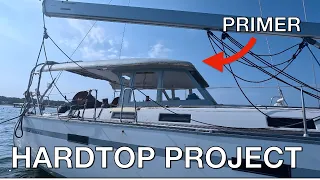
Finally Done with Fiberglass! | Boat Hardtop Project
My hardtop project update covers the final stages of the build. See the completed fiberglass work and the new electrical panel installation. The fiberglass work is finally finished, marking a major milestone for this custom build. I have wrapped up all the necessary design changes and error correct...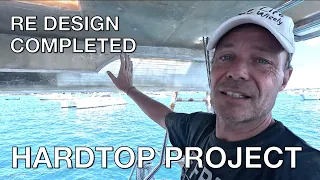
Building my Perfect HardTop: Aft Section re Design and lamp Complete
Hardtop built on a Bavaria 55 Cruiser, all done at a mooring where the cockpit is the only workshop. Finally, the dry season is here, and I can make good progress. Redesigning the aft section to gain more headroom at the helm stations. This is not a how-to guide for building a HARD DODGER or HARDTO...
Finally fixing the aft section #boat #diyproject
The weather is unbelievable, and I'm pushing forward with my current diy projects. This week, we're making good progress on the boat, focusing on boat maintenance and essential repair work. It's a journey of how I approach this diy boat project, showing the build in my own way.
My Favorite Escape: The Best Moments From The Road 🏍️✨ #bikerlife
Clip from my latest upload. I work on my Hardtop project and are having great progress. Beautiful weather in Bali, so I even take you with me on a Sunday Fun day roadtrip visiting the production of hand made vintage cars.