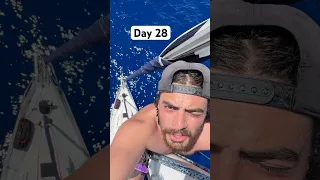
Link to donate in channel description
When former corporate professional Oliver Widger liquidated his 11-year career and retirement savings in 2024 to pursue blue-water cruising, he embarked on a journey that would capture the imagination of mariners worldwide through Sailing With Phoenix | Oliver. Accompanied by his loyal feline first mate Phoenix, Widger transitioned from a novice navigating Pacific Northwest waters into an accomplished ocean voyager. In late 2026, operating from the historic maritime staging port of Port Townsend, Washington, he launched an audacious undertaking: a 30,000-mile solo, non-stop, unassisted circumnavigation of the globe aboard his 1998 Pacific Seacraft 40 cutter, Phoenix do Mar.
By Day 12 at sea, the sheltered channels of the Salish Sea and coastal shelf have receded over a thousand nautical miles to the north. Sailing alone into the vast expanse of the open Pacific Ocean, Widger confronts the unrelenting physical and mental realities of solo blue-water seamanship. Aboard a 24,000-pound heavy-displacement cruising yacht, every watch is governed by following swells, windvane adjustments, and the vigilance required to safeguard ship and crew in thousands of fathoms of water without harbor support or escort vessels.
Yet this circumnavigation is defined by a cause far greater than personal adventure. Behind Widger’s departure lies a life-altering medical revelation: a diagnosis of Klippel-Feil Syndrome (KFS), a rare congenital spinal disorder characterized by extensive cervical vertebrae fusion and dangerously loose sliding vertebrae that place him at constant risk of quadriplegia. Rather than allowing an alarming prognosis to paralyze his future, Widger harnessed his global maritime platform to mount an altruistic crusade, dedicating his non-stop voyage to raising charitable funds and clinical awareness for KFS research through GoFundMe.
The Solitude of Day 12: Pacific Seamanship and Ocean Cadence
Marking Day 12 of his solo non-stop circumnavigation, Oliver Widger aboard his Pacific Seacraft 40 for Sailing With Phoenix continues south across the vast Pacific Ocean passage, dedicating every nautical mile to his KFS mission. Entering the transitional waters between the temperate Pacific Northwest and the northern trade winds, the rolling oceanic swell presents an unforgiving rhythm. Offshore singlehanded sailing demands immediate adaptation, structuring daily routines around short fragmented sleep cycles, regular deck safety rounds, and proactive sail adjustments.
Singlehanded voyaging requires strict operational discipline. Aboard Phoenix do Mar, sleep is rationed into 20- to 40-minute naps synchronized with radar and AIS scanning intervals to monitor commercial shipping lanes. Course-keeping is entrusted to a transom-mounted Hydrovane servo-pendulum windvane, which mechanically steers the 24,000-pound cutter through ocean swells without drawing electric current from the vessel’s lithium battery banks. This mechanical self-steering provides the quiet redundancy essential for surviving months alone on the open ocean.
The psychological transition of Day 12 is profound. As terrestrial radio transmissions fade and satellite communication becomes the sole link to civilization, solitary voyaging fosters intense focus. Out on the open Pacific, the constant cadence of following seas rushing against the double-ended canoe hull replaces the noise of modern life. For Widger, this oceanic isolation brings clarity, reinforcing his conviction to use his voyage as a beacon of hope for patients facing rare neurological challenges.
A Spine in the Balance: Forensic Realities of Klippel-Feil Syndrome
The philosophical catalyst driving Oliver Widger and Sailing With Phoenix across this arduous Pacific Ocean passage aboard the Pacific Seacraft 40 is his life-altering diagnosis of Klippel-Feil Syndrome, a rare congenital disorder that forever reshaped his destiny. Characterized by the abnormal embryonic fusion of cervical vertebrae, KFS alters spinal biomechanics, inducing restricted neck mobility and chronic muscular tension. While the condition occurs in roughly one in 40,000 births, its anatomical expression varies markedly among individuals, requiring individualized medical assessment.
In Widger’s spine, radiological scans revealed extensive congenital deformation and fused cervical vertebrae alongside a critical hazard: two specific vertebrae remain loose and slide horizontally. This hypermobility exposes his spinal cord to severe impingement risk, where a violent slip or sudden deceleration on deck could trigger acute quadriplegia. Consultations with seven independent neurologists left clinicians baffled by his spinal architecture, prompting Widger to reject paralyzing fear and commit his remaining youth to ocean sailing while his physical faculties endured.
Living with unstable cervical vertebrae while managing a heavy displacement cutter in open swells demands rigorous risk mitigation. Rather than succumbing to despair, Widger approached his physical limitations with engineering discipline. He adapted deck procedures to eliminate unnecessary strain, utilizing mechanical advantages and harness tethers to safeguard his neck against sudden shocks, transforming vulnerability into an empowering voyage across the global ocean.
From Novice to Offshore Voyager: The Hawaii Proving Ground
Long before Oliver Widger embarked on his current Pacific Ocean passage and KFS mission aboard his Pacific Seacraft 40 for Sailing With Phoenix, his maritime journey was forged during a high-stakes shakedown run from Oregon to Hawaii. Liquidating his 11-year corporate career and 401(k) in 2024 with zero sailing experience, Widger purchased SV Phoenix, a 33-foot Com-Pac monohull, mastering navigation, weather analysis, and diesel mechanics through intensive self-directed study and practical application.
Departing across the treacherous Columbia River Bar with his cat Phoenix, Widger undertook a grueling 2,500-mile ocean transit. The 24-day crossing tested him relentlessly with rigging failures, heavy squalls, and a mid-ocean rudder failure that demanded emergency forensic repairs hanging over the transom. Widger shared every mistake with disarming candor and ironic humor, coining the phrase ‘I am a professional’ during crises. The voyage went viral worldwide, building an international community that propelled his non-stop circumnavigation ambitions.
The viral success of the Hawaii passage proved to be a transformative milestone. Confronting open ocean hazards aboard a modest 33-foot vessel confirmed Widger’s aptitude for blue-water seamanship under pressure. By sharing the technical realities of boat repairs and the emotional trials of offshore isolation, Widger forged a profound bond with his audience, creating the foundation for a mission-driven global campaign.
Sailing for a Cause: Channeling Global Reach into KFS Research
Rather than leveraging his viral fame for personal wealth, Oliver Widger and Sailing With Phoenix have dedicated their grueling Pacific Ocean passage aboard the Pacific Seacraft 40 to an altruistic KFS mission and charitable GoFundMe campaign. Because Klippel-Feil Syndrome is an under-recognized orphan disease, scientific research and patient advocacy receive negligible funding compared to prominent neurological disorders, leaving many patients struggling with debilitating neuropathic pain and progressive physical instability in diagnostic isolation.
Broadcasting from his cockpit on Day 12, Widger made an earnest request to his global audience. He urged well-wishers seeking to support his expedition to redirect all financial contributions directly to the KFS GoFundMe campaign rather than personal donations. Widger underscored that completing a 30,000-mile circumnavigation serves as an awareness vehicle: if his voyage can support one patient’s treatment or spark dedicated medical research into cervical spine stability, every physical sacrifice offshore is justified.
This charitable dedication elevates the voyage into an international humanitarian initiative. As Phoenix do Mar journeys south toward the equator and the Roaring Forties, every nautical mile logs vital visibility for rare spinal conditions. Widger’s voyage demonstrates that profound physiological vulnerabilities need not define the boundaries of human potential.
Vessel Architecture and Voyage Parameters: The Pacific Seacraft 40
Selecting the right vessel for Oliver Widger and Sailing With Phoenix on this non-stop Pacific Ocean passage and global KFS mission led directly to the Pacific Seacraft 40, an iconic blue-water monohull engineered for oceanic survival. Drawn by celebrated designer William Crealock, the vessel features a double-ended canoe stern engineered to part following seas, a robust skeg-hung rudder, and an encapsulated lead fin keel. The 24,000-pound displacement provides exceptional directional stability and safety in heavy weather.
Prior to departure from Port Townsend, Washington, Widger completed an exhaustive refit tailored for unassisted global navigation. The cutter rig allows flexible sail configurations, balancing the inner staysail and high-clewed yankee to minimize heel angles that might strain his cervical spine. Independent power generation combines a high-output alternator and stern solar arch charging lithium iron phosphate batteries, while 1,000 shelf-stable MRE rations and redundant Rainman desalination units guarantee complete logistical autonomy for eight months at sea.
| Category / Parameter | Specification / Detail | Operational & Nautical Context |
|---|---|---|
| Vessel Model & Year | Pacific Seacraft 40 (1998) / SV Phoenix do Mar | Heavy-displacement ocean cruiser built in Fullerton, California |
| Naval Architect | William Crealock, N.A. | Double-ended canoe stern designed to split heavy following seas in high latitudes |
| Length Overall (LOA) & Beam | 40 ft 3 in (12.27 m) / 12 ft 5 in (3.78 m) | Moderate beam providing sea-kindly roll motion and excellent tracking stability |
| Draft & Keel Configuration | 6 ft 1 in (1.85 m) / Moderate Fin Keel | Deep fin keel with external 8,600 lb (3,901 kg) lead ballast (36% ballast ratio) |
| Displacement | 24,000 lbs (10,886 kg) | Heavy displacement delivering comfortable motion and substantial payload capacity |
| Sail Plan & Rigging | Heavy-duty Cutter Rig | Inner forestay with staysail and roller furling yankee for versatile heavy-weather sail balance |
| Autonomous Steering | Hydrovane Windvane Self-Steering | Transom-mounted servo-pendulum system operating mechanically with zero electrical consumption |
| Auxiliary Propulsion | Yanmar 4JH2E Marine Diesel | Shaft drive auxiliary with high-output alternator for rapid battery bank recharging |
| Energy & Electrical Autonomy | Lithium House Bank + Custom Solar Arch | Off-grid photovoltaic array supplying navigation computers, radar, and satellite transceivers |
| Freshwater Independence | Rainman Desalination Unit (Dual Redundancy) | High-output reverse osmosis watermaker with manual backup options for 8-month autonomy |
| Expedition Food Supply | 1,000 Shelf-Stable MRE Rations | Caloric provisioning designed for non-stop unassisted circumnavigation without harbor resupply |
| Expedition Profile | 30,000-Mile Solo Non-Stop Circumnavigation | Unassisted global route around the great southern capes (Horn, Leeuwin, Good Hope) |
| Departure Harbor | Port Townsend, Washington, USA | Historic Pacific Northwest maritime center; extensive 2026 structural refit staging ground |
| Day 12 Passage Benchmark | Open Pacific Ocean (28.5000° N, 135.0000° W) | 1,000+ nautical miles offshore; entering North Pacific trade wind transitional corridors |
| Primary Charitable Objective | Klippel-Feil Syndrome (KFS) Research Fund | Directing global audience contributions to dedicated GoFundMe for rare spinal disease research |
Four Paws in the Open Ocean: Offshore Life with Phoenix the Cat
Navigating the open Pacific Ocean passage aboard the Pacific Seacraft 40, Oliver Widger of Sailing With Phoenix shares his floating sanctuary and KFS mission with his faithful companion, Phoenix the cat. Having adapted to blue-water voyaging during their 24-day Hawaii transit, Phoenix serves as an indispensable emotional anchor, breaking the intense solitude of singlehanded voyaging and instilling a reassuring domestic structure within the companionway.
Shipboard safety for a feline crew member requires specialized structural precautions. Throughout Phoenix do Mar, Widger fitted custom safety netting along the deck lifelines and interior lee cloths to prevent falls during steep heeling. Non-skid carpeting on cabin steps provides secure traction under motion. In turn, caring for Phoenix reinforces Widger’s commitment to steady, controlled seamanship, encouraging proactive sail reefing, deliberate deck movements, and careful risk management to safeguard both cat and skipper.
The daily companionship between Widger and Phoenix highlights the psychological value of animal companionship at sea. Amidst towering waves and vast horizons, the cat’s quiet curiosity and rhythmic purring provide comfort against sensory overload. In safeguarding his four-legged shipmate, Widger maintains exemplary deck safety, ensuring that every maneuver aboard Phoenix do Mar is executed with calmness, prudence, and unwavering vigilance.
Frequently Asked Questions
The following frequently asked questions address the nautical, medical, and technical aspects of Oliver Widger and Sailing With Phoenix as he navigates his Pacific Seacraft 40 across the open Pacific Ocean passage in pursuit of his global KFS mission.
Oliver Widger is a former 11-year corporate professional who liquidated his savings in 2024 to sail full-time. Accompanied by his rescue cat Phoenix, he documents his maritime adventures on Sailing With Phoenix while currently executing a 30,000-mile solo non-stop circumnavigation to raise funds and awareness for Klippel-Feil Syndrome.
Klippel-Feil Syndrome is a rare congenital condition causing cervical vertebrae to fuse abnormally. In Oliver’s spine, while several vertebrae are fused, two remain dangerously loose and slide back and forth, putting him at acute risk of spinal cord trauma and quadriplegia, requiring meticulous ergonomics and safety precautions offshore.
Designed by William Crealock, the Pacific Seacraft 40 is a world-renowned heavy-displacement bluewater cruiser. Featuring a double-ended canoe stern to split following waves, an encapsulated lead fin keel, a skeg-hung rudder, and a robust cutter rig, it provides maximum survivability and sea-kindly tracking for the Southern Ocean.
A solo non-stop unassisted circumnavigation requires a single mariner to sail approximately 30,000 nautical miles around the world’s great capes without touching land, entering harbor, or receiving outside physical provisions or fuel, demanding total onboard self-sufficiency for food, freshwater, and repairs.
Starting with zero prior experience in 2024, Oliver learned seamanship through intensive study and hands-on trial. He completed a 2,500-mile solo maiden passage from Oregon to Hawaii aboard his original Com-Pac 33, overcoming severe rudder failure and rigging emergencies with transparent problem-solving.
Phoenix is an experienced sailor who successfully completed the 24-day Pacific crossing to Hawaii. The vessel is outfitted with interior lee cloths, safety netting along lifelines, and non-skid resting perches, allowing Phoenix to stay secure and calm during rough sea states while providing companionship to Oliver.
Rather than accepting personal donations for his sailing voyage, Oliver directs all financial support to a dedicated GoFundMe campaign for Klippel-Feil Syndrome research and patient advocacy, helping fund clinical studies and improve resources for individuals living with this rare spinal disorder.
Support Sailing With Phoenix | Oliver
At WeBoating.com, we profoundly acknowledge the unwavering dedication that Sailing With Phoenix | Oliver invests in crafting each and every video or voyage. Their passion for delivering exceptional ocean content shines through every frame, and it's a labor of love that deserves your attention.
We invite you to watch their captivating videos here and actively engage with their content, including their social media links above. Liking, commenting, and sharing their work goes a long way in fueling their creative fire.
We're also inviting you to explore the gear, sponsorships, and boat partnerships highlighted in the "Link to donate in channel description" video description, or directly on YouTube. By engaging with these offerings or purchasing services and items, you directly support Sailing With Phoenix | Oliver, their collaborators, and the brands they're associated with.
To ensure you never miss an offshore update, consider visiting their official YouTube Channel to subscribe, like, and join their community directly.
If you have any feedback, corrections, or additional information about Sailing With Phoenix | Oliver or their videos, please use the comment form below to share your thoughts with us.
Thank you for being a part of our community and supporting the creators we cherish. Your time and support truly matter!
Sailing around the world for Klippel-Feil syndrome (KFS)

Sailing With Phoenix | Oliver
From liquidating his 401(k) to solo global loops, join Oliver and his cat Phoenix as they prepare for a 30,000-mile non-stop circumnavigation.
Channel Information:
Social Media Links:
Link to donate in channel description Location
- Day 12 Open Ocean Passage Position, Pacific Ocean (28.5,-135)
- Departure Harbor, Port Townsend, Washington, USA (48.1172,-122.7605)
Latest Episodes from Sailing With Phoenix | Oliver
Explore the most recent voyages. Subscribe to the channel to never miss an update!
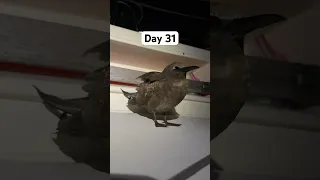
Day 31 sailing around the world without stopping
During Day 31 sailing around the world without stopping, Oliver Widger welcomes an unbothered brown noddy aboard, pausing offshore passage work to let the seabird rest.
Day 30 sailing around the world without stopping
On Day 30 of his non-stop circumnavigation, Oliver encounters a wild storm petrel that lands on deck while he is hoisting his light air sail at sea.
Day 29 sailing around the world without stopping
Oliver Widger battles shifting winds and oppressive heat in the doldrums on Day 29 of his solo circumnavigation, dousing sails as squalls hit.
The Challenges of Sailing Around the World Keep Coming
Entering the Pacific doldrums on days 19 to 23 of his solo non-stop circumnavigation, Oliver Widger aboard Phoenix do Mar repairs a chafing halyard, weathers sudden squalls, and stows his bow anchor down below.