Sailing Wishful Thinking

From the Roaring Forties to remote Pacific archipelagos, join Emily and Ryan as they merge technical precision with a soulful voyage of discovery.
Channel Information:
Social Media Links:
Sailing Wishful Thinking Latest Episode
Sailing Wishful Thinking: The Art of Technical Precision and Emotional Voyaging
There is a profound dissonance between the curated, sun-drenched perfection of most sailing vlogs and the gritty, salt-stained reality of maintaining a thirty-year-old cruiser in remote waters. For Emily and Ryan, the creators of Sailing Wishful Thinking, this gap is exactly where their story lives. Transitioning from the tempestuous winds of their native Tasmania to the sophisticated tactical challenges of the Mediterranean and now the far reaches of the Pacific, their journey is a masterclass in the balance between "wishful thinking" and the rigorous engineering required to make a dream sustainable.
Key Takeaways
- The Vibe: "Authentic Luxury" — a blend of high-fidelity cinematography and raw, unfiltered technical deep-dives.
- The Vessel: A meticulously refitted 1988 Moody 425, transformed from a charter-spec boat into a sustainable off-grid sanctuary.
- The Mission: A transition from the Southern Ocean's Roaring Forties toward the remote archipelagos of the Pacific.
⚓ Quick Specs & Channel Vitals
| Metric | Detail |
|---|---|
| Vessel Name/Type | Wishful Thinking / Moody 425 |
| Sailing Style | Blue Water / Technical DIY / Nomadic |
| Key GEO Focus | Mediterranean → Caribbean → remote Pacific |
| Primary Tech | LiFePO4 Lithium Bank, Starlink, B&G Integrated Suite |
| Technical Focus | Sustainable Energy Loops & System Optimization |
| Notable Milestone | Full DIY conversion of a classic British cruiser for remote exploration |
Meet the Crew and the Vessel
The Sailors Behind the Helm
Emily and Ryan carry the ancestral weight of the Tasmanian coastline—a region where the wind is a constant companion and the Southern Ocean is an unforgiving neighbor. This heritage of "Roaring Forties" seafaring instilled in them a fundamental distrust of "out-of-the-box" solutions. With professional backgrounds in technical engineering, their approach to sailing is less about the leisure of the destination and more about the precision of the process. While Ryan often disappears into the bilge to troubleshoot a saltwater cooling leak, Emily captures the emotional arc of the journey, focusing on the mental toll and triumph of nomadic living. Together, they represent a rare synergy of technical rigidity and emotional transparency.
The Boat: Wishful Thinking (Moody 425)
The Moody 425 is a legend of British yacht design, sculpted by Bill Dixon to offer an expansive center-cockpit sanctuary without sacrificing the seaworthiness of a heavy-displacement hull. Purchased in Greece, the vessel—then a weathered charter boat—required more than just a coat of paint; it required a soul-transplant. The crew’s obsession with energy autonomy led to a complete overhaul of the electrical system, replacing dated lead-acid banks with a high-capacity LiFePO4 lithium array and integrating a massive solar canopy that turns the boat into a floating power station. This technical pivot transformed the Moody from a coastal cruiser into a legitimate, off-grid exploration platform.
| Specification | Detail (Standard/Estimated) |
|---|---|
| LOA | 41' 8" (12.70 m) |
| Beam | 13' 4" (4.10 m) |
| Draft | 6' 0" (1.83 m) |
| Displacement | ~21,200 lb (9,625 kg) |
| Engine | Thornycroft/Perkins (Refitted) |
Voyages, Destinations, and Local Waters
Top Routes and Expeditions
Their odyssey began in the labyrinthine waters of the Mediterranean, where they mastered the art of "Med mooring" in the crowded ports of the Ionian and Aegean Seas. From the turquoise bays of the Peloponnese to the stark, wind-beaten shores of the Cyclades, their travels served as a testing ground for the boat's new systems. However, the true test of their resolve has been the transition toward the Pacific, migrating through the Caribbean's diverse island chains and facing the complex current management of tropical waters.
Navigating the Pacific Horizon
As of 2026, the crew has pivoted toward the remote archipelagos of the Pacific. This shift requires a fundamental change in routing: moving away from the seasonal Meltemi winds of the Aegean and toward a strategy of total self-sufficiency. For Emily and Ryan, the challenge is no longer about finding the next marina, but about managing the energy loop—balancing the consumption of their B&G electronics and Starlink with the intermittent harvest of the tropical sun. The remote nature of their current trajectory emphasizes the necessity of their DIY refits, where a single failed component in the mid-Pacific is a problem that only engineering discipline can solve.
Life Aboard: Techniques, Gear, and Challenges
Essential Gear and Tech Stack
The tech stack aboard Wishful Thinking is designed for one thing: absolute autonomy. At the heart of the vessel is a B&G Zeus integrated suite, providing high-resolution charting and performance data crucial for navigating remote reefs. Connectivity is handled via Starlink, which allows them to upload cinematic content from the most isolated anchorages on earth. But the crown jewel is the energy loop—a custom solar array integrated into the bimini, feeding a Victron-managed Lithium bank that eliminates the "voltage anxiety" typical of older cruisers.
Skills & Tutorials: Technicality meets Philosophy
The educational value of the channel lies in its refusal to simplify the process. From deep-dives into saltwater cooling leaks to the intricacies of lithium battery charging cycles, the content is instructional by nature. Yet, there is a deeper lesson here: the philosophy of "The Gap." Emily and Ryan explore the space between the idealized dream of sailing and the grueling reality of maintenance. By documenting the failures as clearly as the triumphs, they provide a realistic blueprint for anyone aspiring to the nomadic life.
The YouTube Journey and Financing the Dream
Funding the Voyage
Living aboard a Moody 425 in the Pacific is an expensive ambition. The crew utilizes a transparent, community-driven funding model, combining YouTube AdSense with strategic sponsorships from maritime tech brands. However, the engine of their journey is their Patreon community. By offering behind-the-scenes emotional narratives and financial breakdowns, they have turned their audience into stakeholders in their success, ensuring that their content remains authentic and free from the constraints of intrusive corporate advertising.
Top Episodes: Where to Start Watching
To experience the evolution of Wishful Thinking, we recommend these pillars of their content:
- The Greek Beginning: The purchase and initial shock of buying a Moody 425 in Greece.
- The Energy Transformation: A technical breakdown of their massive solar upgrade and lithium transition.
- The Pacific Shift: Their most recent series documenting the move toward remote exploration.
Frequently Asked Questions about Sailing Wishful Thinking
What kind of boat is Wishful Thinking?
Wishful Thinking is a 1988 Moody 425, a la center-cockpit masthead sloop designed by Bill Dixon and built by Marine Projects in the UK.
How do Emily and Ryan afford to sail?
Their journey is funded through a combination of personal savings, YouTube ad revenue, and a robust community-supported Patreon model.
Where are they currently sailing?
After extensive time in the Mediterranean and Caribbean, the crew is currently transitioning toward remote Pacific archipelagos as of early 2026.
What is the primary focus of their content?
Their content balances high-end cinematography with deep technical dives into yacht refits, sustainable energy, and the psychological reality of nomadic living.
Sailing Wishful Thinking Journey and Videos Locations
Support Sailing Wishful Thinking
At WeBoating.com, we profoundly acknowledge the unwavering dedication that Sailing Wishful Thinking invests in crafting each and every video or voyage. Their passion for delivering exceptional ocean content shines through every frame, and it's a labor of love that deserves your attention.
We invite you to watch their captivating videos here and actively engage with their content, including their social media links above. Liking, commenting, and sharing their work goes a long way in fueling their creative fire.
We're also inviting you to explore the gear, sponsorships, and boat partnerships highlighted in the videos descriptions, or directly on YouTube. By engaging with these offerings or purchasing services and items, you directly support Sailing Wishful Thinking, their collaborators, and the brands they're associated with.
To ensure you never miss an offshore update, consider visiting their official YouTube Channel to subscribe, like, and join their community directly.
If you have any feedback, corrections, or additional information about Sailing Wishful Thinking or their videos, please use the comment form below to share your thoughts with us.
Thank you for being a part of our community and supporting the creators we cherish. Your time and support truly matter!
Watch Sailing Wishful Thinking's Latest Videos
Catch up on the most recent updates. Browse the complete video archive and Follow the journey.
Showing 1-18 of 18 results
Sailing across the Pacific Ocean – Panama to French Polynesia – 29 days at sea
WE MADE IT!!!!!! Wishful Thinking's anchor is down in the Marquesas Islands of French Polynesia, after 29 days and 5 hours at sea. We are so excited and relieved to have arrived here safely, having crossed about 3,850 nautical miles of the Pacific Ocean. We're also stoked to have had...
Sailing across the Atlantic Ocean! 15 days at sea – Cape Verde to Barbados – December 2024
It's been a little while since we've posted an update on YouTube... We've been busy sailing across the Atlantic Ocean! We've now arrived in the Caribbean! Here's a short video with some of the highlights from the crossing. Details below: Cape Verde to Barbados. Approx 2,...
Sailing the Ionian islands with no other boats! Best beaches on Ithaca – Off season Greece (Ep 16)
We complete our sail around the Peloponnese and arrive at the Ionian islands in early April. The weather is unseasonably warm due to a storm in the Atlantic pushing hot air up into Europe. As it's still the "off season" for tourism, we get to enjoy some of Greece's best anchorage...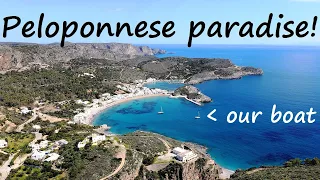
Wild sailing around the Peloponnese! Winter / off season in Greece (Ep 15)
We explore Milos and then have a hectic 13 hour sail across to beautiful Kythira. After a quick stop at Elafonisos island, we have another sporty sail around the Peloponnese to Methoni. We explore epic Venetian fortresses at Methoni and Pilos, as well as what we thought was an abandoned lighthouse o...
Sailing across the Cyclades in March – Cold, stormy & AMAZING! Winter / off season in Greece (Ep 14)
We finally launch Wishful Thinking in Leros, Greece, ready for our second sailing season. We're nervous about our launch as we've done lots of work below the waterline and found a leak after launching last year. Our friends (along with their cat, Chicho) invite us over for a boat tour of t...
Anchor and chain upgrade & water maker refurb (Katadyn / PUR 40E) (Ep 13)
We upgrade our anchor and chain, replacing our Chinese knock-off Bruce with a shiny new Spade. Ryan also refurbishes a Katadyn/PUR 40E water maker and installs a cockpit/deck shower. We finish off lots of other jobs ready for launch day, while Chicho the ginger tom keeps us company.
Spring refit and boat work on Leros island, Greece – New solar, bilge alarm and fridge (Ep 12)
We fly back to Leros island in Greece where we left Wishful Thinking for the European winter on the hard at Moor and Dock Boatyard. We get straight into boat work to prepare to launch her for our second sailing season. Below the waterline we remove rust on the keel, replace some thru hulls, fibregla...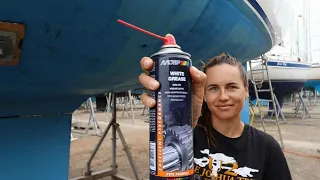
Hauling out and winterising our sailboat on Leros island, Greece (Ep 11)
Wishful Thinking is hauled out on Leros island in eastern Greece for the European winter. We pack away the sails, service the engine and seacocks, fog our dinghy outboard and do lots of other jobs to prepare to leave her for the winter. We engage a technician from the boat yard to service and repack...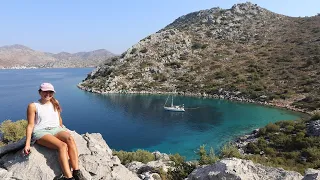
Last weeks in Turkey and sailing to Symi and Nisyros in Greece (Ep 10)
We spend our last few weeks in Turkey with our friends Beth, Paul, Gabi, Alex and Belinda. We then sail back to Greece as our Schengen visa time had finally reset. We check in at Symi and explore the island. We sail to Tilos and Nisyros as we make our way north towards Leros where Wishful Thinking w...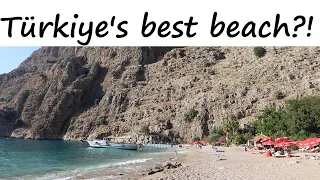
Sailing Turkey: Fethiye to Kas and Kekova (Ep 9)
We continue exploring around Fethiye before sailing to Kas and Kekova. We check out some sights around Kas, including the ancient cities at Patara and Myra as well as Duden Waterfalls in Antalya. Luke heads off to continue his travels through Europe and Wig, Andy and my brother Peter join the crew.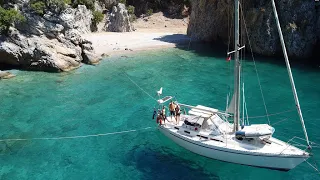
Sailing Turkey: Ciftlik, Marmaris, Pamukkale & the Fethiye Gulf (Ep 8)
We continue sailing up the Turkish coast, visiting Ciftlik, Marmaris, Pamukkale and the Fethiye Gulf, and stopping at some other amazing anchorages along the way. We say goodbye to Zander in Marmaris and welcome Ryan's cousin Luke on board.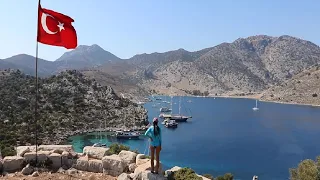
Exploring Rhodes & sailing from Greece to Turkey (Ep 7)
We spend a week exploring Rhodes. We particularly loved wandering the streets of the old town and exploring the impressive fortress. Our Schengen visa was about to run out though, so we sail across to Türkiye and start our adventure down the Turkish coast.
Sailing from the Cyclades to the Dodecanese Islands, Greece (Ep 6)
We sail Wishful Thinking from the Cyclades to the Dodecanese Islands, making our way to eastern Greece ready to head to Turkiye. We stop at Naxos, Koufonisia, Astipalea, Kos, Tilos and Alimia along the way. We'd planned to check out of Greece in Kos, but decided to make our way to Rhodes instea...
Sailing the Cyclades, Greece: Naxos, Paros & run into by a super yacht (Ep 5)
We explore Naxos and Paros in the Cyclades Islands, Greece. While in Paros a super yacht collides with us in the middle of the night when its stern line breaks. Luckily there was no damage to our boat!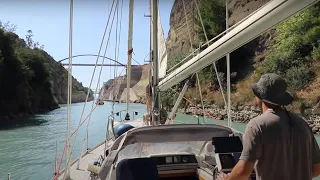
Corinth Canal transit, our first crew & sailing the Saronic and Cyclades Islands, Greece (Ep 4)
We transit the Corinth Canal and sail to the Saronic Islands where we meet up with Ryan's family at Poros. We explore Hydra while we're there, before setting off on our adventure through the Cyclades with stops at Legrena, Kythnos, Syros and Mykonos.
Fibreglass work & sailing for the first time in the Ionian Sea, Greece (Ep 3)
We fix a leak coming from one of Wishful Thinking's thru hulls by doing some fibreglassing. We also get some other boat jobs done including servicing our winches and re-oiling our compass. We then make a second launch attempt and set off on our journey through the Ionian Sea and Gulf of Corinth...
Boat work & launch fail in Greece – Moody 425 sailboat – Seacocks, pump, holding tank, leaks (Ep 2)
We arrive back in Greece, reunite with Wishful Thinking and spend four weeks getting her ready to go in the water. Ryan installs a new bilge pump, holding tank and replaces four broken seacocks. Unfortunately Wishful Thinking sprang a leak on launch day and had to be lifted back out.