Explocat 52 Review 2025 | The Aluminium Power Cat That Can Go Anywhere
Nick Fabry steps into the forward cockpit of the ExploCat 52 moored at Cannes, conducting a forensic technical walkthrough of Garcia Yachts’ heavy-duty aluminium explorer catamaran. Designed specifically for high-latitude voyaging and global ocean crossings, this rugged multihull features an insulated metal hull mated to a composite deck structure. Reviewing the vessel for Sailing Ruby Rose following a community request from supporter Brooke, the inspection evaluates whether this expedition cruiser balances commercial-grade durability with liveaboard livability.
As Fabry points out while surveying the vessel along the pontoons in Cannes, the platform is engineered to handle extreme conditions that fiberglass production catamarans avoid: “This will take you high latitude sailing. This will take you through the northwest passage in a cat.”
Transom Setup, Cockpit Engineering, and Line Routing
The walkthrough starts at the stern quarters, where overengineered stainless steel davits dominate the aft beam. Sized to hoist and carry a heavy tender, the davit framework integrates accessible life raft stowage cradles positioned fore and aft for immediate emergency deployment. Broad transom steps provide secure boarding from low floating docks, equipped with low-draw night LED courtesy lights, an accessible emergency steering access port, and a swim ladder.
Stepping into the aft cockpit reveals an expanse sheltered by an overengineered coachroof supported by heavy-duty stainless steel pillars. The deck surface is laid in maintenance-free composite flexi-teak engineered directly into the deck structure. Dining accommodations center around a solid timber table mounted on telescopic metal pedestals, flanked by an L-shaped lounge sofa. A complete outdoor working galley complements the space, featuring an integrated sink, a marine barbecue station, and built-in refrigeration drawers. Opening aft galley windows and a broad sliding glass door establish continuous air circulation and communication between the cockpit and the interior galley.
Sail controls converge along the cockpit margins, where dedicated line storage boxes keep working tails organized beside primary winches and deck clutches routed back from the foredeck. Line routing reveals operational trade-offs for short-handed crews. The running lines for the spinnaker and gennaker bisect the cockpit bench seating based on clutch placement, creating potential foot-snag obstacles across the living area. Distant winch stations make single-handed maneuvering impractical, requiring coordinated crew interaction during sail changes.
Dual-Position Versa Helm and Deck Architecture
Helm operations center on an articulating Versa Helm steering station. A lowered helming position provides seated control sheltered within the cockpit envelope during rough weather. Ascending two wide teak steps shifts the helm to an elevated double bench, delivering commanding panoramic visibility over the cabin house. While the elevated post offers clear sightlines across all four quarters of the yacht, the skipper remains directly exposed to rain and spray beneath minimal bimini framing.
The helm console incorporates a rotating instrument pod housing full engine readouts, thruster interfaces, and an electronic chartplotter, though direct sunlight exposure can challenge screen readability. Running lines lead back from the mast toward deck organizers rather than through captive under-deck conduits. Wide side decks flanked by continuous stainless steel safety grabrails provide unobstructed passage forward, although an elevated rail track introduces a minor tripping hazard along the side deck path. Flush deck hatches channel ambient light into the cabins while maintaining a clean, snag-free walking surface.
On the foredeck, a massive anchor locker opens to reveal raw aluminium internal hull frames and structural stringers. A reinforced longitudinal central beam carries the heavy anchor chain back from the electric windlass. Starboard of the central beam sits a high-tension woven trampoline netting, while a structural bowsprit extends forward to fly off-wind canvas.
Cutter Sail Plan and Forward Cockpit Access
Rigged as a versatile ocean cutter, the yacht carries a tall aluminium mast supported by a single set of spreaders. A forward-facing radar bracket is mounted on the mast, placed where it could potentially foul flying headsails during tacking. Mainsail management relies on a wide semi-Park Avenue boom that simplifies flaking and catching the sail during ocean drops. The sail plan supports multiple configurations: an inner forestay carries a heavy-weather storm jib, an outer forestay flies an overlapping furling genoa, and the extended bowsprit flies code sails, gennakers, or asymmetric spinnakers.
A weatherproof door set into the forward coachroof opens directly into a sunken forward cockpit. This social well features molded lounge seating and wooden steps ascending to the cabin top. A dedicated heavy-duty powered winch is mounted in the forward well to handle spinnaker sheets and halyards. While the forward cockpit offers panoramic visibility, the dispersed winch layout reinforces Fabry’s observation that the vessel demands an active crew rather than a solitary watchkeeper.
Saloon Layout and Interior Command Station
Entering the saloon highlights semi-bespoke joinery tailored to the owner’s specifications. The interior centers on an expansive C-shaped galley set to port, configured with deep solid work surfaces, dedicated cabinetry storage, and natural bracing angles that allow safe food preparation underway in turbulent seas. The opening aft windows create a direct serving bar into the cockpit.
A standout navigational asset is the forward-facing interior chart station positioned in the forward port corner of the saloon. Garcia equipped this interior nav station with both an electronic autopilot display and dedicated engine throttle controls. This architecture provides complete motoring and steering command from within the climate-controlled deckhouse, sparing watchkeepers grueling exposure during freezing polar passages or sodden offshore watches. To starboard, an L-shaped dining lounge surrounds a dining table with pull-out director chairs, backed by aft bulkhead cabinetry containing entertainment television screens and domestic refrigeration.
Hull Accommodations, Radiator Heating, and Mechanical Bays
Descending into the starboard hull reveals an opulent owner’s retreat occupying the entire length of the hull. The aft stateroom features a walk-around double berth framed by deep lockers and custom drawers. Moving forward past a sliding privacy partition, a dedicated workstation desk with a pull-out stool provides an isolated office space for logkeeping and ship business. Further forward, the owner’s head contains a stand-up walk-in shower stall alongside twin vanity basins.
Thermal control on this particular vessel features hydronic central heating radiators installed in every cabin compartment, plumbed specifically for cold-water cruising: “Central heating in the form of radiators to this boat. So, I can only assume that the plans for this boat don’t simply involve bobbing around the Bahamas drinking mojitos.”
The port hull accommodates guests across two private staterooms positioned fore and aft, each fitted with double berths and full-height hanging lockers. The two guest cabins share a central Jack and Jill head compartment with dual access doors. Aft transom hatches open to reveal immaculate engine compartments housing twin Volvo diesel engines. Each machinery bay provides walk-in space with uncluttered access to filters, belts, raw water strainers, and fluid dipsticks.
Technical Specifications, Hull Armor, and Commercial Valuation
As afternoon gusts build across the Cannes waterfront, Fabry inspects the hull plates and structural engineering. The ExploCat 52 combines an insulated aluminium hull with a composite deck, featuring watertight structural bulkheads, sacrificial collision zones, insulated topsides, and shockproof rudders engineered to absorb underwater strikes.
“The quality of engineering on this boat is incredible.”
Summarizing the vessel’s rugged character, Fabry emphasizes its industrial strength: “An aluminum catamaran that essentially is tough as old boots.”
| Specification metric | Metric data |
|---|---|
| Overall length | 55 feet |
| Waterline length | 52 feet |
| Hull Beam | 8 meters 20 |
| Vessel Draft | a meter and a half |
| Light displacement | 19,000 kilograms |
| Fuel tank capacity | 1,100 liters |
| Fresh water capacity | 600 liters |
| Hot water boiler capacity | 40 liters |
| Base purchase price | $1.45 million |
| Fully optioned price | $2.73 million |
| Brokerage market value | $2.29 million |
| Option upgrade premium | 80 percent |
Commercial pricing reflects the specialized metal boatbuilding process. Starting from a base figure of $1.45 million, a fully commissioned exploration specification reaches $2.73 million before taxes—an 80 percent price expansion. Brokerage examples command approximately $2.29 million on the secondary market.
Frequently Asked Questions
The ExploCat 52 is built by Garcia Yachts, utilizing an insulated aluminum hull paired with a composite GRP topside and deck for rugged high-latitude voyaging.
The ExploCat 52 measures 55 feet overall with a 52-foot waterline, a beam of 8 meters 20, a draft of a meter and a half, and an unladen displacement of nearly 19,000 kilograms. It carries 1,100 liters of diesel fuel, 600 liters of fresh water, and a 40-liter water heater.
The vessel features a cutter rig with a tall mast, a semi-Park Avenue boom, an inner forestay for a heavy-weather storm jib, an outer forestay for an overlapping genoa, and an integrated bowsprit for flying asymmetric spinnakers or gennakers.
Yes. The forward-facing interior chart station features both an autopilot control head and dedicated engine throttle controls, allowing full command under power from inside the sheltered cabin.
The vessel is fitted with hydronic central heating connected to domestic radiators throughout the cabins and living quarters, designed for sub-zero polar voyages.
The yacht starts at a base price of $1.45 million, rising to $2.73 million when fully specified—an 80 percent increase before tax—while brokerage models trade around $2.29 million.
Book a trip where this was filmed — near Cannes
Support Sailing Ruby Rose
At WeBoating.com, we profoundly acknowledge the unwavering dedication that Sailing Ruby Rose invests in crafting each and every video or voyage. Their passion for delivering exceptional ocean content shines through every frame, and it's a labor of love that deserves your attention.
We invite you to watch their captivating videos here and actively engage with their content, including their social media links above. Liking, commenting, and sharing their work goes a long way in fueling their creative fire.
We're also inviting you to explore the gear, sponsorships, and boat partnerships highlighted in the "Explocat 52 Review 2025 | The Aluminium Power Cat That Can Go Anywhere" video description, or directly on YouTube. By engaging with these offerings or purchasing services and items, you directly support Sailing Ruby Rose, their collaborators, and the brands they're associated with.
To ensure you never miss an offshore update, consider visiting their official YouTube Channel to subscribe, like, and join their community directly.
If you have any feedback, corrections, or additional information about Sailing Ruby Rose or their videos, please use the comment form below to share your thoughts with us.
Thank you for being a part of our community and supporting the creators we cherish. Your time and support truly matter!
The ExploCat 52 isn’t your typical luxury catamaran. Built from aluminium and designed for long-range cruising, this rugged power cat is made to go where the polished marina queens fear to tread.
In this video, we step aboard to see what makes the ExploCat so unique — from its heavy-duty build and efficient hull design to the surprisingly comfortable interior. Whether you’re dreaming of ocean crossings or just want to see something different from the usual fibreglass fare, this one’s worth a look.
Requested by our Patreon supporter Brooke, we were more than happy to oblige — and we think you’ll enjoy this deep dive into one of the most capable cats we’ve seen in a while.
🔔 Subscribe for more boat reviews, walkthroughs, and honest opinions from the water.
Join us on Substack for free: https://sailingrubyrose.substack.com/
Join our Patreon community: www.patreon.com/sailingrubyrose
Thanks for watching! Please subscribe and leave a comment ⛵️
To support our work ❤️ https://www.patreon.com/sailingrubyrose
Our videos are free for everyone to watch, and always will be. However, we have an amazing community of Patrons who, for the cost of a cup of coffee a month, receive all sorts of benefits and perks. This support allows us to continue bringing our stories to you, so a HUGE thanks to our wonderful Patrons 😊 Click the link above to find out more.
SOCIAL MEDIA
http://www.instagram.com/sailingrubyrose
http://www.facebook.com/sailingrubyrose
https://www.tiktok.com/@sailingrubyrose
MUSIC
Epidemic Sound
Artlist
Hey there! We're Nick and Terysa and we’ve become completely obsessed with the idea of sailing around the world and sharing our experiences and information through our sailing lifestyle videos with others.
We met travelling around India, and quickly agreed that rather than “settling down” and doing what most normal people do, we wanted to travel and have adventures! We moved onto our 38 foot monohull in 2014, sailed across the Atlantic twice, cruised the Caribbean, Bahamas and Europe, before buying a brand new 45 ft catamaran!
We hope you enjoy what we do. Please subscribe, like and share.

Sailing Ruby Rose
Join Nick and Terysa of Sailing Ruby Rose as they document their 2026 Australian chapter and the legacy of their custom Seawind 1370 catamaran.
Channel Information:
Social Media Links:
Explocat 52 Review 2025 | The Aluminium Power Cat That Can Go Anywhere Location
- Port de Cannes, Cannes, France (43.5513,7.0174)
Latest Episodes from Sailing Ruby Rose
Explore the most recent voyages. Subscribe to the channel to never miss an update!
Allures 51.9 Review 2025 – The Aluminium Adventure Yacht Built to Go Anywhere
Nick Fabry inspects the Allures 51.9 aluminium bluewater cruiser at the Southampton Boat Show, evaluating its lifting centerboard, composite deck, twin helm cockpit, and dedicated walk-in engine room.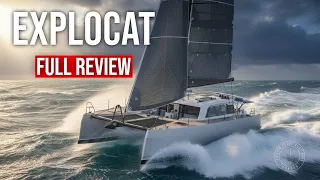
Explocat 52 Review 2025 | The Aluminium Power Cat That Can Go Anywhere
Nick Fabry inspects the Garcia ExploCat 52 at Cannes, evaluating its aluminium hull, cutter sail plan, dual-position Versa Helm, insulated interior, and high-latitude engineering.
Amel 60 Review 2025| Ultimate Bluewater Cruiser Sailboat Tour
Nick Fabry tours the Amel 60 bluewater cruiser in Cannes, exploring the carbon rig, sheltered helm, 175 hp Volvo engine, walnut interior, and underwater propeller inspection port.

The $12k Bluewater Yacht
Step aboard the Contessa 32, one of the most iconic bluewater sailboats ever built. Known for her seaworthiness, timeless design and offshore pedigree, the Contessa 32 remains a favourite among serious sailors and cruising couples alike. In this short review we highlight her classic lines, strong re...