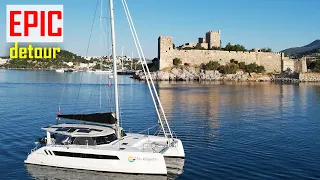
E243 - We Visit Seawind's New Factory in Turkey!
Returning to their Seawind 1370 No Regrets berthed at Oasis Marina in Yenifoça, Chris and Joanne of Sailing No Regrets joined Seawind Europe general manager Kivanc for an inspection of the factory in Turkey building the Seawind 1170. Having logged extensive miles on their own catamaran, the tour offered a direct look at how the smaller sister ship takes shape from composite staging to final assembly.
Kivanc guided the tour through the plant, beginning at the materials preparation area where composite schedules, barcode tracking, and cutting jigs organize each structural element.
Fiber Cutting and Structural Vacuum Infusion
The walkthrough starts inside the fiber preparation area, where technicians stage and cut fiberglass and carbon reinforcements. Barcode work orders display the exact fiber types and dimensions required for every part, ensuring accuracy before resin application.
On the ground floor, large molds produce major structural subassemblies. Kivanc pointed out the cabins, heads, and central saloon furniture, explaining the composite methodology behind each primary module: “everything you see on this floor is vacuum infusion.” Closed-mold infusion compacts dry fabrics and structural cores under vacuum pressure, drawing liquid resin evenly through the laminate to maximize strength while controlling weight. On the second floor above, secondary components and smaller molded parts continue through hand layup stations.
Carbon Reinforcement and Foredeck Catchment Design
Examining bare hull moldings reveals targeted carbon fiber placements across high-stress load paths. Black carbon strips reinforce structural corridors, shear plates, and the chain plate zones designed to transfer rigging loads into composite bulkheads. Technicians position alignment jigs across the hulls before installing primary bulkheads, with pre-drilled access openings established in advance to streamline rigging and plumbing runs.
On the forward deck molding, the tour inspected a molded rainwater collection channel recessed along the coachroof and foredeck. Comparing the drainage perimeter to their Seawind 1370, Chris observed that the catchment channel on the 1170 provides double the collection area: “So for a smaller boat, she collects more.” Water channels inward through dedicated drainage lines to top up fresh water tanks during passages.
Engineering Layout and Cockpit Optimization
Inside partially assembled hulls, the layout highlights design choices between deck space and mechanical access. Fuel and water tanks sit secured below cabin soles alongside headliners and interior bulkheads. Chris and Kivanc examined the cockpit perimeter, where under-seat lockers house refrigeration and gas storage.
Engineering volume limits dictate cockpit layout differences between the two sister designs. While larger models permit cockpit refrigeration placed directly beside the helm, Kivanc explained that space constraints on the 1170 required positioning the exterior cockpit fridge outward, leaving helm seat access unobstructed without crowding structural bulkheads. Temporary PVC spacers stand in along structural mounting poles, allowing technicians to test-fit helm modules while awaiting carbon fiber shipments from suppliers.
Full Electric Galley and Assembly Line Progress
Further along the line, hulls numbered 16 and 17 illustrate late-stage interior fit-outs. On Hull 16, flooring soles are in place and solar wiring is bonded to the coachroof before the overhead deck is sealed. The galley configuration on this hull eliminates onboard propane, featuring an induction cooktop and a Kenyon electric oven recessed beneath the salon bench seating.
Kivanc highlighted the operational benefits of the all-electric design: “We call it full electric galley option, so there is no LPG inside the boat.” For cruising sailors, induction cooking prevents excess cabin heat and removes the need for international propane refills. Kivanc also noted the vertical storage gains of the sunken galley arrangement: “You will see that the storage space in this boat is bigger than 1370.” Upper-level cabinetry provides roughly four to five times the usable volume of galley-up arrangements, while the oven position under the bench retains direct drawer access.
Across the aisle, Hull 17 advances through structural joinery, ready for subsequent deck integration.
Millwork Joinery and Yacht Manufacturing Logistics
The tour concluded inside the timber shop, where carpenters fabricate interior bulkheads and cabinetry. The facility utilizes ash hardwood and sliced veneer wafers to produce lightweight components with flush cabin thresholds, replacing the raised companionway steps found on earlier Seawind 1260 catamarans.
Kivanc explained the supply chain challenges of boutique yacht manufacturing compared to automobile production. Low build volumes restrict supplier leverage: “Here, you buy only five pieces of something.” If reordering six months or a year later, builders must navigate boutique lead times to ensure finish consistency across hulls. Seeing hulls 16 and 17 on the line confirmed that the factory in Turkey has established reliable serial production for the Seawind 1170.
| Production Component | Build Specification | Manufacturing Detail |
|---|---|---|
| Hull 16 assembly | Full electric galley | Induction cooktop with Kenyon electric oven and coachroof solar wiring |
| Hull 17 assembly | Serial production line | Structural bulkheads and interior cabinetry modules set in jigs |
| Auxiliary propulsion | Diesel engine options | 29 hp, 30 hp, and 39 hp engine choices (40 hp unavailable) |
| Joinery shop | Ash timber and veneer | Millwork joinery featuring continuous level soles without raised stepovers |
Frequently Asked Questions
The manufacturing facility is located in Turkey, with launching and handover operations supported nearby at Oasis Marina in Yenifoça.
The factory uses vacuum infusion for all large structural components, including the hulls, cabins, heads, and main saloon furniture, while smaller parts undergo hand layup on the second floor.
The build offers 29 hp, 30 hp, and 39 hp engine choices, whereas 40 hp engines are not an option.
The full electric galley option eliminates LPG entirely, installing an induction cooktop and a Kenyon electric oven beneath the saloon bench seating.
The timber joinery shop constructs interior cabinetry and bulkheads using solid ash timber and thin ash veneer wafers.
Book a trip where this was filmed — near Mykonos
Support Sailing No Regrets
At WeBoating.com, we profoundly acknowledge the unwavering dedication that Sailing No Regrets invests in crafting each and every video or voyage. Their passion for delivering exceptional ocean content shines through every frame, and it's a labor of love that deserves your attention.
We invite you to watch their captivating videos here and actively engage with their content, including their social media links above. Liking, commenting, and sharing their work goes a long way in fueling their creative fire.
We're also inviting you to explore the gear, sponsorships, and boat partnerships highlighted in the "E243 - We Visit Seawind's New Factory in Turkey!" video description, or directly on YouTube. By engaging with these offerings or purchasing services and items, you directly support Sailing No Regrets, their collaborators, and the brands they're associated with.
To ensure you never miss an offshore update, consider visiting their official YouTube Channel to subscribe, like, and join their community directly.
If you have any feedback, corrections, or additional information about Sailing No Regrets or their videos, please use the comment form below to share your thoughts with us.
Thank you for being a part of our community and supporting the creators we cherish. Your time and support truly matter!
Returning to No Regrets at Oasis Marina in Yenifoça, Turkey, we took the opportunity to visit the new Seawind factory.
Kivanc, General Manager of Seawind Europe, kindly took us on a personal tour, showing us around the facility and giving us a behind-the-scenes look at the manufacturing process. We saw Seawind 1170 catamarans at various stages of construction, from the early stages of fabrication through to boats nearing completion.
As owners of a Seawind 1370, it was fascinating to see how its smaller sister, the Seawind 1170, is built and to meet the team responsible for bringing these boats to life.
A big thank you to Kivanc and his team for showing us around and making us feel so welcome!
Join us for a look inside Seawind's new factory in Turkey.
Thanks for watching, and fair winds!
#SailingNoRegrets #SeawindCatamarans #Seawind1170 #SailingTurkey #Catamaran
WHO ARE WE?
Hey there! We’re Chris and Jo, an ordinary Aussie couple living our extraordinary dream aboard our Seawind 1260 since January 2019 and now we continue from 2024 aboard our new 1370!
Our adventure began with an unforgettable journey down the east coast of Australia, followed by a sail to the stunning New Caledonia. In 2020, we continued our exploration further north, and by 2021 and 2022, we circumnavigated Australia, discovering breathtaking locations along the way.
Having previously owned fishing and water-skiing boats, our passion for sailing deepened after crewing in South Australia, leading us to make the leap into full-time living at sea.
We hope to inspire you, just as we were inspired by other YouTube channels, to chase your dreams and explore the wonders of this beautiful world. Join us on our journey, and don’t forget to like, comment, and subscribe for more sailing adventures!
Sailing No Regrets
In 2026, Sailing No Regrets follows Australian sailors Chris and Joanne cruising the Mediterranean aboard No Regrets 2, their brand-new 45-foot Seawind 1370 performance catamaran. After completing an Australian circumnavigation, the couple navigates Greece and Turkey, surviving 65-knot gales and proving the blue water mastery of modern multihulls.
Channel Information:
Social Media Links:
E243 - We Visit Seawind's New Factory in Turkey! Location
- Oasis Marina, Yenifoça, Turkey (38.743667,26.838722)
- Seawind Factory, İzmir, Turkey (38.6216,26.9293)
Latest Episodes from Sailing No Regrets
Explore the most recent voyages. Subscribe to the channel to never miss an update!

E247 – We Finally Made It to Athens! Sailing the Mediterranean
Chris and Jo navigate their catamaran from Mykonos to Athens, stopping at Kolona Beach on Kythnos and Cape Sounion before negotiating tight berths and berth repairs in Athens Marina.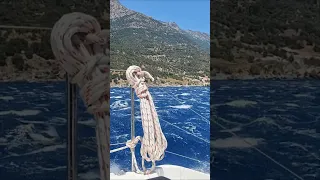
65 KNOTS! The Mediterranean Shows Its Fury!
Chris and Jo aboard their Seawind catamaran endure severe gale winds near Ikaria, facing sustained 45-knot conditions with gusts exceeding 60 knots as salt spray covers the vessel.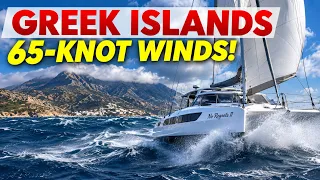
E245 – 65 Knot Winds in Greece! We Weren’t Expecting This Sailing the Greek Islands
Transiting past the lee of Ikaria, Chris and Joanne on No Regrets encounter sudden katabatic squalls peaking at 65 knots before reaching sheltered anchorages in Mykonos and Delos.
E244 – Cappadocia’s Magical Balloons & Incredible Fairy Chimneys!
Sailing No Regrets pauses their voyage for an inland trek across Cappadocia's fairy chimneys before sailing from Turkey to Greece, anchoring under Mount Kerkis.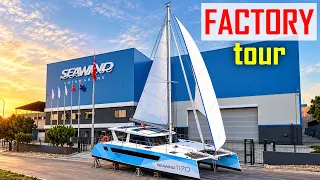
E243 – We Visit Seawind’s New Factory in Turkey!
Touring Seawind's European facility in Turkey, Chris and Joanne inspect the construction of the Seawind 1170, from resin infusion and carbon chain plates to all-electric galleys.