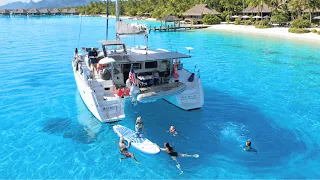
Keeping Whales From Sinking Us - 700 NM to a New Country
Clearing the outer reef passes of Fiji and pointing their bows west toward the Coral Sea, Daniel and Jenna Brown faced one of the most psychologically demanding passages of their Pacific voyage aboard SV Machete. Documented on their channel Sailing Machete, the family of six—including children Jack, Jessa, John, and Juju—set out on a 730-nautical-mile ocean passage from Savusavu to Port Moselle in Nouméa, New Caledonia. While steady trade winds promised speeds of seven to eight knots, the voyage was defined by an acute hazard that had nearly ended their cruising life months earlier.
In late 2025, while sailing in Tonga, the 2015 Lagoon 400 S2 catamaran suffered a violent collision with a whale, resulting in severe structural hull trauma that required extensive composite repairs in New Zealand. Returning to offshore waters, the crew carried not only reinforced laminates, but also the enduring vigilance of mariners who understand how abruptly a cetacean strike can turn a routine ocean passage into a sinking emergency.
Offshore Transit Logistics and Departure from Fiji
Preparing for the demanding 700-nautical-mile ocean passage from Savusavu to Port Moselle, Daniel and Jenna Brown of Sailing Machete approached their departure with disciplined seamanship honed by past trials, acutely aware that mitigating the hazard of another catastrophic whale strike required absolute vigilance aboard SV Machete. Offshore logistics with four children required extensive provisioning, with Daniel stowing abundant fresh produce, dozens of pounds of apples, potatoes, eggs, and passage meals into galley lockers to sustain the crew across five continuous days at sea.
Exit formalities in Fiji carried customary Pacific warmth. Before casting off, Daniel and Jenna completed customs clearance, gifting fourteen pounds of surplus ceremonial kava root to the local customs officer. Once cleared, the catamaran motored out past the barrier reef into open water, hoisting sails into a steady 16-knot southeasterly breeze that propelled SV Machete at seven to eight knots on a west-southwesterly heading.
Mitigating Whale Strike Hazards Across South Pacific Migration Corridors
Navigating open bluewater outside the reef, Daniel and Jenna Brown maintained rigorous watchkeeping aboard SV Machete, applying practical seamanship to counter the ever-present risk of a whale strike as Sailing Machete traversed deep ocean trenches during this remote ocean passage. Hours into the passage, that threat surfaced when a massive whale breached and held its fluke aloft off the bow, reigniting visceral memories of the family’s earlier collision in Tonga.
Whale strikes represent a grave hazard for cruising multihulls, where sleeping cetaceans in swell troughs are nearly impossible to detect from the helm in choppy seas. As dusk settled and another whale blew mist directly along their course, Daniel engaged the auxiliary diesel engines. The underwater acoustic rumble and propeller cavitation acted as an acoustic deterrent, alerting submerged animals to sound clear of the advancing hulls while the crew maintained vigilant bow watches through the night.
Landfall in Nouméa: Harbor Clearance and Offshore Family Resilience
Sighting the jagged barrier reef of New Caledonia after completing the demanding ocean passage without suffering another crippling whale strike, Daniel and Jenna Brown guided SV Machete into Port Moselle, where their calm seamanship and family cohesion allowed Sailing Machete to navigate stringent biosecurity and customs protocols. After 114 hours and 728 miles underway, Daniel throttled back sail trim overnight to ensure a safe daylight entrance through the turbulent Havana Pass into the protected barrier lagoon.
Arriving at Port Moselle Marina in Nouméa, the crew was greeted by French maritime infrastructure—the renowned Paris of the Pacific. Biosecurity officials boarded the vessel to inspect galley stores, confiscating fresh produce and six dozen Fijian eggs while permitting packaged provisions. The landfall also marked Jenna’s 38th birthday. After days of offshore motion, the family celebrated aboard with take-out pizza from Les Patates Jacques Cartier and handmade cards and gifts crafted by the children during the passage.
Lagoon Navigation, Marine Maintenance, and Reef Exploration
Within the sheltered expanse of the world’s second-largest barrier reef, Daniel and Jenna demonstrated that true seamanship extends far beyond surviving an open ocean passage or avoiding a whale strike, as the crew of Sailing Machete tackled stubborn head plumbing failures and mooring challenges aboard SV Machete. Shifting to coastal exploration, the catamaran anchored off the DoubleTree resort at Îlot Maître and navigated toward historic Phare Amédée, where Daniel secured a heavy mooring in gusty chop after losing a boat hook overboard.
Ashore on the coral islet, the family explored the 56-meter cast-iron lighthouse while encountering docile banded sea kraits (tricot rayé) resting on the paths. Underway, domestic systems tested Daniel’s diagnostic patience when a hair accessory jammed an electric head macerator pump. After extracting the obstruction and attempting to avoid a complete unit swap, subsequent head use triggered another blockage, demonstrating the persistent mechanical demands of offshore multihull life.
Passage Telemetry, Whale Strike Risk Mitigation Protocols, and Watch Schedules
To quantify the technical parameters of the voyage, Daniel and Jenna logged comprehensive navigation telemetry and emergency watch data aboard SV Machete, demonstrating the meticulous seamanship that protected Sailing Machete from whale strike hazards during their 730-nautical-mile ocean passage. The operational data gathered between Fiji and New Caledonia illustrates the rigorous balance between speed, safety, and watch fatigue.
| Passage Metric / Category | Recorded Telemetry / Parameter | Seamanship Protocol |
|---|---|---|
| Distance & Route | 728 Nautical Miles (Savusavu to Port Moselle) | Direct Rhumb Line with Weather Deviation |
| Transit Duration | 4 Days, 18 Hours (114 Total Elapsed Hours) | Timed Daylight Entry via Havana Pass |
| Speed Over Ground | 7.2 Knots Average (Peak: 8.6 Knots under Sail) | Reefed Main and Genoa in Trade Winds |
| Wind & Sea State | 14–18 Knots Southeasterly; 2.0–2.5m Ocean Swell | Conservative Sail Plan for Catamaran Safety |
| Whale Avoidance | Continuous Daylight 180° Visual Horizon Watch | Auxiliary Engine Cavitation Engaged at Dusk |
| Hull Integrity | Watertight Forepeaks & Crash Bulkheads Checked | Autonomous Bilge Monitors Active in Hulls |
| Watch Schedules | Staggered 3-Hour Night Watches (Daniel & Jenna) | Dedicated Daylight Deck Watch with Child Safety |
| Port Clearance | Port Moselle Marina, Nouméa, New Caledonia | Quarantine Biosecurity & Customs Inspection |
Expedition Preparations for Vanuatu and the Western Pacific
Looking ahead to future remote landfalls, Daniel and Jenna turned SV Machete into a staging platform for island trading and cultural engagement, ensuring that Sailing Machete balanced practical seamanship and whale strike vigilance with humanitarian preparations before departing on their next ocean passage. New Caledonia served as a crucial provisioning hub before heading to Vanuatu and the Solomon Islands, where cash economies give way to direct barter in isolated anchorages.
The crew organized parcels of outgrown children’s clothing, sacks of sugar, commercial flour, instant coffee, powdered milk, and canned corned beef. For Solomon Island woodcarvers, they assembled packages containing sandpaper, marine adhesives, and sunglasses. After completing exit clearances across immigration, customs, and port authority offices, and purchasing a replacement boat hook at a Nouméa chandlery, the family stood fully prepared for their onward voyage.
Frequently Asked Questions
Documenting offshore cruising realities, Daniel and Jenna answer common questions regarding SV Machete, sharing how Sailing Machete approaches whale strike prevention, vessel maintenance, and offshore seamanship during an extended South Pacific ocean passage.
Cruising sailors mitigate whale collision risks through dedicated daylight visual lookouts scanning 180 degrees ahead. In low-visibility or dusk conditions, skippers often run auxiliary diesel engines so underwater propeller cavitation alerts sleeping cetaceans, while maintaining moderate speeds to reduce collision impact energy.
Immediately following an impact, crews must verify bilge pump alarms, visually inspect forward crash bulkheads and rudder stocks, dog down watertight doors to isolate potential hull breaches, and adjust course or heave-to to minimize hydrostatic pressure on damaged composite laminates.
The ocean passage from Fiji (Savusavu or Lautoka) to Nouméa, New Caledonia covers approximately 700 to 730 nautical miles. Cruising multihulls averaging 7 knots in tradewind conditions complete the transit in four to five days, timing their arrival for daylight entry through barrier reef passes.
The VPLP-designed Lagoon 400 S2 is an ocean-rated CE Category A multihull featuring solid fiberglass underwater hulls, low-aspect sacrificial keels, and generous bridge deck clearance. Its wide 23.75-foot beam provides exceptional stability and load-carrying capacity for extended family voyaging.
In Port Moselle, Nouméa, incoming yachts must submit quarantine declarations. Biosecurity officials confiscate fresh produce, honey, and untreated poultry or pork products to protect local agriculture, while allowing packaged goods from Australia and New Zealand before customs and immigration clearance.
Parents maintain staggered three- to four-hour solo night watches, ensuring each adult gets uninterrupted sleep while the other monitors radar and AIS. During daylight, watches are shared alongside homeschooling and meal preparation, with strict cockpit safety rules enforced for children.
Havana Pass experiences strong tidal streams exceeding four to six knots, creating dangerous overfalls when wind opposes current. Entering in daylight ensures optimal visibility to read water color over coral shoals and accurately identify navigational beacons along the barrier reef.
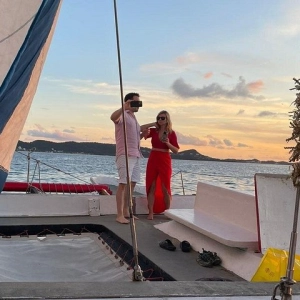
Water adventures near Grenada
Support Sailing Machete
At WeBoating.com, we profoundly acknowledge the unwavering dedication that Sailing Machete invests in crafting each and every video or voyage. Their passion for delivering exceptional ocean content shines through every frame, and it's a labor of love that deserves your attention.
We invite you to watch their captivating videos here and actively engage with their content, including their social media links above. Liking, commenting, and sharing their work goes a long way in fueling their creative fire.
We're also inviting you to explore the gear, sponsorships, and boat partnerships highlighted in the "Keeping Whales From Sinking Us - 700 NM to a New Country" video description, or directly on YouTube. By engaging with these offerings or purchasing services and items, you directly support Sailing Machete, their collaborators, and the brands they're associated with.
To ensure you never miss an offshore update, consider visiting their official YouTube Channel to subscribe, like, and join their community directly.
If you have any feedback, corrections, or additional information about Sailing Machete or their videos, please use the comment form below to share your thoughts with us.
Thank you for being a part of our community and supporting the creators we cherish. Your time and support truly matter!
Saying goodbye to Fiji and sailing over 700nm to a country you've probably never heard of!
To God be the glory!
#sailingfamily #familyvlog #boatlife #familytravelvlog #youtubekids #sailingaroundtheworld #outdoors #bucketlist #fiji #paradise #sailing #laugroup #fulaga #sailingfiji #yasawas #castawayisland
To Follow Along in Real Time -
Sailing Machete on Instagram: https://www.instagram.com/sailingmachete/
All music provided by Epidemic Sound. Sign up here to get your free trial. https://share.epidemicsound.com/amehuq
00:00 Intro
02:19 Checking Out of Fiji
05:30 Why are boats sinking?
08:38 Sailing to a New Country
12:50 Checking into New Caledonia
15:53 Birthday Celebration!
19:24 Seeking Shelter
21:51 Toilet Troubles
24:19 Overwater Bungalows
26:55 How to Catch a Mooring Ball
28:25 Lighthouse Snakes
32:08 Checking out of New Caledonia

Sailing Machete
Join the Brown family of Sailing Machete as they document their 2026 Fiji mission and post-refit Pacific circuit aboard their Lagoon 400 S2, Machete.
Channel Information:
Social Media Links:
Keeping Whales From Sinking Us - 700 NM to a New Country Location
- Savusavu Marina & Harbor, Vanua Levu, Fiji (-16.78,179.333)
- Port Moselle Marina & Harbor Fairway, Noumu00e9a, New Caledonia (-22.277,166.442)
Latest Episodes from Sailing Machete
Explore the most recent voyages. Subscribe to the channel to never miss an update!
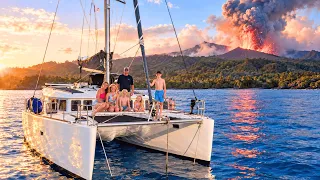
We Hiked to the Rim of an ACTIVE VOLCANO… Then It Exploded!
After sailing from New Caledonia to Port Resolution, Daniel and Jenna Brown anchor their catamaran on Tanna Island, deliver supplies to a local village, and hike to the exploding crater of Mount Yasur.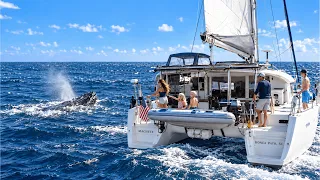
Keeping Whales From Sinking Us – 700 NM to a New Country
Daniel and Jenna Brown sail 700 nautical miles from Fiji to New Caledonia aboard SV Machete, implementing rigorous whale strike mitigation and offshore seamanship.
Hope to see you there! See description for links! 🎉 #annapolissailboatshow
Hope to see you there!!! Link for boat show tickets: Link to Cruisers Creating Content Schedule:
Living the Life We Had Dreamed About
Having our final adventure in FIJI! To God be the glory! #sailingfamily #familyvlog #boatlife #familytravelvlog #youtubekids #sailingaroundtheworld #outdoors #bucketlist #fiji #paradise #sailing #laugroup #fulaga #sailingfiji #yasawas #castawayisland To Follow Along in Real Time - Sailing Mach...
We Explored the Most Famous Deserted Island in the World
Family sailing vlog about exploring deserted islands. To God be the glory! #sailingfamily #familyvlog #boatlife #familytravelvlog #youtubekids #sailingaroundtheworld #outdoors #bucketlist #fiji #paradise #sailing #laugroup #fulaga #sailingfiji #yasawas #castawayisland To Follow Along in Real Ti...