Pump It Ep238
A persistent drip at the propeller shaft forced Steve and Karen of Sailing Intermission to postpone their Friday departure for Texas aboard Isabella, their 1990/2010 C.N.S.O. Super Mikado 56 ketch. Rather than risking an in-water adjustment at a marina without a travel lift capable of hauling their 56-foot vessel in an emergency, the couple booked a Tuesday service appointment at a larger marina and used the extra days at the dock to test their dinghy, install port-side fuel mounts, and map out deep-water anchorages along the Georgia and Florida coast.
Designed by naval architect Michel Bigoin—who also penned the 1976 246-foot, four-masted steel schooner Phocea—Isabella carries a fiberglass hull with a 1.68 capsize ratio, a 42.19 comfort ratio, hydraulic steering, and a 7-foot draft. That deep keel shapes every decision on the upcoming 1,617-nautical-mile passage to Texas, requiring Steve and Karen to verify approach depths and bridge clearances well before casting off.
Launching the Dinghy and Testing the Mercury Outboard
Before diving into mechanical work and chart preparation, Karen and Steve took their inflatable dinghy out on the water after it had been sitting unused for a stretch. Karen pumped air into the dinghy’s three chambers while Steve inspected the mounting stand and prepped the Mercury outboard motor.
Once launched, Steve joked, “Ahoy. Chips Ahoy. Wait a minute, isn’t that a cookie?” and teased that Karen was ready to go swimming with the alligators. The Mercury engine fired up without hesitation, prompting Karen to remark, “I am so glad the outboard started right up. It’s been a while.” Steve opened up the throttle enough to kick up a small wake behind the tender during their short run.
Soaking the Packing Gland and Scheduling a Safe Marina Haul-Out
Back aboard Isabella, Steve inspected the bronze packing gland surrounding the propeller shaft, which had developed an excessive leak alongside a green patina. Comparing the aged assembly to photos of the gland when it was brand new—along with the specialized packing material and adjusting wrench—Steve explained why he was hesitant to force the hardware at their current berth.
“This is our packing gland. It surrounds the propeller shaft, keeps water from coming in from the outside, and it’s leaking a little too much.”
Steve, Sailing Intermission
Steve had been soaking the packing gland’s lock nut so it could be loosened more easily, noting that he had not backed the nut off in a while and wanted to avoid snapping anything. Because their current marina lacked the equipment to lift a Super Mikado 56 out of the water if the gland or a bolt failed during adjustment, the risk of flooding the engine room was too high to ignore.
“It’s a little scary, cuz if something if the if the bolt breaks down there while you’re dealing the packing gland, the boat basically floods. So, we want to be sure that wherever we are, they can lift us out, and we don’t sink to the bottom.”
Karen, Sailing Intermission
To eliminate that hazard, Steve arranged to move Isabella on Tuesday to a larger marina with full haul-out capability and pay their technicians to service the packing gland. Although the five-day delay meant missing the full moon for their departure, Steve noted they would still have a solid quarter moon and their low-light camera to assist with night navigation, aiming to reach Texas before the end of November—or, as they joked, before Christmas.
Mounting Port-Side Jerry Can Supports and Shore Logistics
To expand their diesel reserve for the 1,617-nautical-mile run, Steve added a fuel rack on the port railing to match the composite board already mounted in the shade on the starboard side. Using pressure-treated wood as a temporary support until he sources another composite board, he fastened the plank directly beneath the strapped emergency tiller using stainless U-bolts lined with rubber strips to keep the hardware from scratching the stainless railing uprights.
Reviewing the completed installation on both sides of the deck, Steve observed, “Man, we can strap on 10 jerry cans if we want.” The crew currently carries five jerry cans on board—each holding 5 gallons of fuel—and is considering picking up one more before setting sail.
With the extra days in port, Steve and Karen also finalized their shore and portable power logistics:
- Vehicle Storage and Retrieval Plan: They rented a storage space for their car while provisioning the boat. Once Isabella is settled in Texas, they plan to fly back, pick up both their motorcycle and car, and either drive them west or rent a U-Haul and trailer to tow them.
- Backup Battery Banks: Steve tested a new 60,000-milliamp battery bank rated to charge a phone roughly a dozen times, supplementing their other portable power banks and a solar Lucy light that doubles as a USB charger.
Charting Deep-Water Inlets and Anchorages on Waterway Guide
With four private cabins, an engine room, a salon, a galley, and three heads with two separate shower stalls, Isabella draws 7 feet of water, and Steve and Karen prefer to maintain at least 9 to 10 feet of depth beneath the keel. In addition, the ketch’s mast height rules out many inland waterway passages. As Steve explained, “We hate the fixed bridges, you know, a lot of them are supposedly 65 ft. We need at least 63 ft and so, you know, uh, we avoid them.”
Vetting St. Marys Entrance Between Cumberland and Amelia Islands
Using Waterway Guide alongside Google Maps and their Garmin and Raymarine chartplotters, Karen and Steve examined emergency duck-in spots and diesel fuel stops heading south. Starting at St. Marys Entrance between Cumberland Island and Amelia Island, Karen confirmed that the inlet has well-marked entry and exit points, zero bridges, and channel depths ranging from 50 feet down to 27 feet.
Although Steve prefers anchorages located 2 or 3 miles inside an inlet, Karen measured the St. Marys anchorages at 8.8 nautical miles (10 miles) up the straight, well-marked channel. Zooming in on mean low tide soundings, she immediately rejected the first anchorage because approach depths dropped to 5.8 and 5.9 feet. However, she logged two deeper options along the St. Marys River area:
- Primary 15-Foot Anchorage: Offers 15 feet of water at mean low water over a mud bottom with a 5-out-of-5 holding rating, a 3-out-of-5 wind protection rating, strong current directions, light small-boat wake, and good shore access.
- Secondary 10-Foot Anchorage & Fuel Docks: Provides 10 feet of depth with good holding, strong current flow, and no wind protection, situated directly across from several marinas offering diesel fuel. While cross-referencing the inlet on Google Maps, Karen briefly laughed after realizing her map had zoomed out to Western Australia before refocusing on the Cumberland Island channel.
Evaluating the St. Johns River and St. Augustine Inlet
Continuing south on Waterway Guide, Karen bypassed an inlet showing mean low tide depths dropping to under a foot and 6.8 feet alongside two bridges. Next, they reviewed the St. Johns River, where they had previously spent a transient night (in addition to an earlier anchorage stop at St. Catherines Island), noting that their saved track line would still be available on the chartplotter.
Further south at St. Augustine Inlet and West Augustine, the couple considered stopping for a couple of days in the historic city dating back to the 1500s. Clicking the bridge icon on Waterway Guide, Karen verified that the St. Augustine drawbridge opens on the hour and half-hour rather than on demand. Checking anchorages located outside the drawbridge, she passed over an 8-foot spot as too dicey and selected a 15-foot anchorage located two and a half to almost 3 nautical miles inside the inlet—holding her finger against the screen to measure the distance since Waterway Guide hides anchorage icons whenever its measuring tool is activated.
| System / Waypoint | Recorded Specification / Measurement |
|---|---|
| Vessel & Designer | Isabella, 1990/2010 C.N.S.O. Super Mikado 56 ketch by Michel Bigoin |
| Draft & Preferred Depth | 7 ft draft (9 to 10 ft preferred minimum water depth) |
| Air Draft Clearance | 63 ft minimum required (avoids fixed 65 ft bridges) |
| Planned Voyage Distance | 1,617 nautical miles to Texas (delayed 5 days) |
| Auxiliary Fuel Capacity | Up to 10 jerry cans on port/starboard racks (5 cans at 5 gallons each onboard) |
| Portable Power Bank | 60,000 milliamps battery bank plus solar Lucy light charger |
| St. Marys Entrance | 50 to 27 ft channel; 15 ft and 10 ft MLW anchorages 8.8 NM (10 miles) inside |
| St. Augustine Inlet | 15 ft anchorage 2 and 1/2 to 3 NM inside before the drawbridge |
Frequently Asked Questions
Isabella’s propeller shaft packing gland was leaking too much and needed adjustment. Because a broken bolt or gland failure during an in-water adjustment could flood the boat and their current marina could not haul out a 56-foot ketch, they scheduled a Tuesday appointment at a larger marina with haul-out capabilities.
To complement the composite board already mounted on the starboard railing, Steve attached a pressure-treated wood support board on the port railing beneath the emergency tiller using rubber-lined stainless U-bolts. The two racks allow them to strap on up to 10 five-gallon jerry cans.
Isabella has a 7-foot draft, and Steve and Karen prefer at least 9 to 10 feet of water under the hull. The ketch also requires at least 63 feet of overhead clearance, leading the crew to avoid fixed 65-foot bridges.
At St. Marys Entrance between Cumberland Island and Amelia Island, Karen noted a 15-foot MLW mud anchorage with 5-out-of-5 holding and a 10-foot anchorage 8.8 nautical miles inside near diesel marinas. At St. Augustine Inlet, she marked a 15-foot anchorage located 2 and 1/2 to 3 nautical miles inside before the drawbridge.
Book a trip where this was filmed — near St Augustine
Support Sailing Intermission
At WeBoating.com, we profoundly acknowledge the unwavering dedication that Sailing Intermission invests in crafting each and every video or voyage. Their passion for delivering exceptional ocean content shines through every frame, and it's a labor of love that deserves your attention.
We invite you to watch their captivating videos here and actively engage with their content, including their social media links above. Liking, commenting, and sharing their work goes a long way in fueling their creative fire.
We're also inviting you to explore the gear, sponsorships, and boat partnerships highlighted in the "Pump It Ep238" video description, or directly on YouTube. By engaging with these offerings or purchasing services and items, you directly support Sailing Intermission, their collaborators, and the brands they're associated with.
To ensure you never miss an offshore update, consider visiting their official YouTube Channel to subscribe, like, and join their community directly.
If you have any feedback, corrections, or additional information about Sailing Intermission or their videos, please use the comment form below to share your thoughts with us.
Thank you for being a part of our community and supporting the creators we cherish. Your time and support truly matter!
Dang, dang, dang!!! Isabella’s packing gland needs to be adjusted and our journey to Texas is now delayed. Steve’s been soaking the lock nut for the packing gland so that it can be loosened easily. The issue is that should that break or there start to be a leak; a whole lot of water would come rushing in and potentially sink the boat. Our current marina would be unable to pull us out of the water if that emergency situation should arise. We have an appointment at a larger marina early next week. Hopefully, this can be done quickly with Isabella still in the water and we can set another departure date soon.
It’s not the Atlantic but we did take the dinghy out on the water. Karen pumped up the three chambers. It was great that the Mercury outboard started right up and out we went. Steve even revved the motor enough that we caused a small wake. Very small.
On the starboard side of Isabella, we have a composite board support for jerry cans. After buying a few more cans, we added support on the port side. It’s pressure treated wood and may only be a temporary addition. However, now all the extra fuel can be safely secured onboard.
We are taking the extra few days to locate additional anchorages and marinas with fuel docks that are accessible along the way on our move to Texas. Many of the channels are deep enough for us to navigate but sometimes the area getting to them is too shallow. Additionally, many of the anchorages and marina approaches are too shallow. Isabella has a 7-foot draft and we like to have at least 9 to 10 feet of water under her. We use the information on Waterway Guide to make a list and double check it with our chart plotters’ and other websites.
Thank you for being with us and sharing our adventure. Huge hugs and kisses to our subscribers and a big howdy to our viewers. If you like what you see and haven’t already, become a subscriber and help us to continue our journeys and Sailing Intermission to grow.
We live aboard S/V Isabella, a Super Mikado 56 built in France by C.N.S.O. (Constructions Nautiques du Sud-Ouest). Isabella is a 1990/2010 sailing ketch with four private cabins, an engine room, a salon, a galley, and three heads with two separate shower stalls. Her fiberglass hull is designed for bluewater cruising, with an excellent capsize ratio of 1.68 and a very good comfort ratio of 42.19. She is equipped with Garmin and Raymarine electronics and hydraulic steering.
Isabella was designed by naval architect Michel Bigoin, who also designed Phocea. Built in 1976, the 246-foot, four-masted steel schooner was considered the world’s largest private sailing yacht until 2004.
Additional Links:
Hey y’all, our Sony video camera broke and you can help us replace it. Find out more at: https://gofund.me/231be506c
You can also follow us at: https://linktr.ee/sailingintermission
We are now on Patreon.
Musical Attributes:
OTE - Balloon
John Runefelt – Shots All Around
#sailingintermission #liveaboard #boatlife #mikado56 #dinghy #georgia #texas #packinggland #atlantic #texas #compositboard #jerrycan #fuel #waterway #andchorage
Sailing Intermission
Steve and Karen: The professor and the vixen navigating their 56ft French ketch, Isabella, through the forensic refit and turquoise waters of the Florida Keys in 2026.
Channel Information:
Social Media Links:
Pump It Ep238 Location
- St. Marys Entrance, Cumberland Island, Georgia, USA (30.7103,-81.4508)
- St. Catherines Island, Georgia, USA (31.6568,-81.1512)
- St. Johns River Entrance, Jacksonville, Florida, USA (30.3986,-81.3964)
- St. Augustine Inlet, St. Augustine, Florida, USA (29.9094,-81.2875)
Latest Episodes from Sailing Intermission
Explore the most recent voyages. Subscribe to the channel to never miss an update!
Saved by the Pole Ep240
At Hilton Head Island, South Carolina, the Sailing Intermission crew hauls out their Super Mikado 56 ketch for packing gland repacking, MaxProp line cutter replacement, propeller lubrication, and a sea trial.
Controlled Crash Ep239
Steve and Karen navigate Isabella to a Georgia boatyard for packing gland maintenance, facing an unyielding locknut, a tight docking maneuver, and travelift strap mishaps.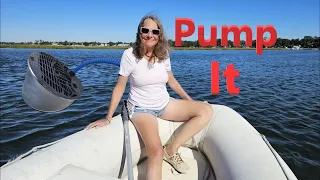
Pump It Ep238
Steve and Karen delay their 1,617-nautical-mile passage to Texas aboard their Super Mikado 56 ketch Isabella to service a leaking packing gland, install port-side jerry can mounts, and chart deep-water anchorages.
Our Groovy Kind of Love Ep237
One week before sailing from Georgia to Texas aboard S/V Isabella, Steve and Karen install a third helm monitor, repair a freshwater tank leak, and wash the decks.
Journey Soon Adventure Chaos Ep236
Steve and Karen prepare SV Isabella, their 56ft Super Mikado ketch, for an offshore voyage from Georgia to Texas via Florida, installing engine room telemetry and staging fuel reserves.