Lanzarote: First HoverAir Aqua Drone Test | Marina Puerto Calero & Volcanic Island
Tied up alongside the pontoons at Marina Puerto Calero on the southern coast of Lanzarote, Richard and Jude of Sailing Helios inspect the volcanic stone quayside before setting out to test a specialized marine drone. After arriving on their Jeanneau Sun Odyssey 410, Helios, a couple of weeks earlier, the crew found themselves settled in a modern harbor carved directly into ancient basalt flows. Surrounding the marina basins, residential apartments and restaurants stand where historical lava cut down toward the Atlantic Ocean.
With a Fly More Combo package delivered to the dock, Richard and Jude walk beyond the marina perimeter onto the black volcanic shoreline. Here, camper vans scatter across an expansive, desolate flat resembling a Martian plain, providing an isolated open-air testing ground for the HoverAir Aqua flying camera.
The Volcanic Foundations of Marina Puerto Calero
Marina Puerto Calero offers visiting sailors extensive protection, yet its physical setting reflects Lanzarote’s violent geological history. The surrounding cliffs display distinct strata of solidified basalt and ash deposits left behind by historical eruptions. A catastrophic volcanic event lasted from 1730 to 1736, burying numerous villages under lava flows that measured 50 m deep in several regions across the island. A subsequent eruption in 1824 further altered the island’s topography.
When port developers established the harbor, civil engineers cut directly back into that solid rock face. Today, that excavated shelf accommodates modern resort amenities, waterfront apartments, bars, and dining venues serving pizza and Indian cuisine. The influx of holiday visitors sustains facilities and infrastructure that visiting cruisers aboard sailboats rarely encounter in remote anchorages, creating a relaxed base before offshore departures.
Marine Drone Vulnerabilities and Previous Setbacks
Cruising sailors face significant risks when operating standard consumer drones from small boat decks. Jude explained the underlying anxiety that keeps many cruising crews from deploying aerial cameras:
“Cuz there’s such risk of it going in the water, and when it goes in the water, it will die straight away.”
The crew’s previous experience reinforced that caution. During only their second flight aboard Helios, the collision avoidance system resisted Richard’s attempt to hand-catch the unit. The drone darted upward into the vessel’s solar panels, severing rotor blades, cutting his fingers, and tumbling through the cockpit. The machine survived only because it missed falling overboard into seawater by 6 in. Since that near-miss, aerial filming remained largely shelved due to the financial hazard of losing expensive electronics to the ocean.
Hardware Architecture of the HoverAir Aqua
The HoverAir Aqua departs from conventional aerial platforms by emphasizing hands-free personal tracking and comprehensive saltwater resilience. Rather than maneuvering an aircraft to compose scenic landscape vistas, the device functions as an automated tracking tool. As Richard observed during the hardware inspection:
“So they actually call this a flying camera rather than a drone because you know, with a drone, you sort of get up there and you’re taking pictures, big grand pictures of the bay and sort of stuff.”
The aircraft is engineered as a 100% waterproof system built specifically for water sports such as kayaking and kiteboarding. To resist marine corrosion, the manufacturer incorporates titanium screws and ceramic ball bearings throughout the structure. The battery housing features an internal vacuum-test mechanism that evacuates air upon closure, confirming a watertight seal before permitting flight. An enclosed perimeter guard shields operator fingers from the blades, while a soft buoyant exterior ring functions as a flotation collar. If inverted in the water, the aircraft initiates a Turtle Flip maneuver to right itself for water takeoff.
To remain exempt from formal registration and licensing requirements in most international cruising destinations, the aircraft maintains an ultralight footprint. As Richard emphasized:
“it has to stick within you know less than 250 g, so it’s 249 g, so you don’t have to have your drone pilot license to use it.”
| Metric | Specification |
|---|---|
| Takeoff Weight | 249 g under 250 g threshold |
| Maximum Wind Handling | 29 knots or 55 km/h |
| Auto-Landing Inactivity Timeout | 15 seconds upon return |
| Radio Tether Drift Limit | 5 m repositioning distance |
| Beacon Manual Control Range | 1 km operational span |
Coastal Field Testing and Autonomous Flight Modes
On the rocky headland beside the marina, Jude straps the Lighthouse companion unit to her forearm. Unlike standard camera drones that depend purely on optical recognition to track human subjects, the system relies on a direct radio frequency connection between the Lighthouse beacon and the aircraft. Positioned with its transmitter pointing upward, the beacon establishes an electronic tether that maintains tracking even if the camera momentarily loses visual contact.
Once the system initiates its Omni Terrain sequence, audible voice prompts broadcast aircraft status directly from the unit, eliminating the need to inspect handheld screens while navigating uneven terrain or operating watercraft. The crew selects Orbit Follow mode, setting the aircraft to circle smoothly around them as they walk across the volcanic rubble. The system supports adjustable follow distances of 3 m, 6 m, 10 m, 20 m, and 30 m, alongside camera inclination angles spanning from -30 to +30 degrees.
Pressing the Return to Home command summons the aircraft back to hover directly in front of the operator. If left untouched, an automated 15-second countdown initiates a controlled vertical landing. On the water, should the vessel or paddler drift away, an active tether command instructs the floating drone to take off and fly within 5 m of the operator. Switching to Kayak mode, the camera tracks forward off Jude’s left shoulder. Although rated to handle wind speeds up to 29 knots or 55 km/h, Richard opted against tossing the drone into the coastal shorebreak. Rough swells breaking over slippery jagged rocks created excessive recovery risk, prompting the crew to reserve direct water takeoffs for open ocean passages across the Atlantic.
Inland Transit Logistics and Car Rental Economics
To explore the interior of Lanzarote, the crew developed a practical transport strategy to avoid elevated marina rental rates. Jude shared a straightforward cost-saving recommendation:
“tip, if you want to hire a car, they are half the price at the airport than getting them hired at the port.”
Securing a rental at nearly a third of local harbor prices required taking a public bus from Puerto Calero to the airport. The journey took approximately 20 minutes and cost 1.50 per passenger. However, transit schedules proved unreliable. Jude cautioned other travelers:
“Don’t trust the bus timetables.”
Paper schedules posted at roadside shelters failed to match digital network updates, requiring patience while waiting for transit. Once equipped with a rental vehicle, the crew toured the southern shoreline and drove inland through the northern volcanic expanses.
Surveying Lanzarote’s Lava Fields and Stone Walls
Driving south revealed secluded coastal stretches where visitors traversed barren sand resembling open desert. In keeping with local customs on Spanish beaches, the crew refrained from filming in designated clothing-optional zones. Moving northward, the terrain shifted into vast fields of bubbling basalt and fractured volcanic stone that gave the impression of traversing an alien landscape.
Across these rugged valleys, ancient settlers stacked volcanic stones into continuous low fences and protective circular walls. Built across black volcanic sand, these labor-intensive stone barriers shield modest agricultural attempts from persistent Atlantic winds. Navigating through small northern settlements proved challenging, as navigation maps frequently failed to recognize narrow one-way streets, leaving the crew looping repeatedly through stone alleys that Richard compared to Hotel California. After completing their inland reconnaissance, the crew returned to Marina Puerto Calero to prepare Helios for upcoming flights during their offshore passage.
Frequently Asked Questions
Although the HoverAir Aqua is completely waterproof, strong onshore winds and rough breaking waves against slippery coastal rocks created high recovery risks, leading the crew to test tracking modes over land before conducting ocean flights during their Atlantic crossing.
The aircraft incorporates titanium screws, ceramic ball bearings, an automated vacuum-sealing battery compartment that verifies watertight integrity before flight, and enclosed propeller guards with a buoyant foam outer ring.
The aircraft has an all-up takeoff weight of 249 g, keeping it below the 250 g regulatory threshold that mandates a formal drone pilot license.
When the Return to Home command is activated, the drone flies back and hovers directly in front of the operator. If no manual action is taken within 15 seconds, it automatically lands.
Jude advised taking a 20-minute public bus ride costing 1.50 to the airport, where vehicle rental rates are half to one-third of the prices charged by agencies near the marina.
Water adventures near Sicily
Support Sailing Helios
At WeBoating.com, we profoundly acknowledge the unwavering dedication that Sailing Helios invests in crafting each and every video or voyage. Their passion for delivering exceptional ocean content shines through every frame, and it's a labor of love that deserves your attention.
We invite you to watch their captivating videos here and actively engage with their content, including their social media links above. Liking, commenting, and sharing their work goes a long way in fueling their creative fire.
We're also inviting you to explore the gear, sponsorships, and boat partnerships highlighted in the "Lanzarote: First HoverAir Aqua Drone Test | Marina Puerto Calero & Volcanic Island" video description, or directly on YouTube. By engaging with these offerings or purchasing services and items, you directly support Sailing Helios, their collaborators, and the brands they're associated with.
To ensure you never miss an offshore update, consider visiting their official YouTube Channel to subscribe, like, and join their community directly.
If you have any feedback, corrections, or additional information about Sailing Helios or their videos, please use the comment form below to share your thoughts with us.
Thank you for being a part of our community and supporting the creators we cherish. Your time and support truly matter!
We’ve just arrived in Lanzarote and are settled into Marina Puerto Calero. In this episode, we take a short walk around the marina, talk about the island’s dramatic volcanic history, and then head out to the barren shoreline right next to the marina for the first real test of our new HoverAir Aqua.
This video is sponsored by HOVERAir. The HOVERAir AQUA is the world’s first 100% waterproof self-flying camera, built for water adventures and conditions that would be too risky for most conventional drones. It is IP67-rated, can take off and land directly on the water, floats, and rights itself with Turtle Flip. We talk through some of the key features — including the Lighthouse companion for control from the water, the automatic flight modes, the lightweight 249 g design, and the 4K capability — and how we expect it to help us capture more useful footage for the channel along coastlines, from the boat, and in wet or unpredictable conditions.
We also share footage from a recent car trip around the island, from the beaches in the south up to the striking imprint of past volcanic eruptions in the national park in the north.
Thanks to HOVERAir for sponsoring this episode.
Learn more about the HOVERAir AQUA:
https://eu.hoverair.com/products/hoverair-aqua
@HOVERAir_official
Instagram: @hoverair_global
TikTok: @hoverair_official
Episode Recorded: S04E33
Viewer-first. Ad-free. Supported by those who choose to.
Become a member by clicking the "Join" button.
http://www.youtube.com/@SailingHelios/join
Support Our Journey:
🔗 Check out www.sailinghelios.com for exclusive behind-the-scenes content
📸 Follow us on Instagram for updates: https://www.instagram.com/sailinghelios2023/
📸 Follow us on Facebook for updates: https://www.facebook.com/groups/sailinghelios
📸 Follow us on Substack for updates:
https://substack.com/@sailinghelios
Products we love:
Aussie Chiller Hats: https://www.aussiechiller.com/judith
Jude wears a Bushie Plus in Blonde colour, and Richard wears an Explorer in Camel.
EZRaft inflatable dinghy: www.ezraft.com
€100 off with discount code "helios"
Momentum Electric Marine: https://momentumelectricmarine.com/
We use a U2 Electric Outboard - 2.5kW
Smartboatia - AI Powered Copilot: https://smartboatia.com
Lookout AI Powered Camera System: https://www.getalookout.com/discount/HELIOS10
10% off for a limited time using the Discount Code: "HELIOS10"
Morpheis Smart Anchor Buoy: https://mooring-solution.com/helios
€100 off using the Discount Code: "helios"
Within the EU get an extra €100 by trading in a Gripy Anchor Buoy
Sailproof rugged tablets and waterproof electronics for sailors: https://sailproof.shop/
We use a tablet provided by Sailproof
Carawater Smart Water Pump: https://carawater.de/produkt-kategorie/druckwasserpumpen/
We love having a silent water pump.
4K Video
Chapters
00:00 Marina Puerto Calero
02:35 Matian Landscape
03:11 HoverAir Aqua - Drone Test
17:28 Lanzarote Road Trip
Sailing Helios
Welcome to our channel! We’re an Aussie and a Kiwi who left the grind behind to live the ultimate adventure—exploring the world by sailboat. With authentic charm and a touch of daring, we invite you to join us on this inspirational journey to breathtaking destinations. Along the way, we celebrate the freedom of life on the water, the kindness of strangers, and the beauty of the natural world. Subscribe to experience a lifestyle most only dream of—unfiltered, bold, and undeniably unforgettable. #AvantLink
Channel Information:
Social Media Links:
Lanzarote: First HoverAir Aqua Drone Test | Marina Puerto Calero & Volcanic Island Location
- Marina Puerto Calero, Lanzarote (28.915972,-13.704389)
- Lanzarote Airport, Las Palmas (28.945681,-13.607588)
Latest Episodes from Sailing Helios
Explore the most recent voyages. Subscribe to the channel to never miss an update!
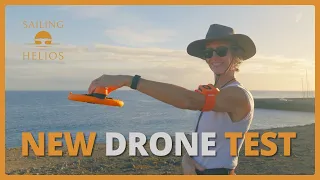
Lanzarote: First HoverAir Aqua Drone Test | Marina Puerto Calero & Volcanic Island
Richard and Jude test the waterproof HoverAir Aqua flying camera along Lanzarote's volcanic shoreline before exploring the island's lava fields by road.
Avoiding Orcas While Exiting the Med | 4-Day Passage from Gibraltar to Lanzarote – S04E32
Richard and Jude depart Gibraltar aboard Helios for a 600-nautical-mile ocean passage to Lanzarote, dodging shipping lanes and orcas before navigating rolling Atlantic seas.
We Sailed to Gibraltar and Climbed Inside the Rock’s Wartime Tunnels – S04E31
Richard and Jude sail their Jeanneau Sun Odessey 410 into Gibraltar, replacing a flat starter battery, docking at Queensway Marina, and touring the Great Siege and World War II tunnels before crossing to Morocco.
Exploring the Streets of Granada – Sailing Helios S04E30
Sailing Helios crew Richard and Judith take a break from their Jeanneau Sun Odyssey 410 in Motril to explore the historic inland city of Granada, wandering the cathedral, Little Morocco, Sacromonte cave dwellings, and gold-adorned churches.
Stepping Back in Time on Richard’s 60th Birthday – Exploring Salobreña – Sailing Helios S04E29
It’s Richard’s 60th birthday and we’re spending a few days at Motril Marina on Spain’s Costa Tropical. We borrow bikes from the marina and ride through the countryside to the historic hill town of Salobreña. Built on the slopes of a rocky promontory, Salobreña’s old town rises above sugar-cane fiel...