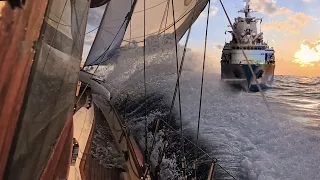
Why we fly halfway around the world for the Annapolis boat show | Ep180
Steve and Judy of Sailing Fair Isle arrive in Annapolis, stepping aboard Heidi and Franny’s boat where they establish their base for the annual Annapolis Boat Show. While daytime temperatures initially trigger the host vessel’s air conditioning, sudden autumn weather swings quickly plunge the harbor into near-freezing chill over their four to five days in town.
The Annapolis gathering remains fully active despite other industry events scaling back, giving the crew a packed schedule across the crowded docks and exhibition tents. Between testing equipment for their voyaging program and catching up with fellow sailors, they set out to evaluate vessels, hardware innovations, and practical solutions before preparing their next passages.
Preview Day Inspections and Pilothouse Design
On preview day, the docks offer an unhurried look at final preparations and quiet reunions between boat owners before public crowds enter. Vessels from the United States, South Africa, and Europe line the marina basins. While passing a sleek Swan 51, Steve observes modern synthetic teak decking, remarking that modern composite decks continue to show noticeable aesthetic refinement.
A Brockmann 50 pilothouse motor-sailer quickly catches the crew’s attention. Combining the profile of a motor cruiser with an active sailing rig, the vessel features a dedicated stern dinghy platform and a spacious aft cockpit beneath a protective bimini. The standout feature remains the enclosed pilothouse, providing clear visibility all the way around and climate protection suited for cold-weather passages. The interior helm station includes a convertible forward-facing bench seat, allowing the watchkeeper to sit forward in comfort while monitoring navigation instruments.
The owner, Ted, guides Steve through the interior living quarters, which have been adapted for long-term voyaging. Ted opens a cleverly reconfigured storage cupboard, demonstrating how practical joinery maximizes space aboard a liveaboard yacht. Inspecting the conversion, Ted smiles: “That is a good use of space, if I may say.” Steve inspects the wide head and practical guest cabins, gathering layout ideas to adapt aboard Fair Isle before heading north into higher latitudes.
Boat Valuation Databases and Waterfront Meetups
While walking between marina docks, Steve and Judy encounter James Evenson, an author and longtime friend who has developed an analytical boat-buying software platform. James demonstrates how prospective yacht buyers can input any brokerage listing into the system, which automatically generates a detailed 15-page evaluation report.
The platform calculates fair market value, depreciation curves, red flags, and projected equipment upgrade costs. To provide objective evaluations, the system queries the Wayback Machine to evaluate 10 years of historical yacht listings, while crawling owner forums for model-specific mechanical quirks. As a technical example, James explains that Hylas Yachts transitioned from non-tinned copper wiring to tinned wiring in 2002. Consequently, a buyer considering a 2001 Hylas should anticipate potential electrical gremlins that were resolved in the 2002 production run, highlighting how data-driven analysis exposes hidden refit expenses.
Dusk brings the crew to Garvey’s Oyster Bar, where daily patron gatherings gather over pints of Guinness and local seafood. At the bar, cruising friend Bobby introduces Judy to a traditional regional treat: a freshly shucked Maryland oyster served with cocktail sauce and topped with a splash of vodka. Judy samples the oyster shooter, commenting with a laugh: “That’s actually really rather nice.” Then attendee May August arrives, contributing to the festive social atmosphere of the Annapolis waterfront.
Bicycle Commutes and Chesapeake Schooners
Each morning, Steve and Judy make a 20-minute commute to the docks on loaner Brompton G Line folding bicycles. The bikes provide electric assist that makes light work of the bridge crossing, allowing them to glide past stationary lines of commuter traffic heading toward the harbor.
Arriving at the waterfront under a brisk morning breeze, Steve notes the flags snapping in the wind, signaling ideal sailing conditions on Chesapeake Bay. At the floating docks, they inspect two identical 74-foot schooners built by Scarano Boat Building in New York. Designed specifically for passenger charters on Chesapeake Bay and recognized for their appearance in the comedy film Wedding Crashers, the wooden vessels operate regular sailing excursions. The crew rarely relies on internal combustion, routinely cutting the auxiliary engine before exiting the mooring basin to deliver an authentic sail-powered passage.
Dinghy Innovations and Cruisers University
At the True Kit exhibition stand, Steve joins Fergus to inspect modern catamaran tenders. Aboard Fair Isle, Steve and Judy depend on a True Kit Navigator 250 tender, and Fergus highlights the Navigator 250 and Navigator 300 as foundational inflatable catamarans. Fergus explains that the open-bow landing craft design allows cruisers to step directly onto beaches, floating dinghy docks, or yacht swim platforms without climbing over awkward inflatable tubes.
Fergus also presents the Tactician 350, a specialized tender measuring 3.5 meters (11.6 feet) in overall length. Designed with a long, slender waterline, the hull weighs only 61 pounds. Fergus emphasizes its carrying efficiency: “It is only 61 lb, so incredibly lightweight.” Its narrow profile reduces hydrodynamic drag, allowing cruisers to achieve efficient motoring speeds using low-power portable electric outboards or small petrol motors.
Midday lunch brings Steve and Judy aboard the vessel South Atlantic, whose owners host daily meals for visiting maritime video creators representing 52 YouTube channels. Following lunch, Steve visits Cruisers University, an intensive instructional program offering sailors modular 1-day or 5-day training tracks. Steve speaks with coordinator Patty about the hands-on curriculum, which includes live mechanical teardowns on diesel engines, marine electrical wiring labs, and comprehensive rope splicing workshops. Nearby, Steve Cuttsworth and Greg Cuttsworth of Mantus Anchors lead technical presentations on ground tackle selection and anchoring technique.
Standout Cruising Technology and Marine Gear
A sudden drop in temperature prompts Steve and Judy to retreat into the heated exhibition tents, where they inspect hardware innovations and identify practical items for blue-water voyaging.
Their first highlighted technology is an inline parallel hybrid drive system that mounts directly behind an existing auxiliary diesel engine, such as their Yanmar 110. The system retains the mechanical gearbox connection to the propeller shaft while integrating a parallel motor generator. When motoring under diesel power, the unit acts as a continuous 10 kW generator, charging house battery banks while the vessel moves. When running purely electric, the motor delivers 15 kW (20 horsepower) of propulsion. For higher-displacement vessels, a twin motor assembly doubles output to 20 kW of power generation and 30 kW (40 horsepower) of electric drive.
Connecting the hybrid system to a 20 kWh lithium battery bank allows 2 to 3 hours of quiet electric cruising at moderate power draws between 5 and 6 kW. When under sail, the system supports hydrogeneration: allowing the propeller to freewheel spins the motor generator, producing electrical current to run navigation electronics, refrigeration, and house systems on ocean passages without starting an internal combustion engine. Steve notes that in the Mediterranean, where light breezes frequently cause sails to slat violently in rolling swells, engaging a gentle electric motor assist stabilizes the rig, prevents sail wear, and maintains passage speed.
The second item is the Further Customs Skipper Seat, an ergonomic rigid chair designed to mount onto an inflatable stand-up paddleboard. While standard flat paddleboards frequently induce lower back fatigue after 10 to 20 minutes of paddling, the elevated seat provides upright posture and converts the board into an efficient sit-down canoe or kayak. The paddleboard incorporates quarter-twenty threaded mounting sockets, allowing cruisers to secure GoPro cameras, fishing rod holders, cup holders, and navigation lights. Steve and Judy plan to carry the system aboard Fair Isle to navigate the canals of Venice and explore shallow anchorages around Torcello.
Their third evaluation centers on an engineered shore power connection system designed to eliminate high-resistance failures in dockside wiring. Conventional twist-lock plugs often suffer from loose terminal contact, leading to localized electrical resistance, extreme heat buildup, and fire hazards. The upgraded system provides 27 times the electrical contact surface area between pins and clips compared to standard twist-lock plugs. The asymmetrical connector uses locking side levers rather than a threaded locking ring, automatically securing the connection. Built with zinc-plated brass terminals, fully tinned wiring, and a waterproof IP-rated casing that withstands high-pressure washdown hoses, the plug is constructed from non-combustible V0-rated aerospace plastic that melts rather than ignites under extreme electrical overload. Available in 30 amp and 50 amp configurations, the manufacturer summarizes their safety standard: “Our motto is safe simple and secure.”
Fourth on their list is a dedicated marine trauma first aid pack and ruggedized automated external defibrillator (AED). The emergency medical kit features color-coded pouches organized for rapid access during trauma, eye injuries, burns, sprains, and fractures, stocked with suture materials, over-the-counter medications, and Israeli compression bandages. Demonstrating portable marine AEDs, the medical specialist explains that marine units require superior dust, drop, and water resistance, pointing out an IP55 rating compared to standard IP22 indoor units. Emphasizing the isolation of offshore voyaging, the specialist remarks: “If you tell me what will happen to you, I’ll tell you what you need. Otherwise, you really need everything, because you’re all alone out there.”
Reflecting on long-term equipment reliability, Steve notes that several items featured in previous seasons remain in active service aboard Fair Isle: their Blu3 diving system introduced 2 years ago, their Ewincher electric winch handle, and their custom hinged bunk mattress.
Offshore Passages and Cruising Seamanship
Between visiting exhibition booths, Steve and Judy reconnect with Ryan, a blue-water passage instructor. The sailors last crossed paths in late 2019, when both vessels hauled out alongside each other at a shipyard in Faro, Portugal.
Ryan explains his practical offshore training program, which takes student crews on non-stop ocean voyages rather than repetitive marina maneuvers. In the winter season, his program runs continuous north-to-south passages through the Caribbean from St. Martin to Grenada, instructing students in mooring pickups, anchoring, customs clearance, and inter-island entry procedures. For long-distance voyagers, Ryan conducts full transatlantic crossings from Newport to the Azores and Lisbon.
Focusing strictly on seamanship rather than classroom paper certificates, Ryan explains: “When you come with us the experience is what you’re going to get.” The ocean curriculum includes overnight watchstanding, radar operation, AIS collision avoidance, and hands-on mechanical repairs when gear inevitably fails at sea. Emphasizing the rarity of non-stop blue-water instruction, Ryan observes: “It’s hard to find someone that’s going to take you over the horizon.”
Technical Specifications of Evaluated Equipment
| Equipment | Key Specifications | Marine Cruising Application |
|---|---|---|
| True Kit Tactician 350 | 3.5 m (11.6 ft) length, 61 lb weight | Lightweight catamaran tender for portable petrol and electric outboards |
| Parallel Hybrid Drive | 10 kW generation, 15 kW (20 hp) motor | Yanmar 110 auxiliary motoring, sail hydrogeneration, and light-air boost |
| Upgraded Shore Power | 27 times contact area, 30 amp and 50 amp | V0 non-combustible housing preventing dockside electrical overheating |
| Marine AED Defibrillator | IP55 water and dust ingress rating | Ruggedized medical emergency response against onboard moisture and shock |
| Scarano Schooners | 74 ft length, twin wooden hulls | Commercial passenger day sailing in Chesapeake Bay without engine propulsion |
Unexpected Dental Surgery in Annapolis
Beyond marine hardware and boat inspections, an unexpected medical emergency reshapes the final days of the Annapolis trip. Steve cracks a tooth while walking the docks and contacts Herbie of The Rigging Doctor. Known throughout the cruising community for his rigging tutorials and having just presented Steve with a copy of his comprehensive rigging manual, Herbie also operates an established dental practice in Bolton.
Herbie repairs Steve’s fractured tooth and performs an X-ray evaluation of Judy’s jaw. The radiographic scan reveals a large, deeply impacted wisdom tooth resting directly against the mandibular nerve, which had begun eroding the surrounding jaw bone. Recognizing that leaving the tooth untreated risked a catastrophic jaw fracture from simple chewing, Herbie conducts complex oral surgery to extract the tooth. Relieved following the successful procedure, Judy expresses her deep gratitude: “And you actually yeah, at some point you do need to take yourself a little bit more seriously and I’m just overwhelmingly grateful to Herbie. Thank you so much.”
With dental emergencies resolved and dockside evaluations complete, Steve reflects on the four busy days in Maryland, remarking: “The boat show lasts 4 days, and that’s never long enough.” Having completed their equipment research and reunions, the crew prepares to depart Annapolis, planning to resume their Mediterranean voyaging program in Montenegro.
Frequently Asked Questions
The Annapolis Boat Show runs for 4 days and focuses exclusively on sailboats, with powerboats holding a separate show the preceding week. The event hosts global yacht builders from the United States, Europe, and South Africa, alongside extensive exhibitor tents showcasing marine accessories and electronics.
The True Kit Tactician 350 measures 3.5 meters (11.6 feet) in length and weighs only 61 pounds. Its long, narrow catamaran hull profile offers high paddling and motoring efficiency when paired with small electric or portable petrol outboards.
The parallel hybrid system mounts an electric motor generator between an existing diesel engine (such as a Yanmar 110) and the transmission gearbox. The unit generates 10 kW of continuous electrical power while motoring or regenerates power under sail, while delivering 15 kW (20 horsepower) of electric propulsion from a battery bank.
Upgraded marine shore power plugs provide 27 times the electrical contact surface area between pins and clips compared to conventional twist-lock connectors. They incorporate asymmetrical alignment, side-locking levers, an IP-rated waterproof casing, and flame-resistant V0 aerospace plastics to prevent overheating.
Ryan runs hands-on offshore passage training along a continuous Caribbean route from St. Martin to Grenada, as well as transatlantic crossings from Newport through the Azores to Lisbon, providing cruisers with live experience in night watches, radar, AIS, and offshore seamanship.
Book a trip where this was filmed — near New York City

Support Sailing Fair Isle
At WeBoating.com, we profoundly acknowledge the unwavering dedication that Sailing Fair Isle invests in crafting each and every video or voyage. Their passion for delivering exceptional ocean content shines through every frame, and it's a labor of love that deserves your attention.
We invite you to watch their captivating videos here and actively engage with their content, including their social media links above. Liking, commenting, and sharing their work goes a long way in fueling their creative fire.
We're also inviting you to explore the gear, sponsorships, and boat partnerships highlighted in the "Why we fly halfway around the world for the Annapolis boat show | Ep180" video description, or directly on YouTube. By engaging with these offerings or purchasing services and items, you directly support Sailing Fair Isle, their collaborators, and the brands they're associated with.
To ensure you never miss an offshore update, consider visiting their official YouTube Channel to subscribe, like, and join their community directly.
If you have any feedback, corrections, or additional information about Sailing Fair Isle or their videos, please use the comment form below to share your thoughts with us.
Thank you for being a part of our community and supporting the creators we cherish. Your time and support truly matter!
Annapolis boat show 2026 has managed to be just as hectic as always, there's always too much to do and see than the 4 days allow.
There's loads of space for boats on the water here and they are just sailboats, the motor boats have their own show the week before. So all the major brands were here and there are masses of tents full of every type of boat accessory.
We pick our 5 best things as always and try to give you a real sense of what it's like to come to this boat show, drink Guinness & eat oysters!
Do get yourself a copy of Herby's manual on rigging, it covers everything:
https://www.amazon.com/dp/1493086006?lv=shuf&channelId=500&plpRedirect=mhFallback
You will see we had a couple of Brompton G-line bikes on loan for the show. We are trying to find the best bike to have aboard and we wanted to compare these with the excellent T-line bikes we have on board. There will be a full review video soon. @bromptonbicycle @bromptonusa2419
We will be showing the 'Further' SUP in upcoming episodes, it's a really well made board ( our last one blew up about 10 minutes after I had been using it film several thousand stinging jellyfish in Majorca! ) We are really looking forward to trying it out in kayak mode with the chair.
Here's a link to their site: www.furthercustoms.com
PLEASE DO SUBSCRIBE - IT COSTS YOU NOTHING AND HELPS US OUT WITH THE YOUTUBE ALGORITHM
PATREON:
We couldn't make these videos without the support of you, our patrons. You are our first line of feedback, our team, our support and our friends. We are really grateful and it means we can keep the videos coming! If you would like to join us you get to see (and comment on, which really helps us) the current videos with no ads at all before they get released to the public. There are also lots of extra videos available on Patreon and you can contact us directly on board. Ask us anything! We have regular ZOOM sessions and a WhatsApp group where we talk about boats, passages and life onboard. Join us!
https://www.patreon.com/sailingfairisle
Sailing Fair Isle
Steve and Judy: The veteran BBC filmmakers navigating the globe aboard their Hans Christian 48, Fair Isle, blending broadcast-quality storytelling with blue-water grit.
Channel Information:
Social Media Links:
Why we fly halfway around the world for the Annapolis boat show | Ep180 Location
- Annapolis, Maryland (38.9764364,-76.489642)
Latest Episodes from Sailing Fair Isle
Explore the most recent voyages. Subscribe to the channel to never miss an update!
Hiding from storms behind Croatian islands | Ep182
Steve and Judy cruise Fair Isle along the Croatian coast in November, sheltering behind islands from 40-knot bura gales, exploring empty ancient ports, and preparing for an open-water crossing to Venice.
Custom boat tour from Pacific Shipyards
Step aboard the 24-meter custom motor yacht Nomad of London at Porto Montenegro with Steve and Judy from Sailing Fair Isle, examining its twin John Deere diesels, DMS Magnus rotor stabilizers, bespoke residential galley, and Dutch steel engineering.
We Just Made It: Sailing Into Porto Montenegro
Steve and Judy sail Fair Isle across the southern Adriatic to Porto Montenegro on tight fuel reserves, complete a 9-mile mountain hike to Kotor, and tour the custom yacht Nomad of London.
Which bike for your boat?
Steve and Judith test Brompton folding bikes aboard Fair Isle, comparing lightweight titanium T Lines in Barcelona with rugged electric G Lines at the Annapolis Boat Show to find the ultimate bike for dinghy landings and cruising life.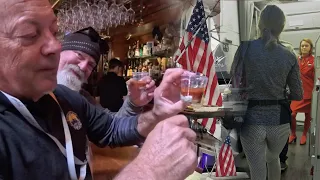
Why we fly halfway around the world for the Annapolis boat show | Ep180
Steve and Judy travel to Annapolis to evaluate cruising sailboats, tenders, hybrid propulsion, and electrical safety systems before facing an unexpected medical visit.