Was it a bad decision
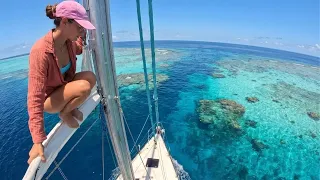
Navigating into the expansive lagoon of Rangiroa in the Tuamotu Archipelago, Lee and Sara Rice maneuvered their Pearson 530, Catalpa, toward an anchorage flanked by dangerous coral bombies. With strong winds blowing across the atoll, the crew aboard Sailing Catalpa carefully selected a spot in 10 meters of water, setting their ground tackle and floating the chain with dedicated floats to prevent it from fouling on coral heads rising up to a meter below the surface.
With the vessel secured, securing fresh provisions became an immediate priority before undertaking their next offshore passage. Walking inland near the local airport and bank ATM in Avarua, Sara gathered an initial basket of four tomatoes, a zucchini, cream for making ice cream, baguettes, and lettuce, totaling $36 US. The modest haul highlighted the real logistical hurdles of remote island grocery shopping in French Polynesia.
Stormy Dinghy Runs and Lagoon Provisioning
The following morning brought the arrival of a cargo supply ship unloading fresh inventory at the dock. Hoping to find newly stocked supermarket shelves, Lee and Sara planned a four-nautical-mile dinghy transit down the island to visit a larger store. Before setting out across the lagoon, they took the opportunity to snorkel a reef opening, only to beat a hasty retreat when a large moray eel lunged toward them from a coral cavern.
Setting out in the tender under deteriorating conditions, the crew soon encountered a heavy tropical squall pushing wind chop across the shallow water. Lee steered the dinghy behind a concrete pylon alongside a private islet to take temporary shelter from the rain. Once the front passed, they reached the commercial dock, secured the painter, and hiked into town, taking a brief pause along the road where Sara remarked, “Sometimes you got to take the time just to stop and smell the flowers.”
At the larger supermarket, they loaded up on fresh produce, including cucumbers, apples, tomatoes, zucchinis, chocolate, and a large cut of beef. The register total came to $90 US, with the meat accounting for $50 and the fresh produce taking up the remaining $40. After hauling fuel cans back aboard the dinghy, they punched through choppy water back to the anchorage to ready the yacht for sea.
Standing Waves at Tiputa Pass
Before leaving Rangiroa, the crew traveled to the edge of Tiputa Pass to evaluate the oceanic current ripping through the narrow cut. Strong outgoing water collided violently with incoming ocean swells, creating towering standing waves where wild dolphins surfed the breaks. Watching the ferocious rush of water reinforced the critical necessity of timing atoll transits around slack water, especially when strong winds oppose the tidal outflow.
With an incoming weather window expected to flatten out the surf within days, Lee and Sara faced a dilemma: wait for ideal tidal conditions or leave immediately to catch the remaining swell at Tikehau. Preparing the deck for an energetic offshore hop, Lee noted the brisk breeze buffeting the lagoon: “All right guys, there’s enough wind to blow the bloody hair off a hippie out here today.”
Running for Tikehau in Twenty-Knot Winds
Weighing anchor in sustained winds exceeding 20 knots, Catalpa powered into the open Pacific. The yacht quickly accelerated from 8 knots up to 10 knots under sail, slicing through a two-meter swell. A trolling line trailing astern hooked a fish—suspected to be a young mahi—before the line pulled free and the catch escaped. While Sara monitored the autopilot, Lee focused intently on calculating their estimated time of arrival at Tikehau, knowing they were cutting it dangerously close to the end of the outgoing tidal cycle.
Arriving off the pass at Tikehau, the outgoing tidal current was surging seaward at up to 12 knots. Facing an intimidating wall of standing chop on an ebbing tide, Lee and Sara weighed the severe risks of pushing through against the current or being forced to turn around. When assessing the raging narrows, Lee quipped, “That’s only 12 knots, darling.” With daughter Bella standing by with binoculars in the cockpit, the crew decided to attempt the transit, trusting the displacement power of the vessel to punch through the counter-current.
Gori Propeller and Passage Performance
Underway during the crossing, Lee evaluated the yacht’s propulsion efficiency, highlighting how their folding propeller had transformed vessel handling in heavy water. Having previously cycled through different propulsion setups, Lee shared a detailed assessment of their drivetrain upgrade: “We had the max prop originally. We went to back to our fixed prop which was just no good. And then now we’ve got the Gori with overdrive and it’s just working a dream.”
Where the previous fixed propeller had struggled to keep the boat moving around 7 knots under power, the Gori unit with overdrive enabled Catalpa to settle into an effortless cruising pace around 8.5 knots while drastically curbing diesel fuel consumption. The enhanced speed and thrust proved vital for making timely headway across open stretches and fighting intense opposing currents in the Tuamotu atolls.
| Passage & Technical Parameter | Recorded Metric / Detail |
|---|---|
| Rangiroa Anchorage Depth | 10 meters (chain floated over coral bombies) |
| Initial Grocery Run Cost | $36 US (produce, cream, and baguettes) |
| Lagoon Dinghy Provisioning Distance | 4 nautical miles to supermarket dock |
| Secondary Supermarket Bill | $90 US ($50 meat, $40 fresh produce) |
| Passage Wind Conditions | Sustained winds over 20 knots |
| Underway Sailing Speed | 8 to 10 knots in 2-meter swells |
| Tikehau Tidal Pass Current | Up to 12 knots running out |
| Gori Propeller Cruising Speed | 8.5 knots (overdrive diesel fuel savings) |
| Fixed Propeller Speed Benchmark | Struggling around 7 knots |
Frequently Asked Questions
The crew dropped anchor in 10 meters of water and floated their anchor chain using surface floats to clear coral bombies that rose to within 1 meter of the surface.
The family spent $36 US on their first trip for basic fresh produce and baguettes, and later spent $90 US on a second haul comprising $50 for meat and $40 for fresh vegetables and fruit.
While motoring 4 nautical miles across the lagoon to reach a larger grocery store, a sudden tropical squall hit, forcing them to shelter behind a pylon on a private islet until the heavy rain and wind eased.
The pass at Tikehau can run with an outgoing current of up to 12 knots, creating dangerous standing waves when ocean swell opposes the outgoing water.
The Gori propeller with overdrive allowed Catalpa to cruise at around 8.5 knots with reduced diesel consumption, outperforming the previous fixed prop which struggled around 7 knots.
Book a trip where this was filmed — near Tahiti

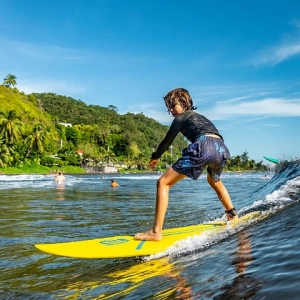
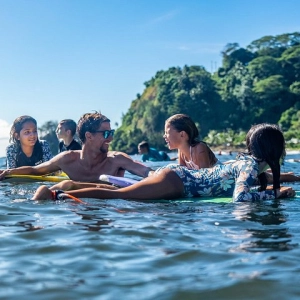
Group Guided Surfing Lesson in Tahiti
Sold by Ecole de surf TURA'I MATAARE (poussé par la houle)
Support Sailing Catalpa
At WeBoating.com, we profoundly acknowledge the unwavering dedication that Sailing Catalpa invests in crafting each and every video or voyage. Their passion for delivering exceptional ocean content shines through every frame, and it's a labor of love that deserves your attention.
We invite you to watch their captivating videos here and actively engage with their content, including their social media links above. Liking, commenting, and sharing their work goes a long way in fueling their creative fire.
We're also inviting you to explore the gear, sponsorships, and boat partnerships highlighted in the "Was it a bad decision" video description, or directly on YouTube. By engaging with these offerings or purchasing services and items, you directly support Sailing Catalpa, their collaborators, and the brands they're associated with.
To ensure you never miss an offshore update, consider visiting their official YouTube Channel to subscribe, like, and join their community directly.
If you have any feedback, corrections, or additional information about Sailing Catalpa or their videos, please use the comment form below to share your thoughts with us.
Thank you for being a part of our community and supporting the creators we cherish. Your time and support truly matter!
Join us aboard Sailing Catalpa as we continue our voyage through the remote Tuamotu Archipelago in French Polynesia! In this episode, we navigate tricky passes, anchor among coral bombies, provision on an isolated atoll, and attempt to run a notoriously fast 12-knot tidal pass to chase the surf.
We arrive at Rangiroa, the largest atoll in the Tuamotus, welcomed by wild dolphins at the pass. After finding a safe spot to drop anchor and float our chain over coral heads, we set out on a mission to hunt for fresh provisions and fuel. Finding groceries while living on a sailboat isn't always straightforward—watch along as we explore the local stores, dodge squalls, and break down what provisioning really costs in the middle of the Pacific Ocean.
Then, the adventure steps up a notch. We pull anchor in gusty winds and race towards Tikehau to catch a dying swell. Navigating atoll passes on an outgoing current is generally considered a massive gamble—with water rushing out at up to 12 knots, can Catalpa power through?
If you love sailboat travel, blue water cruising, off-grid boat life, and tropical adventures, make sure to like, subscribe, and hit the bell icon to follow the journey!
02:00 - Anchoring Among Dangerous Coral Bombies
03:07 - Grocery Shopping & Provisioning on a Remote Atoll
05:45 - Snorkeling & an Unexpected Moray Eel Encounter
07:58 - Testing Our Waterproof HoverAir Drone
Get ready for the HOVERAir Halloween Sale, running from October 23 to November 2! Mark your calendar and get ready to save up to 15% off. Plus, use my link https://hoverair.sjv.io/GbBx1E to get a FREE wetsuit! Just add it to your cart and use code AQK8M4ZX731 at checkout. Limited time only!
09:11 - Dodging Storms on the Hunt for Food & Fuel
12:13 - The Real Cost of Groceries in French Polynesia
13:25 - Tiputa Pass & Dolphins Surfing the Waves
14:48 - Setting Sail for Tikehau in 20+ Knot Winds
17:35 - Trolling for Fish & Offshore Sailing Performance
20:00 - Attempting the 12-Knot Tidal Pass at Tikehau
21:07 - Gori Prop Performance & Boat Speed Review
23:45 - Finding Surf Waves in the Final Atoll
Subscribe @SailingCatalpa
Become a Patron
https://www.patreon.com/sailingcatalpa
To DONATE just because your a bloody LEGEND
https://www.paypal.me/sailingcatalpa
For more on our family and travels you can check out our website
http://www.sailingcatalpa.com
Follow us on Facebook
https://www.facebook.com/sailingcatalpa
Follow us on Instagram
https://www.instagram.com/sailingcatalpa
https://www.instagram.com/belllarice
https://www.instagram.com/artoftaj
Sailing Catalpa
We are a family of 4 that packed up our life on the Gold Coast in Australia, Sold everything to live our dream and sail the world in 2016. We may not have much in the way of the things but we are living now sailing full time in South East Asia. Follow us as we document our adventures good times and bad and what it’s like for a family living on a sailing boat. We hope that our weekly videos make you smile and inspire you to live your wildest dreams. Facebook https://www.facebook.com/sailingcatalpa/ Instagram https://www.instagram.com/sailingcatalpa/ Website https://www.sailingcatalpa.com Our Channel is supported by our Patrons you can Check out our Patreon Page to see more and become a patron. https://www.patreon.com/sailingcatalpa The Catalpa Crew
Channel Information:
Social Media Links:
Was it a bad decision Location
- Tiputa Pass, Rangiroa, French Polynesia (-14.9715,-147.6225)
- Tikehau Atoll, French Polynesia (-15.007,-148.278)
Latest Episodes from Sailing Catalpa
Explore the most recent voyages. Subscribe to the channel to never miss an update!

what life looks like sailing to a remote atoll
Sailing Catalpa explores Tikehau atoll in French Polynesia, testing scuba gear, visiting the off-grid Île d'Eden organic farm, and setting sail across 180 nautical miles to Tahiti.
Was it a bad decision
Aboard Catalpa in the Tuamotus, Lee and Sara Rice navigate coral bombies in Rangiroa, brave squalls on a lagoon provisioning run, and race toward Tikehau to challenge a 12-knot tidal pass.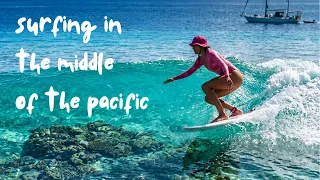
Sailing to the most remote waves in the tuamotus
Sailing Catalpa navigates a narrow Tuamotu atoll pass to hunt remote reef waves, enduring 40-knot winds, long dinghy transits, reef cuts, and low fuel.
the most sharks we have ever seen
Lee and Sara Rice of Sailing Catalpa navigate their Pearson 530 into Fakarava Atoll, free-diving the South Pass's Wall of Sharks and testing off-grid solar autonomy.
the clearest water we have ever seen…The Tuamotus
This episode we are in a atoll sitting out some strong winds and big swell we hear whales and swim in the clearest water we may have ever seen. Cheers everyone for watching!! Subscribe @SailingCatalpa Become a Patron To DONATE just because your a bloody LEGEND For more on our family and tra...