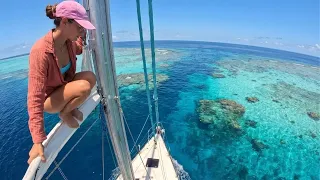
the most sharks we have ever seen
When Lee and Sara Rice set sail from Australia’s Gold Coast in 2016 aboard Sailing Catalpa, they were navigating a $15,000 ferro-cement monohull with two toddlers and no offshore experience. A decade and thousands of nautical miles later, that bold departure has evolved into one of cruising’s most respected family odysseys. Now voyaging across French Polynesia aboard Catalpa II, a heavily built 1981 Pearson 530 center-cockpit ketch, the Australian couple—alongside teenage children Taj and Bella—have reached the remote atolls of the Tuamotu Archipelago. Navigating into Fakarava’s expansive turquoise lagoon, the crew confronted one of the most biodiverse marine habitats on earth.
Fakarava represents a pivotal milestone in the Rice family’s trans-Pacific expedition aboard Catalpa II. Having completed extensive structural refits in Mexico and navigated Central American coastal corridors, the vessel was engineered specifically for off-grid self-reliance in remote tropical archipelagos. In the southern sector of Fakarava Atoll, adjacent to the historic settlement of Tetamanu, lies Tumakohua Pass—celebrated globally as the ‘Wall of Sharks.’ Here, tidal hydrology creates a dynamic underwater amphitheater where hundreds of apex predators hover stationary within the incoming current, offering Taj and Bella an extraordinary natural classroom in South Pacific coral reef ecology.
Entering Fakarava Atoll: Tuamotu Navigation and Geological Majesty
Guiding the Pearson 530 Catalpa II through the reef passes of Fakarava in the Tuamotu Archipelago, Lee and Sara Rice of Sailing Catalpa entered a pristine geological formation shaped by volcanic subsidence. Spanning 60 kilometers by 21 kilometers, Fakarava is the second largest atoll in the Tuamotus, designated as a UNESCO Biosphere Reserve. The sunken volcanic ring encloses a shimmering lagoon connected to the open South Pacific by two primary cuts: Garuae Pass in the north and Tumakohua Pass in the south.
Navigating an atoll requires careful calculations from offshore mariners. Enormous oceanic swells and rising tides force millions of cubic meters of seawater into the lagoon, creating furious tidal currents of six to eight knots through the narrow passes. Arriving off Tetamanu at the southern pass, the Rice family timed their entrance near slack water to avoid standing waves and overfalls, dropping anchor safely in the protected lee of the southern motu.
The Wall of Sharks: Free-Diving Tumakohua Pass
Dropping anchor in the lee of Tetamanu at the southern boundary of Fakarava in the Tuamotus, Lee and Sara Rice of Sailing Catalpa prepared their Pearson 530 Catalpa II as an expedition basecamp for free-diving Tumakohua Pass. Their initial excursion into the pass proved frustrating; lingering head congestion prevented equalizing during descents, fogged mask lenses obscured the underwater landscape, and shifting currents created localized cloudiness. Rather than chartering scuba gear from dive operators ashore, the Rice family waited patiently aboard the vessel until sinus pressure cleared and the incoming tidal window offered optimal water clarity.
The subsequent morning brought pristine conditions. Diving into the turquoise pass on an incoming tide, the family drifted silently over the outer canyon rim. At depths between 18 and 20 meters (59 to 66 feet), the famed ‘Wall of Sharks’ materialized out of the sapphire blue. Hundreds of grey reef sharks (Carcharhinus amblyrhynchos), accompanied by whitetip reef sharks (Triaenodon obesus) and sleek blacktips, hovered motionless in the incoming stream, utilizing passive ram-ventilation to breathe effortlessly. Drifting onward into shallower coral gardens, the family enjoyed intimate encounters without scuba bubble noise, reaffirming their decision to explore on breath-hold.
Reef Break Reconnaissance and Remote Coral Shorelines
While staged inside Fakarava in the Tuamotu Archipelago aboard their Pearson 530 Catalpa II, Lee and Sara Rice of Sailing Catalpa monitored regional swell forecasts in search of clean Pacific surf along the atoll’s barrier reef. Friends aboard the cruising yacht Sailing with Six had previously reported a workable wave peeling over the shallow outer reef shelf near the South Pass. Anticipating a forecast window on Thursday with negligible wind and favorable angles, Lee and Taj loaded their surfboards into the dinghy to investigate the outer reef edge.
Paddling out, the duo discovered that ocean swell was marginally too small to wrap cleanly over shallow coral plateaus. Waves broke directly onto razor-sharp coral bombies in only a few feet of water, with several reef sharks circling below. Lee and Taj prudently chose to forgo the sketchy surf and redirected their day toward exploring uninhabited motus along the lagoon rim. Taj cracked fresh coconuts against coral rocks to share sweet water and meat, complemented by Lineage Provisions snack bars. As afternoon squalls cleared, a radiant double rainbow arched overhead, dedicated to the heavenly birthday of Sara’s late grandfather, Poppy.
A River of Apex Predators: The 300-Shark South Pass Drift
Returning to Tumakohua Pass on an optimal incoming tide, Lee and Sara Rice of Sailing Catalpa anchored their tender to immerse the crew of the Pearson 530 Catalpa II directly into Fakarava’s legendary marine spectacle in the Tuamotu Archipelago. What followed was what Lee hailed as a ‘bloody river of a dive’—a continuous drift snorkel through one of the densest biomass concentrations in the South Pacific. Shifting across the channel away from surge into gin-clear water, the family drifted alongside an estimated 300 reef sharks and over 10,000 schooling fish, including dense clouds of bigeye trevally, snappers, and surgeonfish.
In the shallows directly fronting the Tetamanu dive station, curious grey reef and whitetip sharks cruised within arm’s reach along the sandy bottom, unfazed by human presence. Clad in protective neoprene wetsuits to stave off the chill of prolonged drift sessions, Taj and Bella observed the predators’ calm, non-aggressive demeanor. This immersion demonstrated the role of sharks as essential regulators of coral health, validating a decade of nomadic ocean homeschooling and instilling a profound respect for marine ecology.
Lagoon Transit to Rotoava: Superyacht Encounters and Atoll Logistics
Departing the southern anchorage of Fakarava in the Tuamotu Archipelago, Lee and Sara Rice navigated their Pearson 530 Catalpa II northward across 30 nautical miles of open lagoon water, maneuvering around the intricate coral bombies that define this Sailing Catalpa expedition. Transiting an atoll lagoon requires constant vigilance; coral pinnacles rise abruptly from depths of 30 meters to just inches beneath the surface. Clear overhead sunlight and dedicated bow watches were mandatory to identify coral heads before a keel strike occurred.
During their northward passage, the crew intercepted a striking AIS target: a 171-foot luxury superyacht carrying a 33-foot beam and a 15-foot draft, underscoring the sophisticated navigation required to guide deep-draft vessels through Tuamotu coral heads. Reaching Rotoava village on Saturday, the family stocked up before visiting mega-yacht crews cleared the shelves. With the Tahiti cargo ship arriving on Wednesdays, the second supermarket closer to their anchorage was well-stocked, enabling the crew to secure fresh produce and coveted cartons of eggs, a scarce luxury across remote atolls.
Atoll Exploration and Pearson 530 Off-Grid Power Forensics
Going ashore at Rotoava Village on Fakarava in the Tuamotu Archipelago, Lee and Sara Rice of Sailing Catalpa stepped away from the helm of their Pearson 530 Catalpa II to explore the narrow atoll rim by bicycle. Pedaling north on a quiet Sunday, the family scouted alternative anchorages, noting how the 60-kilometer internal lagoon fetch whips up steep chop, making northern anchorages uncomfortable when trade winds freshen. Along the road, a friendly island dog bonded with Bella, trotting loyally alongside until they returned to their tender.
Back aboard Catalpa II, Lee audited the yacht’s off-grid solar infrastructure. Engineered during their Mexican refit, the custom hardtop houses 2,400 watts of Shadow Flux and Renogy solar panels with engineered airflow ventilation. Under clear tropical skies, the array generated 2,300 watts—an astonishing 96% real-world efficiency. By 10:00 AM, the lithium battery bank was fully charged, powering electric water heaters and auxiliary banks while maintaining 900 watts even under clouds. With provisions, fuel, and pails secured on deck, Lee and Sara weighed anchor to exit through Garuae Pass, riding trade winds toward their next Tuamotu destination.
| Expedition Dimension | Logistical & Technical Specifications |
|---|---|
| Vessel & Rig | Catalpa II / 1981 Pearson 530 Center-Cockpit Ketch (Bill Shaw Design) |
| Primary Geographic Focus | Fakarava Atoll, Tuamotu Archipelago, French Polynesia (UNESCO Biosphere Reserve) |
| Pass Waypoints | Tumakohua / South Pass (-16.5050, -145.5350) & Garuae / North Pass (-16.0594, -145.6217) |
| Pass Tidal Currents | Inbound/Outbound flow reaching 6 to 8+ knots; drift diving strictly timed on incoming slack |
| Apex Predator Demographics | 300+ Grey Reef Sharks (C. amblyrhynchos), Whitetip Reef Sharks, Blacktips |
| Marine Pelagic Fauna | 10,000+ Bigeye Trevally, Snappers, Barracuda, and Surgeonfish across coral canyon |
| Free-Diving Operating Depth | 18 to 20 meters (59 to 66 ft) along outer wall; 3 to 8 meters across inner reef shallows |
| Solar Array Capacity | 2,400W Shadow Flux / Renogy hardtop array (2,300W peak output / 96% real-world efficiency) |
| Energy Storage & Usage | High-capacity lithium house bank; 100% full by 10:00 AM powering electric water heating |
| Atoll Provisioning Logistics | Rotoava Village epiceries; Tahiti supply freighter arrives weekly on Wednesdays |
Frequently Asked Questions
Lee and Sara Rice sail Catalpa II, a 1981 Pearson 530 center-cockpit ketch designed by Bill Shaw. They previously cruised for years aboard a 44-foot ferro-cement monohull purchased in Australia for $15,000.
Tumakohua Pass (South Pass) in Fakarava is world-renowned for the ‘Wall of Sharks,’ where up to 300 grey reef sharks, whitetips, and blacktips congregate in the incoming current to feed and aerate their gills.
Navigating Fakarava requires carefully timing pass transits around slack water due to 6 to 8 knot tidal currents, and posting strict bow watches inside the 60-kilometer lagoon to avoid uncharted coral bombies.
After an initial dive hindered by head congestion, the crew found that drift snorkeling on an incoming tide provided crystal-clear 18 to 20 meter visibility without disturbing the sharks with scuba bubbles.
Catalpa II features a 2,400-watt solar array of Shadow Flux and Renogy panels mounted with airflow ventilation on a custom hardtop, generating up to 2,300 watts (96% efficiency) to charge their lithium banks.
Cruisers provision in Rotoava Village in northern Fakarava, timing their shopping around the inter-island supply freighter from Tahiti that arrives every Wednesday to secure fresh produce and eggs.
Surf is possible on outer reef shelves during light-wind windows with adequate ocean swell, but waves break directly over razor-sharp, shallow coral heads in shark-inhabited waters, demanding expert skill.
Support Sailing Catalpa
At WeBoating.com, we profoundly acknowledge the unwavering dedication that Sailing Catalpa invests in crafting each and every video or voyage. Their passion for delivering exceptional ocean content shines through every frame, and it's a labor of love that deserves your attention.
We invite you to watch their captivating videos here and actively engage with their content, including their social media links above. Liking, commenting, and sharing their work goes a long way in fueling their creative fire.
We're also inviting you to explore the gear, sponsorships, and boat partnerships highlighted in the "the most sharks we have ever seen" video description, or directly on YouTube. By engaging with these offerings or purchasing services and items, you directly support Sailing Catalpa, their collaborators, and the brands they're associated with.
To ensure you never miss an offshore update, consider visiting their official YouTube Channel to subscribe, like, and join their community directly.
If you have any feedback, corrections, or additional information about Sailing Catalpa or their videos, please use the comment form below to share your thoughts with us.
Thank you for being a part of our community and supporting the creators we cherish. Your time and support truly matter!
We’ve never experienced anything quite like this! In this episode, we sail to Fakarava in the Tuamotu archipelago—world-famous for its incredible marine life and the legendary “Wall of Sharks.” Join us as we free dive through the crystal-clear waters of the South Pass surrounded by hundreds of sharks, scout for surf along remote coral reefs, explore the atoll by bike, and test out our off-grid solar setup in French Polynesia.
If you love ocean adventures, remote atoll exploration, and living full-time aboard a sailboat, be sure to subscribe to follow our journey across the Pacific!
⏱️ In This Episode:
00:00 – Sailing into Fakarava (Tuamotus, French Polynesia)
01:30 – Free Diving the Famous Wall of Sharks
04:08 – Scouting Remote Reef Surf at the South Pass
06:05 – Beach Combing & Island Life
09:28 – Diving with 300+ Reef Sharks
11:40 – Cruising to Fakarava North & Superyacht Spotting
12:05 – Provisioning & Island Life in the Tuamotus
13:07 – Biking Around Fakarava Atoll
17:39 – Off-Grid Living: 2,400W Solar Panel Efficiency Update
19:20 – Setting Sail for the Next Atoll
To try the protein bars we are snacking on go to https://lineageprovisions.com/CATALPA2 or use the code CATALPA2
🌴 About Sailing Catalpa
Over a decade ago, we bought a $15,000 concrete sailboat with no experience, two young kids, and a dream to explore the world. Two boats and thousands of nautical miles later, we’re still out here living our dream off-grid on the water.
Follow Along & Support Our Journey:
🔔 Subscribe to Sailing Catalpa: https://www.youtube.com/@SailingCatalpa
⛵️ Support our adventures on Patreon https://www.patreon.com/sailingcatalpa
📸 Follow daily updates on our social channels:
https://www.instagram.com/sailingcatalpa
https://www.instagram.com/belllarice
https://www.instagram.com/artoftaj
Sailing Catalpa
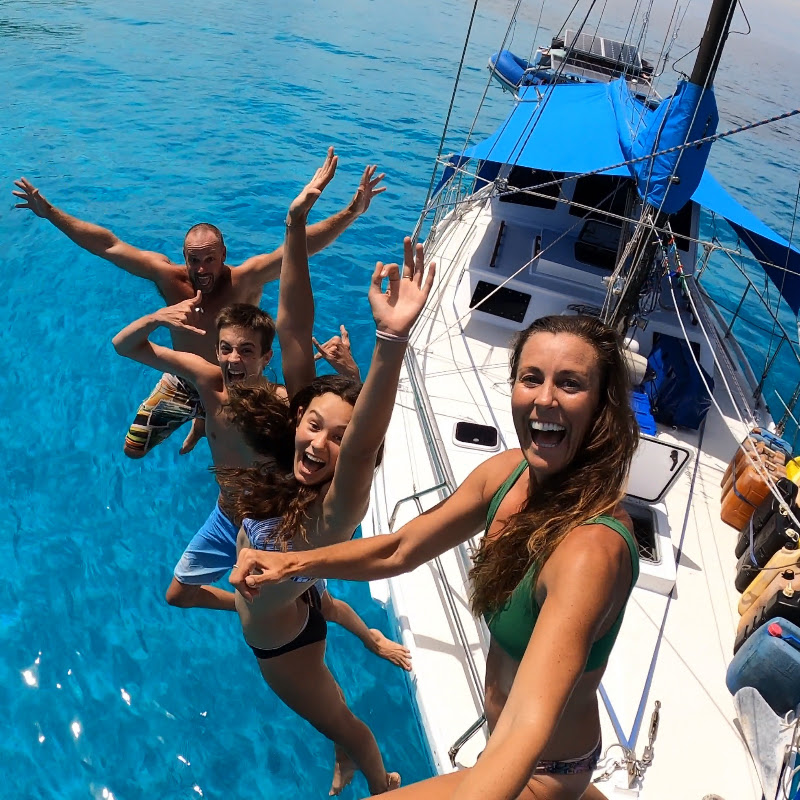
We are a family of 4 that packed up our life on the Gold Coast in Australia, Sold everything to live our dream and sail the world in 2016. We may not have much in the way of the things but we are living now sailing full time in South East Asia. Follow us as we document our adventures good times and bad and what it’s like for a family living on a sailing boat. We hope that our weekly videos make you smile and inspire you to live your wildest dreams. Facebook https://www.facebook.com/sailingcatalpa/ Instagram https://www.instagram.com/sailingcatalpa/ Website https://www.sailingcatalpa.com Our Channel is supported by our Patrons you can Check out our Patreon Page to see more and become a patron. https://www.patreon.com/sailingcatalpa The Catalpa Crew
Channel Information:
Social Media Links:
the most sharks we have ever seen Location
- South Pass (Tetamanu / Tumakohua Pass), Fakarava Atoll, French Polynesia (-16.505,-145.535)
- Rotoava Village & Northern Anchorage, Fakarava, French Polynesia (-16.0594,-145.6217)
Latest Episodes from Sailing Catalpa
Explore the most recent voyages. Subscribe to the channel to never miss an update!
what life looks like sailing to a remote atoll
This week we continue sailing in the Tuamotu Archipelago of French Polynesia, dropping anchor in the peaceful atoll of Tikehau. From crystal-clear lagoon waters and secluded motus to celebrating our 22nd wedding anniversary off-grid, this is what living and sailing full-time on a boat really looks l...
Was it a bad decision
Join us aboard Sailing Catalpa as we continue our voyage through the remote Tuamotu Archipelago in French Polynesia! In this episode, we navigate tricky passes, anchor among coral bombies, provision on an isolated atoll, and attempt to run a notoriously fast 12-knot tidal pass to chase the surf. We...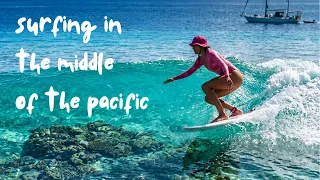
Sailing to the most remote waves in the tuamotus
Surfing remote atolls looks like paradise from the outside—but the reality of hunting waves in the Tuamotus is wild, unpredictable, and rarely easy. After navigating a narrow, churning pass into a remote atoll in French Polynesia, we found ourselves sitting out howling 40-knot winds and heavy 3.5m ...
the most sharks we have ever seen
Lee and Sara Rice of Sailing Catalpa navigate their Pearson 530 into Fakarava Atoll, free-diving the South Pass's Wall of Sharks and testing off-grid solar autonomy.
the clearest water we have ever seen…The Tuamotus
This episode we are in a atoll sitting out some strong winds and big swell we hear whales and swim in the clearest water we may have ever seen. Cheers everyone for watching!! Subscribe @SailingCatalpa Become a Patron To DONATE just because your a bloody LEGEND For more on our family and tra...