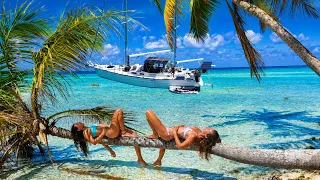
11 days at sea living on a 50 foot Catamaran Ep 298 (raw unfiltered)
Lee and Sarah Rice of Sailing Catalpa joined friends Matt and Tara aboard the 50-foot aluminium catamaran SV Nalukai in Tual, Indonesia, to begin an 11-day passage back to Australia. Departing their final port in Indonesia with eight people on board—including teenagers Ally, Liam, Taj, and Bella—the two families motored into open water with a light following breeze pushing them toward Torres Strait.
With calm conditions prevailing on the first evening, the crew settled into offshore routines. Sarah prepared an evening meal of oven-baked pasta and roasted carrot macaroni in the galley while the twin hulls maintained an easy motion over the water.
Departure from Tual and Arafura Sea Watch Rotations
Setting a direct course across the Arafura Sea toward Thursday Island at the northern tip of Queensland, the crew established a continuous watch schedule. Eight sailors on board allowed for comfortable two-hour shifts around the clock, keeping everyone rested as the boat tracked south and east. Light following breezes between 5 and 8 knots pushed the 50-foot platform along at speeds of 5 to 7 knots under sail and motor.
During his watch shifts, Lee noted the pronounced difference between their heavy monohull and the wide catamaran platform. The motion remained remarkably steady even as night fell over the open water:
“longest passage on a cat I must say it’s bloody easy”
The spacious salon allowed off-watch crew members to relax and watch movies while tracking navigation data on the chartplotter. Lee reflected on the stability of the vessel:
“it just feels like you’re sitting in your Lounge room at home”
Offshore Fishing, Galley Preparation, and Transom Pyrotechnics
Offshore angling provided steady meals and activity throughout the crossing. Early in the passage, Liam hooked into a barracuda estimated at 7 kilos, which the crew discarded as time wasters before turning back to deep-water lures. Soon after, Captain Matt landed a double strike of Spanish mackerel. On the aft deck, Matt demonstrated how to butcher mackerel for offshore preservation, slicing around the outer perimeter down to the bone and excising the dark bloodline and skeletal frame so the flesh would freeze without spoiling.
The galley turned fresh catches into varied meals across the voyage. Matt cooked breakfast skillets with sausage, onion, egg, and herbs, while Lee and Sarah prepared sushi and sashimi plates combining freshly caught mackerel and yellowfin tuna with avocado and homemade mayonnaise.
With Australian customs regulations strictly prohibiting the entry of consumer fireworks, the crew decided to clear their remaining inventory while underway in deep water. Off the catamaran transom, Liam ignited pyrotechnics across the sea surface while Lee stood watch beside the deck fuel containers:
“we are not allowed to bring back in fireworks”
Technical Fixes, Cooling Intakes, and Commercial Drift Nets
Passage making across isolated waters required constant mechanical vigilance. While trimming under sail, an electrical cable was inadvertently drawn into a deck winch block and severed. Lee retrieved the cord, trimmed the damaged copper back to clean wire, and rewired the terminal connection on deck, noting that “nothing’s a problem” when spare parts and tools are on hand.
Cooling flow anomalies surfaced during an early morning shift when water circulation dropped in the engine cooling intake. Suspecting growth or debris fouling the running gear, Matt and Sarah donned swim gear and jumped overboard in glassy seas to inspect the underwater gear. Matt cleared tangled kelp from one hull intake while Sarah freed the other side, though Matt sustained a painful jellyfish tentacle sting during the dive:
“the intake had seaweed blocking it”
Shortly after completing an impromptu haircut on deck for Lee, the watch team spotted a line of commercial drift net buoys and corresponding AIS targets stretching across the horizon in the middle of the Arafura Sea. Rather than attempting a multi-kilometer detour around the perimeter of the unmarked net, Captain Matt shifted the transmissions into neutral and guided the hulls directly over a submerged section:
“we found a part in the net that was actually full of fish”
With the net weighted down by trapped catch, the floats cleared beneath the keels, allowing the catamaran to motor back into clear water.
Australian Waters, Quarantine Regulations, and Thursday Island Fueling
Approximately 50 nautical miles off Thursday Island, SV Nalukai crossed into Australian territorial waters. The crew hoisted the yellow quarantine flag at the spreaders to signal international transit status and discussed long-awaited comforts ashore, from bakery pies and hamburgers to retail hardware runs.
The vessel reached Thursday Island at 1:00 AM, contacting Torres Strait harbor control on VHF to coordinate an anchorage outside the active commercial pilot channel:
“we arrived last night about 1:00 a.m. into Thursday Island”
At daybreak, Australian Border Force directed the catamaran alongside the commercial wharf to take on fuel. Lee observed the exceptional clarity of the diesel dispensed at the dock:
“this isn’t fuel I’ve never seen anything that clear”
Because Thursday Island lacked designated biosecurity clearance facilities for international private vessels during pandemic restrictions, the crew was barred from going ashore. Under quarantine protocols requiring 14 days of isolation counting sea time, the seven days logged from Indonesia were credited toward clearance, leaving an additional seven days of transit along the coast to reach the official port of entry at Cairns, located 500 miles south.
Coastal Headwinds, Crocodile Precautions, and Transit to Stanley Island
Departing Thursday Island and rounding Cape York, SV Nalukai met strong coastal conditions with wind speeds exceeding 30 knots. The catamaran surged to ten and a half knots under canvas before the crew tucked into a sheltered mangrove anchorage. Because saltwater crocodiles inhabited the coastal estuary, crew members remained strictly on board. During downtime, a landing drone grazed Sarah’s leg without causing serious injury.
Underway along the inner shipping channel, the watch maintained close VHF radio communication with a commercial vessel, adjusting heading by 13 and 20 degrees to preserve safe passing distances. At dinner, the galley prepared fried mackerel roe with salt for Lee and Taj to sample. Later, Australian Border Force contacted SV Nalukai on VHF channel 72 to record registration details, crew numbers, and itinerary logs.
South of Cape York, squalls delivered 40-knot headwinds on the nose. With mainsail doused, the crew motored into 15 to 20 knots of chop at three and a half knots, recording speeds of 3.8 knots under power. After spending a night tucked behind Morris Island, the crew hoisted anchor to tackle a 50 to 60 nautical mile passage toward Stanley Island, planning to hold position until a favorable weather window opened for the remaining run to Cairns:
“we stopped at Morris Island last night and we’re just pulled anchor just now and we’re heading for Stanley Island”
| metric | detail | | passage route | Tual, Indonesia to Thursday Island and Queensland coast | | vessel type | 50-foot aluminium cruising catamaran | | total crew | 8 people (two families) | | passage duration | 11 days at sea | | distance to clearance port | 500 miles from Thursday Island to Cairns | | standard watch rotation | 2-hour shifts | | recorded wind conditions | 5 to 8 knots light following air to 40-knot coastal squalls | | recorded vessel speeds | 3.8 knots motoring into head seas to ten and a half knots sailing | | quarantine requirement | 14 days isolation counting sea days | | stage leg distance | 50 to 60 nautical miles from Morris Island to Stanley Island |
Frequently Asked Questions
The Catalpa crew sailed aboard SV Nalukai, a 50-foot aluminium catamaran owned by their friends Matt and Tara, accommodating both families with eight people total on board.
Under border regulations during the pandemic, Thursday Island lacked biosecurity facilities for international private yachts, requiring vessels to complete 14 days of quarantine counting sea time and proceed 500 miles south to Cairns for official clearance.
Rather than sailing kilometers around the drift net, Captain Matt shifted the catamaran engines into neutral and crossed directly over a submerged section weighted down by fish, allowing the floats to pass under the hulls.
Seaweed blocked the water intakes on both hulls, requiring Matt and Sarah to dive overboard to clear the obstruction, during which Matt sustained a jellyfish sting.
The vessel faced 30-plus knot winds and later 40-knot headwinds on the nose, forcing the crew to drop the mainsail and motor into 15 to 20 knots of chop at speeds up to 3.8 knots.
Book a trip where this was filmed — near Cairns & the Tropical North
Support Sailing Catalpa
At WeBoating.com, we profoundly acknowledge the unwavering dedication that Sailing Catalpa invests in crafting each and every video or voyage. Their passion for delivering exceptional ocean content shines through every frame, and it's a labor of love that deserves your attention.
We invite you to watch their captivating videos here and actively engage with their content, including their social media links above. Liking, commenting, and sharing their work goes a long way in fueling their creative fire.
We're also inviting you to explore the gear, sponsorships, and boat partnerships highlighted in the "11 days at sea living on a 50 foot Catamaran Ep 298 (raw unfiltered)" video description, or directly on YouTube. By engaging with these offerings or purchasing services and items, you directly support Sailing Catalpa, their collaborators, and the brands they're associated with.
To ensure you never miss an offshore update, consider visiting their official YouTube Channel to subscribe, like, and join their community directly.
If you have any feedback, corrections, or additional information about Sailing Catalpa or their videos, please use the comment form below to share your thoughts with us.
Thank you for being a part of our community and supporting the creators we cherish. Your time and support truly matter!
Sailing back to Australia on a 50 foot aluminium catamaran. 2 families 1 boat and 11 days at sea. Reminder if your confused our episodes are numbered in the order of timeline not when posted so if you are new here this is footage from 2022 on Catalpa our first sail boat before we bought Catalpa 2.
Cheers everyone for watching!!
Join a live boat life cooking class with Sara https://www.sailingcatalpa.com/live-classes
Subscribe @SailingCatalpa
Become a Patron
https://www.patreon.com/sailingcatalpa
To DONATE just because your a bloody LEGEND
https://www.paypal.me/sailingcatalpa
For more on our family and travels you can check out our website
http://www.sailingcatalpa.com
Follow us on Facebook
https://www.facebook.com/sailingcatalpa
Follow us on Instagram
https://www.instagram.com/sailingcatalpa
https://www.instagram.com/teensonthesea
Sailing Catalpa
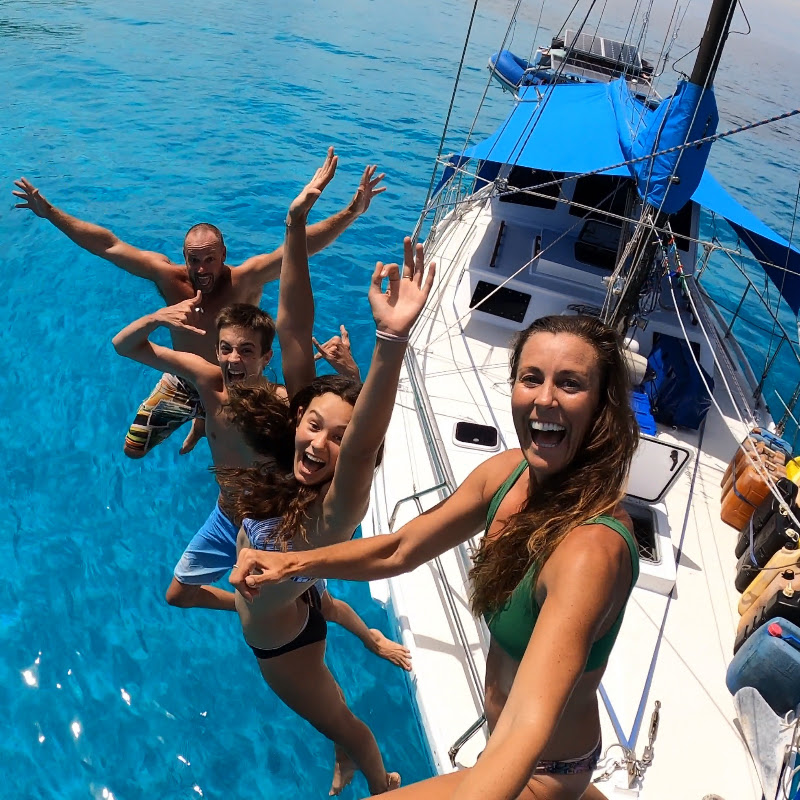
We are a family of 4 that packed up our life on the Gold Coast in Australia, Sold everything to live our dream and sail the world in 2016. We may not have much in the way of the things but we are living now sailing full time in South East Asia. Follow us as we document our adventures good times and bad and what it’s like for a family living on a sailing boat. We hope that our weekly videos make you smile and inspire you to live your wildest dreams. Facebook https://www.facebook.com/sailingcatalpa/ Instagram https://www.instagram.com/sailingcatalpa/ Website https://www.sailingcatalpa.com Our Channel is supported by our Patrons you can Check out our Patreon Page to see more and become a patron. https://www.patreon.com/sailingcatalpa The Catalpa Crew
Channel Information:
Social Media Links:
11 days at sea living on a 50 foot Catamaran Ep 298 (raw unfiltered) Location
- Tual, Maluku, Indonesia (-5.6289,132.7481)
- Arafura Sea Passage (-8.5,137.5)
- Thursday Island Anchorage and Fuel Jetty, Queensland, Australia (-10.5786,142.2189)
- Cape York, Queensland, Australia (-10.6871,142.5316)
- Morris Island Anchorage, Queensland, Australia (-13.4939,143.7256)
- Stanley Island, Flinders Group, Queensland, Australia (-14.1787,144.2549)
Latest Episodes from Sailing Catalpa
Explore the most recent voyages. Subscribe to the channel to never miss an update!
Is it as beautiful as they say
The Rice family anchors in Ha'apiti, tackles heavy reef surf with SV Valor, relocates to Cook's Bay ahead of 30-knot winds, and logs a 35-nautical-mile dinghy circumnavigation around Moorea.
Sailing to Tahiti to surf
Watch full video here Sailing to Tahiti | Surf and new sails
Sailing to Tahiti | Surf and new sails
SV Catalpa II motors into Tahiti after the wind dies, watching heavy surf at Teahupoo, tracking a chain plate floor leak, and rigging a new pink spinnaker before crossing to Moorea.