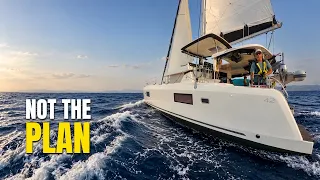
30 Knots, Two Reefs, Then No Wind | Sailing Greece
Cruising full-time across the Mediterranean demands both passage flexibility and continuous vigilance, a reality experienced firsthand by Fredrik, Laura, Lucas, and Noa aboard their Lagoon 42 catamaran Bluefish. Documenting their voyages through Sailing Bluefish, the family has embraced liveaboard life, voyaging across the Cyclades archipelago in the Aegean Sea of Greece. Yet even special milestones—such as celebrating Lucas’s birthday—remain subordinate to the unpredictable nature of Aegean weather.
What began with birthday pancakes in a scenic cove soon turned into an urgent seamanship test. In Greek waters, benign conditions can evaporate quickly when localized pressure gradients collide with high island terrain. When winds climbed to 26 knots and ocean swells rolled straight into the bay, the crew had to choose between staying put or prioritizing vessel safety.
Anchorage Evacuation: Balancing Birthday Traditions and Swell Safety
When dawn arrived across the anchorage, Lucas celebrated his birthday aboard the Lagoon 42 catamaran Bluefish, but the crew of Sailing Bluefish quickly recognized that their temporary refuge within the Cyclades of the Aegean Sea in Greece was turning hazardous. A relentless 25-knot surge drove heavy oceanic rollers directly into the bay, transforming what was intended as a peaceful morning into a violent rolling test of multihull ground tackle.
While Lucas was ashore picking up takeaway birthday pizzas, wind gusts spiked to 26 knots. Heavy swell surged under the catamaran’s bridgedeck, causing severe snatch loads on the anchor chain and bridle. Rather than endure a sleepless, turbulent night anchored on a rocky lee shore, Fredrik and Laura decided to evacuate.
The family collected Lucas, stowed the pizzas and birthday cake down below, and engaged the electric windlass. Hauling anchor amidst breaking swell required careful engine maneuvering to prevent side-loading the bow roller. Moving around the headland to a sheltered lee allowed the crew to finish the birthday in comfort, proving that adapting quickly to changing weather is vital for cruising multihulls.
Morning Departure and Code Zero Tactics Across Changing Winds
By 07:00 the following morning, Lucas stood ready on deck as the Sailing Bluefish family prepared their Lagoon 42 catamaran Bluefish to depart north across the sunlit waters of the Cyclades in the Aegean Sea of Greece. With the barometric pressure fluctuating and the wind clocking south-southwest at 16 to 17 knots, the passage promised dynamic conditions, prompting the crew to initially evaluate their expansive Code Zero gennaker for the downwind leg toward their next island destination.
After morning coffee and pre-departure system checks, Fredrik hoisted the square-top mainsail and bore away on a broad reach. Bluefish accelerated to over seven knots through rolling seas. With apparent wind speed around 14 to 15 knots, the crew initially kept the Code Zero furled, prioritizing stability and control over maximum speed.
When the breeze moderated to 12 knots apparent against 16 knots true, Fredrik unfurled the Code Zero. The lightweight reaching sail generated immediate forward drive, boosting boat speed by nearly two knots to 7 knots. The Lagoon 42 surged effortlessly downwind as the crew tracked true wind speed and rig tension.
High-Wind Catamaran Reefing: Managing Sudden 30-Knot Squalls
Offshore cruising conditions shifted with startling velocity when Lucas and the crew of Sailing Bluefish steered their Lagoon 42 catamaran Bluefish into open channel fairways exposed to the raw weather systems of the Cyclades within the Aegean Sea of Greece. Without warning, true wind speeds spiked from moderate sailing breezes into violent 25-knot gusts, rapidly escalating past 30 knots as squall lines poured down from island massifs.
Cruising catamarans do not heel to spill wind pressure like monohulls; excess aerodynamic force translates directly into massive standing rigging and sail loads. Fredrik acted immediately, furling and dropping the Code Zero to the deck to prevent fabric tear or furler jams. The sail was securely lashed down to eliminate any risk of accidental unfurling in gusts.
Focus then shifted to the mainsail. Easing the main halyard to calibrated marks, the crew tucked in the first reef and tensioned the reefing line. As another gust peaked above 30 knots, they immediately pulled the second reef and rolled a fraction of the self-tacking jib, re-establishing balance and allowing the catamaran to track smoothly through whitecaps.
A key seamanship technique utilized aboard Bluefish is pre-marking halyards and reefing lines with bright visual references. In sudden heavy gusts, these marks allow a watchstander to set halyard tension and reef clew position instantly without guesswork, preventing batten cars from jamming and keeping sails properly shaped.
The Island Wind Shadow Phenomenon: Navigating From 30 Knots to Glassy Dead Calms
Just as quickly as the gale-force squalls had descended upon Lucas and the voyagers of Sailing Bluefish, their Lagoon 42 catamaran Bluefish crossed an invisible meteorological threshold between island channels in the Cyclades of the Aegean Sea in Greece. The fierce 30-knot gusts abruptly vanished, collapsing the surface wind to less than one knot as the multihull slipped beneath the immense leeward wind shadow of a towering island massif.
This contrast exemplifies Mediterranean island navigation. During the passage, the wind performed a full 360-degree rotation—shifting from north to east, south, southwest, west, and back to east. High mountain ridges accelerate winds through channel straits, then create vast dead zones on their sheltered leeward flanks.
With wind dropping below one knot, Fredrik shook out the reef lines, dropped the mainsail, and engaged the twin Yanmar diesels. The water turned to glass under a warm haze of airborne Sahara dust. Mid-passage, the crew was greeted by a pod of wild dolphins riding the catamaran’s bow wave, providing a welcome break during the calm motor passage.
Maritime Encounters: Passing Superyacht Hemisphere and Securing the Anchorage
As localized thermal sea breezes revitalized the sails of the Lagoon 42 catamaran Bluefish, Lucas joined the Sailing Bluefish watch to observe an extraordinary sight emerging through the warm haze of the Cyclades in the Aegean Sea of Greece: the colossal 44-meter sailing catamaran Hemisphere. Designed by VPLP—the identical naval architectural studio responsible for the modern hull geometry of Bluefish—Hemisphere represents the pinnacle of luxury superyacht multihull design, standing over 16 meters in beam and commanding weekly Mediterranean charters exceeding 235,000 euros.
Sailing past the world’s largest sailing catamaran highlighted shared VPLP design lineage: reverse bows, an aft-positioned rig, and high-volume hulls. While Hemisphere caters to ultra-luxury chartering, the production Lagoon 42 proved that the same naval architecture translates into an agile, secure family cruiser.
Approaching Vasiliki, the crew prepared to anchor. Renowned for its reliable afternoon thermal wind known locally as “Eric,” the bay requires sound anchoring technique. Fredrik found a wide patch of clean sand, dropped anchor, set ample chain scope with a nylon snubbing bridle, and tested holding in reverse. With Bluefish secure, the family headed ashore to collect Lucas’s new pink downwind SUP foil board.
Lagoon 42 Technical Telemetry, Reefing Schedules, and Cruising Strategy
The varied meteorological shifts navigated by Lucas and the crew of Sailing Bluefish aboard the Lagoon 42 catamaran Bluefish underscore the necessity of disciplined multihull passage planning across the Cyclades and Aegean Sea in Greece. From high-wind sail reductions to thermal afternoon winds and leeward dead calms, operating a 42-foot cruising catamaran demands methodical adherence to sail carrying limits, rig balance, and ground tackle security.
| Stage / Condition | Wind Telemetry | Sail Plan | Seamanship & Handling Protocol |
|---|---|---|---|
| Morning Departure | 16–17 kts True, 14 kts Apparent | Full Main & Jib | Monitored downwind sea state; kept Code Zero stowed until swell leveled. |
| Reaching Window | 16 kts True, 12 kts Apparent | Code Zero & Full Main | Unfurled Code Zero; gained nearly 2 kts boat speed (6.8–7.0 kts). |
| Squall Onset | 25–30 kts in Gusts | Reef 1 Main, Furl Code Zero | Furled and dropped Code Zero to deck; tucked Reef 1 into mainsail. |
| Peak Heavy Gusts | 30+ kts Sustained | Reef 2 Main & Partial Jib | Tucked Reef 2; rolled partial self-tacking jib to reduce rig loading. |
| Island Wind Shadow | <1 kt (Dead Calm) | Sails Flaked & Dropped | Fired twin Yanmar diesels; motored through dust haze with dolphin pod. |
| Bay Arrival | 15–20 kts Thermal ("Eric") | Bare Poles / Engine Transit | Anchored in clean sand with 5:1 scope and heavy nylon bridle. |
Treating each transition with proactive checklists—reading apparent wind indicators, marking halyard reefing positions, and choosing secure anchor holding—allows cruising families to navigate volatile Mediterranean weather with confidence.
Frequently Asked Questions
The dynamic coastal and open-water passage executed by Lucas and the crew of Sailing Bluefish aboard their Lagoon 42 catamaran Bluefish throughout the Cyclades and Aegean Sea in Greece raises practical questions for bluewater cruising sailors navigating Mediterranean weather systems, multihull reefing, and island topography.
On a Lagoon 42, cruising guidelines recommend tucking the first reef into the mainsail at 18 to 20 knots of true wind. A second reef should follow at 23 to 25 knots. When gusts exceed 28 to 30 knots, crews should reduce to the third reef or drop the mainsail while partially furling the self-tacking jib to protect the rig.
A Code Zero must be furled before true wind reaches 16 to 18 knots. If sudden 30-knot gusts hit, the helm should bear away slightly to ease sail pressure while crew furl the sail firmly on a winch. It should then be dropped and lashed to deck to prevent accidental unfurling.
High Greek island ridges block surface airflow, creating massive leeward wind shadows. While windward slopes accelerate winds through straits via Venturi effects up to 30 knots, entering the island lee collapses surface wind to under 1 knot, requiring immediate motoring.
All crew on deck must wear lifejackets with harnesses clipped to jacklines. Running rigging is routed to the raised helm for centralized control, and clear communication between helm and mast ensures safe reefing during sudden squalls.
Catamarans should anchor in clean sand patches and avoid rocky shelves. Crews should lay out 5:1 scope with a nylon bridle to absorb surge loads. If shifting winds send uncomfortable beam swell over 20 knots, prompt relocation to a sheltered bay is required.
Pre-marking halyards and reefing lines allows watchstanders to drop the sail to exact reef points immediately without guessing or looking aloft in spray. This prevents batten cars from jamming and maintains sail shape under 30-knot loads.
Both the Lagoon 42 and the 44-meter superyacht Hemisphere were designed by VPLP Design. VPLP pioneered aft-stepped rigs, self-tacking jibs, and balanced hull volumes, reducing pitching and improving handling on both family cruisers and mega catamarans.
Support Sailing Bluefish
At WeBoating.com, we profoundly acknowledge the unwavering dedication that Sailing Bluefish invests in crafting each and every video or voyage. Their passion for delivering exceptional ocean content shines through every frame, and it's a labor of love that deserves your attention.
We invite you to watch their captivating videos here and actively engage with their content, including their social media links above. Liking, commenting, and sharing their work goes a long way in fueling their creative fire.
We're also inviting you to explore the gear, sponsorships, and boat partnerships highlighted in the "30 Knots, Two Reefs, Then No Wind | Sailing Greece" video description, or directly on YouTube. By engaging with these offerings or purchasing services and items, you directly support Sailing Bluefish, their collaborators, and the brands they're associated with.
To ensure you never miss an offshore update, consider visiting their official YouTube Channel to subscribe, like, and join their community directly.
If you have any feedback, corrections, or additional information about Sailing Bluefish or their videos, please use the comment form below to share your thoughts with us.
Thank you for being a part of our community and supporting the creators we cherish. Your time and support truly matter!
Lucas wakes up to birthday pancakes aboard Bluefish, our Lagoon 42, but our plans for the day soon change when the anchorage becomes too uncomfortable to stay.
We collect the family — and the pizzas — pull up the anchor and move around to a calmer bay to finish the birthday.
The following morning we set sail north along the west coast of Kefalonia towards Vasiliki. What starts as a good sail quickly becomes a constantly changing day: Code Zero out, Code Zero back in, winds building to around 30 knots, two reefs in, then almost no wind at all.
Along the way we find dolphins and sail past Hemisphere, the 44-metre sailing catamaran designed by VPLP — the same naval architects behind our Lagoon 42.
We finish the day anchored in Vasiliki, where we head ashore to collect our new downwind foil SUP and start another project we’ve been looking forward to.
Full-time family life aboard a Lagoon 42 in Greece — sailing, foiling and everything that happens in between.
If you’re enjoying the journey, subscribe and come along. It means a lot to us.
________________________________________________
00:00 Lucas’s birthday aboard Bluefish
02:12 Plans change at anchor
04:34 Sailing towards Vasiliki
10:05 Wind builds to 30 knots
13:25 Dolphins
14:14 The world’s largest sailing catamaran
15:34 Arriving in Vasiliki
16:00 Picking up our new foil board
_____________________________________________
⛵ Welcome aboard Bluefish
We’re Fredrik, Laura, Lucas and Noa. We sold everything and moved aboard Bluefish, our Lagoon 42 catamaran, because we believe life is meant to be lived before it’s too late.
Now we sail the Mediterranean full-time, sharing life aboard with teenagers — sailing, anchorages, boat systems, fishing, foiling, photography and the places we discover along the way.
🌍 Website: https://www.sailingbluefish.com
📸 Instagram: https://www.instagram.com/sailingbluefish
📘 Facebook: https://www.facebook.com/sailingbluefish
📩 Business & Collaboration: [email protected]
Sailing Bluefish
A family living full-time aboard a Lagoon 42 catamaran, sailing Greece and exploring real boat life in the Mediterranean. We’re Sailing Bluefish — Fredrik from Sweden, Laura from the UK, and our two New Zealand-born boys. After building businesses and raising our family in New Zealand, we chose a different kind of life. Now our home floats. We’ve been sailing and living aboard for the past two years. We’re only now sharing the journey properly on YouTube. This channel follows the real rhythm of full-time catamaran life — Mediterranean sailing, family life aboard, worldschooling, boat systems, maintenance, repairs, anchorages, passages, weather, waiting, and the everyday lessons learned through trial and error. If you’re curious about family liveaboard sailing, Lagoon 42 life, sailing Greece, and what it really takes to live full-time on the water, welcome aboard.
Channel Information:
Social Media Links:
30 Knots, Two Reefs, Then No Wind | Sailing Greece Location
- Paros Island Anchorage & Bay, Cyclades, Greece (37.0833,25.15)
- Naxos Channel Fairway & Strait, Cyclades, Greece (37.1,25.3667)
Latest Episodes from Sailing Bluefish
Explore the most recent voyages. Subscribe to the channel to never miss an update!
We Let the Wind Decide
We don’t always know where we’re going when we leave an anchorage. The wind, the weather and how the day unfolds often decide for us — and the longer we live aboard, the more comfortable we’ve become with that. Sometimes it takes us somewhere new. Sometimes it brings us back to a place we already ...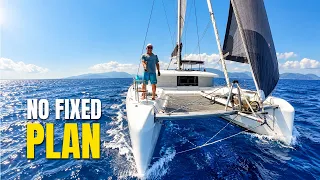
We Stopped Chasing Destinations | Sailing Greece
We leave Ithaca with a southerly breeze and no fixed destination. A few anchorages are possible, but where we end up depends on how the wind and the day unfold. Sailing our Lagoon 42 through Greece’s Ionian Sea, we set the Code Zero when the angle works, adjust as the conditions change, and settle i...
We Thought This Would Be Easier
We finally try the new foil setup — and it’s a lot harder than expected. This week aboard Bluefish we move on to Vathy, refuel, anchor outside town, test the new board and head ashore for dinner. Watch the full episode now on Sailing Bluefish. #SailingBluefish #Lagoon42 #LiveaboardLife #Foiling
Is Living on a Boat Really That Easy? | Lagoon 42 Life
We leave Vasiliki aboard our Lagoon 42, Bluefish, and motor towards Vathy on Ithaca, stopping for fuel before anchoring in a small bay just outside town. Once we’re settled, it’s finally time to assemble the new foil setup and give it a proper try. Noa gets going quickly, Fredrik spends plenty of ti...
We saw the world’s largest sailing catamaran! #yachting #sailing
A birthday aboard Bluefish starts with pancakes and pizza — then the anchorage turns rough and the next day brings completely different conditions. We sail north towards Vasiliki, put the Code Zero out, take it back in, reef as the wind builds towards 30 knots, see dolphins and pass Hemisphere — the...