We Wanted a Different Life… This Is Where It Took Us
Strong weather across the channel kept the family aboard Sailing Big Lost sitting at anchor in Tahiti rather than sailing back to Moorea. Friends anchored across in Moorea radioed reports of 40-knot wind gusts and boats dragging through the anchorage, prompting the crew of four to hold their position in Tahiti to tackle boat chores and schoolwork. The unexpected pause at anchor opened up time to examine the route that brought their family of four across thousands of miles of ocean to French Polynesia.
Their journey at sea did not begin with seasoned mariners or decades of offshore experience. With a goal of stepping away from societal demands and finding shared family adventure, the crew flew to the BVI to take delivery of an unfamiliar 62-foot charter catamaran, stepping into a whirlwind of provisioning and vessel preparation before setting out on their maiden offshore passage.
From the BVI to the Rio Dulce: A 102-Day Cruising Apprenticeship
The family’s very first offshore run was an ambitious route spanning 10 days and 16 hours from the BVI across the Caribbean Sea to the Rio Dulce in Guatemala. Navigating a 62-foot charter catamaran with minimal prior passage-making experience proved an intense trial, but reaching the river marked only the beginning of their technical education. In Guatemala, the crew spent the next 102 days working through heat and humidity to transform the charter boat into an independent cruising vessel, including planning and executing a comprehensive solar refit.
Those 102 days in the river demanded constant troubleshooting, mechanical repairs, and patience. When the refit was complete, they cleared out of Guatemala and sailed to Guanaja, Honduras, earning their first true taste of self-sufficient cruising. Leaving Honduras for Mexico, however, delivered an abrupt lesson in maritime realities when rough offshore conditions battered the vessel.
A Broken Halyard in 14-Foot Seas and a Diversion to Cuba
En route toward Mexico, the vessel encountered a severe storm running 12 to 14-foot seas. Under heavy loads, a halyard snapped, forcing the crew to wrestle with unruly sails while managing seasickness among the crew. The rough conditions made maintaining their planned itinerary impossible, leading to an unplanned landfall in Cuba.
“sailors don’t operate on schedules. We operate on weather, and sometimes that means going somewhere you never planned to go.”
Cuba offered warm hospitality, but the crew faced a critical logistical barrier: the island lacked available diesel fuel needed to operate the catamaran’s engines and systems. Knowing they could not remain without reliable fuel supplies, the family departed Cuba and sailed north into the Bahamas, where clear anchorages and island hopping allowed them to find their footing as full-time cruisers.
Downsizing to a 44-Foot Catamaran and the 1,000-Mile Atlantic Passage
Less than a year into their cruising journey, the family recognized that their 62-foot charter boat was far too large and demanding for a family of four to handle comfortably. Making the difficult decision to pivot, they sold the 62-foot catamaran and acquired a 44-foot catamaran that better aligned with their practical cruising needs. Taking delivery of a new vessel meant restarting the learning curve, but this time with valuable seamanship experience under their belts.
Departing Florida late in the season, most cruising friends had already made safe harbor in Grenada. Rather than fighting contrary trade winds and currents south along the traditional island chain through the Bahamas, Dominican Republic, and Puerto Rico, the skipper chose a bold route: pointing the bows east and sailing more than 1,000 miles straight into the open Atlantic Ocean to reach the US Virgin Islands. The long Atlantic passage brought them full circle back to the BVI where their journey began, confirming how substantially their maritime skills had developed.
Navigating the Eastern Caribbean, Colombia, and the Panama Canal
Working their way south through Saint Martin and down the Eastern Caribbean chain, the family reached Grenada as hurricane season loomed. Grenada marked a strategic crossroads for Caribbean cruisers. Rather than continuing seasonal loops up and down the Eastern Caribbean, the crew chose to turn west toward Panama and the Pacific Ocean.
The westbound passage led them through Bonaire for diving, followed by a watchful passage keeping well offshore of Venezuela to avoid unpredictable local winds. In Colombia, the crew explored coastal culture and cuisine before pushing westward into severe squalls and active lightning storms. Arriving in the San Blas islands of Panama, they provisioned, completed repairs, and established a dependable backup source of electrical power in preparation for ocean voyaging.
Transiting the Panama Canal aboard their own 44-foot catamaran stood out as a monumental milestone. As the final set of lock gates opened toward the horizon, the family officially entered the Pacific Ocean, knowing every mile sailed over the preceding year had prepared them for this ocean.
Crossing the Pacific: Galapagos, Marquesas, and the Tuamotus
After a provisioning stop in the Galapagos, the crew set their sights across the vast expanse of the South Pacific toward French Polynesia. The multi-week crossing across thousands of miles of open water transformed them into self-reliant sailors, completely reliant upon their vessel and each other.
“There was no marina around the corner, no store, no mechanic, no one coming to fix something if it broke.”
Making landfall in the Marquesas brought immense relief along with new customs, language, and island dynamics. From the Marquesas, the family cruised into the Tuamotus, navigating low-lying coral atolls and tidal passes where the demands of ocean voyaging began to feel like second nature. By the time they reached Tahiti, living together in close quarters aboard their catamaran had become their established way of life.
Passage and Vessel Milestones
| Milestone / Passage Leg | Recorded Data & Metric |
|---|---|
| Initial Charter Catamaran Length | 62 feet |
| Maiden Passage (BVI to Rio Dulce, Guatemala) | 10 days and 16 hours |
| Refit Duration in Rio Dulce | 102 days |
| Storm Wave Heights (Mexico Passage) | 12 to 14 feet |
| Replacement Cruising Catamaran Length | 44 feet |
| Atlantic Easting Passage (Florida to USVI) | 1,000 miles |
| Moorea Wind Gusts at Tahiti Anchor | 40 knots |
Frequently Asked Questions
The crew delayed their crossing to Moorea after cruising friends reported 40-knot wind gusts and anchors dragging across the Moorea anchorage, prompting them to remain safely in Tahiti to complete boat chores and schoolwork.
The family completed their very first offshore passage from the BVI to the Rio Dulce in Guatemala in 10 days and 16 hours aboard a 62-foot catamaran.
Less than a year into cruising, the family determined that the 62-foot charter catamaran was too large and complex for a family of four to manage, choosing to downsize to an easier 44-foot catamaran.
En route to Mexico, the vessel weathered a storm with 12 to 14-foot seas, suffered a broken halyard, and faced seasickness, forcing the crew to make an unscheduled stop in Cuba before discovering a local lack of diesel fuel.
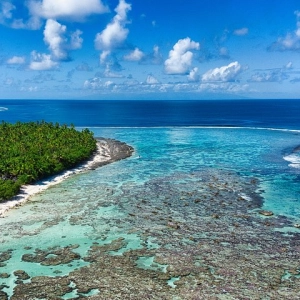
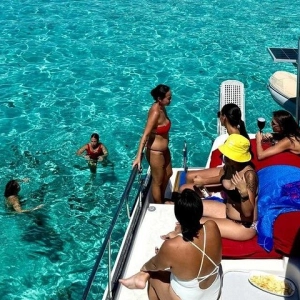
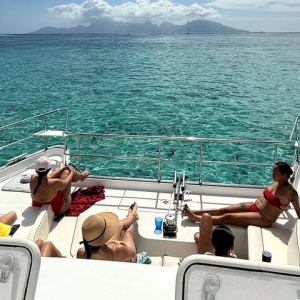
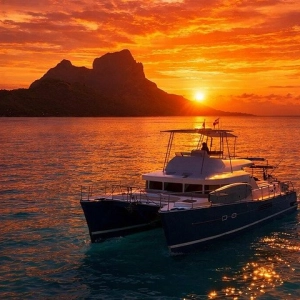
Book a trip where this was filmed — near Tahiti
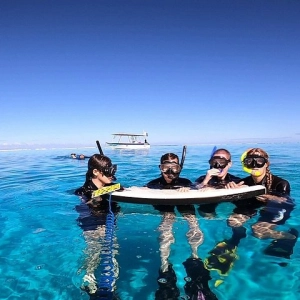
Boat tour + snorkeling in a preserved lagoon – Mobydick Tahiti
Sold by Mobydick Tahiti
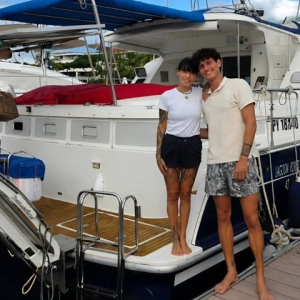
Support Sailing Big Lost
At WeBoating.com, we profoundly acknowledge the unwavering dedication that Sailing Big Lost invests in crafting each and every video or voyage. Their passion for delivering exceptional ocean content shines through every frame, and it's a labor of love that deserves your attention.
We invite you to watch their captivating videos here and actively engage with their content, including their social media links above. Liking, commenting, and sharing their work goes a long way in fueling their creative fire.
We're also inviting you to explore the gear, sponsorships, and boat partnerships highlighted in the "We Wanted a Different Life… This Is Where It Took Us" video description, or directly on YouTube. By engaging with these offerings or purchasing services and items, you directly support Sailing Big Lost, their collaborators, and the brands they're associated with.
To ensure you never miss an offshore update, consider visiting their official YouTube Channel to subscribe, like, and join their community directly.
If you have any feedback, corrections, or additional information about Sailing Big Lost or their videos, please use the comment form below to share your thoughts with us.
Thank you for being a part of our community and supporting the creators we cherish. Your time and support truly matter!
We left Idaho looking for a different life. We had no idea that decision would eventually take our family across the Caribbean, through the Panama Canal, across the Pacific Ocean and all the way to French Polynesia.
This week, the weather kept us sitting still in Tahiti—and for once, that gave us a chance to look back.
From learning how to become cruisers in Guatemala to storms in Mexico, changing boats in Florida, sailing more than 1,000 miles into the Atlantic, turning west toward Panama and eventually crossing the Pacific, this journey has changed far more than our location.
We've become more capable. More comfortable with uncertainty. Our kids have grown up on the water. And the family that packed those bags in Idaho isn't quite the same family sitting at anchor in Tahiti today.
We're not done. Not even close.
There is still a lot of ocean ahead of us, and we're excited to see where this journey takes us next.
Thanks for being part of it.
⛵ SUPPORT SAILING BIG LOST
Want to support the journey or check out the gear we actually use aboard Big Lost?
Visit:
sailingbiglost.com
There you'll find our Gear We Use page, ways to support the channel, and links to products we genuinely use aboard the boat.
Some product links are affiliate links, which means we may earn a commission if you make a purchase through them—at no additional cost to you. It helps support Sailing Big Lost and allows us to keep creating these videos.
❤️ JOIN US ON PATREON
Get closer to the journey, including early access when possible and updates from life aboard Big Lost:
patreon.com/Biglost
FOLLOW SAILING BIG LOST
Instagram: @SailingBigLost
TikTok: @SailingBigLost
Facebook: Kelly Malone
0:00 Leaving Idaho
1:03 Why We're Still in Tahiti
1:57 Learning to Become Cruisers
3:09 Our First Lessons at Sea
4:28 Finding the Cruising Life
6:15 Starting Over on a Smaller Boat
8:11 We Chose the Pacific
9:28 Crossing the Pacific
10:35 Life on the Other Side
12:17 What This Journey Has Taught Us
Family sailing • Liveaboard cruising • Sailing the Pacific • French Polynesia • Life aboard a catamaran

Sailing Big Lost
Sailing Big Lost follows Conor, Kelly, Finn, and Maddie Malone from Sun Valley, Idaho, living full-time aboard their South African Vision 444 ES catamaran, Big Lost. In 2026, their channel documents transiting the Panama Canal, completing a 3,000-mile Pacific crossing, diving Tuamotu atolls, and raising teenagers offshore.
Channel Information:
Social Media Links:
We Wanted a Different Life… This Is Where It Took Us Location
- Tahiti, French Polynesia (-17.6509195,-149.4260421)
Latest Episodes from Sailing Big Lost
Explore the most recent voyages. Subscribe to the channel to never miss an update!
The Ordinary Days Are the Ones We’ll Remember ❤️ #Shorts
Not every day sailing the world is an adventure. Some days it’s homeschooling, boat chores, baking, board games, and spending time with friends. These are the ordinary moments of raising a family aboard a sailboat in French Polynesia. And they might just be the ones we remember most. We’re Sailing...
What Living on a Sailboat Is REALLY Like ⛵ #sailingfamily
Living on a sailboat isn’t all beautiful anchorages and sunset sails. There’s plenty of cleaning, hauling groceries by dinghy, and everyday chores. But there’s also adventure, incredible friendships, and moments that remind us why we love this life. A little glimpse of what sailing around the worl...
We Left Idaho… To Come Home to This
The crew of Big Lost returns to their Vision 444 catamaran in Tahiti, navigating from Phaeton Bay past Marina Taina to Airport Anchorage.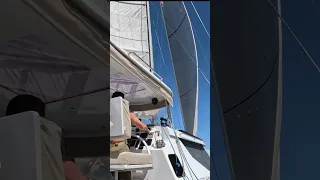
This Never Gets Old ⛵ | Sailing in Tahiti #Shorts
There's nothing quite like raising the sails, turning off the engines, and letting the wind take over. ⛵ After a couple of weeks away from Big Lost, we're finally back sailing the beautiful waters of Tahiti, French Polynesia. Our next sailing adventure drops tomorrow! #SailingBigLost #S...
A little piece of home ❤️ #sailingfamily #sailingbiglost #idaholife
A little piece of home. ❤️ We took a quick break from sailing in French Polynesia to return to Idaho and spend time with family and friends. Dogs, cousins, old friends, Finn learning to drive, and those beautiful Idaho sunsets. These are some of the things we miss most while sailing around the wo...