Sailing lessons ASA 101 & 103: The Good, The Bad, The Ugly
Buying an ocean-ready sailing catamaran before learning to sail might sound like putting the cart before the horse, but for Connor and Connie of Sailing Big Lost, turning a wild ambition into reality demanded bold action. After closing on their dream multihull and committing to trade life on land for the open ocean, the couple realized the time had come to master the lines, sails, and navigation rules of the sea. Packing up their children, Finn and Maddie, they departed rural Idaho on a long-distance trek to the British Virgin Islands to undertake back-to-back American Sailing Association (ASA) certifications.
The journey from the Idaho mountains to the Caribbean is an endurance trial in its own right. Two full days of travel—beginning with a four-hour mountain drive to Salt Lake City, followed by an overnight red-eye flight, a grueling five-hour layover in Atlanta, and final island hops—deposited the groggy family at Nanny Cay Resort on Tortola. Exhausted but determined, they shed their travel fatigue under the tropical sun, checked out of the resort, and stepped onto the docks of Horizon Yacht Charters to meet Captain Martin and board their training vessel: a 38-foot Bénéteau monohull named Calypso Express.
Clearing the Fairway and ASA 101 Fundamentals
Stepping aboard Calypso Express, the family was immediately greeted by midday Caribbean heat exceeding 85°F and stifling humidity. Captain Martin, a seasoned maritime instructor slated to live aboard with the family for five intensive days, immediately established standard deck discipline. Before leaving the marina fairway, Martin guided the crew through the harbor entrance protocol. He directed Connor and Connie to pull alongside the fuel dock staging area—the mandatory threshold where every prudent skipper pauses to complete essential housekeeping before meeting open water.
As the family hauled in fenders and neatly flaked dock lines along the gunwales, Martin pointed to thick mats of brown sargassum drifting past the hulls—part of the seasonal sargassum influx pushed down from the Sargasso Sea. Getting underway safely required clear intakes and uncluttered decks. With lines stowed, Martin introduced the theoretical foundation of the ASA 101 Basic Keelboat standard. The curriculum demanded mastery over essential nautical nomenclature, points of sail, mainsail and jib trimming, standing and running rigging, USCG safety requirements, collision regulations (COLREGs), crew-overboard recovery maneuvers, and line-handling fundamentals.
For the liveaboard candidates, ASA 103 Basic Coastal Cruising layered on practical systems engineering: auxiliary inboard and outboard propulsion systems, basic coastal navigation, anchoring techniques, weather interpretation, and heavy-weather reefing. Connor and Connie had dedicated weeks to studying the official course books prior to flying south, but proving theoretical knowledge under the watchful eye of an instructor in trade-wind conditions presented an immediate test of focus.
Tender Trials and The Willy T at Norman Island
Setting course south across the Sir Francis Drake Channel, the crew anchored in The Bight off Norman Island, legendary haven of privateers and modern cruisers alike. Their first practical auxiliary lesson centered on outboard motor management. Operating a spirited two-stroke tender outboard with tiller steering forced Connor to recalibrate his muscle memory—pushing the tiller arm away to turn toward the dock and pulling it close to swing clear, all while managing throttle reverse in choppy water without stalling.
With tender handling in check, the family headed across the anchorage to the notorious William Thornton, the floating bar and restaurant known throughout the Caribbean as the Willy T. While the venue is renowned for raucous adult revelry later in the evening, the afternoon atmosphere offered a welcoming spot for food, dock jumps, and shore relaxation. Finn wasted no time leaping from the upper deck into the turquoise water. Maddie, having firmly stated she had no intention of swimming, arrived without a bathing suit—only to change her mind minutes after watching Finn splash into the sea. Connor fired up the tender and ripped back across the anchorage to Calypso Express to retrieve her suit, proving that family cruising logistics remain constant no matter how far one ventures from home.
Coastal Sailing Past Pelican Island and Squalls at Cooper Island
Underway the following morning, Captain Martin put Connor and Connie through the paces of sail trim and helm balance. Navigating out of the Norman Island approaches, Martin tested Connor’s spatial awareness as they cleared the rocky shores of Pelican Island. Once clear of the landmark, Connor determined the heading, eased the mainsheet and jib sheet to match their new broad reach, and trimmed the telltales until the monohull settled into a steady, balanced groove through the swell.
The passage brought them north to Manchioneel Bay at Cooper Island, where the idyllic tropical weather abruptly vanished. Towering squalls rolled over the peaks, unleashing torrential rain that battered the anchorage. Below deck, the realities of summer liveaboard life without generator-driven air conditioning became impossible to ignore. Inside the 38-foot Bénéteau, cabin temperatures soared to a stifling 105°F with near-total air stagnation once the deck hatches were dogged shut against the driving rain.
Connie had initially envisioned cooking all three daily meals for six people inside the monohull’s compact galley. Between the intense cabin heat, violent pitching in the squall, and zero cross-ventilation, galley duty became unbearable. The crew wisely opted to ride the dinghy ashore to the Cooper Island Beach Club restaurant, waiting out the deluge under roof while the boat rolled against its mooring bridle. At night, seeking any trace of a breeze, Finn often abandoned his sweltering bunk to sleep on the open cockpit cushions under the stars whenever the rain cleared.
Reef Hazards, Trellis Bay, and Lobster Reefs at Leverick Bay
Continuing northeast through the islands, Calypso Express skirted Beef Island near Trellis Bay. Scanning the mooring fields and shallows near the airport runway, the crew spotted a stark cautionary tale: the battered hull of a sailboat firmly aground along the reef flats, its keel and hull bottom sheared away by a navigational miscalculation. It served as an unvarnished reminder of why careful chart study and vigilant eyeball piloting are mandatory in coral-strewn waters.
Mooring pick-up drills soon tested the crew’s coordination. Approaching the designated mooring field, Connor brought the bow smoothly up into the eye of the wind while Connie stood at the foredeck with the boat hook. Catching the floating pennant cleanly, she secured the bridle lines through the eye, completing their first independent pickup without drama.
Rounding the North Sound into Leverick Bay on Virgin Gorda, the crew tied up the tender at the marina dinghy dock on an urgent supply mission to restock shipboard provisions. Beyond the docks, Leverick Bay offered prime shore excursions. Snorkeling along a secluded beach cove, the family explored deep rock overhangs and discovered a resident colony of spiny lobsters tucked into the coral crevices. The evening brought festive island culture, as the family gathered ashore to watch vibrant moko jumbie stilt dancers perform in full costume against the Caribbean sunset.
ASA Curriculum and Training Milestones
The five-day liveaboard syllabus pushed the crew to translate textbook theory into instinctual physical drills. From line handling under tension to identifying navigational aids, the course established the operational habits required before taking delivery of their cruising catamaran.
| Curriculum Milestone | Certification Standard | Practical Application Aboard Calypso Express |
|---|---|---|
| Harbor Departure & Stowage | ASA 101: Deck Organization | Clearing fenders and dock lines at the Nanny Cay fuel dock; managing summer sargassum weed along fairway channels. |
| Tender & Auxiliary Propulsion | ASA 103: Outboard Handling | Tiller steering reverse dynamics, throttle control, and tender mooring at The Willy T in The Bight, Norman Island. |
| Points of Sail & Sheet Trimming | ASA 101: Basic Sailing | Bearing away past Pelican Island, easing main and jib sheets off the wind to balance the helm in 15–20 knot trade breezes. |
| Mooring Buoy Retrieval | ASA 101 / 103: Seamanship | Bow communication, boat hook handling, and securing bridle lines to mooring pendants at Cooper Island and Trellis Bay. |
| Reef Navigation & Piloting | ASA 103: Coastal Cruising | Eyeball piloting around shallow reef bars off Beef Island; navigating the entrance channel into Leverick Bay, Virgin Gorda. |
| Rigging & Mechanical Rigor | ASA 101: Line & Winch Handling | Loading halyards and sheets with four full wraps around winch drums; reinforcing essential hitch and bend knots. |
Debrief and Graduation at Nanny Cay
Returning to Nanny Cay Marina, Connor eased Calypso Express back into the Horizon Yacht Charters slip, bringing five intense days of liveaboard instruction to a close. After completing their written multiple-choice examinations and on-water practical evaluations, the family packed their bags and transitioned back to land. While waiting out the busy marina laundry queues and cooling off at the beach pool bar, Connor and Connie sat down to reflect on their transformation from novice dreamers to certified skippers.
When asked about their most significant takeaways, both highlighted the critical importance of mastering winch safety—specifically loading four full turns around the winch drum to prevent slips under load—along with navigational buoy identification and knot tying under pressure. For Connor, the proudest milestone of the entire voyage was watching Connie command the foredeck and helm with poise, transforming initial hesitation into genuine confidence. With ASA 101 and ASA 103 certifications officially in hand, the crew of Sailing Big Lost gained the foundational seamanship skills necessary to step aboard their own catamaran and launch their open-ocean family voyage.
Frequently Asked Questions
Connor and Connie completed the American Sailing Association (ASA) 101 Basic Keelboat and ASA 103 Basic Coastal Cruising certification courses during their five-day liveaboard charter.
The family trained aboard Calypso Express, a 38-foot Bénéteau monohull chartered through Horizon Yacht Charters based at Nanny Cay Marina on Tortola.
Captain Martin, an ASA-certified sailing instructor, lived aboard the monohull with the family for five days to provide daily practical drills, classroom theory, and safety evaluations.
The course spanned Nanny Cay on Tortola, The Bight and Pelican Island at Norman Island, Manchioneel Bay at Cooper Island, Trellis Bay off Beef Island, and Leverick Bay on Virgin Gorda.
The crew experienced extreme cabin heat reaching 105°F with limited cross-ventilation during summer squalls, tight galley accommodations that made cooking difficult, and rough overnight anchorages during heavy rain.
Key skills included four wraps on winches under tension, tender handling with tiller-steered two-stroke outboards in reverse, picking up mooring balls with a boat hook, easing sheets on points of sail, and identifying reef hazards.
Book a trip where this was filmed — near Tortola
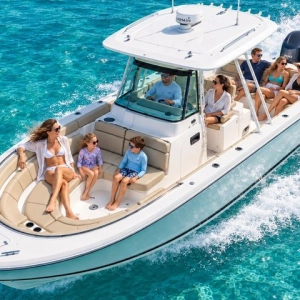
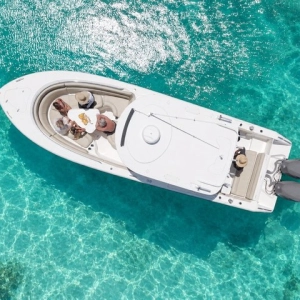
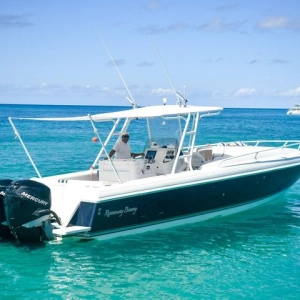
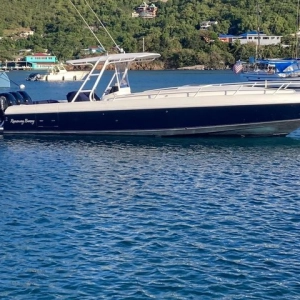
BVI Day Charter Experience on Runaway Bunny Intrepid 377
Sold by Quintessence charters aboard M/V Apotheoseas
Support Sailing Big Lost
At WeBoating.com, we profoundly acknowledge the unwavering dedication that Sailing Big Lost invests in crafting each and every video or voyage. Their passion for delivering exceptional ocean content shines through every frame, and it's a labor of love that deserves your attention.
We invite you to watch their captivating videos here and actively engage with their content, including their social media links above. Liking, commenting, and sharing their work goes a long way in fueling their creative fire.
We're also inviting you to explore the gear, sponsorships, and boat partnerships highlighted in the "Sailing lessons ASA 101 & 103: The Good, The Bad, The Ugly" video description, or directly on YouTube. By engaging with these offerings or purchasing services and items, you directly support Sailing Big Lost, their collaborators, and the brands they're associated with.
To ensure you never miss an offshore update, consider visiting their official YouTube Channel to subscribe, like, and join their community directly.
If you have any feedback, corrections, or additional information about Sailing Big Lost or their videos, please use the comment form below to share your thoughts with us.
Thank you for being a part of our community and supporting the creators we cherish. Your time and support truly matter!
Join us on our sailing adventure!
In this episode, we embark on a new chapter of our journey as we dive into the world of sailing! Having recently purchased our dream catamaran, we realized it was time to learnt the ropes (quite literally) and enrolled in an intensive week-long sailing course aboard a monohull. Follow along as we navigate through American Sailing Classes 101 and 103, reminiscing on our days as eager students and hoping our instructor sees potential in our newfound skills!
Check out Horizon Yacht Charter:
https://horizonyachtcharters.com
American Sailing Association:
https://asa.com
Nanny Cay Marina - British Virgin Islands:
https://nannycay.com/yacht-services/amenities-other-services/
✨ Don’t forget to LIKE, COMMENT & SUBSCRIBE to follow our sailing journey!
📸 Follow us on Instagram for behind-the-scenes updates: https://www.instagram.com/sailingbiglost/
🗞️ Follow us on TikTok: https://www.tiktok.com/@sailingbiglost
⛵️ Check out our Website and Merch: https://www.sailingbiglost.com
🛥️ Support Our Journey on Patreon: https://www.patreon.com/c/Biglost
#caribbeansailing #sailingjourney #boating #sailingexperience #liveaboardlife #travel #bahamas #sailingwithkids #boatlife #catamaransailing #sailingfamily #travelvlog #boatinglife #travelfamilyvlog #Britishvirginislands #bvi #sailBVI
#ASA101 #ASA103 #americansailingassociation #NormanIsland #WillyT #learntosail

Sailing Big Lost
Sailing Big Lost follows Conor, Kelly, Finn, and Maddie Malone from Sun Valley, Idaho, living full-time aboard their South African Vision 444 ES catamaran, Big Lost. In 2026, their channel documents transiting the Panama Canal, completing a 3,000-mile Pacific crossing, diving Tuamotu atolls, and raising teenagers offshore.
Channel Information:
Social Media Links:
Sailing lessons ASA 101 & 103: The Good, The Bad, The Ugly Location
- Nanny Cay Marina, Tortola, British Virgin Islands (18.397,-64.636)
- The Bight and The Willy T, Norman Island, British Virgin Islands (18.3185,-64.6185)
- Pelican Island, British Virgin Islands (18.3325,-64.6255)
- Manchioneel Bay, Cooper Island, British Virgin Islands (18.3845,-64.5125)
- Trellis Bay, Beef Island, British Virgin Islands (18.4455,-64.5315)
- Leverick Bay, Virgin Gorda, British Virgin Islands (18.498,-64.3875)
Latest Episodes from Sailing Big Lost
Explore the most recent voyages. Subscribe to the channel to never miss an update!
We Finally Left Tahiti… Then I Made a Huge Mistake
After crossing from Tahiti to Moorea, a mistaken block release drops Big Lost's tender, fracturing the davit crossbar and forcing the crew to halt their Tuamotus voyage for emergency repairs.
The Ordinary Days Are the Ones We’ll Remember ❤️ #Shorts
Not every day sailing the world is an adventure. Some days it’s homeschooling, boat chores, baking, board games, and spending time with friends. These are the ordinary moments of raising a family aboard a sailboat in French Polynesia. And they might just be the ones we remember most. We’re Sailing...
What Living on a Sailboat Is REALLY Like ⛵ #sailingfamily
Living on a sailboat isn’t all beautiful anchorages and sunset sails. There’s plenty of cleaning, hauling groceries by dinghy, and everyday chores. But there’s also adventure, incredible friendships, and moments that remind us why we love this life. A little glimpse of what sailing around the worl...
We Left Idaho… To Come Home to This
The crew of Big Lost returns to their Vision 444 catamaran in Tahiti, navigating from Phaeton Bay past Marina Taina to Airport Anchorage.
This Never Gets Old ⛵ | Sailing in Tahiti #Shorts
There's nothing quite like raising the sails, turning off the engines, and letting the wind take over. ⛵ After a couple of weeks away from Big Lost, we're finally back sailing the beautiful waters of Tahiti, French Polynesia. Our next sailing adventure drops tomorrow! #SailingBigLost #S...