Rained Out in San Blas
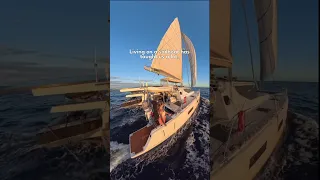
At 8:00 in the morning at Los Penos in Guna Yala, the crew aboard the sailing catamaran Big Lost pulled anchor to seek protected water before incoming wind and swell arrived. As the family navigated through rainy conditions, they weighed upcoming weather forecasts alongside companion vessels cruising the Panama coast.
Cruising full-time aboard Big Lost, documented on Sailing Big Lost, requires navigating around persistent tropical rainstorms on the Atlantic side of Panama. Preparing for incoming squalls, the crew explained that “although it looks nice and glassy, um, some wind’s supposed to pick up in the next day or so and we want to get to an anchorage where the swell is going to be minimal.” Along the passage, fishing lines trailed astern and brought up an unknown fish, prompting the family to debate whether to keep it before continuing along the coast.
Cultural Context and Dinghy Run Up the Sugandi River
While exploring the Guna Yala region, the crew observed the traditional Kuna swastika flag flown throughout the islands. The emblem originates from 1925, when the Kuna people revolted against Panameanian suppression of their native traditions, leading to recognized autonomy in 1930. The traditional flag design represents an ancient octopus that created the world, with tentacles pointing to 4 cardinal directions, and a distinguishing ring was added in 1942.
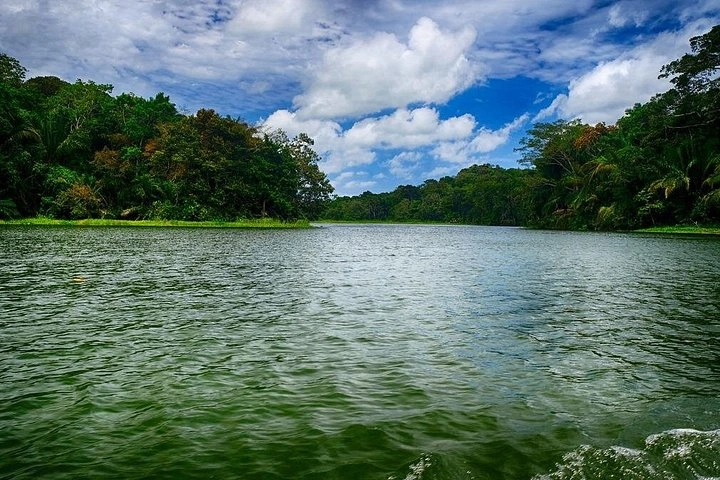
While anchored off Ustopo, local residents informed the crew that dinghies could navigate up the Sugandi River. Despite relentless rain and plans to move on the following morning, the family launched the tender. Motoring into the dense jungle interior, the waterway grew extremely shallow. Crew members had to tilt up the outboard engine as the hull scraped the riverbed. Crew members called out submerged logs and shoals while rain fell steadily, tracking lightning strikes estimated 5 miles out before easing back toward the anchorage.
Storm Shelter at Ustupo and Passage to Achu
The anchorage at Ustupo provided critical shelter while outer ocean swells reached 7 ft. Weather forecasts showed differing scenarios for a developing tropical system, with an American model suggesting cyclonic conditions while other models indicated calmer weather. Overnight, intense lightning storms and heavy rolling thunder reverberated directly through the hulls of Big Lost. Once daylight broke, the crew weighed anchor for a 5 nautical mile run toward Achu, seeking cleaner water suitable for swimming.
Approaching Achu, runoff from a nearby river spilled across the passage, marking the sea with a sharp brown line of sediment. Heavy debris, including floating sticks and deadhead logs, drifted directly through the fairway. Companion cruising boats Plan B, Palaran, Betteran, and Levita Shred navigated close nearby. Entering the anchorage safely required adequate overhead sunlight to read the surrounding coral reefs, which cloudy skies obscured. Recognizing the hazard of drifting logs bumping against hulls, the fleet decided to bypass the anchorage entirely and continue traveling toward outer island shelter.
Managing Systems Through Rain and Snug Harbor Arrival
Cruising during extended rainy periods on the Caribbean side of Panama created ongoing operational friction aboard the catamaran. Solar charging was severely restricted by overcast days, leaving the vessel without daily renewable energy. With no auxiliary generator on board, the crew adapted by running the propulsion engines for multiple hours daily to recharge the house batteries. As Kelly noted, “we’ve had to run our engines for multiple hours a day just to top everything off so we can make it through the night.”
Dampness permeated the cabin, making wet laundry impossible to dry in the tropical humidity. Tiny no-see-ums emerged during dawn and dusk, squeezing past standard mosquito window netting. At the same time, frequent electrical storms heightened concern aboard a vessel whose mast reaches 64 ft into the air. Big Lost motored along at 5 knots through murky river plumes, inspecting three or 4 potential anchorages before finally turning into Snug Harbor. Dropping anchor in clear blue water alongside buddy boats, the family gathered in the galley to prepare pecan bars for Thanksgiving.
Frequently Asked Questions
Persistent cloud cover prevented solar battery charging, and without an onboard generator, the crew had to run engines for multiple hours each day to charge the electrical system for the night.
The anchorage at Ustupo provided protection while outer swells reached 7 ft.
River runoff caused heavy brown silt and floating logs, and poor lighting prevented the crew from visually navigating the surrounding coral reef.
The mast on Big Lost stands 64 ft tall, creating heightened vigilance during frequent tropical lightning storms in Panama.
The passage between Ustupo and Achu was a 5 nautical mile run along the coast.
Book a trip where this was filmed — near Panama City
Support Sailing Big Lost
At WeBoating.com, we profoundly acknowledge the unwavering dedication that Sailing Big Lost invests in crafting each and every video or voyage. Their passion for delivering exceptional ocean content shines through every frame, and it's a labor of love that deserves your attention.
We invite you to watch their captivating videos here and actively engage with their content, including their social media links above. Liking, commenting, and sharing their work goes a long way in fueling their creative fire.
We're also inviting you to explore the gear, sponsorships, and boat partnerships highlighted in the "Rained Out in San Blas" video description, or directly on YouTube. By engaging with these offerings or purchasing services and items, you directly support Sailing Big Lost, their collaborators, and the brands they're associated with.
To ensure you never miss an offshore update, consider visiting their official YouTube Channel to subscribe, like, and join their community directly.
If you have any feedback, corrections, or additional information about Sailing Big Lost or their videos, please use the comment form below to share your thoughts with us.
Thank you for being a part of our community and supporting the creators we cherish. Your time and support truly matter!
We’re a family sailing full-time, exploring the Caribbean and Central America aboard our sailing catamaran Big Lost. New episodes every Tuesday at 10:30 AM ET.
We’ve had rain off and on since arriving in Panama, and as we begin exploring the San Blas—now learning their true name, the Guna Yala Islands—we quickly realize this paradise comes with its own challenges. In this episode, we search for a protected anchorage before the next round of storms and incoming swell.
While hunkering down, we visit the vibrant community of Ustupo and take a peaceful trip up the Sugandi River, grateful for every adventure and the genuine kindness of the Guna Yala people.
Then it’s off to Snug Harbor for some much-needed swimming and relaxation before we continue hopping up the coast, exploring anchorage by anchorage through the beautiful Guna Yala Islands.
Join us as we chase shelter, culture, and calm in one of the most stunning cruising grounds in the world.
🌴⚓️ Subscribe to follow our journey sailing full-time aboard Big Lost!
💙 Join Our Crew:
Subscribe ➡️ https://www.youtube.com/@UCgQWjtfYowV40rQK87XtzKQ
Instagram ➡️ https://www.instagram.com/sailingbiglost/
TikTok ➡️ https://www.tiktok.com/@UCgQWjtfYowV40rQK87XtzKQ
Website & Merch ➡️ https://www.sailingbiglost.com
If you would like to help support our adventure please check out our Patreon:
https://www.patreon.com/c/Biglost
***
🎵 Copyrighted music licensed from Lickd. https://lickd.co Good News by Shaboozey, https://t.lickd.co/l/4XJ7ybOWRYe
🎵 Copyrighted music licensed from Lickd. https://lickd.co White Horse by Chris Stapleton, https://t.lickd.co/l/kJYWyaLM3db
Sailing Big Lost
Sailing Big Lost follows Conor, Kelly, Finn, and Maddie Malone from Sun Valley, Idaho, living full-time aboard their South African Vision 444 ES catamaran, Big Lost. In 2026, their channel documents transiting the Panama Canal, completing a 3,000-mile Pacific crossing, diving Tuamotu atolls, and raising teenagers offshore.
Channel Information:
Social Media Links:
Latest Episodes from Sailing Big Lost
Explore the most recent voyages. Subscribe to the channel to never miss an update!
We Set Out to Sail the World…We Found So Much More
We set out to sail the world. We found so much more. When we traded our life on land for life aboard a sailboat, we knew we wanted to explore the world together. What we didn’t fully appreciate was how much more this adventure would give us. Friends who have become family. A community that looks o...
How Do Kids Make Friends Sailing Around the World? ⛵ #Shorts
What happens to your kids' friendships when you decide to sail around the world? We're raising two teenagers aboard our sailing catamaran, Big Lost, and one of the biggest surprises has been watching them make friends with other cruising kids. From skateboarding to swimming between boats...
After All That Chaos… This Is Why We Sail
The Malone family faces unexpected challenges in Tahiti, from strict anchoring regulations and electrical mishaps to supporting a friend through an emergency appendectomy.
What Living on a Sailboat REALLY Looks Like ⛵ #Shorts
Living on a sailboat full-time isn't always about sailing to beautiful destinations. Sometimes it's boat repairs, unexpected challenges, helping fellow cruisers, and enjoying everyday family life in French Polynesia. We're a family of four sailing around the world aboard Big Lost, s...
One Mistake. Days of Sailboat Repairs. 😅
It only took a moment to break our dinghy davits. Fixing them was another story! Changing sailing plans, coordinating repairs, fabrication, and finally testing whether our solution worked. Just another day of living aboard our sailing catamaran, Big Lost. 🎥 Watch the full episode: We Broke It. No...