Into the Wind: Sailing East to Sint Maarten
Anchored at St. Thomas Bay on Virgin Gorda, Connor and Kelly of Sailing Big Lost completed their engine maintenance checks, tightened the alternator belts, and shifted their Vision 444 catamaran north to Prickly Pear Island. The short repositioning placed the crew near Leverick Bay, establishing a staging anchorage to wait for a viable weather window before punching eastward into the Caribbean trade winds toward Sint Maarten.
The upcoming passage marks one of the most demanding directional legs of their seasonal cruising schedule. Having spent four months changing vessels and carrying out boat refits, the family faces a tight timeline to reach hurricane refuge in Grenada. Pushing east into the prevailing trades is necessary before the route turns south past Martinique, requiring focused calculations and direct upwind motoring.
Airlock Installation at Prickly Pear Island
While anchored off the beach at Prickly Pear Island in strong breeze, Connor tackled a boat improvement project in the port hull. Marine air conditioning systems often develop stagnant moisture and mildew odors when left inactive at anchor. To address this, the crew took delivery of an Airlock air purification kit designed for marine and recreational vehicle air conditioning blowers.
Working on the port air conditioner, Connor wired the compact unit directly to positive and negative 12-volt power and mounted it using the integrated magnetic backing plate. The magnetic adhesive pad allowed immediate installation on the air handler without drilling into the boat structure.
“They make these really easy. Just hooked up to a positive and negative. They give you this sticky back on a magnet that makes it absolutely easy to install.”
Connor
Ashore on Virgin Gorda, the family took time to stretch their legs along the island roadways. Daughter Maddie completed her morning mathematics lessons aboard before the family explored the road winding out from Leverick Bay Resort, observing local terrain and emergency evacuation markers before returning to prepare the catamaran for sea.
Night Departure into the Trade Winds
After waiting nearly a week for trade winds gusting between 20 and 30 knots to moderate, a brief easing in the pressure gradient opened an opportunity to depart. Connor and Kelly arose at 2:30 a.m. to run pre-departure checklists, start the diesels, and raise the anchor in total darkness. Navigating out of the reef-strewn anchorage required reliable communication between the foredeck and helm station.
“Start. Headsets. We don’t always use them, but uh we’re leaving at night. I can’t see Kelly up front, and I think it’s important that we’re able to communicate.”
Connor
Underway at 3:00 a.m., Big Lost pointed east into open water. By 5:00 a.m., the catamaran had logged 2 hours of steady motoring, maintaining 5 knots through the water as sea swells leveled out away from Virgin Gorda. With Maddie and Finn sleeping soundly in their cabins below, Kelly took the helm watch as the morning sun broke over the horizon.
Operating on an uncompromising cruising calendar brings constant pressure to weigh safety margins against passage schedules. Watching the horizon from the helm, Kelly reflected on the practical demands of navigating a family catamaran across long stretches of open water without shore support.
“Everything takes longer than you think. Weather windows are rare. Boat repairs pop up unexpectedly. Parts get delayed. Plans change.”
Kelly
Sargassum Weed and Headwind Motoring
As the passage progressed through the morning, dense patches of floating sargassum seaweed created continuous operating hazards. The heavy weed mats fouled the keels, rudders, and propellers, dragging down boat speed and placing extra strain on the running gear. Connor actively hand-steered around the largest mats to keep the underwater surfaces clear.
When weed buildup on the port propeller caused the engine RPM to drop sharply, Connor immediately pulled the throttle into reverse. Backing down through the water spun the tangled grass off the propeller blades, restoring proper drive and avoiding the dangerous alternative of swimming under the hull in open ocean swells.
By 10:27 a.m., Big Lost had recorded 7 hours of running time. The catamaran logged 10 knots of true wind and 17 knots of apparent wind directly on the nose, maintaining 6 knots through the water. While Connor cleared weed off a trailing trolling line, Kelly prepared softboiled eggs in the galley, using locking stovetop clamps to keep pans secured against the rolling swell.
Arrival in Simpson Bay and Alternator Upgrades
At 3:00 p.m., Big Lost completed the 12 hour eastward run, safely dropping anchor in Simpson Bay on Sint Maarten. Averaging 6 knots across the passage, the catamaran arrived with ample daylight to establish a secure hold. Throughout the passage, Finn slept continuously in his bunk, emerging on deck just as the anchor chain rattled into the seabed.
Simpson Bay provided strategic advantages for the vessel: immediate dinghy access to customs and immigration clearance, and entry into Simpson Bay Lagoon for chandleries and services while the crew awaited freight delivery of a new dinghy to Philipsburg. After chaining the tender to the dinghy dock and taking the family to breakfast at Miranda, Connor turned his attention to mechanical upgrades in the engine compartment.
The catamaran’s factory alternators had been operating at their maximum thermal and amperage limits. To eliminate the risk of alternator failure experienced by earlier production catamarans, Connor unpacked high-output replacement units. The installation revealed an unexpected wiring variation: the new units were case-ground alternators lacking an isolated negative post.
“It’s called a case ground alternator where I need to hook the ground up to the engine uh block.”
Connor
Connor headed ashore to the local marine chandlery to source specific mounting bolts to complete the engine block grounding, preparing the electrical charging system for the next leg southward toward Grenada.
Passage Metrics
| Passage Metric | Recorded Value |
|---|---|
| Departure Time | 3:00 a.m. |
| Arrival Time | 3:00 p.m. |
| Total Passage Duration | 12 hours |
| True Wind Speed | 10 knots |
| Apparent Wind Speed | 17 knots |
| Speed Through Water | 6 knots |
| Prior Week Wind Range | 20 to 30 knots |
Frequently Asked Questions
The crew motored into easterly trade winds because Virgin Gorda lies west of Sint Maarten, requiring an upwind push across the passage before turning south toward Grenada.
When seaweed reduced RPM on the port engine, Connor shifted the catamaran into reverse to spin the grass off the propeller blades, preventing engine damage without needing to dive under the hull.
Big Lost motored into 10 knots of true wind and 17 knots of apparent wind, holding 6 knots through the water and concluding the 12 hour crossing at 3:00 p.m.
Connor installed higher-output alternators because the factory units operated at their upper capacity limit, creating a burnout risk experienced by earlier production catamarans.
The new units were case-ground alternators without an isolated negative terminal, requiring Connor to purchase a bolt at a marine chandlery to ground the wiring to the engine block.
Simpson Bay provided direct access to customs and immigration clearance, plus dinghy access into Simpson Bay Lagoon for marine supplies while awaiting a dinghy delivery in Philipsburg.
Support Sailing Big Lost
At WeBoating.com, we profoundly acknowledge the unwavering dedication that Sailing Big Lost invests in crafting each and every video or voyage. Their passion for delivering exceptional ocean content shines through every frame, and it's a labor of love that deserves your attention.
We invite you to watch their captivating videos here and actively engage with their content, including their social media links above. Liking, commenting, and sharing their work goes a long way in fueling their creative fire.
We're also inviting you to explore the gear, sponsorships, and boat partnerships highlighted in the "Into the Wind: Sailing East to Sint Maarten" video description, or directly on YouTube. By engaging with these offerings or purchasing services and items, you directly support Sailing Big Lost, their collaborators, and the brands they're associated with.
To ensure you never miss an offshore update, consider visiting their official YouTube Channel to subscribe, like, and join their community directly.
If you have any feedback, corrections, or additional information about Sailing Big Lost or their videos, please use the comment form below to share your thoughts with us.
Thank you for being a part of our community and supporting the creators we cherish. Your time and support truly matter!
We set sail from the British Virgin Islands, taking on one of the most challenging points of sail: east into the trades. As we make our way to Sint Maarten, we reflect on the many passages that have brought us to this point—and why it always seems like we’re heading against the grain.
With our sights set on Grenada, reaching Sint Maarteen marks a major milestone and, hopefully, the end of the hardest legs of our journey. After weeks of grinding miles and navigating wind, waves, and doubt, we’re finally able to exhale. The easting is behind us.
Now it’s time to enjoy the vibrant island life, soak in the culture, and—fingers crossed—find some new friends for our kids to play with. Come along as we regroup, recharge, and prepare for what’s next on this sailing adventure aboard Big Lost.
⚓️ Subscribe to follow our journey as we tackle the challenges of boat life, explore new destinations, and chase freedom one nautical mile at a time.
Follow along — from land to sea and back again — with Sailing Big Lost.
📸 Instagram: https://www.instagram.com/sailingbiglost/
🏝️ TikTok: https://www.tiktok.com/@UCgQWjtfYowV40rQK87XtzKQ
🌎 Website: https://www.sailingbiglost.com
🎥 Patreon: https://www.patreon.com/c/Biglost
Thanks for Watching! We appreciate you! 💕
For more information on Airlock systems check out their website. The crew at Airlock will be happy to assist you: https://www.airlockusa.com
Don't forget to order your SBL swag at our store:
https://www.sailingbiglost.com/store
#SailingBigLost #SailingFamily #Vision444 #CatamaranLife #boatlife

Sailing Big Lost
Sailing Big Lost follows Conor, Kelly, Finn, and Maddie Malone from Sun Valley, Idaho, living full-time aboard their South African Vision 444 ES catamaran, Big Lost. In 2026, their channel documents transiting the Panama Canal, completing a 3,000-mile Pacific crossing, diving Tuamotu atolls, and raising teenagers offshore.
Channel Information:
Social Media Links:
Into the Wind: Sailing East to Sint Maarten Location
- Simpson Bay, Sint Maarten (18.0384,-63.0984)
- Prickly Pear Island, Virgin Gorda, British Virgin Islands (18.5015,-64.363)
Latest Episodes from Sailing Big Lost
Explore the most recent voyages. Subscribe to the channel to never miss an update!
We Finally Left Tahiti… Then I Made a Huge Mistake
After crossing from Tahiti to Moorea, a mistaken block release drops Big Lost's tender, fracturing the davit crossbar and forcing the crew to halt their Tuamotus voyage for emergency repairs.
The Ordinary Days Are the Ones We’ll Remember ❤️ #Shorts
Not every day sailing the world is an adventure. Some days it’s homeschooling, boat chores, baking, board games, and spending time with friends. These are the ordinary moments of raising a family aboard a sailboat in French Polynesia. And they might just be the ones we remember most. We’re Sailing...
What Living on a Sailboat Is REALLY Like ⛵ #sailingfamily
Living on a sailboat isn’t all beautiful anchorages and sunset sails. There’s plenty of cleaning, hauling groceries by dinghy, and everyday chores. But there’s also adventure, incredible friendships, and moments that remind us why we love this life. A little glimpse of what sailing around the worl...
We Left Idaho… To Come Home to This
The crew of Big Lost returns to their Vision 444 catamaran in Tahiti, navigating from Phaeton Bay past Marina Taina to Airport Anchorage.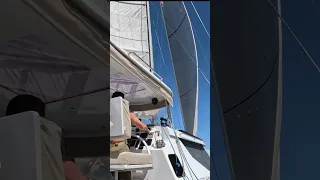
This Never Gets Old ⛵ | Sailing in Tahiti #Shorts
There's nothing quite like raising the sails, turning off the engines, and letting the wind take over. ⛵ After a couple of weeks away from Big Lost, we're finally back sailing the beautiful waters of Tahiti, French Polynesia. Our next sailing adventure drops tomorrow! #SailingBigLost #S...