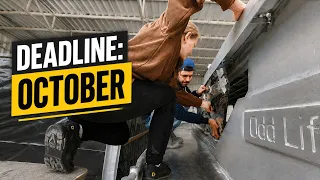
⛵️ The Most Important Step Before Shipping Our Boat! Ep.390
At their workshop in France, Duca and Roberta face a critical construction milestone for their custom 43-foot aluminum sailboat: finishing every structural weld below the waterline before the hull can be shipped to the Caribbean. Because the transport vessel will offload the yacht directly into open water in a bay upon arrival in Martinique without a dry haulout facility available, ensuring complete watertight integrity is vital. The boat must float immediately upon release into the bay without risking haulout delays or towing emergencies.
Working against rigid shipping deadlines alongside visiting friends and specialized tradespeople, the Odd Life Crafting team must complete underwater hull reinforcements, calibrate seven standing pipes, seal side portholes, and take delivery of heavy aluminum spar sections. Every task tackles the practical engineering needed to turn a raw aluminum fabrication into a seaworthy expedition vessel.
Calibrating Engine Reinforcement Frames
The first structural task involves dry-fitting two heavy structural frames that cross the bottom of the hull directly under the inboard propulsion machinery. The engine bed frames were redesigned digitally using a 3D computer model, but transferring digital CAD coordinates to real-world marine plating exposed physical gaps along the curved bilge. The hull shape on this section required slightly more curvature than the rigid flat edges of the cut frames permitted, leaving visible gaps between the aluminum plating and the structural flanges.
To eliminate stress concentrations and ensure full contact prior to final welding, Duca established a zero reference datum on the frames. By scribing the exact contour of the hull onto the frame material, the excess aluminum could be cut and trimmed until the entire frame sat perfectly flat against the hull plating. Ensuring a precise fit for these two cross-hull structural members provides the rigid foundation required to carry engine torque and dynamic vibration offshore.
Standing Pipes and Forespar Marelon Valves
Plumbing underwater through-hulls on an aluminum yacht presents distinct metallurgical challenges compared to standard fiberglass vessels. In typical composite hull construction, through-hull valves sit directly on the hull skin below the waterline to manage water intake and discharge. In an aluminum vessel, submerging conventional bronze or brass fittings creates direct risk of galvanic corrosion due to dissimilar metals in saltwater. To overcome this hazard, Duca opted for dedicated standing pipes—aluminum tubes welded directly to the hull bottom that elevate the shutoff valves well above the outside waterline.
Using a laser level set 25 cm above the loaded waterline, Duca calibrated the elevation for each valve assembly: “Right now, the laser level is 25 cm higher than the waterline, and we’re trying to decide how high we want the valve to be. And that means we can even replace a valve when we are in the water.” By raising the valves above static sea level, any valve failure can be serviced or replaced while floating without drydocking. Each of the seven standing pipes was carefully located, measured, and trimmed at an angle to match the hull deadrise before welding.
For the valves themselves, the crew selected Forespar Marelon fittings. These glass-reinforced composite valves screw directly onto the threaded aluminum pipe tops. Because Marelon is completely non-metallic, it prevents dissimilar metal contact and corrosion issues in seawater, replicating the durable plumbing arrangement the crew previously relied upon during years living aboard their former steel boat.
Vetus Water Lock and Exhaust Routing
Locating the standing pipes required simultaneous planning for the engine wet exhaust plumbing. The engine compartment layout is constrained by the position of the exhaust water lock, which dictates available physical clearance along the hull floor. The crew selected a heavy-duty composite water lock manufactured by Vetus, choosing this model because it handles higher cooling water temperatures than standard units without deformation.
The rotating body design of the Vetus water lock allows 360-degree orientation of the inlet and outlet ports. This flexibility allowed Duca to test multiple orientations to find the clean run for the heavy exhaust hose, which rises toward the deckhead before looping down through a gooseneck to exit through the transom. Measuring roughly 62 cm from the end of the engine compartment board provided the clearance required to clear surrounding mechanical machinery and standing pipe runs.
Professional Welder Matthieu Completes Underwater Seams
To overcome the massive backlog of structural metalwork, Duca and Roberta brought in Matthieu, an experienced aluminum welder from South France. With decades of hands-on marine fabrication experience, Matthieu provided rapid precision on the most critical structural assemblies: “I weld for 22 years maybe… Bow truster. I welded many bow trusters… I know exactly where I go and I just do.”
Matthieu worked alongside the crew for one week and one day, transforming the build schedule. Working with high-amp TIG and MIG welding gear, he completed the bow thruster tube installation and finished complex seams across the bottom of the hull, accomplishing more structural progress in eight days than the team had achieved over 6 months of solo labor. Recognizing the transformative impact of professional trade craftsmanship, Duca credited Matthieu for saving the schedule: “If you are in South France or anywhere in France and you need some beautiful aluminum welds, you just go to this guy.” Before Matthieu departed for home, the team celebrated a massive milestone: every single weld below the waterline was complete.
Welding Hull Portholes Against Heavy Seas
With the underwater welds secured, team member Pieter transitioned to welding the side portholes into the topsides. Sealing these openings is vital before transatlantic shipping, as rough offshore conditions on passages toward Grenada could cause water ingress if porthole cutouts remained unsecured. Matthieu established a rigorous multi-pass procedure for Pieter to follow to prevent heat distortion in the aluminum plate.
The welding procedure begins by placing tight tack welds along the exterior perimeter. Pieter then moves inside the hull to lay down full interior root welds in two balanced passes, traveling symmetrically from center-bottom to center-top on each side. Once the interior seams solidify, the exterior tacks are ground smooth, and full exterior cap welds are laid down following the same bottom-to-top sequence. To protect the precision sealing flanges from weld spatter, Duca clamped protective aluminum cover plates over the frame openings during welding.
Selden Mast Delivery and Stowage Logistics
The technical milestone concluded with the arrival of a freight truck carrying the new sailing rig. For 4 years, Duca and Roberta had been communicating with spar maker Selden to configure their aluminum rig. Visiting friend James, author of the book Be the Captain, arrived just in time to assist with offloading the massive delivery by hand.
The shipment contained two extruded sections of the main mast, the boom, spinnaker pole, sail tracks, standing rigging wires, and assembly hardware. Because the yacht is undergoing hull construction inside a building, the mast will not be stepped in France. Instead, the crew will construct heavy wooden deck cradles to stow the mast sections securely on deck during transport across the Caribbean.
Receiving the spars in Europe rather than the Caribbean was a deliberate financial and logistical calculation: “It is really hard to ship a mast to Grenada. It would be a much more expensive to ship a mast there than having a mast shipped it to here.” With delivery complete and underwater welding finished, the yacht is structurally prepared for transport to Martinique, where it will be dropped directly into the sea: “When we arrive in Martinique, the boat is gonna go straight to the water, no matter what. There is no place for the ship to put the boat on the dry.”
| Parameter | Documented Detail |
|---|---|
| Vessel Length | 43 feet |
| Standing Pipe Valve Offset | 25 cm above waterline |
| Standing Pipes Installed | 7 pipes |
| Welder Professional Experience | 22 years |
| Rig Planning Timeline | 4 years with Selden |
Frequently Asked Questions
The transport ship will offload the boat directly into the water in a bay in Martinique without a dry haulout facility available, meaning the hull must float immediately without leaking.
Standing pipes welded to the aluminum hull elevate non-metallic Forespar Marelon valves 25 cm above the waterline, preventing galvanic corrosion from dissimilar metals and allowing in-water valve maintenance.
The boat design incorporates seven standing pipes welded directly to the bottom plating to handle seawater intakes and discharges.
Portholes were tack-welded outside, welded inside in two passes from center-bottom to center-top, ground smooth on exterior tacks, and then fully capped outside with protective plates over the flange faces.
Freight costs to ship a mast extrusion and rigging to Grenada or the Caribbean are significantly higher, so the crew took delivery in France to stow the two-piece mast securely on deck for transport.
Support Odd Life Crafting
At WeBoating.com, we profoundly acknowledge the unwavering dedication that Odd Life Crafting invests in crafting each and every video or voyage. Their passion for delivering exceptional ocean content shines through every frame, and it's a labor of love that deserves your attention.
We invite you to watch their captivating videos here and actively engage with their content, including their social media links above. Liking, commenting, and sharing their work goes a long way in fueling their creative fire.
We're also inviting you to explore the gear, sponsorships, and boat partnerships highlighted in the "⛵️ The Most Important Step Before Shipping Our Boat! Ep.390" video description, or directly on YouTube. By engaging with these offerings or purchasing services and items, you directly support Odd Life Crafting, their collaborators, and the brands they're associated with.
To ensure you never miss an offshore update, consider visiting their official YouTube Channel to subscribe, like, and join their community directly.
If you have any feedback, corrections, or additional information about Odd Life Crafting or their videos, please use the comment form below to share your thoughts with us.
Thank you for being a part of our community and supporting the creators we cherish. Your time and support truly matter!
Our boat MUST float when it arrives in the Caribbean, and there's no room for mistakes! This week, we tackle one of the biggest milestones of our aluminum sailboat build: finishing every weld below the waterline. And after years of dreaming and planning, our brand-new mast finally arrives!
We're getting closer to the Caribbean, one crazy challenge at a time!
James's book: https://bethecaptain.com
James' youtube channel: @BeTheCaptain
___________________________________________________
Support our project:
► http://www.patreon.com/oddlifecrafting (Get instant access to extra content)
► donating through PayPal using: [email protected]
___________________________________________________
** Links and contact information **
For business inquiries: [email protected]
Our private email address: [email protected]
👨👩👦 We are Duca and Roberta, a Brazilian couple that during a sabbatical trip in 2016 decided to follow our dreams creating this youtube channel to document our journey.
The final dream was to build a metal boat to be able to travel the world taking our house with us, but we didn't have money for that. So, we started building a tiny shipping container house with no prior experience in building to gain some skills to build a boat. When we were almost finishing the house we found a boat that was neglected for over 22 years and we spent 2 years refitting her. We sailed for 2 years (exploring the Brazilian coast and part of the Caribbean). Then we sold our boat and we moved to Europe. Right now the dream is happening and we are building a new aluminum 43ft sailboat and a new life with our son Oli.
We hope to inspire others to follow their dreams.
SUBSCRIBE to our channel and join us every SUNDAY for a new episode of our journey!!
#boat # building #sailboat

Odd Life Crafting
From a steel 'Oddity' to the aluminum 'Pacific', Duca and Roberta of Odd Life Crafting define the technical pinnacle of DIY expedition boat building.
Channel Information:
Social Media Links:
⛵️ The Most Important Step Before Shipping Our Boat! Ep.390 Location
- Boat Workshop, France (46.2276,2.2137)
- Fort-de-France Bay, Martinique (14.6033,-61.0733)
- St. George's, Grenada (12.0529,-61.7558)
Latest Episodes from Odd Life Crafting
Explore the most recent voyages. Subscribe to the channel to never miss an update!
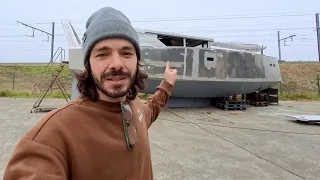
⛵️ The Most Important Step Before Shipping Our Boat! Ep.390
Duca and Roberta achieve a major build milestone on their custom 43-foot aluminum sailboat in France, finishing every weld below the waterline, installing standing pipes, and receiving their new Selden mast.
⛵️ Building an Aluminum Exploration Sailboat ain’t easy!! Ep.389
They can't harm you, if they can't find you! Use code ODDLIFECRAFTING at the link below and get [60%]* off annual plans: The countdown is ON! ⏳⛵ With just weeks left before shipping our aluminum sailboat to the Caribbean, we're racing against time to get everything ready. This week...
⛵️The biggest change yet in the building of our Sailboat!! Ep. 388
Get an exclusive 15% discount on Saily data plans! Use code ODDLIFECRAFTING at checkout. Download Saily app or go to With only 74 days left to get our aluminum sailboat ready to splash, things are getting serious! Our welder has arrived from France, and it's finally time to tackle some of the...
⛵️ Building an Exploration Aluminium Boat!! The clock is ticking!! Ep.387
Our sailboat is finally outside the shed, some of the biggest pieces of the entire build have arrived and we’re getting everything ready for one of the biggest transformations of this project. Next week, we start cutting into the hull and turning all these aluminum pieces into part of the boat. Thi...
⛵️ A Huge Milestone Towards Splashing Our New Boat in Just a Few Weeks!! Ep.386
Check out the Practical Survival gear we used today: Click the links below to get yours now! Filter Straws: Gravity Filter: Use our Discount Code: ODDLIFE10 We need to install the keels and rudders on our boat, but first we need to raise the entire boat about 1 meter to have enough space to w...