Paradise Comes At A Price | Injuries And Boat Repairs | EP151 | HD 1080P
Moored off the coast of Panama, MJ crawled into the damp aft steering compartment of the family’s Lagoon 410 catamaran to dismantle a deteriorating steering mechanism. The steel rudder arms connecting the rudder posts had accumulated heavy surface rust from bilge humidity, prompting the crew of Motherload sailing to pull the assemblies apart before salt corrosion compromised steering control offshore.
Water intrusion around the emergency tiller deck fitting had allowed moisture to drip continuously onto the mechanical linkages. To halt the corrosion, MJ set out to unbolt the rudder arms, carry them ashore to the workshop, grind away the oxidation, and coat the steel in protective marine epoxy before reinstalling the assembly.
Disassembling Rusted Tiller Arms in the Bilge
Working in the confined bilge spaces of the Lagoon 410, MJ unbolted the steel tiller arms linking each rudder stock to the central tie bar. Thread sealant on the fasteners fought back during extraction, requiring firm taps with a hammer and light leverage with a screwdriver to dislodge the tapered fittings. Kevin assisted nearby as the final stubborn bolts freed up, allowing the rusted metal arms to pop free from the rudder posts without cracking the surrounding fiberglass housings.
Upon freeing the components, MJ inspected the critical steering geometry that keeps the multihull tracking straight at sea:
“Connects the rudder post or stock to a big tie rod. Connects to a cable. Connects to the steering wheel. If this thing fails, you’re done.”
The metal exhibited extensive surface rust, but the underlying structure remained solid without deep metal loss. MJ transported the arms to the workshop bench, where he took a mechanical grinder and wire brush to strip away all scale, grease, and corrosion down to bright steel.
Applying Protective Barrier Coats to Steering Linkages
With the steel ground down to a clean, shiny surface, MJ prepped the parts for multi-layer chemical protection. Rather than relying on simple spray primer, he chose a durable marine epoxy coating specifically designed to withstand harsh marine exposure:
“We strip it down to uh shiny metal. And we use Interlux 2000 barrier coat. It’s two-part paint. Uh works really good on steel.”
Over several days, MJ systematically built up the epoxy thickness across the rudder arms. After applying five coats, he decided to add a sixth coat of the two-part barrier fluid to ensure an airtight seal across every weld and edge. To prevent galvanic seizing on future maintenance cycles, he prepared Tef-Gel thread lubricant for the mounting hardware.
Nearby, the triangular steel stop bracket that prevents the rudders from turning hard over also required overhaul. During its removal from the boat, two frozen bolts snapped off in the bracket, forcing MJ to order replacement fasteners before completing reassembly. Meanwhile, the autopilot quadrant sat awaiting its replacement linear drive ram, which remained out of service.
Emergency Medical First Aid on the Cockpit Sole
Mechanical dilemmas were quickly overshadowed by an urgent medical mishap on deck. Young Rebel stepped on an exposed fishing hook, embedding the barb deep into the flesh of his foot. The family immediately gathered on the cockpit sole to manage the puncture wound without causing panic.
Amy and MJ evaluated the injury, determining that clipping the barb and backing the shank out was the safest path forward. To keep the young boy calm, they handed Rebel a Ring Pop candy while older brother Bobby held his foot and ankle firmly against the cockpit sole. Rebel took a steady breath and endured the extraction without shedding a tear, drawing praise from the entire family before paper towels and antiseptic were applied to disinfect the puncture.
Morning Surf Session and Ankle Injury at Wizards
Leaving boat work behind for a brief morning surf session, Amy paddled out to the break at Wizards alongside local surfer Bola and traveling friends. Swells were pushing consistent chest-to-head-high sets over the shallow sandbars, creating fast-moving walls:
“Paddled out here at Wizards. There’s like chest had high sets. Really pretty. Just us, Sean. Local guy Bola. And then our friend Ryan showed up in his boat.”
After paddling into the lineup from their dinghy and two accompanying pangas, Amy caught a right-hand closeout wave. While kicking out over the inside shallows, her foot dropped into a hidden sand hole carved out by tidal currents. The awkward landing violently twisted her ankle, generating sudden pain and nausea that left her breathless. Struggling against incoming waves, Amy managed to paddle out of the impact zone, avoiding an oncoming surfboard before retreating to the dinghy to ice her swollen joint while the rest of the crew finished their surf session.
Medical Evaluation and Shoreline Exploration
Back in town, the severe swelling prompted a clinic visit for diagnostic imaging. Medical staff administered an intramuscular pain injection before running X-rays on Amy’s injured lower leg to rule out fractures. While awaiting the radiological results, nurses fitted her lower leg with a supportive splint and immobilization brace to protect the strained ligaments during recovery.
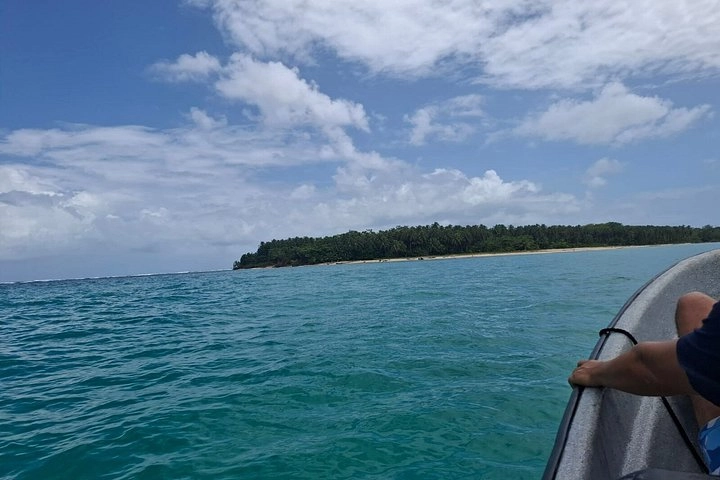
Seeking relaxation despite the injury, the family took their dinghy to explore an unnamed secluded shoreline they dubbed secret beach. While roaming the sand beneath coastal trees, the boys stumbled upon a germinated coconut that had sprouted. MJ and the children split the husk open to reveal the spongy interior cotyledon. The crew sampled the airy, oil-rich coconut sponge, laughing over its spongy texture and mild water-diluted sweetness before returning to the boat to prepare for upcoming transom latch repairs.
Frequently Asked Questions
The steel rudder arms were exposed to persistent dampness inside the bilge, accelerated by water leaking through the emergency tiller deck fitting directly onto the steering tie bar assembly.
MJ ground the rusted rudder arms down to shiny bare steel with a wire brush and mechanical grinder, then built up six protective coats of Interlux 2000 two-part epoxy barrier coat to shield the metal.
Amy surfed at the Wizards break alongside friends Sean, Ryan, and local surfer Bola, where she stepped into a submerged sand hole on the inside bar, severely twisting her ankle.
Older brother Bobby held Rebel’s ankle steady on the cockpit sole while distracting him with a Ring Pop candy, allowing the parents to snip and extract the barb cleanly.
Book a trip where this was filmed — near Bocas del Toro
Support Motherload sailing
At WeBoating.com, we profoundly acknowledge the unwavering dedication that Motherload sailing invests in crafting each and every video or voyage. Their passion for delivering exceptional ocean content shines through every frame, and it's a labor of love that deserves your attention.
We invite you to watch their captivating videos here and actively engage with their content, including their social media links above. Liking, commenting, and sharing their work goes a long way in fueling their creative fire.
We're also inviting you to explore the gear, sponsorships, and boat partnerships highlighted in the "Paradise Comes At A Price | Injuries And Boat Repairs | EP151 | HD 1080P" video description, or directly on YouTube. By engaging with these offerings or purchasing services and items, you directly support Motherload sailing, their collaborators, and the brands they're associated with.
To ensure you never miss an offshore update, consider visiting their official YouTube Channel to subscribe, like, and join their community directly.
If you have any feedback, corrections, or additional information about Motherload sailing or their videos, please use the comment form below to share your thoughts with us.
Thank you for being a part of our community and supporting the creators we cherish. Your time and support truly matter!
Paradise isn’t always what it looks like from above… 🌴⛵
This week aboard Motherload Sailing, we’re reminded that living completely off-grid with five boys comes with some incredible rewards — and some pretty painful realities.
We escape to a breathtaking, deserted tropical beach with friends, capturing some stunning drone footage of the untouched beauty surrounding us here in Panama. These are the moments that make this unconventional life worth every sacrifice.
But back aboard our Lagoon 410 catamaran, reality is waiting.
We’re tackling another critical boat project: refurbishing our steering quadrants and working on the system that keeps our floating home under control.
And as if boat projects weren’t enough, the injuries just keep coming! A hook through a toe, butterfly tape holding a facial injury together, and one serious injury that could take MONTHS to heal.
When you’re raising five boys, maintaining a sailboat, and living completely off-grid, there’s never a dull moment.
It’s beautiful. It’s chaotic. It’s painful. And it’s our life.
Welcome aboard MOTHERLOAD SAILING — where paradise comes with a price.
❤️ If you enjoy real, unfiltered family adventures, please LIKE, COMMENT, and SUBSCRIBE to follow our journey as we work toward sailing across the Pacific.
Tell us in the comments: Would you trade the comforts of land for this kind of freedom?
Motherload sailing
Meet the Motherload crew: A family of seven (and a lab!) trading the American Dream for a life of worldschooling and blue-water discovery aboard their Lagoon 410.
Channel Information:
Social Media Links:
Paradise Comes At A Price | Injuries And Boat Repairs | EP151 | HD 1080P Location
- Playa Wizard (Wizard Beach), Isla Bastimentos, Panama (9.352,-82.195)
- Bocas del Toro Anchorage, Isla Colón, Panama (9.3385,-82.2415)
Latest Episodes from Motherload sailing
Explore the most recent voyages. Subscribe to the channel to never miss an update!
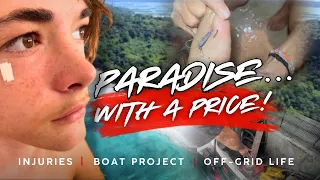
Paradise Comes At A Price | Injuries And Boat Repairs | EP151 | HD 1080P
MJ strips and refinishes rusted rudder arms on the Lagoon 410 catamaran, while Amy and the boys navigate surf wipeouts and emergency hook removal in Panama.
The Boys Had to Fix WHAT?! | EP 150 | HD 1080P
In Bocas del Toro, Panama, the Motherload sailing crew tackles an electric marine head failure, tracing a smoking macerator motor to an obstruction before addressing a $2,300 autopilot replacement.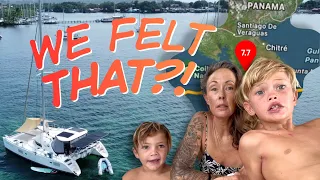
Earthquake In Paradise?! | Real Life Aboard Motherload Sailing | EP149 HD 1080P
Aboard Lagoon 410 Motherload in Bocas del Toro, Amy and MJ experience a major island earthquake, assist with boatyard fiberglass repairs, and celebrate Nautis' 7th birthday.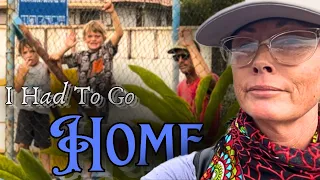
I Had To Leave Everything Behind… | An Emotional Journey Home… | EP148 HD 1080P
Sometimes life on the Motherload isn’t about sailing, surfing, or chasing the next destination. After months of stress, changing plans, uncertainty, and emotions running high, everything suddenly shifted. Mom left Bocas del Toro in a rush and headed back to North Carolina to spend time with family a...
Rain, Chaos & A Puppy Surgery!? | EP147 HD 1080P
The rain just keeps coming… 🌧️ This week aboard Motherload, the skies are gray, the rain is relentless, and somehow we’re finding ways to turn the chaos into an adventure. Between going a little stir-crazy in the rain, hanging out with friends, creating our own fun, and trying to make the most of cl...