When Paradise Turns Into Your Worst Nightmare… | Sailing San Blas! Ep-242
In the San Blas archipelago along the Caribbean coast of Panama, Jason Marshall and Janaye McDonald track unstable atmospheric fronts sweeping westward from Colombia aboard their 40-foot monohull Escapade. Documenting their voyage on Leading the Escapade, the Australian crew monitors regional conditions as the rainy season generates severe localized squall systems known across Guna Yala as Culo de Pollo.
These rapid weather events typically originate from the south or southeast, developing in direct opposition to prevailing trade winds and delivering torrential rain, lightning, and gusts ranging from 40 to 60 knots. While riding out the initial front in the Holandes Cays, the crew discovers that their masthead wind sensor is reading roughly 10 knots low, recording 18 to 21 knots while neighboring cruising vessels report gusts exceeding 30 knots. Heavy downpours allow the crew to catch rainwater to replenish their freshwater tanks, but a failure within their primary digital anchor alarm requires downloading a secondary monitoring application before they can relocate.
Riding Out the Holandes Cays Squall and Debris Sighting
The storm system tracking out of Colombia brought considerable fetch across the open water of the Holandes Cays, testing Escapade at her mooring. With anchor alarms set on mobile devices to track any potential dragging across the seabed, Jason and Janaye kept watch as squall winds swept across the anchorage. Neighboring crews communicating over a regional WhatsApp messaging network warned of 40-knot gusts moving along the coastal mainland, confirming that the localized system carried substantial energy.
Once the squall cleared and conditions eased across the reef, Escapade retrieved her ground tackle to shift toward the Coco Bandero Cays. During the transit between island groups, the crew spotted a large white hazard floating low in the chop. Suspecting it had broken loose from a coastal installation during the storm, Jason maneuvered the monohull clear of the obstruction, noting that the floating object looked like a bridge insert or commercial sink drifting aimlessly across the passage.
Anchoring and Stern-Tying at Coco Bandero
Arriving in Coco Bandero, Jason and Janaye selected a holding ground close to the sand shore of a small cay. Anchoring in the confined area presented tactical challenges due to a large motor vessel positioned nearby, another vessel adjacent to the drop zone, and a persistent cross-current pushing Escapade sideways across the shelf.
To maintain vessel position without swinging into neighboring yachts or coral heads, the crew executed a stern-tie maneuver. Jason dropped the bower anchor into sand and reversed toward the beach while running a long stern line ashore to secure around the trunk of a coconut palm tree. As soon as the anchor dug into the bottom and the stern line came taut, 3 nurse sharks emerged beneath the transom, circling the rudder in the shallows.
Cobb Barbecue and Marine Life Under the Transom
With Escapade securely tethered between the anchor and the palm tree, the crew set up their portable Cobb charcoal grill on deck for dinner. Lacking commercial fire starters aboard, Jason improvised using basic galley supplies to ignite the charcoal briquettes. Explaining the lighting technique he had adopted, Jason said, “A South African taught me this trick. some paper towel and a bit of oil just to be like a little bit like a fire starter cuz we don’t have any fire starter.”
The charcoal required 25 minutes to ash over before cooking could begin. The crew assembled an evening meal featuring marinated steak bites, prawn skewers for Janaye, and spiny lobsters sourced earlier from an indigenous Kuna fisherman who had paddled his dugout canoe out to Escapade. The fisherman had offered a bag containing 4 lobsters for $20, coming out to $5 per lobster. Janaye prepared the seafood alongside $3 worth of steak cut from an eye fillet, bringing the total estimated cost of the deck dinner to $15.
| Provision | Sourcing and Details | Approximate Cost (USD) |
|---|---|---|
| Marinated Steak | Cut from whole eye fillet | $3 |
| Prawn Skewers | Prepared seafood skewers | $5 |
| Spiny Lobster | Purchased from local fishermen bag (4 for $20) | $5 |
| Complete dinner | Evening meal prepared on the Cobb grill | $15 |
While dining on deck with underwater transom lights switched on, the crew observed the surrounding sea life. The 3 nurse sharks remained active near the stern, accompanied by a large spotted eagle ray that circled gracefully through the illuminated water beneath the swim platform.
The meal also prompted a serious conversation regarding marine conservation in the archipelago. Janaye observed that several lobsters brought out by local divers measured at the bare minimum legal threshold. Having researched regional crustacean biology, she noted that spiny lobsters require approximately 2 years of growth to achieve sustainable reproductive maturity, pointing out that purchasing undersized catches risks depleting local populations even when intended to support indigenous trade.
Cultural Exchange and Morning Preparations
The following morning brought intense tropical heat and darkening skies as another atmospheric disturbance developed over the coast. Below deck, Janaye began her routine breadmaking, mixing ciabatta dough with 4 cups of flour, incorporating 1 cup of whole wheat flour to use up dry provisions stored aboard.
The small cay where Escapade remained tethered supported a local Kuna family living without electrical grid power, generators, or solar panels. The residents cooked over open wood fires and operated traditional carved wooden canoes known as cayucos. The previous afternoon, an elder Kuna man had paddled over to Escapade to ask if he could charge personal electronic devices from the boat’s battery bank.
Recognizing the simplicity of the islanders’ daily routine, Jason and Janaye assembled a donation package of surplus marine gear. Because they relied primarily on trolling lines and spearfishing rather than casting, they sorted out Jason’s Amazon flick rod, a spare pole spear, extra spear tips, and artificial lures to assist the islanders with subsistence harvesting.
Sudden 50-Knot Squall and the Search for Nala
Before delivering the equipment, the crew attempted a quick trip to the beach with their rescue cats, Nala and Lulu. However, the excursion lasted barely 5 minutes as menacing storm clouds dropped low over the anchorage. Returning immediately to the monohull, the crew prepared for imminent impact as wind velocity spiked rapidly.
A severe squall slammed into Coco Bandero, striking Escapade beam-on with violent gusts between 45 and 50 knots. The sudden blast pushed the hull sideways against the shore line. High winds tore across the cockpit, sending deck cushions flying and nearly sweeping a heavy comfort seat into the sea. Jason shouted toward the bow for Janaye to ready the anchor windlass in case the ground tackle dragged. In the urgent rush to secure the deck, the companionway was left unattended before the cats could be herded downstairs.
When Janaye retreated below deck once the bow was stabilized, she located Lulu safe inside the cabin, but Nala was nowhere to be found. With wind howling through the rigging and rain lashing the portlights, Janaye fell into panic, convinced that Nala had been thrown overboard into the churning water when the boat heeled violently. Explaining the sheer urgency of that terrifying moment, Janaye recalled, “I didn’t want to waste time looking in the boat when she could be out there like getting blown away in the water.”
Janaye conducted a frantic search through every compartment of the 40-foot monohull, inspecting the engine bay, the forward interior anchor locker, cat carriers, and interior lockers. Desperately calling out, she found nothing. Just as emotional exhaustion took over, Nala suddenly appeared in the central cabin walkway. The frightened cat had squeezed into a tight crevice behind an angled box of engine oil containers, remaining silent and motionless during the height of the storm.
Weeping with relief as she held Nala against her chest, Janaye established a new safety rule for future bad weather aboard the vessel: “From now on, instead of panicking about the bow, we make sure the cats are inside first.”
Cruising Realities, Anxiety, and Departure for Colombia
Roughly 2 hours after the squall subsided, the crew sat down in the galley to slice the warm ciabatta loaf and pour glasses of sangria to settle their frayed nerves. The terrifying near-loss of Nala brought long-suppressed emotions to the surface regarding the realities of life at sea.
Jason and Janaye had adopted Nala and Lulu as stray kittens in Tunisia, having previously raised charitable funds to support vulnerable street animals across Greece, Turkey, and Tunisia. Over their years together, the cats had crossed the Atlantic Ocean, visited 25 countries, and accompanied the Australian couple across thousands of nautical miles.
Reflecting candidly on camera, Janaye addressed the psychological toll of long-term voyaging. After 5 years living aboard and completing roughly 20,000 nautical miles under keel, she noted that accumulated exposure to severe weather, mechanical failures, and hazardous situations had not diminished her fear. Instead, the persistent threat of maritime emergencies had produced symptoms akin to post-traumatic stress, where past trauma resurfaces during every new storm front. After 5 years at the mercy of shifting weather patterns, Janaye acknowledged an increasing desire for the physical stability, safety, and permanence of life on land.
The following morning, with conditions calm across Coco Bandero, Jason and Janaye paddled ashore to deliver the fishing rod, pole spear, spear tips, and lures to the Kuna family. With their gear stowed and deck secured, the crew prepared Escapade to weigh anchor and depart the San Blas archipelago, charting their upcoming offshore passage east toward Cartagena, Colombia.
Frequently Asked Questions
A Culo de Pollo is a sudden, violent tropical squall common during the rainy season in Panama’s Guna Yala archipelago. Typically originating from the south or southeast opposite the trade winds, these storms bring heavy rain, lightning, and wind gusts reaching 40 to 60 knots.
Jason used a method learned from a South African sailor, rolling paper towels soaked in ordinary vegetable oil and placing them beneath the charcoal briquettes to serve as effective homemade fire starters.
Three nurse sharks circled the transom immediately after the crew anchored and secured their stern line to a palm tree. Later that evening, an eagle ray joined the sharks beneath the yacht’s underwater transom lights.
Janaye and Jason adopted Nala and Lulu as rescue kittens in Tunisia after organizing support for street animals in Greece, Turkey, and Tunisia. The cats have since sailed across the Atlantic and visited 25 countries.
The crew gifted Jason’s Amazon flick rod, a spare pole spear, extra spear tips, and fishing lures to the indigenous family living on the cay, helping them harvest fish without needing commercial power.
Book a trip where this was filmed — near Panama City
Support Leading the Escapade
At WeBoating.com, we profoundly acknowledge the unwavering dedication that Leading the Escapade invests in crafting each and every video or voyage. Their passion for delivering exceptional ocean content shines through every frame, and it's a labor of love that deserves your attention.
We invite you to watch their captivating videos here and actively engage with their content, including their social media links above. Liking, commenting, and sharing their work goes a long way in fueling their creative fire.
We're also inviting you to explore the gear, sponsorships, and boat partnerships highlighted in the "When Paradise Turns Into Your Worst Nightmare… | Sailing San Blas! Ep-242" video description, or directly on YouTube. By engaging with these offerings or purchasing services and items, you directly support Leading the Escapade, their collaborators, and the brands they're associated with.
To ensure you never miss an offshore update, consider visiting their official YouTube Channel to subscribe, like, and join their community directly.
If you have any feedback, corrections, or additional information about Leading the Escapade or their videos, please use the comment form below to share your thoughts with us.
Thank you for being a part of our community and supporting the creators we cherish. Your time and support truly matter!
This week in the San Blas Islands, we experienced one of the most terrifying moments of our entire sailing journey. 💔
Our adventures continue through the beautiful San Blas Islands of Panama, but living in tropical paradise isn't always quite as idyllic as it looks!
After riding out a powerful tropical squall, known locally as a Culo de Pollo, we make our way to the stunning Coco Bandero Islands, where we find ourselves anchored in one of the most beautiful spots we've ever visited.
With our stern tied to a palm tree, nurse sharks swimming past the boat, incredible snorkelling, and a sunset BBQ watching fish and eagle rays glide beneath us, life couldn't have felt much better.
But the following day, another violent storm rolls through our anchorage, and things take a terrifying turn when we suddenly realise we can't find one of our beloved cats, Nala.
With the wind howling and rain pouring down, we search desperately, terrified that she may have been swept overboard.
It's an incredibly emotional experience, and one that brings up a lot of feelings I've been carrying for quite some time.
When we first started this journey almost five years ago, we were inexperienced, perhaps a little naive, and certainly didn't fully understand the power of Mother Nature.
But after sailing thousands of nautical miles, crossing oceans and experiencing everything this lifestyle has thrown at us, my perspective on sailing has changed enormously.
For quite a while now, I've found myself questioning whether this is the lifestyle I still want. As much as I love the incredible places we've explored and the experiences we've had, I'm finding myself craving the safety, comfort and stability of life on land more and more.
It's something I've been thinking about for a long time, and in this episode, I open up a little more about how I'm feeling, how this journey has changed me, and what that might mean for our future.
Thank you so much for following along on our adventures and being part of our journey. ❤️
Love, Janaye, Jason, Nala & Lulu 🐾
📍 Coco Bandero Islands, Guna Yala, Panama
#Sailing #SanBlasIslands #SailingLife #BoatLife #panama
-------------------------------------------------------------------------------------------------------------------------------------------------------
⛵ Join us aboard our 40ft sailboat, Escapade, as we navigate the highs and lows of full-time sailing, boat life, and the adventures that come with exploring the world by sea.
🔥 If you're enjoying the videos, you can Hype this episode on YouTube to help support the channel and share our adventures with more people.
🎥 Watch from the beginning:
https://www.youtube.com/playlist?list=PLcpg_1nM2Z5zzbEr20cfs0K1W3FAV46DJ
🫶🏽 Patreon (early access / ad-free):
https://www.patreon.com/Leadingtheescapade
☕ One-off support:
https://www.paypal.com/paypalme/leadingtheescapade
Leading the Escapade
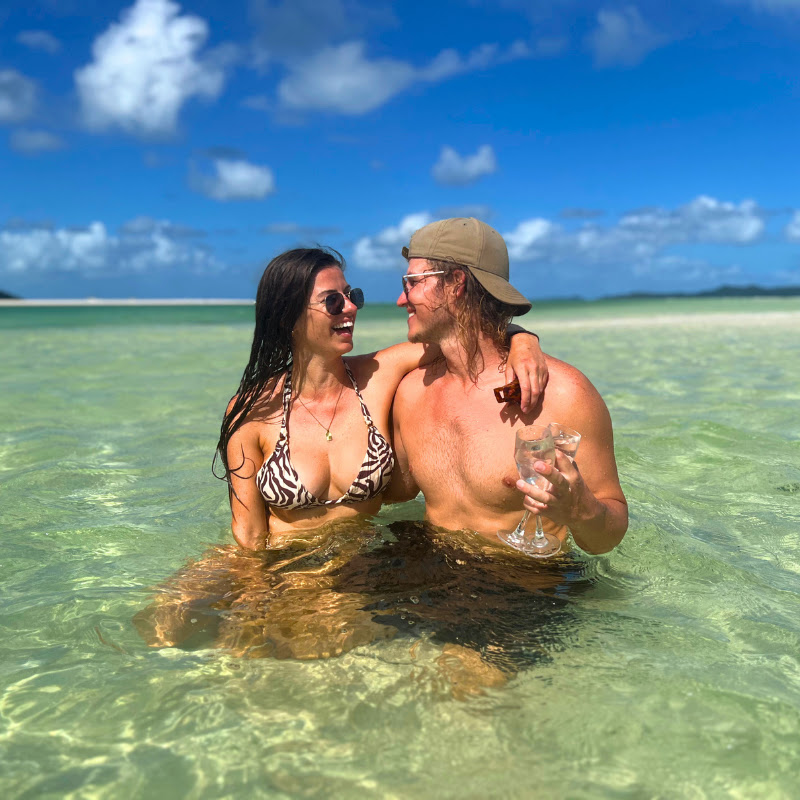
Janaye and Jason, two ocean-loving Aussies, have embarked on a once-in-a-lifetime adventure to circumnavigate the world aboard a 2002 Jeanneau Sun Odyssey 40.
Channel Information:
Social Media Links:
When Paradise Turns Into Your Worst Nightmare… | Sailing San Blas! Ep-242 Location
- Coco Bandero Cays (9.5333,-78.65)
Latest Episodes from Leading the Escapade
Explore the most recent voyages. Subscribe to the channel to never miss an update!
Sailing the Colombian Coast | Pirates?! & Escobar’s Sunken Plane | Ep. 244
Leading the Escapade sails 30 hours along the Colombian coast from Sapzurro to Cartagena, testing new Southeast Asian sails and anchoring in Rosario Islands.
We couldn’t find Nala during a storm on anchor #shorts
A strong storm comes over us and we can't find our cat Nala anywhere?! 🔗 Watch the full video: #Sailinglife #stormonaboat
20,000 Nautical Miles Later: Why Sailing Feels Scarier #shorts
After 20,000 nautical miles, experience brings stronger sailing skills—but also a deeper awareness of how quickly things can go wrong. Past frightening moments can linger, even when the boat is safe. 🔗 Watch the full video: #SailingLife #OceanSailing #SailingExperience #LifeAtSea
Remote Reefs & Hidden Anchorages 🇨🇴 Sailing to Colombia! EP-243
Janaye McDonald and Jason Marshall navigate fuel shortages, cash limits, and customs clearance while sailing Escapade from the San Blas Islands to Sapzurro.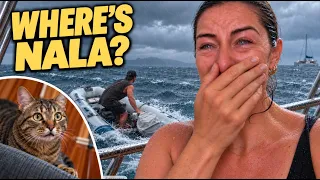
When Paradise Turns Into Your Worst Nightmare… | Sailing San Blas! Ep-242
Riding out violent Culo de Pollo squalls in the San Blas Islands, the crew of Escapade faces an emergency when an unexpected 50-knot gale hits their anchorage.