The 3 Worst Sailboats of All Time
A sailboat has one fundamental job: it should sail. It can contain berths, a galley, a head, refrigeration, and enough interior joinery to suggest an English pub, but beneath all of that, it must convert wind into forward motion without making the helmsperson wonder whether the anchor is still dragging. Three production boats treated that core requirement more like a polite suggestion. Examining these compromised designs on Lady K Sailing, technical editor Tim Labute breaks down why the MacGregor 26, Hunter Edge 27, and Island Packet SP Cruiser became three of the worst sailing production sailboats ever manufactured.
None of these vessels failed by accident. Instead, each sacrificed pure sailing dynamics to chase contrasting priorities: trailerable highway speed, waterskiing capability, or trawler-grade weather protection.
The MacGregor 26: Water Ballast and Planing Speeds
The trailerable powersailer concept began with MacGregor. While earlier versions like the 26D and 26S were conventional, light, water-ballasted sloops designed primarily to sail, the mid-1990s introduction of the 26X shifted the concept in an entirely new direction. Rather than carrying an 8 or 10-horsepower auxiliary outboard for docking, the 26X handled up to 50 horsepower. Its successor, the 26M, accepted as much as a 70-horsepower outboard installed by an authorized dealer.
The 26M measured 25 feet 10 inches overall with a beam of 7 feet 9 inches. It weighed 2,500 pounds empty, carried 300 pounds of permanent ballast, and took on another 1,100 pounds of water ballast for sailing. With the board raised, it drew only 1 foot of water. Under a 70-horsepower engine with ballast tanks drained, MacGregor advertised a top speed of 24 mph.
To reach that speed, MacGregor abandoned the rounded displacement underbody of a conventional sailboat. The hull was light, broad, and flat at the aft section to plane out of the water under power. Under canvas, that flat aft section dragged through waves, while high topsides caught the wind. Placing 1,100 pounds of water ballast inside the hull liner created far less righting leverage than lead carried deep beneath a keel. The vessel heeled quickly in gusts before hull form resisted:
“It sometimes felt as though the sails and hull were involved in a separate meeting, and nobody had circulated the minutes.”
Light weight caused the boat to react sharply to wave chop, climbing over each wave individually rather than carrying momentum. Pointing ability was modest, steering felt vague, and the boat preferred reaching. Yet when the wind died 20 miles from home, while a traditional 5-knot trailer sailer faced hours of displacement motoring, the MacGregor crew drained ballast, raised the board, and planed home at 24 mph.
The Hunter Edge 27: Over-Engineering the Hybrid Concept
Seeing the commercial success of the MacGregor, Hunter Marine built an elaborate and heavier alternative. Marketed as a 27-footer with an exact hull length of 26 feet 4 inches and a beam of 8 feet 4 inches, the Hunter Edge remained in production from 2008 to 2012. It displaced 3,400 pounds empty and weighed over 5,000 pounds with its 1,600-pound water ballast tank full.
Hunter promoted the boat’s ability to exceed 20 knots under power with its 75-horsepower outboard, even advertising that it could tow a waterskier. The design utilized Hunter’s B&R rig, wheel steering, an enclosed motor well, and a finished cabin with a private head. Under sail, the Edge carried nearly 288 square feet of working canvas and moved at 5 or 6 knots in a useful breeze. However, dragging a flat powerboat stern and a heavy outboard compromised performance. When pressed hard, it rounded up abruptly.
The main obstacle for the Edge was weight and cost. The MacGregor succeeded because it was cheap, light, and towable by standard family vehicles. The Edge, weighing over 5,000 pounds loaded on a trailer, demanded a heavy towing rig and commanded a steep price tag. It resembled replacing an inexpensive 20-dollar folding chair with an 80-pound version of mahogany and leather: undeniably more refined, but defeating the simple utility of the original concept.
The Island Packet SP Cruiser: Trawler Comfort Under Canvas
The Island Packet SP Cruiser approached compromise from the opposite direction. Rather than a small runabout trying to sail, it was a substantial cruising sailboat evolving into a trawler. Measuring 41 feet 1 inch overall with a beam of 12 feet 9 inches and a shallow draft of 3 feet 8 inches, it displaced 23,000 pounds, including 5,000 pounds of lead ballast.
Where a typical 41-foot auxiliary carries 40 or 50 horsepower, Island Packet installed a 110-horsepower engine. Supported by 215 gallons of diesel and 130 gallons of fresh water, it offered an estimated motoring range approaching 1,000 nautical miles. Above the hull sat an enclosed pilothouse with large windows and an interior steering station, shielding the crew from cold, wind, and rain.
Under sail, 714 square feet of canvas had to propel 23,000 pounds while fighting the windage of a pilothouse. On a reach in 15 knots of apparent wind, the SP Cruiser reached around 6 knots. Upwind progress, however, was limited. The shallow full keel produced minimal lateral lift, requiring wide tacking angles:
“You could sail an SP cruiser to weather, but the process contained the same faint optimism as trying to move a sofa up the stairs without measuring the staircase.”
Faced with clawing to weather, skippers readily started the 110-horsepower engine, never treating power as a failure of seamanship.
The Philosophy of Purpose: Re-Evaluating the Flawed Hull
Judged strictly as sailing craft, these three boats were deeply compromised. The MacGregor was tender and shaped to plane, the Hunter Edge added excessive towing weight, and the Island Packet carried the machinery and windage of a trawler beneath a modest rig.
Yet evaluating them solely by windward efficiency misses why buyers chose them. The MacGregor was designed for families balancing trailering, lake camping, and beaching:
“This is not a failed sailboat. It’s an extraordinarily versatile recreational vehicle that happens to sail rather poorly.”
The Hunter Edge provided refined cruising comfort and waterskiing for those wanting one dual-purpose platform. The Island Packet SP Cruiser allowed experienced couples to voyage without spending eight hours exposed to foul weather. Each vessel sacrificed pure sailing performance to secure practical qualities their owners valued more.
| Metric | MacGregor 26M | Hunter Edge 27 | Island Packet SP Cruiser |
|---|---|---|---|
| Hull Length | 25 ft 10 in | 26 ft 4 in | 41 ft 1 in |
| Beam | 7 ft 9 in | 8 ft 4 in | 12 ft 9 in |
| Empty Displacement | 2,500 lb | 3,400 lb | 23,000 lb |
| Ballast | 1,100 lb water ballast | 1,600 lb water ballast | 5,000 lb lead ballast |
| Outboard or Auxiliary Power | 70 hp outboard | 75 hp outboard | 110 hp engine |
Frequently Asked Questions
To achieve speeds up to 24 mph under a 70-horsepower outboard, MacGregor utilized a broad, flat aft section so the hull could climb out of the water and plane once the 1,100 pounds of water ballast were drained.
Because the 1,100 pounds of water ballast sits inside the hull rather than beneath a deep keel, it provides less leverage than lead ballast. The boat feels tender and sensitive to crew movement, heeling quickly in gusts before the hull shape resists.
The Hunter Edge was heavier and more expensive, displacing 3,400 pounds empty and over 5,000 pounds when loaded with 1,600 pounds of water ballast. It featured a B&R rig, wheel steering, a finished interior, and handled an outboard up to 75 horsepower.
Its shallow full keel drawing 3 feet 8 inches, substantial 23,000-pound displacement, modest 714 square feet of sail, and the heavy aerodynamic windage of an enclosed pilothouse reduce lateral lift, demanding wide tacking angles to make headway.
It provides an enclosed pilothouse with interior steering that shields the crew from cold, rain, and spray, paired with a 110-horsepower engine and 215 gallons of fuel offering a motoring range approaching 1,000 nautical miles.
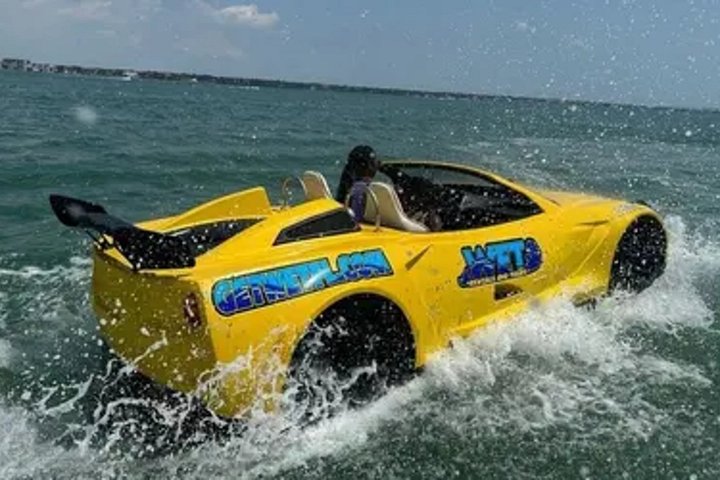
Book a trip where this was filmed — near Clearwater

Support Lady K Sailing
At WeBoating.com, we profoundly acknowledge the unwavering dedication that Lady K Sailing invests in crafting each and every video or voyage. Their passion for delivering exceptional ocean content shines through every frame, and it's a labor of love that deserves your attention.
We invite you to watch their captivating videos here and actively engage with their content, including their social media links above. Liking, commenting, and sharing their work goes a long way in fueling their creative fire.
We're also inviting you to explore the gear, sponsorships, and boat partnerships highlighted in the "The 3 Worst Sailboats of All Time" video description, or directly on YouTube. By engaging with these offerings or purchasing services and items, you directly support Lady K Sailing, their collaborators, and the brands they're associated with.
To ensure you never miss an offshore update, consider visiting their official YouTube Channel to subscribe, like, and join their community directly.
If you have any feedback, corrections, or additional information about Lady K Sailing or their videos, please use the comment form below to share your thoughts with us.
Thank you for being a part of our community and supporting the creators we cherish. Your time and support truly matter!
What are the worst sailing sailboats ever built? In this Practical Sailor episode, we examine three unusual production sailboats that sacrificed pure sailing performance for speed, comfort, portability, or powerboat capability: the MacGregor 26X and 26M, the Hunter Edge 27, and the Island Packet SP Cruiser. These boats can sail, but each was designed around compromises that make it behave very differently from a conventional cruising sailboat.
We look at why the MacGregor 26 became one of the most successful trailerable powersailers ever made, why Hunter created the larger and more expensive Hunter Edge, and why the Island Packet SP Cruiser is closer to a motorsailer or trawler than a traditional sailboat. Are these truly bad sailboats, or were they clever solutions for boaters who valued shallow draft, high-speed motoring, easy trailering, weather protection, and cruising comfort more than windward performance? Before buying a used sailboat, trailer sailer, powersailer, motorsailer, or cruising sailboat, watch this comparison of three boats that probably should have been powerboats.
Lady K Swag!!! Right here: www.lady-k-sailing-shop.fourthwall.com
Need a consult? Click here to drop a message: https://ladyksailing.com/consults/
Want to help support Lady K Sailing? Click here to become a Patron: http://www.patreon.com/ladyksailing
Or here to make a one time donation: http://www.ladyksailing.com/team-k
Follow Lady K on Facebook: https://www.facebook.com/ladyksailing
Or Instagram: https://www.instagram.com/ladyksailing/

Lady K Sailing
From the legendary Hughes 35 'Lady K' to the current catamaran 'Rome' refit, Tim Labute provides the technical gold standard for affordable cruising.
Channel Information:
Social Media Links:
The 3 Worst Sailboats of All Time Location
- Island Packet, Largo, Florida (27.9095,-82.7873)
- Hunter Marine, Alachua, Florida (29.7939,-82.4948)
- MacGregor, Costa Mesa, California (33.6411,-117.9187)
Latest Episodes from Lady K Sailing
Explore the most recent voyages. Subscribe to the channel to never miss an update!
Why 90% of Sailboats Can’t Actually Cross an Ocean
Tim Labute investigates the viral claim that 90% of sailboats cannot cross an ocean, contrasting modern production rally finishers with structural inspection realities.
The Cottage Boat! Start Your Waterfront Dream Before Moving #cottageboat #sailing #sailboat #travel
Tim Labute of Lady K Sailing outlines the cottage boat strategy, explaining how aspiring boaters can use remote work, three-year plans, and weekend commuting to start living on the water years before permanent relocation.
How Landlocked Sailors Actually Own Boats
Tim Labute outlines practical methods for owning a cruising sailboat hundreds of miles from the coast, contrasting permanent relocation with the commuter cottage boat model.
How to Tell if a Sailboat is Garbage
Evaluating older sub-$10,000 cruisers, Tim Labute separates replaceable components like worn sails and rigging from fatal structural flaws including rotten deck core, deteriorating keel bolts, and ruined bulkheads.
Budget Sailing 💵 The New Rules📋for Buying a $10K Sailboat! ⛵#sailboat #boatbuying #advice #rules
Tim Labute from Lady K Sailing outlines new rules for buying a $10,000 sailboat, explaining how slip availability, marine insurance, and maintenance logistics have shifted over 20 or 30 years.