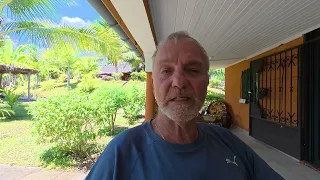
#340 Du chocolat à Ambanja , Madagascar, 1ère partie
For bluewater voyagers navigating the remote waters of northwest Madagascar, true seamanship extends far beyond the helm. After spending nine years circumnavigating the globe aboard their sailing catamaran, Michel and Corinne of Javerne established their cruising base on Nosy Be. While their offshore passages have spanned world oceans, traveling domestic coastal arteries across the Mozambique Channel and the western Indian Ocean demands adaptability, local insight, and cultural resilience.
Stepping away from their yacht, the voyagers embarked on an overland and maritime expedition to the mainland. Their goal was twofold: to document local transit aboard an aged, heavy-iron coastal ferry bound for Ankify, and to journey inland through the fertile Sambirano Valley to the historic agricultural center of Ambanja. There, deep in the Diana Region, an ethical fair-trade cocoa enterprise founded by a Swiss-Malagasy entrepreneur is transforming rural livelihoods across northern Madagascar.
The Iron-Hull Ferry Transit Across Northwest Waters to Ankify
Setting out from the island anchorages of northwest Madagascar into the turquoise waters of the western Indian Ocean, the crew of Javerne prepared for an overland expedition starting at the coastal terminal of Ankify and ascending toward Ambanja and the fertile Sambirano Valley. Standing on the departure quay, the voyagers met a quintessential piece of regional transport infrastructure: an aging, heavy-gauge iron car ferry bearing every mark of continuous commercial duty in the tropics. Heavy oxidation coated the steel bulkheads and deck plating, presenting a weathered utilitarian craft contrasting sharply with the polished gelcoat of offshore yachts.
For Corinne, stepping aboard the weathered iron vessel provoked immediate trepidation, noting with nervous candor that reaching the mainland terminal safely would warrant celebration. Michel, however, embraced the crossing with seasoned cruising philosophy, maintaining that venturing outside personal comfort zones is central to authentic travel. Operating with a roll-on roll-off deck, the ferry transported a single passenger automobile alongside foot travelers, while easily retaining deck capacity for two or three additional vehicles across the channel.
Estuarine Seamanship, Tidal Channels, and Coastal Pilotage at Ankify Harbor
Navigating the shallow mangrove-lined channels that characterize northwest Madagascar where the Mozambique Channel meets the Indian Ocean, the maritime approach taken by Javerne toward Ankify requires keen tidal awareness before travelers can push inland toward Ambanja and the Sambirano Valley. Ankify serves as the indispensable umbilical harbor connecting offshore islands of the Diana Region to the mainland. The coastal approaches feature silt deposits, shifting sandbars, and dense mangrove estuaries shaped by seasonal river runoffs from inland highlands.
Operating a shallow-draft iron ferry in these waters demands practical seamanship and localized navigational knowledge. Ferry skippers must calculate tidal heights and currents to avoid grounding on unbuoyed shoals during low-water spring tides. Guided by visual pilotage and surface ripples, the master brought the iron hull safely alongside the concrete slipway. As the bow ramp clattered down, foot passengers and cargo cleared swiftly, allowing Michel and Corinne to step ashore on the mainland and commence their overland journey.
Overland Navigation: Ruts, Monsoons, and Dirt Tracks into the Sambirano Valley
Departing the salt-crusted docks of Ankify on the mainland of northwest Madagascar in the Indian Ocean, the expedition mounted by the sailors of Javerne faced a punishing 19-kilometer dirt artery leading directly toward Ambanja and the lush agricultural basin of the Sambirano Valley. While a 19-kilometer drive on paved highway takes twenty minutes, overland passage through rural Madagascar represents a demanding test of vehicles and patience. The unpaved corridor is deeply gouged by monsoon deluges and heavy transport, having endured years without formal grading or repair.
Navigating the rutted track proved an exercise in perseverance. Michel and Corinne found their smartphone GPS inadvertently locked in pedestrian routing mode, requiring fifteen separate stops along the cratered dirt road to recalibrate directions. Embracing the unhurried cadence of local travel, they completed the bumpy passage in approximately one hour. Upon reaching Ambanja, they checked into the peaceful garden bungalows of the V Lodge (Volodge), establishing a comfortable staging base to explore the regional cocoa industry.
The Sambirano Valley Cocoa Cooperative: Empowering Smallholders in Ambanja
Returning to Ambanja in the verdant Sambirano Valley after their initial coastal transit from Ankify across the Indian Ocean waters of Madagascar, Michel and Corinne of Javerne reunited with a visionary agricultural project first observed during their earlier bluewater cruising seasons. Three years prior, while still living aboard their catamaran, the sailors had filmed the initial construction of this cocoa processing facility. Returning now, they found the enterprise in full commercial operation, managing an extensive network of independent smallholder cacao farmers.
The enterprise was founded by Philippe Mena, a Swiss-Malagasy entrepreneur residing in Switzerland who sought to harness the agronomic wealth of his homeland. The Sambirano River basin possesses a sheltered microclimate and rich volcanic alluvial soils, yielding prized aromatic cacao varieties. To protect local producers from predatory middlemen, Philippe established a cooperative organizing over 1,500 smallholder farmers across Upper and Lower Sambirano. The cooperative guarantees fair purchase prices and organic certification, processing nearly 2,000 metric tons of beans annually.
Factory Intake Operations: Counter-Weighing, Grading, and Fair-Trade Traceability
Inside the central processing compound in Ambanja within the Sambirano Valley, reached by the crew of Javerne after their rugged crossing from Ankify in northwest Madagascar beside the Indian Ocean, the morning intake of harvested cacao moves with disciplined precision under the supervision of export division manager Razar Johnson. Farm trucks and utility transports arrive loaded with coarse burlap bags, entering a meticulous verification protocol designed to uphold strict international organic and fair-trade standards.
The critical first step is standardized counter-weighing. Cocoa sacks are pre-calibrated to exactly 67 kilograms per bag, and factory technicians hoist each sack onto certified scales to verify weights against incoming farmer manifests. Every lot is cross-checked to ensure complete traceability from field to warehouse. The dried beans then pass to wide sorting tables where skilled workers inspect each batch, removing foreign debris, stones, and defective beans. Surrounding the facility, massive mango trees hang laden with fruit, signaling the bounty of the northern harvest season.
Export Logistics, Swiss Partnerships, and Domestic Artisanal Chocolate Production
Balancing global commerce with regional community welfare in Ambanja within the Sambirano Valley, reached after the maritime crossing to Ankify across Madagascar waters of the Indian Ocean, the operations observed by Javerne highlight a unique dual-track distribution model. Developing nations often export raw agricultural commodities overseas while local populations remain disconnected from finished value-added goods. Under Philippe Mena’s model, the enterprise intentionally combines high-end export trade with meaningful local beneficiation.
Approximately 90 percent of the cooperative’s dried cocoa beans are exported to premium chocolatiers across Western Europe, with Switzerland serving as the primary commercial destination. Meanwhile, the remaining 10 percent is retained on-site at the Sirin Ingredients factory. There, beans are roasted and processed into cocoa mass, nibs, and finished chocolate bars ranging from 15 percent to 50 percent cacao. This domestic production is dedicated to the local Sambirano community, ensuring that the farmers who cultivate the crop can affordably taste and enjoy fine chocolate created from their own harvest.
Madagascar Coastal Transit and Provisioning Telemetry
For cruising yachtsmen like the crew of Javerne navigating northwest Madagascar and the Indian Ocean, coordinating coastal ferry transfers at Ankify and overland provisioning runs into Ambanja and the Sambirano Valley requires detailed logistical planning. The regional transport network integrates maritime estuarine crossings with demanding unpaved roads, rewarding travelers who maintain flexible schedules and robust overland preparation.
| Telemetry Parameter | Field Data & Observation Details |
|---|---|
| Expedition Vessel & Voyagers | Javerne (Michel & Corinne, 9-year circumnavigators based in Nosy Be) |
| Marine Passage Route | Nosy Be to Port of Ankify Coastal Terminal (Mozambique Channel / Indian Ocean) |
| Coastal Transit Craft | Vintage heavy-gauge iron car ferry (single vehicular deck, capacity 1–3 cars) |
| Coastal Port Coordinates | Port of Ankify Terminal: Lat -13.6833° S, Long 48.3333° E |
| Overland Transit Distance | 19 kilometers from Ankify landing to Ambanja via unpaved secondary road |
| Overland Transit Duration | 45 to 60 minutes across heavily rutted unpaved dirt track |
| Agricultural Center Coordinates | Ambanja & Sambirano Valley: Lat -13.6833° S, Long 48.4500° E |
| Regional Lodging Facility | V Lodge (Volodge) complex (garden bungalows and dining pavilion) |
| Cocoa Facility & Founder | Saniram Export / Sambirano / Sirin Ingredients (founded by Philippe Mena) |
| Cooperative Farmer Scale | 1,500+ independent smallholders across Upper and Lower Sambirano |
| Annual Processing Volume | Approximately 2,000 metric tons of certified organic dried cocoa beans |
| Standard Intake Caliber | 67 kg calibrated burlap sacks with counter-weighing and sorting inspection |
| International Export Share | 90% of dried cocoa beans exported overseas (primary destination: Switzerland) |
| Domestic Chocolate Share | 10% processed on-site into cocoa mass, nibs, and 15%–50%+ chocolate bars |
Frequently Asked Questions
Cruising sailors planning voyages aboard Javerne or visiting vessels in northwest Madagascar across the Indian Ocean frequently encounter critical logistical questions regarding ferry crossings at Ankify, road conditions into Ambanja, and provisioning opportunities throughout the Sambirano Valley.
Cruisers transit between Nosy Be and Ankify via local heavy-iron car ferries and open motor launches (vedettes). The vintage iron ferries provide roll-on roll-off capacity for foot passengers, cargo, and vehicles across coastal waters.
The iron ferries operating to Ankify are utilitarian commercial craft with noticeable exterior rust and steel construction. While unpolished compared to offshore yachts, they safely transport vehicles and cargo across sheltered coastal channels.
The 19-kilometer overland stretch from Ankify to Ambanja is an unpaved secondary dirt track heavily rutted by monsoon rains. Driving this section requires 45 to 60 minutes, requiring sturdy vehicles to handle deep craters.
The Sambirano Valley features a protected microclimate shielded by mountain topography and enriched by volcanic alluvial soils. These conditions cultivate prized Criollo and Trinitario cocoa beans known worldwide for bright acidity and complex aromatic profiles.
Founded by Philippe Mena, the cooperative organizes over 1,500 smallholder growers across Upper and Lower Sambirano. It eliminates predatory intermediaries, provides fair guaranteed purchase prices, and assists farmers with organic certification.
Cocoa deliveries arrive in standardized 67-kilogram burlap sacks that are counter-weighed against farmer receipts on certified scales. The beans pass across sorting tables where inspectors remove twigs, stones, and imperfect beans before export bagging.
Approximately 90 percent of the facility’s 2,000 metric tons of annual cocoa beans is exported to European chocolatiers, primarily in Switzerland. The remaining 10 percent is processed locally at Sirin Ingredients into chocolate bars for the community.
Support Javerne
At WeBoating.com, we profoundly acknowledge the unwavering dedication that Javerne invests in crafting each and every video or voyage. Their passion for delivering exceptional ocean content shines through every frame, and it's a labor of love that deserves your attention.
We invite you to watch their captivating videos here and actively engage with their content, including their social media links above. Liking, commenting, and sharing their work goes a long way in fueling their creative fire.
We're also inviting you to explore the gear, sponsorships, and boat partnerships highlighted in the "#340 Du chocolat à Ambanja , Madagascar, 1ère partie" video description, or directly on YouTube. By engaging with these offerings or purchasing services and items, you directly support Javerne, their collaborators, and the brands they're associated with.
To ensure you never miss an offshore update, consider visiting their official YouTube Channel to subscribe, like, and join their community directly.
If you have any feedback, corrections, or additional information about Javerne or their videos, please use the comment form below to share your thoughts with us.
Thank you for being a part of our community and supporting the creators we cherish. Your time and support truly matter!
Veuillez regarder la video #224 pour comprendre celle-ci.Nous retournons dans la chocolaterie de Ambanja qui est actuellement en production.Toutes les explications dans les 2 prochaines vidéos.
On vous emmène avec nous dans la suite de nos aventures à Nosy Be.
Et comme toujours dans la joie et la bonne humeur propres à Javerne.

Javerne
Michel et Corinne autour du monde, et on s’est installés à Nosy Be, Madagascar après 9 ans de voyage sur un catamaran à voile.
Channel Information:
Social Media Links:
#340 Du chocolat à Ambanja , Madagascar, 1ère partie Location
- Port of Ankify Coastal Terminal, Diana Region, Madagascar (-13.6833,48.3333)
- Ambanja & Sambirano River Valley, Diana Region, Madagascar (-13.6833,48.45)
Latest Episodes from Javerne
Explore the most recent voyages. Subscribe to the channel to never miss an update!
#342 Bricolage et aventures à Nosy Be
On vous a manqué ?Donc du coup une video de 30 minutes de la suite de notre vie à Nosy Be, avec du bricolage, de la découverte de l’ile, et notre vie au quotidien .Et une petite parenthèse de nos compagnons Javy et Snoopie dans leur jeux quotidien. On vous emmène avec nous dans la suite de nos avent...
#341 Du chocolat à Ambanja , Madagascar, 2ème partie
La vidéo est ici : retournons dans la chocolaterie de Ambanja qui est actuellement en production.2ème vidéo, et tout le processus de production expliqué. On vous emmène avec nous dans la suite de nos aventures à Nosy Be. Et comme toujours dans la joie et la bonne humeur propres à Javerne.
#340 Du chocolat à Ambanja , Madagascar, 1ère partie
Cruising sailors of Javerne transit northwest Madagascar on a rugged iron coastal ferry to Ankify before venturing into the Sambirano Valley and Ambanja to explore artisanal cocoa production.
#339 Javy & Snoopie
Salut à vous tous. Hé bien pour cette semaine rien de bien particulier, du coup on vous propose la vie de nos gentils animaux Javy et Snoopie. On vous emmène avec nous dans la suite de nos aventures à Nosy Be. Et comme toujours dans la joie et la bonne humeur propres à Javerne.
#338 C’est la Vie !
Des amis nous rendent visite, et c’est l’occasion de faire une délicieuse fondue.Quelques jeux bien arrosés.Et on part faire des courses à Hellville.On vous emmène avec nous dans la suite de nos aventures à Nosy Be. Et comme toujours dans la joie et la bonne humeur propres à Javerne.