Tour of my New Catamaran (Honest Review)
Huub van der Mark anchored his 2003 Voyage Maxim 380 catamaran in the protected coastal waters of Puerto Rico to document a thorough technical walkthrough of his refitted vessel. Documented on Huub Vlogs, the multihull recently completed extensive structural restorations and equipment upgrades after enduring hull damage from Hurricane Beryl in July 2024.
Measuring 38 feet overall with sugar scoop transom additions that extend the functional waterline to slightly over 40 feet, the cruising multihull offers a balanced liveaboard platform. The walkthrough evaluates how customized off-grid solar architecture, mechanical propulsion, and interior ergonomics perform after months of hands-on marine refit work across the Caribbean.
Deck Layout, Solar Arch, and Rigging Upgrades
At the stern, the catamaran features an extensive off-grid power generation system centered around an 1,800-watt solar array. Huub commissioned a custom tubular stainless arch welded in St. Croy in the USVI to support four 450-watt photovoltaic panels. Rather than using fixed framing trays that limit future panel replacements, the rack uses open pipe rails capable of securing 41-inch-wide panels without obstructing the walkway. While two panels generating 900 watts previously supplied adequate baseline electricity, the four-panel setup routinely recharges the onboard battery bank to full capacity by 10:30 in the morning under Caribbean sun.
Forward of the solar arch, a custom fiberglass hardtop built with Roel spans the cockpit. The overhead structure functions as an integrated rainwater catchment system designed to channel freshwater into the ship’s storage tanks during tropical downpours. The standing rigging supports a mainsail and working sails that are roughly a year to a year and a half old. At the bow, the ground tackle setup relies on a newly fitted Lofrans 1500-watt electric windlass and fresh anchor chain installed during a maintenance stop in Martinique while traveling alongside fellow cruiser Sam Holmes.
Tender Configuration and Dinghy Handling
Suspended from the aft davits is a 2m80 Highfield aluminum dinghy equipped with a rollup deck. While the collapsible tender met past storage needs on smaller craft, Huub notes that a 3m10 rigid inflatable boat with a solid bottom would provide significantly improved comfort and sea-keeping across choppy anchorages. Propulsion for the tender comes from a 15-horsepower Yamaha Enduro outboard engine acquired two weeks prior to replace an older motor.
Interior Living Quarters and Post-Hurricane Hull Repairs
The interior follows a three-cabin owner’s version layout, dedicating the starboard hull to an owner’s suite featuring a private double berth, extensive locker cabinetry, and a dedicated head with a separate stall shower. This hull section was the primary site of structural impact during Hurricane Beryl in July 2024, when severe storm action breached the fiberglass laminate. Following extensive structural composite repairs, the interior framing and outer hull sections show complete structural integrity.
Stepping into the port hull reveals a second double berth forward, a shared midships head, and an aft guest cabin. Underneath the aft port berth sits an onboard 50-gallon-per-hour watermaker, which remains temporarily offline pending diagnostic repairs after an operational error.
Engine Compartments and Auxiliary Machinery
Propulsion across both hulls is delivered by twin 30-horsepower Yanmar marine diesel engines. Unlike many contemporary cruising catamarans that house machinery in exterior transom lockers beneath cockpit deck lids, the Maxim 380 encloses its diesels directly beneath the interior aft berths. Huub emphasizes that this internal arrangement shields sensitive mechanical and electrical components from salt spray and deck drainage, observing that “these engines look incredibly well for them being 20 years old” while noting that on exterior hatch configurations, “water comes always in and after like 5 years there’s already rust on top of the engine often.”
Beside the port diesel sits an enclosed 12-kilowatt auxiliary marine generator. Operating primarily as a backup reserve, the generator has run only three times for 5 minutes during routine maintenance cycles to preserve mechanical lubrication, as the solar array handles daily loads. The generator is wired to run the vessel’s air conditioning system, though cabin ventilation through open deck hatches has rendered powered cooling unnecessary in anchorages.
Saloon Ergonomics, Galley Amenities, and Power Systems
The bridgedeck saloon combines the central navigation station, dining lounge, and galley. Huub, who stands 6 feet 1 inch tall, notes that interior headroom accommodates his height comfortably through the central walkway up to the galley sink, where dishwashing naturally requires leaning forward. The saloon seating features a semicircular settee, though its curved perimeter makes straight posture awkward when viewing the mounted television, requiring a stack of cushions to recline comfortably. Converting the bench to a traditional right-angle settee remains difficult due to the underlying freezer unit.
In the galley, marine refrigeration includes a dual 12-volt setup consisting of a two-cabinet refrigerator unit costing nearly $2,000 and a companion freezer cabinet priced around $1,100, both installed one month earlier. Countertop appliances include an electric toaster, coffee maker, and an air fryer powered through the house electrical bank. Mounted under the settee cushions, the electrical bay houses two Victron 15070 solar charge controllers dividing the solar panels into two independent arrays, alongside an 80-amp battery charger for generator operations. Energy storage relies on a 600Ah lithium battery bank.
To balance operational loads and reduce parasitic idling losses, the boat employs four distinct inverters. High-demand alternating current is supplied by a built-in 3000-watt 230-volt inverter, while an auxiliary 1500-watt 110-volt unit runs 110-volt power tools. Communications run through a compact 250-watt Victron inverter dedicated exclusively to the Starlink satellite receiver, because “big inverters use more electricity” during continuous operation. A fourth miniature inverter provides dedicated power for charging editing laptops.
Cruising Dynamics, Market Value, and Structural Construction
Transitioning from monohulls to a multihull solved key challenges for Huub’s digital workflow, providing a stable working salon with panoramic ocean views. At anchor, the catamaran completely eliminates harmonic rolling, leading Huub to reflect: “I’ve never had a bad night sleep on this boat.” Under sail, the Maxim 380 regularly logs 7 to 8 knots in moderate breezes, though downwind speeds remain modest, prompting future plans to fit a bowsprit and furling light-air downwind sail.
In the brokerage market, Voyage Maxim 380 catamarans generally command between $150k for vessels in remote locations and $200k up to $250,000 for well-maintained examples. Huub compares this price point to older Leopard 45 catamarans built between 98 and 2008, which sell near $200k. While a Leopard 45 offers greater interior volume that can easily accommodate a standard $300 domestic residential refrigerator, it introduces significantly heavier sails, larger running rigging, and higher haul-out and maintenance expenses.
From a structural standpoint, the 2003 Voyage Maxim 380 features an end-grain balsa core laminate, a common build standard two decades ago. During hurricane repairs, Huub noted the moisture sensitivity of balsa compared to modern PVC core materials, advising prospective catamaran buyers to inspect core integrity around penetrations. With major post-storm fiberglass repairs finished and energy systems fully operational, Huub reached a major cruising milestone, noting: “this is the first moment where I can actually say I am done” with baseline refit work.
Technical Specifications of the Voyage Maxim 380 Refit
| System or Equipment | Details and Measured Figures | Installation Notes |
|---|---|---|
| Hull Length Overall | 38 ft (waterline over 40 ft) | Transom sugar scoops extend waterline length |
| Solar Power Generation | 1,800 W (four 450 W panels) | Custom stainless pipe arch welded in St. Croy |
| Battery Bank Capacity | 600 Ah lithium | Recharged to full by 10:30 AM via dual Victron 15070 controllers |
| Multi-Inverter Network | 4 dedicated units | 3000W 230V, 1500W 110V, 250W Starlink, and laptop charger |
| Auxiliary Generator | 12 kW diesel | Run 3 times for 5 minutes maintenance; powers air conditioning |
| Main Propulsion | Twin 30 hp Yanmar diesels | Under-berth interior dry mounting preventing seawater rust |
| Ground Tackle System | 1500 W Lofrans windlass | Installed in Martinique with new anchor chain |
| Fresh Watermaker | 50 gal/hr unit | Internal installation under port berth awaiting repair |
| Tender and Outboard | 2m80 Highfield with 15 hp Yamaha | Rollup aluminum deck with Enduro outboard |
Frequently Asked Questions
The Voyage Maxim 380 measures 38 feet in nominal hull length, but sugar scoop extensions on the transoms give the boat a waterline length of slightly over 40 feet.
The boat features 1,800 watts of solar through four 450-watt panels, two Victron 15070 charge controllers, a 600Ah lithium house bank, and four separate inverters, including a 250-watt Victron unit dedicated to Starlink.
Positioning the twin 30hp Yanmar engines under the interior berths eliminates exterior deck hatches that often leak seawater and cause premature rust on engine blocks.
Both catamarans sell around $200k on the pre-owned market, but the Leopard 45 offers a larger layout accommodating domestic appliances at the cost of bigger sails, heavier rigging, and higher maintenance expenses.
The catamaran carries a 2m80 Highfield aluminum rollup dinghy paired with a 15-horsepower Yamaha Enduro outboard motor.
Book a trip where this was filmed — near San Juan

Support Huub Vlogs
At WeBoating.com, we profoundly acknowledge the unwavering dedication that Huub Vlogs invests in crafting each and every video or voyage. Their passion for delivering exceptional ocean content shines through every frame, and it's a labor of love that deserves your attention.
We invite you to watch their captivating videos here and actively engage with their content, including their social media links above. Liking, commenting, and sharing their work goes a long way in fueling their creative fire.
We're also inviting you to explore the gear, sponsorships, and boat partnerships highlighted in the "Tour of my New Catamaran (Honest Review)" video description, or directly on YouTube. By engaging with these offerings or purchasing services and items, you directly support Huub Vlogs, their collaborators, and the brands they're associated with.
To ensure you never miss an offshore update, consider visiting their official YouTube Channel to subscribe, like, and join their community directly.
If you have any feedback, corrections, or additional information about Huub Vlogs or their videos, please use the comment form below to share your thoughts with us.
Thank you for being a part of our community and supporting the creators we cherish. Your time and support truly matter!
Vapor is available on the Sublue Shopify/Amazon store
Shopify - https://store.sublue.com/products/vapor
Amazon- https://www.amazon.com/sublue-Pump-Jet-Underwater-Scooter-Snorkeling/dp/B0DK8Q7MGP?ref_=ast_sto_dp&th=1
Part 15 of Solo Sailing a Catamaran. An updated tour of the catamaran. After being repaired and upgraded after Hurricane Beryl in July 2024 made a bunch of holes in the boat!
If you would like to be part of our fixing up process, consider joining on https://www.patreon.com/huubvlogs , if you'd be interested in supporting the journey once :) https://www.paypal.me/huubvandermark
————————————————————————————
Want to see real-life updates and chat? https://www.patreon.com/huubvlogs
Would you like to support once through Paypal? http://www.paypal.me/huubvandermark/
Would you like to buy me a coffee? https://www.buymeacoffee.com/huubvlogs
Let Amazon pay me when you shop (FREE TO YOU): https://amzn.to/47UNucb
————————————————————————————
365 days I crewed on sailboats from San Diego, USA all the way down to Panama, stopping in Mexico and Costa Rica. After Panama crossing the Pacific Ocean to New Zealand stopping at islands like the Marquesas Islands, French Polynesia, Tonga and Fiji
45 days I traveled through New Zealand from the Northernmost point to the Southernmost point, then
100 days I traveled by motorbike through Vietnam, Laos and Cambodia, then
365 days I traveled in my self-built campervan from Kyrgyzstan to Tajikistan, Uzbekistan, Kazakhstan and Turkmenistan, then
365 days I traveled with this van through Iran and Pakistan, then
180 days I built an off-grid log cabin in the woods in Spain, then
180 days I restored an old sailboat in Guatemala, then
365 days I traveled with this sailboat from Guatemala to Honduras, Cuba, Jamaica, Bahamas, Turks and Caicos, Dominican Republic, Puerto Rico, Grenada and more islands in the East Caribbean
Currently we are #hurricanedamage , we're in the #tour doing #catamaran
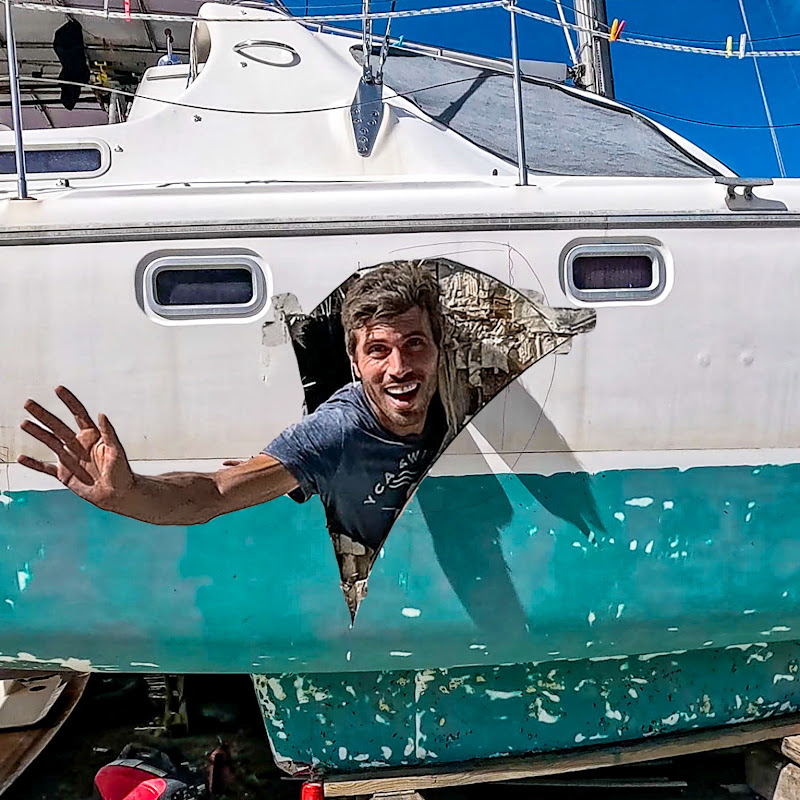
Huub Vlogs
Huub van der Mark chronicles budget boat restoration and coastal cruising on Huub Vlogs. Exploring Dutch and European waterways, Huub shares practical outboard maintenance, fiberglass repairs, and accessible small-boat seamanship.
Channel Information:
Social Media Links:
Tour of my New Catamaran (Honest Review) Location
- Salinas, Puerto Rico (17.97,-66.29)
Latest Episodes from Huub Vlogs
Explore the most recent voyages. Subscribe to the channel to never miss an update!
She wasn’t expecting THIS many Sharks !
Huub van der Mark and crew sail from Tahiti to the Tuamotus to attempt a shark drift dive at the north pass of Fakarava, encountering manta rays and titan triggerfish.
72 Hours in the Middle of the Pacific Ocean
Before departing the Society Islands, Huub and Maria Paula swim with humpback whales off Moorea, then tackle a 72-hour sail against trade winds to reach Fakarava in the Tuamotu Archipelago aboard catamaran Limonada.
Our Last Few Days before Everything Gets Remote
Huub and Maria Paula wrap up cruising in Moorea, relocate to Tahiti to recharge the galley freezer with cruiser Andre, upgrade scooter tires, and provision for months of remote sailing in the Tuamotus.
Her Biggest Dream came true Today!
After repairing their catamaran's engine starter and watermaker in Tahiti, Huub van der Mark and MP sail to Moorea to hike the Pineapple Trail, provision in Cook's Bay, and swim alongside four humpback whales during a heat run.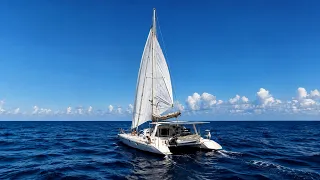
The Reality of Living on a Sailboat in French Polynesia.
Huub of Huub Vlogs navigates the realities of living aboard a cruising catamaran in French Polynesia, troubleshooting diesel electrics and watermaker repairs between Tahiti and Moorea.