Rainman Portable Watermaker Demo/Review after 3 Years use. How we make fresh drinking water on boat
Rob Oberg sets up a portable Rainman reverse osmosis watermaker on the deck of Our Dreamtime during passage through Indonesia, demonstrating the operational setup and performance testing after three continuous years of cruising with Dreamtime Sail. Access to reliable freshwater represents one of the primary constraints for liveaboard cruisers away from municipal docks. Having deployed the modular desalination system across remote anchorages since early 2020, Rob shares an evaluation of flow output, mechanical durability, and routine maintenance practices developed over long-term field use.
As Rob notes at the outset of the demonstration, “fresh drinking water is the biggest single limiting factor on a cruising boat and quite frankly we don’t think you can do any serious cruising without a water maker.” The 41-year-old Whitby 42 ketch relies on self-sufficiency when voyaging across island passages, making equipment reliability and straightforward operation vital when replenishment facilities are days away.
Deploying the Modular Components on Deck
The Rainman configuration on Our Dreamtime consists of two main portable modules: a 240-volt electric motor driving a high-pressure pump, and a separate fiberglass enclosure holding two high-capacity reverse osmosis membranes. The pump unit weighs 24 kilos and is stowed inside the cockpit lazarette, while the dual-membrane assembly weighs 20 plus kilos and is secured in the engine room above the port fuel tank.
To prevent gelcoat scratching and dampen motor vibrations, Rob positions the pump casing on a piece of outdoor carpet laid over the cockpit deck. Power is routed through the standard 3-meter electrical lead connected to a short extension cord. While the unit was originally powered by a portable Honda 2.2 petrol generator, subsequent vessel upgrades allow the system to run directly from an onboard diesel generator drawing 6 amps and consuming 1400 watts of electrical power.
Connecting the Intake and Discharge Plumbing
Plumbing the system involves three quick-connect fluid lines running between the hull and the deck modules. The intake line features a protective cap on a captive ring and connects to a coarse pre-strainer that drops directly over the gunwale. Rob emphasizes that proper immersion depth is critical during deployment: “make sure that the intake line is well down into the water clear of the surface so anything floating by is not going to block the strainer.” The pre-strainer must hang deep enough to avoid floating plastic bags and surface scum, yet remain safely above silt and mud when anchored in shallow bays.
The membrane enclosure connects to three separate lines: the black high-pressure hose that clicks directly into the pump head, the clear brine discharge hose that routes concentrated saltwater overboard, and the white product water hose delivering potable water. An extension hose extends the product delivery line up to 10 meters, allowing freshwater to reach the forward deck fills without repositioning the machinery.
Operating Pressure and Water Purity Benchmarks
Starting the watermaker requires gradual pressure adjustments using the needle control valve mounted alongside the pressure gauge on the membrane housing. Rob slowly closes the valve to ramp system pressure into the center of the green operating zone, avoiding sudden pressure spikes that could rupture high-pressure seals. Once operating pressure stabilizes, the initial output stream is directed into a clean 20-liter bucket.
Rob verifies the product water purity using a handheld digital total dissolved solids tester. While municipal tap water and standard drinking water benchmarks range between 500 and 800 parts per million, the reverse osmosis output registers at approximately 200 parts per million. This confirms effective salt rejection across the semi-permeable membranes before directing flow into the main vessel tanks.
| Metric | Stated specification | Field test result | | Seawater temperature | 25 | 30 | | Production rate (L/hr) | 140 | 170 | | Water purity (TDS ppm) | 500 | 200 | | 20 liter production time (minutes) | 8 | 7 |
Tropical Seawater Temperatures and Output Rates
Manufacturer documentation rates the dual-membrane unit for a production baseline between 120 and 140 liters per hour under standard conditions. To measure actual field output, Rob times the filling of a 20-liter drum with a stopwatch. The drum fills completely in just under 7 minutes. Calculating the flow over an hour reveals an actual production rate of 170 liters per hour.
Rob attributes this substantial performance surplus to equatorial water temperatures. Checking technical data reveals that reverse osmosis membrane efficiency increases with temperature: “for every degree you get an extra 3% output.” Seawater in equatorial Indonesia measures 30 degrees Celsius, compared to typical Australian summer waters around 24 to 25 degrees. This 5-degree temperature increase yields an extra 15 percent in volume output, reducing the generator run time needed to replenish the vessel tanks.
Freshwater Flushing and Filtration Maintenance
Protecting reverse osmosis membranes from biological fouling requires a thorough freshwater rinse after every production run. Upon reaching the desired tank levels, Rob slowly backs off the needle pressure valve to depressurize the cylinders before shutting off power. The intake line is lifted from the sea, the coarse strainer removed, and the hose placed into the 20-liter bucket of freshwater collected during initial startup.
Running pure freshwater through the pump head, pre-filter housing, and membrane cores displaces all brine and marine organisms overboard. Once flushed, Rob removes the pre-filter cartridge to dry under direct sunlight: “removing the filter after each use and just letting it dry out in the sun really does extend the life of them.” Sun-drying desiccates trapped bacteria and biological residue, preventing premature slime accumulation and extending cartridge service intervals.
Addressing Mechanical Failures and Equipment Wear
Throughout three years of operational use, the crew experienced only one mechanical failure, occurring within the first month of cruising the Great Barrier Reef during 2020. Severe pump cavitation halted water production while anchored remotely. Contacting Rainman support initiated systematic troubleshooting over the phone, though the issue could not be resolved on board.
The crew delivered the pump unit to the local chandlery at Abell Point Marina in Airlie Beach. Rainman arranged express freight to their Sydney workshop, receiving the crate on Friday evening at 6:00 PM. Diagnostics on Monday revealed a severed drive shaft inside the high-pressure pump. Technicians installed a replacement pump and dispatched the repaired unit back by midday at zero expense. Rob commends this responsive resolution: “something went wrong they fixed it as fast as was humanly possible and we have not had a problem with its operation since then.”
A minor operational challenge involves vibration along the black high-pressure hose. As the pre-filter gradually accumulates particles, hose oscillation intensifies, creating friction against adjacent surfaces: “before I used a towel I just draped it up and over and it actually wore a hole in our sail bag.” Rob resolves this chafe by wrapping the line in a towel and suspending it over the mizzen boom clear of the deck.
Evaluating Portable Convenience Versus Built-In Installation
Reflecting on three seasons of full-time use, Rob awards the portable system a solid recommendation while noting the physical labor required for regular deployment. Shifting the 24-kilogram pump from the lazarette and hauling the 20-plus-kilogram membrane pack from the engine room becomes tedious during frequent passages.
Cruisers seeking ease of use may prefer a permanently plumbed installation. A built-in watermaker operates while underway using engine alternator output or an inverter, drawing 6 amps and 1400 watts without risk of the intake hose surfacing and sucking air bubbles. While the portable configuration provides immediate versatility without modifying hull fittings, a dedicated marine installation simplifies freshwater production for long-distance passagemaking.
Frequently Asked Questions
The unit draws 1400 watts and 6 amps at 240 volts. It was initially powered by a portable Honda 2.2 petrol generator and later run from an onboard diesel generator.
Membrane production increases by approximately 3 percent per degree Celsius rise in seawater temperature. In 30 degree Celsius tropical waters, output reached 170 liters per hour compared to the standard 120 to 140 liters per hour baseline.
Handheld digital TDS testing showed freshwater purity at approximately 200 parts per million, well within acceptable drinking standards of 500 to 800 parts per million.
Removing the pre-filter cartridge to dry in the sun kills marine organisms and microbes, preventing bacterial slime buildup and extending cartridge life.
A broken drive shaft inside the high-pressure pump halted operation during 2020 cruising in Queensland. Rainman replaced the pump under warranty in Sydney at zero cost.
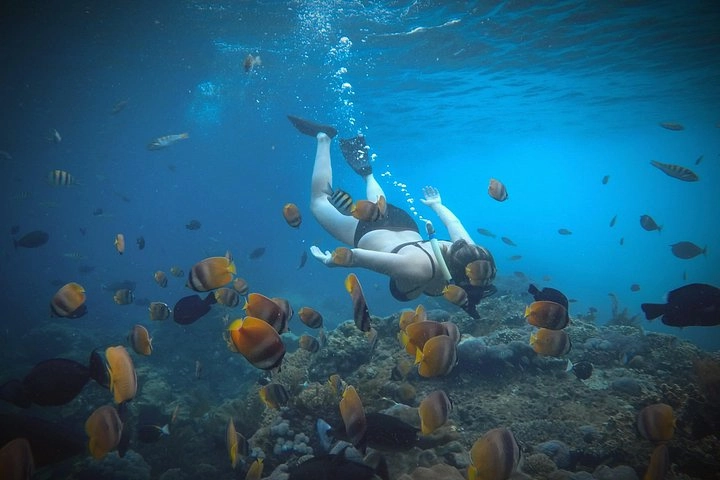
Book a trip where this was filmed — near Bali
Support Dreamtime Sail
At WeBoating.com, we profoundly acknowledge the unwavering dedication that Dreamtime Sail invests in crafting each and every video or voyage. Their passion for delivering exceptional ocean content shines through every frame, and it's a labor of love that deserves your attention.
We invite you to watch their captivating videos here and actively engage with their content, including their social media links above. Liking, commenting, and sharing their work goes a long way in fueling their creative fire.
We're also inviting you to explore the gear, sponsorships, and boat partnerships highlighted in the "Rainman Portable Watermaker Demo/Review after 3 Years use. How we make fresh drinking water on boat" video description, or directly on YouTube. By engaging with these offerings or purchasing services and items, you directly support Dreamtime Sail, their collaborators, and the brands they're associated with.
To ensure you never miss an offshore update, consider visiting their official YouTube Channel to subscribe, like, and join their community directly.
If you have any feedback, corrections, or additional information about Dreamtime Sail or their videos, please use the comment form below to share your thoughts with us.
Thank you for being a part of our community and supporting the creators we cherish. Your time and support truly matter!
This video shows the very simple steps to set up and operate a Rainman Portable Watermaker to produce pure, fresh, drinking water from the sea onboard a boat via reverse osmosis. It’s also our honest, totally unsponsored, review of the system after using it on Our Dreamtime for the past three years, long enough to really know the product. We discuss an initial problem we had with the unit and the company’s response plus the availability of spares and service. We also test the units rate of production and compare it against the advertised figures and, finally, we give you our verdict on whether we think the Rainman option is a thumbs up or down.
We hope you find it interesting and also check out our regular Dreamtime Sail Episodes dedicated to our full time, cruising life in Australia and South East Asia.
Through Patreon or Ko-fi you can support our video productions for less than price of a coffee per episode. The funds help us pay for upload data, music and editing software subscriptions, storage hardrives and to buy better camera and audio equipment to improve the quality of our shows.
Patreon https://www.patreon.com/DreamtimeSail
Ko-fi https://www.ko-fi.com/dreamtimesail
Our Books are available via Payhip HERE - https://tinyurl.com/2p89u5zp
SOCIALS
We’re on Facebook at https://www.facebook.com/DreamtimeSail
Follow our Instagram at https://www.instagram.com/dreamtimesail/
Dreamtime Sail
Rob and Karen Oberg: The Australian duo proving that an 'ordinary' retirement can be an extraordinary 24,000 NM odyssey aboard their Whitby 42 ketch, Our Dreamtime.
Channel Information:
Social Media Links:
Rainman Portable Watermaker Demo/Review after 3 Years use. How we make fresh drinking water on boat Location
- Lombok (-8.650979,116.3249438)
Latest Episodes from Dreamtime Sail
Explore the most recent voyages. Subscribe to the channel to never miss an update!

Playing “Dodgems” Indonesian style.
Rob and Karen Oberg navigate the waters of Bangka Island, encountering dangerous submerged squid platforms and coordinating with fellow sailors to ensure safe passage.
SAILING AMONGST THE BRAVEST DIVERS ON EARTH
It was very sobering sailing north along the coast of Indonesia's Bangka Island where local villagers eek out a very meagre living dredging tin by hand 20 metres underwater in one of the most dangerous jobs in the world. You can see the story in our new Dreamtime Sail Episode 155 on YouTube. #s...
Bangka Island’s Coast Of Death. Do NOT Sail Here At Night! – S6 Ep 155
Dreamtime Sail navigates the hazardous eastern coast of Bangka Island, dodging unlit tin mining rigs and artisanal nets while transiting Indonesia to Malaysia.
Adrift In The Middle Of The Shipping Lane
With a waterspout over the stern, a dark squall approaching from starboard and a large ship showing on AIS to be heading pretty much straight for us, we suddenly sailed straight into a big hole in the wind with the boat coming to a halt in the middle of the shipping lane. No problem. Start the engin...
Time For UsTo Leave Indonesia
We’ve been sailing around many, many incredible areas of Indonesia for well over a year, and know we’ve really only just scratched the surface of what this amazing country has to offer but our time here is fast coming to an end, for now at least. With the hassle free Customs inspection part of our ...