Catalina 36 Survey Review
Captain Wayne Canning arrived dockside in Fort Myers Beach, Florida, to perform a pre-purchase condition and valuation marine survey on a 1995 Catalina 36 MKII sloop. Documenting the inspection for Boating Zen, Canning evaluated the popular production cruiser—measuring a little over 36 feet overall with a 30-foot waterline and a beam of just under 12 feet—from masthead rigging down through the bilge stringers and auxiliary propulsion. While the Catalina 36 MKII offers a functional aft-cockpit layout and comfortable accommodations, Canning focused his inspection beyond polished gelcoat to identify critical structural defects, non-compliant electrical modifications, and hidden mechanical wear.
Having surveyed around 8 of these Catalina 36 hulls across more than 20 years in marine surveying, Canning brought systematic scrutiny to the vessel’s fiberglass laminates, rigging terminals, and drivetrain. The inspection spanned static dockside analysis, sea trial engine performance runs, and an out-of-water yard haulout to verify underwater running gear and keel integrity.
Stemhead Fitting Failure and Bow Structural Inspection
During the exterior rig and hull survey, Canning examined the bow assembly and discovered severe structural degradation on the stainless steel stemhead fitting. Hairline cracking extended through the metal structure, accompanied by a cracked weld seam along the forestay attachment point and deep pitting corrosion. Exterior cosmetic clues pointed to an unrecorded impact event: the surrounding fiberglass gelcoat displayed telltale paint overspray and an uneven orange-peel texture where previous dock impact damage had been cosmetically patched.
“The weld is actually cracked all the way down here. And you see in here that’s pit corrosion. So this whole stem head fitting needs to be replaced.”
This compromised fitting became the decisive hurdle for the vessel’s pending sale. The prospective buyer initially planned to complete the purchase and motor the vessel north along the coast to Tampa Bay and St. Petersburg for repairs. However, marine insurance underwriters refused to issue coverage on a vessel with an active, unseaworthy forestay failure. Unable to secure insurance, the buyer cancelled the purchase contract until the seller agreed to replace the damaged stemhead fitting before closing the transaction.
Standing Rigging, Deck Coring, and Chainplate Seal Integrity
Moving upward through the standing rigging and deck structures, Canning inspected the masthead sloop rig, which carries approximately 550 square feet of working sail area. Examining the lower shroud swage terminals, he detected an ominous discoloration on one swaged wire fitting. Rather than harmless surface patina, rust was weeping outward through the fitting seam.
“That started from the inside of the fitting, which means there’s water and corrosion going on on the inside of that fitting.”
Deck hammer percussion acoustic tap-testing revealed hollow sounding laminate in multiple high-stress zones, pointing to elevated core moisture and possible delamination voids within the cockpit floor and side decks surrounding the chainplates. On deck, previous maintenance consisted of silicone sealant smeared around the exterior chainplate deck penetrations—a cosmetic cover that fails to seal against water ingress.
“I have almost never seen anybody actually be able to repair a leak for more than 10 minutes by smearing cocking around on the outside of it.”
Belowdecks in the main salon, water staining and darkened structural bulkheads beneath the chainplates confirmed chronic deck water penetration, requiring complete chainplate extraction and re-bedding. Further inspection revealed a missing fastener on a mainsail batten car, a loose bulkhead fastening screw, and an owner-placed coffee cup positioned beneath a leaking stanchion base vent fitting.
Cable Steering Quadrant Degradation in the Aft Lazarette
Canning performed a deep inspection inside the aft lazarette, focusing on the Edison chain-and-cable steering gear. While the upper pedestal and helm wheel appeared serviceable, the quadrant assembly beneath revealed catastrophic galvanic corrosion. The cast aluminum quadrant surface was deeply pitted and severely oxidized, while the wire rope clamps securing the steering cables to the adjusting eyes were heavily rusted. Canning noted that in its brittle state, a hard steering impact against the rudder stop risked shattering the quadrant entirely.
Mechanical geometry issues compounded the steering hazard. As the steering cable exited the quadrant groove toward the sheaves, it took a sharp downward angle rather than maintaining tangential alignment. This continuous misalignment subjected the wire strands to abrasive chafe during every helm turn, accelerating mechanical fatigue and creating an imminent risk of cable severance underway.
Drivetrain Assessment and Auxiliary Diesel Sea Trial
Surveying auxiliary systems, Canning highlighted the vital diagnostic importance of engine room cleanliness before starting sea trials.
“If the boat looks great, but you stick your head in the engine compartment, it looks like crap, that’s a sure warning that the owner spent more money on making the boat look good than actually run good.”
The auxiliary machinery compartment, located beneath the companionway stairs, housed a fresh-water-cooled Universal M35 diesel engine delivering 30 horsepower, with 1,158 hours recorded on the tachometer meter. Underway during sea trial evaluations, the diesel engine demonstrated healthy cooling and lubrication performance, running at 170 degrees with 13 volts indicated on the alternator charging circuit. At cruising speed, the Universal M35 pushed the 36-foot hull to 6.6 knots, and reached 7 knots at 2850 RPM full throttle.
However, drivetrain components exhibited maintenance oversights. The PSS dripless face propeller shaft seal showed a distinct radial saltwater spray line etched across the adjacent hull laminate, confirming water slippage while in gear. The hose connecting the PSS seal was distorted by an oversized hose clamp that pinched the rubber out of round, while the engine raw-water anti-siphon vented loop was actively leaking saltwater onto surrounding equipment.
Electrical Architecture, Aftermarket Shore Power, and Pumping Systems
The electrical survey examined both factory distribution systems and subsequent owner modifications. The 12-volt house bank relied on 4 Trojan 6-volt deep-cycle batteries, replenished by 2 140 W solar panels mounted on stern davits with an Outback charge controller, and managed through a Freedom 2000 watt inverter charger with a voltage sensing relay. While these components provided adequate off-grid charging, several critical ABYC safety violations required remediation:
- **Aftermarket shore power feed:** An additional 30-amp shore cord had been installed to power a 16,000 BTU air conditioning unit, but the installation lacked a dedicated branch breaker and an overcurrent protection device within 10 feet of the shore inlet.
- **Inverter case grounding:** The Freedom 2000 watt inverter case ground conductor was severely undersized, failing ABYC guidelines that call for at least a number 8 AWG conductor to safely divert alternating-current fault loads to ground.
- **Direct-current bus studs:** The main grounding bus bar violated the ABYC limit by stacking more than 4 conductor terminals on a single stud, and the primary battery selector switch lacked an insulating terminal boot or a circuit fuse within 7 inches of the power source.
- **Electric pump wiring connections:** Electrical supply wiring for the primary 500 GPH and secondary 1500 GPH electric bilge pumps was mounted just inches above bilge water. Connectors had heat-shrink sleeves that had never been heated or sealed, leaving bare copper exposed to standing water corrosion.
| Metric or survey item | Measured value or survey finding |
|---|---|
| Vessel model | 1995 Catalina 36 MKII |
| Length overall (LOA) | 36 ft |
| Waterline length (LWL) | 30 ft |
| Beam | 12 ft |
| Ballast weight | 6,000 lbs (cast iron fin) |
| Auxiliary diesel engine | Universal M35 (30 hp) |
| Engine meter recorded hours | 1,158 hours |
| Full throttle speed | 7 knots at 2850 RPM |
| Cruising speed | 6.6 knots |
| Fresh water capacity | 80 gallons |
| Fuel tank capacity | 25 gallons |
| Blackwater tank capacity | 15 gallons |
| Water heater capacity | 6 gallons |
| Solar generation equipment | 2 140 W solar panels |
| Inverter charger capacity | Freedom 2000 watt inverter |
| Air conditioning unit | 16,000 BTU system |
| Electric bilge pumps | 500 GPH and 1500 GPH pumps |
Frequently Asked Questions
A cracked weld and pitting corrosion on the bow stemhead fitting prevented the buyer from securing marine insurance to transit from Fort Myers to Tampa Bay for repairs. The buyer cancelled the contract until the seller agreed to replace the damaged stemhead fitting.
The vessel is equipped with a 30-horsepower Universal M35 diesel showing 1,158 hours on the meter. Under sea trial, it recorded a cruising speed of 6.6 knots and achieved 7 knots at 2850 RPM at full throttle.
The 16,000 BTU air conditioner had an aftermarket 30-amp shore cord lacking overcurrent protection within 10 feet of the inlet. Additionally, the Freedom 2000 watt inverter case ground was undersized, the grounding bus bar exceeded 4 terminals per stud, and bilge pump wiring connections lacked sealed insulation.
The aluminum steering quadrant exhibited severe corrosion, rusted cable clamps, and cable misalignment causing chafe at the quadrant exit. The PSS dripless shaft seal showed evidence of saltwater spray and was pinched by an oversized hose clamp.
Hammer percussion tap testing showed elevated core moisture and potential voids in the cockpit floor and side decks near the chainplates. Water staining on salon bulkheads confirmed chronic leakage through unsealed deck chainplate penetrations.
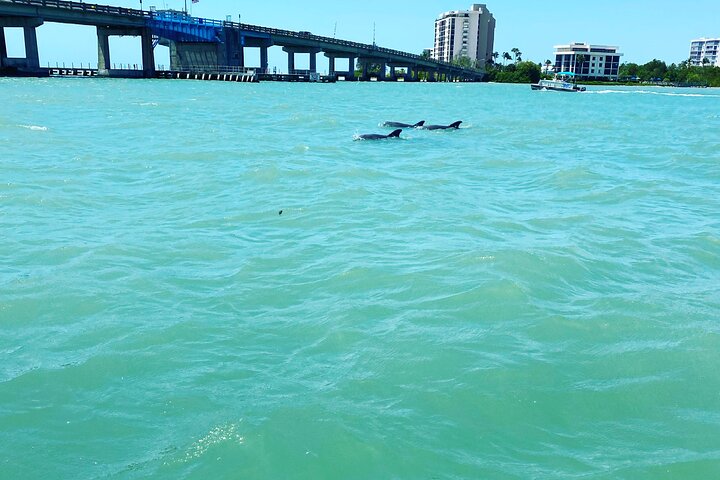
Book a trip where this was filmed — near Fort Myers
Support Boating Zen
At WeBoating.com, we profoundly acknowledge the unwavering dedication that Boating Zen invests in crafting each and every video or voyage. Their passion for delivering exceptional ocean content shines through every frame, and it's a labor of love that deserves your attention.
We invite you to watch their captivating videos here and actively engage with their content, including their social media links above. Liking, commenting, and sharing their work goes a long way in fueling their creative fire.
We're also inviting you to explore the gear, sponsorships, and boat partnerships highlighted in the "Catalina 36 Survey Review" video description, or directly on YouTube. By engaging with these offerings or purchasing services and items, you directly support Boating Zen, their collaborators, and the brands they're associated with.
To ensure you never miss an offshore update, consider visiting their official YouTube Channel to subscribe, like, and join their community directly.
If you have any feedback, corrections, or additional information about Boating Zen or their videos, please use the comment form below to share your thoughts with us.
Thank you for being a part of our community and supporting the creators we cherish. Your time and support truly matter!
In this new series I review some of the surveys I have done over the years to give a more in depth look at boats I inspected. Hopefully it will help others understand more about different types of boats as well as learn what to look for when considering a boat purchase. Please ask any questions you may have. #sailing #Catalina #boatsurvey #boatrepair
If you like this video please subscribe and hit thumbs up! It genuinely helps!
If you find this video helpful please consider subscribing to our Patreon channel. Your support helps us keep producing quality content and you will get bonus content. https://www.patreon.com/Boatingzen
For more content visit our web site at www.boatingzen.com
Follow us on Instagram https://www.instagram.com/boatingzen/
You can also follow us in TikTok https://www.tiktok.com/@boatingzen1
Click link below to leave a tip and help me buy more boat parts!
https://www.paypal.com/ncp/payment/ULG3YZYV85NXW
Your input and comments are welcomed and encouraged. Tell me what you liked and did not like and how we can do better. Let us know what new videos you would like to see?
#projectboat #boatrepair #sailing #boatingor those working on living on and using boats or those who just want to.

Boating Zen
In 2026, Captain Wayne Canning shares 55 years of marine surveying, boatbuilding, and liveaboard experience on Boating Zen. Author of Fiberglass Boat Restoration, Wayne demystifies pre-purchase boat inspections, thru-hull safety, keel failures, and Yanmar instrument repairs. His channel provides boat owners with forensic engineering expertise to keep vessels seaworthy and safe.
Channel Information:
Social Media Links:
Catalina 36 Survey Review Location
- Fort Myers Beach, Florida, United States (26.452,-81.9481)
Latest Episodes from Boating Zen
Explore the most recent voyages. Subscribe to the channel to never miss an update!
Houston, We Have a Problem! | Why Offshore Sailors Need Shore-Side Support
Capt. Wayne of Boating Zen breaks down the necessity of organizing shore-side support before heading offshore, detailing communication schedules, emergency contacts, and float plan essentials.
The other 80% of Cruising They Don’t Tell You About
What every new Cruiser needs to understand is that a good part of cruising is not learning how to sail or navigate it is how to keep the boat working! If you like this video please subscribe and hit thumbs up! It genuinely helps! Join the BoatingZen community on Patreon. For more content visit...
30 Minute Used Boat Inspection
How to quickly tell is a boat you may be interested in is going to be worth the time and effort of a more in depth inspection or if you should just move on. If you like this video please subscribe and hit thumbs up! It genuinely helps! If you find this video helpful please consider subscribing to...
How to Prepare Your Boat for a Hurricane
As a Marine Surveyor I have seen many boat damaged in storms. I have put together a few of the lessons I learned that most hurricane prep information leaves out. Join me as I point out the things most never consider when preparing for a storm. If you like this video please subscribe and hit thumbs...
A surveyor’s View of a 2003 Beneteau 473
Join me for a inside look at what a surveyor sees when reviewing a Beneteau 473. Some issues are not always easy to spot but cannot hide from a trained eye of a good surveyor. Seeing what a surveyor looks for can help you spot problems when used boat shopping. If you like this video please subscri...