Retevis RM21 Review
At the dock in Kemah, Dave unboxed a new Retevis RM21 floating handheld VHF marine radio sent for field evaluation before heading out onto Galveston Bay. Joined by their friend CJ, the crew stepped aboard their Jeanneau 440 to put the portable five-watt unit through practical underway trials alongside the fixed-mount ship station.
Operating under Bad Kitty Sailing (formerly Sailing CAVU), Dave and Patricia routinely assess onboard gear for coastal safety before tackling extended passages. As they cast off lines to test reception across local waters, evaluating whether an affordable handheld could reliably serve as a dinghy radio or emergency backup became the central objective.
Unboxing and Rigging the Handheld Radio at Kemah
Before departing the slip, Dave examined the hardware components supplied in the package. The box contained the radio body, a flexible screw-on antenna, an instruction manual, and a dedicated charging cradle designed for permanent mounting. Dave threaded the antenna into position and verified the initial power state, preparing the transceiver for immediate field use.
The unit features an illuminated LCD display capable of switching between several background color options, including blue and red. Dave noted the dedicated high and low transmission power toggle, opting to keep the radio set on high output for maximum signal reach throughout the shakedown run across Galveston Bay.
Underway Shakedown and Channel Monitoring on Galveston Bay
With CJ joining the crew aboard Cavu, the sailors motored out into Galveston Bay and initiated a series of tacks toward the Ship Channel. Dave tuned the radio to VHF channel 16 to perform an initial transmission check, confirming clear outgoing calls. Switching to the internal weather receiver, the crew monitored automated NOAA forecasts predicting southeast winds and seas building between 3 and 4 feet.
To evaluate everyday channel management, Dave configured custom favorites in the radio memory, locking in channels 16, 22 Alpha, 68, and 13. He tested the automated scanning function, which monitors activity using either carrier detection or timed delays. The radio remained responsive across traffic frequencies, though the crew noted that atmospheric conditions and antenna height impacted reception distance compared to the masthead antenna of their primary vessel setup.
Range Disparities and Underway Performance Observations
While sailing off Kemah, an operational limitation surfaced during routine monitoring. The fixed-mount marine station aboard Cavu clearly picked up Coast Guard transmissions originating down in Galveston, but the handheld remained silent, even after Dave adjusted the squelch threshold down to 0. Patricia observed the communication gap firsthand, noting:
“I didn’t like get that we were hearing calls coming over on the boat radio and not on the handheld”
To determine practical line-of-sight boundaries, Dave conducted a direct radio check with an active vessel across the bay:
“So we did a radio check and it was out to about three miles is where the person was, and I think that’s probably a good estimate on the range on this.”
“So we took the Retevis RM21 out for a test sail today. I gotta say I was a little underwhelmed with its performance, but I really haven’t used a handheld before.”
Despite the modest reception radius, Dave noted that received audio remained clear without staticky distortion. Additionally, after operating on high power across hours of sailing, the battery indicator still displayed approximately three quarters remaining capacity.
Immersion Trials and Moisture Evacuation in the Marina Basin
Because brisk winter temperatures made testing in open bay waters impractical, Dave and Patricia conducted water-ingress trials in the marina hot tub upon returning to the dock. When dropped into the water while powered off, the floating radio activated an emergency flashing red backlight and rear beacon. A subsequent test with the power active produced the identical flashing red warning display upon surface contact.
Following immersion, the crew tested the internal speaker drainage feature. Activating the vibration mode generated a steady low-frequency hum that vibrated trapped water droplets straight out of the front speaker grille to restore clean acoustic output. Dave highlighted the utility of this function for dinghy tenders, though he noted that documentation for triggering the vibration cycle was entirely absent from the included manual.
Technical Verdict and Handheld Utility for Cruisers
Reviewing the overall operational value of the transceiver, Dave concluded that the unit fills a sensible role for budget-conscious sailors seeking secondary communication:
“For the price point I think this is a great radio talking about 90 100 so it’s coming in under even the other off brands and well under the big name brands.”
The handheld’s primary shortcoming remains its abbreviated documentation, which spans multiple languages but offers only about three pages per translation without detailing advanced settings. Nevertheless, with working weather alerts, reliable emergency strobes, and functional water expulsion, the radio serves as a viable portable option for dinghy outings or secondary cockpit monitoring.
Frequently Asked Questions
During the shakedown on Galveston Bay, Dave completed a clear radio check out to approximately 3 miles, exceeding the manufacturer’s advertised specification.
When submerged, the radio floats and automatically triggers a flashing red backlight and rear beacon, activating even if the unit is completely turned off.
The radio features a vibration mode that emits an audible hum and speaker oscillation to expel trapped moisture after immersion.
Dave programmed VHF channels 16, 22 Alpha, 68, and 13 into the radio’s favorite bank for rapid monitoring during their sailing run.
Book a trip where this was filmed — near Austin




Support Bad Kitty Sailing (formerly Sailing CAVU)
At WeBoating.com, we profoundly acknowledge the unwavering dedication that Bad Kitty Sailing (formerly Sailing CAVU) invests in crafting each and every video or voyage. Their passion for delivering exceptional ocean content shines through every frame, and it's a labor of love that deserves your attention.
We invite you to watch their captivating videos here and actively engage with their content, including their social media links above. Liking, commenting, and sharing their work goes a long way in fueling their creative fire.
We're also inviting you to explore the gear, sponsorships, and boat partnerships highlighted in the "Retevis RM21 Review" video description, or directly on YouTube. By engaging with these offerings or purchasing services and items, you directly support Bad Kitty Sailing (formerly Sailing CAVU), their collaborators, and the brands they're associated with.
To ensure you never miss an offshore update, consider visiting their official YouTube Channel to subscribe, like, and join their community directly.
If you have any feedback, corrections, or additional information about Bad Kitty Sailing (formerly Sailing CAVU) or their videos, please use the comment form below to share your thoughts with us.
Thank you for being a part of our community and supporting the creators we cherish. Your time and support truly matter!
Bad Kitty Sailing (formerly Sailing CAVU)
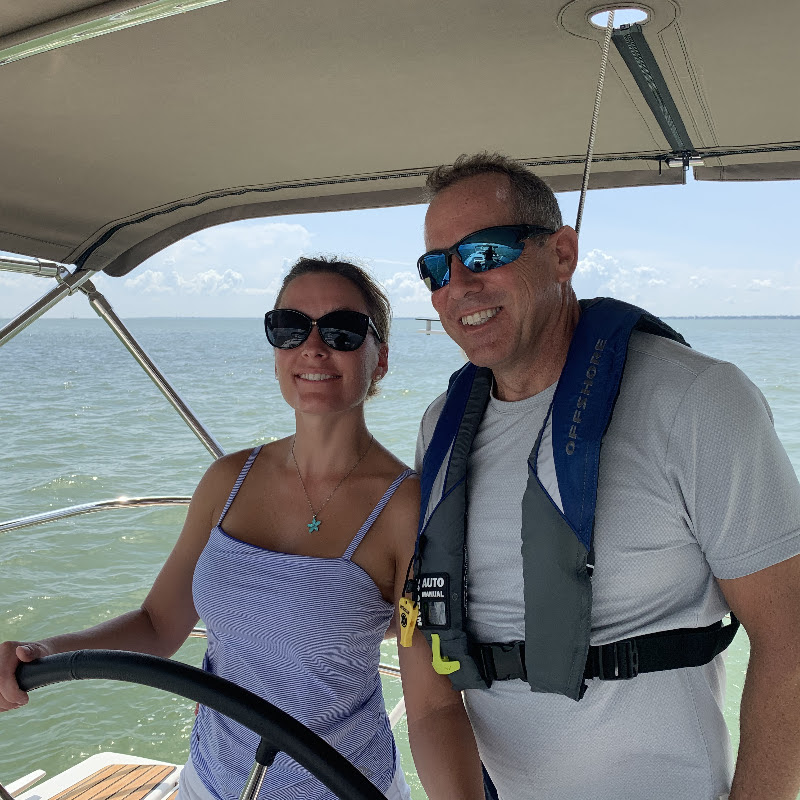
Dave and Patricia Burnham documented their transition from a Jeanneau 440 to their new Maverick 440 catamaran 'Bad Kitty'. Follow their 2026 Florida Keys mission in this feature.
Channel Information:
Social Media Links:
Retevis RM21 Review Location
- Kemah, Texas, USA (29.5427,-95.0205)
- Galveston Bay, Texas, USA (29.555,-94.952)
Latest Episodes from Bad Kitty Sailing (formerly Sailing CAVU)
Explore the most recent voyages. Subscribe to the channel to never miss an update!
Projects start
We made it back to Kemah now we have to fix what we broke and make some upgrades before we can leave and go cruise. Bri Safe Mirror
Starting West but again weather
We leave Bradenton to continue our journey west but weather forces us to divert to Port St Joe.
Kicked out of Key West
We are forced to leave Key West with a cold front approaching. One day of great sailing followed by two more in rough seas. Follow our journey as we bring Bad Kitty back from Grenada to our home in Texas to finish her refit.
Our Inverter failed
One day out from Key West our inverter melts down. We will have to continue without AC power.
San Juan to Key West
We take a quick look aroung Old San Juan before heading out for Key West