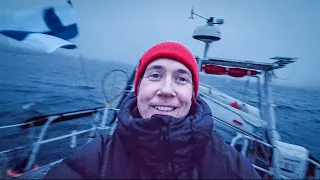
Across the North Atlantic from Iceland to the Faroe Islands
Preparing to depart the harbor of Vestmannaeyjar off the southern coast of Iceland, skipper Juho Karhu and his crew readied their Garcia Nouanni 43 aluminum cutter Lumi for an offshore passage to the Faroe Islands. Documenting their voyages on Alluring Arctic Sailing, the crew mapped out a 380-nautical-mile route across the North Atlantic. Juho planned the crossing around anticipated light airs at the start, followed by building gale-force winds and heavy seas during the final approach to the archipelago.
Steering past the towering cliffs of the Vestmannaeyjar harbor entrance, the crew encountered immediate localized wind gusts that defied initial calm forecasts. Aboard Lumi, Juho worked alongside crew members Kuutti and Taneli to secure deck gear, lubricate deck hardware, and settle into passage routines as the volcanic shoreline receded into the Atlantic mist.
Battling Confused Cross-Seas Across the North Atlantic
As Lumi pushed offshore into open North Atlantic waters, the sea state deteriorated rapidly. Multiple low-pressure weather systems converging across the northern latitudes generated conflicting swell patterns from several directions simultaneously. The resulting confused seas subjected the cutter and its crew to erratic motion for nearly a full day, triggering bouts of seasickness:
“The waves are getting a little bit better now, but just a while ago we had like some really confusing seas for like 20 hours or so and I was getting seasick and really annoying.”
The physical exhaustion of the offshore crossing prompted Juho to reflect on personal priorities ashore. His partner Sohvi was back in Finland awaiting the imminent birth of their child, while their Greenland sled dog Nova was dealing with eye allergies caused by unaccustomed exposure to southern grass. To manage fatigue during the rough ocean transit, the crew established a strict rotation of 3-hour watches. Kuutti assumed watchkeeping duties in the cockpit while Juho took rest below.
Passing through the tail end of a passing gale, the crew hoisted and unrolled the Genoa headsail alone. Running downwind under Genoa only, Lumi maintained a steady cruising speed of around 6 knots in building following swells. The stable motion allowed crew members to attend to remote office work on laptops between watch changes while maintaining a constant lookout for the distant Faroese coastline.
Timing the Dangerous Tidal Window into Vestmanna
Navigating the waters surrounding the Faroe Islands demands precise tidal planning. The channels and sounds between the islands generate ferocious tidal currents capable of overpowering marine engines. When strong ocean swells encounter opposing tidal currents flowing out of narrow fjords, hazardous standing waves develop rapidly. Juho closely analyzed electronic navigation charts to pinpoint a narrow evening arrival slot:
“So the waves will be rolling in and then we really need to time it so that the current is going in the same direction as the waves because if the current is coming out and these kind of waves are coming in, then uh it is not going to be pretty and I want to avoid that if at all possible.”
Targeting an arrival window of approximately 5 to 6 hours when the incoming tide ran parallel with the Atlantic swell, Lumi approached the western sound leading toward Vestmanna. Entering along a steep lee shore under gray skies, Juho relied on Raymarine LightHouse electronic charts displayed on the helm plotter screen. Having navigated with Raymarine electronics for 5 to 6 years across two separate offshore vessels, he praised the system’s rapid chart scrolling and clear depth contour rendering during the critical approach.
As the sound narrowed, the crew furled the Genoa and motored into the channel. The flooding tidal current seized Lumi’s aluminum hull, sweeping the vessel through the entrance at 9 to 10 knots. Watching the speed over ground climb steadily on the helm display, Juho confirmed a peak entrance velocity of 10.3 knots before throttling back to maneuver alongside the harbor docks of Vestmanna.
Customs Clearance and National Day Celebrations
Upon tying off mooring lines in Vestmanna harbor, Juho hailed the harbor master on VHF radio without response. Because Vestmanna serves as an official port of entry, he promptly contacted Faroese customs officials by mobile telephone. Having submitted the required maritime entry documentation and crew declarations by email prior to departure, customs granted immediate verbal clearance for the crew to proceed ashore. To celebrate a safe landfall, the crew toasted the crossing with liquor received as a gift in Iceland before their departure.
The following morning, Juho, Kuutti, and Taneli boarded a local bus to the capital to observe the annual Faroese national day celebrations. The festivities centered around traditional wooden boat rowing regattas, an event carrying immense local prestige:
“So the rowing competition is going to be with the traditional boats and apparently that’s like the biggest honor that you can have. If you if you win the competition, you’re basically like the king of the whole island OR A QUEEN.”
Juho cheered on competitors in the women’s 14 to 16 age category while navigating dense crowds by following Kuutti’s distinctive yellow jacket. The visit stirred memories of a 2021 passage aboard their previous sailboat Arctica, when serious engine failure in these exact waters had forced the crew to summon maritime search and rescue assistance. While pleased that Lumi completed the crossing without mechanical breakdowns, Juho noted that visiting the islands without Sohvi left the experience incomplete.
Navigating Complex Currents Through Faroese Sounds
Departing Vestmanna to explore neighboring sounds, Lumi motored through narrow passages bordered by towering green cliffs. While favorable currents in constricted sounds propelled the yacht at 9 to 10 knots, rounding exposed headlands exposed the vessel to counter-currents:
“The current is coming around the headland like this and I am doing 3.7 knots trying to fight the current here. It is not always possible to go with the current all the time because once you run the headland, the current might be coming from the other direction and it is just all very confusing.”
To navigate the unpredictable flow, Juho observed that local Faroese mariners and visiting yachtsmen rely on a specialized smartphone application providing real-time tidal stream predictions. After securing the yacht for several days of rest before planning their upcoming voyage toward Norway or Sweden, Juho concluded the passage log with reflections on his expedition photo prints captured aboard Lumi in Greenland.
| Passage Metric | Measured Value | Operational Context |
|---|---|---|
| Total passage distance | 380 nautical miles | Offshore route from Vestmannaeyjar to Vestmanna |
| Confused sea duration | 20 hours | Multiple low-pressure systems generating cross-swells |
| Watch schedule | 3-hour watches | Rotating crew watches between Juho, Kuutti, and Taneli |
| Tidal entry window | 5 to 6 hours | Critical evening window aligning current with swell |
| Passage sailing speed | 6 knots | Steady cruising speed maintained under Genoa alone |
| Fjord current entry speed | 9 to 10 knots | Velocity over ground boosted by favorable tidal current |
| Peak entrance velocity | 10.3 knots | Maximum speed over ground recorded entering the sound |
| Adverse headland speed | 3.7 knots | Motoring speed when battling adverse tidal current |
| Raymarine system tenure | 5 to 6 years | Marine electronics suite across two separate vessels |
| Previous Faroe Islands voyage | 2021 | Prior voyage aboard Arctica involving engine rescue |
Frequently Asked Questions
Juho Karhu and the crew of SV Lumi logged approximately 380 nautical miles navigating across the North Atlantic from Vestmannaeyjar in Iceland to Vestmanna in the Faroe Islands.
Juho timed their arrival to match a 5 to 6 hours evening window when the tidal current flowed in the same direction as incoming ocean swells, allowing SV Lumi to enter the sound at 9 to 10 knots, peaking at 10.3 knots.
Because Juho had emailed all required clearance forms to officials beforehand, Faroese customs granted full verbal clearance over the telephone upon Lumi docking in Vestmanna.
Juho and local Faroese mariners relied on a specialized mobile phone application to monitor real-time tidal currents when navigating narrow sounds and exposed headlands.
Book a trip where this was filmed — near Reykjavik
Support Alluring Arctic Sailing
At WeBoating.com, we profoundly acknowledge the unwavering dedication that Alluring Arctic Sailing invests in crafting each and every video or voyage. Their passion for delivering exceptional ocean content shines through every frame, and it's a labor of love that deserves your attention.
We invite you to watch their captivating videos here and actively engage with their content, including their social media links above. Liking, commenting, and sharing their work goes a long way in fueling their creative fire.
We're also inviting you to explore the gear, sponsorships, and boat partnerships highlighted in the "Across the North Atlantic from Iceland to the Faroe Islands" video description, or directly on YouTube. By engaging with these offerings or purchasing services and items, you directly support Alluring Arctic Sailing, their collaborators, and the brands they're associated with.
To ensure you never miss an offshore update, consider visiting their official YouTube Channel to subscribe, like, and join their community directly.
If you have any feedback, corrections, or additional information about Alluring Arctic Sailing or their videos, please use the comment form below to share your thoughts with us.
Thank you for being a part of our community and supporting the creators we cherish. Your time and support truly matter!
After fixing our engine we continue from Iceland to Faroe Islands!
My photo prints from Greenland (and before) are available until the end of this year at http://art.alluringarctic.com . Makes for a great gift too! Every order directly helps me keep making these videos and goes towards our future adventures.
Not into the prints? You can support at http://patreon.com/alluringarctic or at https://www.alluringarctic.com/support
Thanks for watching!
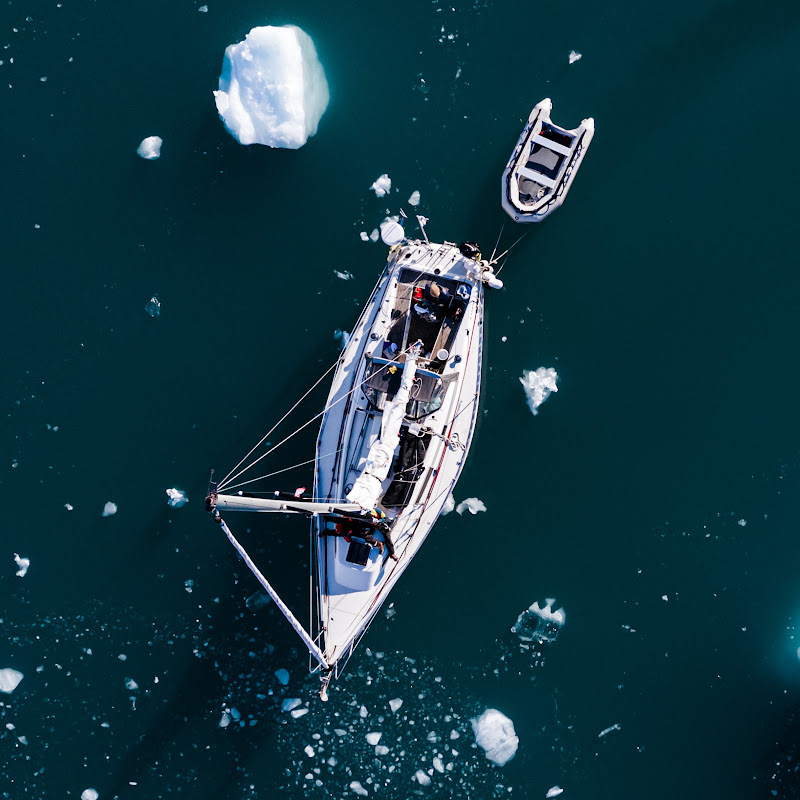
Alluring Arctic Sailing
Join Juho and Sohvi of Alluring Arctic Sailing as they document their high-authority 2026 Arctic odyssey aboard their aluminum Garcia Nouanni 43, Lumi.
Channel Information:
Social Media Links:
Across the North Atlantic from Iceland to the Faroe Islands Location
- Vestmanna, Streymoy, Faroe Islands (62.1564,-7.1667)
- Vestmannaeyjar, Iceland (63.439,-20.2692)
- Tórshavn, Streymoy, Faroe Islands (62.0107,-6.7712)
Latest Episodes from Alluring Arctic Sailing
Explore the most recent voyages. Subscribe to the channel to never miss an update!

Across the North Atlantic from Iceland to the Faroe Islands
Juho Karhu navigates SV Lumi on a 380-nautical-mile passage from Iceland to the Faroe Islands, battling confused North Atlantic seas and strong tides.
Sailing from Greenland to Iceland Across the North Atlantic
Juho Karhu and crew make a 600-mile North Atlantic passage from Greenland to Iceland aboard SV Lumi, dealing with icebergs, fog, a total electrical blackout from a stuck starter key, and docking in the volcanic Westman Islands.
Sailing This Insane Shortcut THROUGH Greenland
Juho Karhu and his crew dodge open-ocean icebergs, test polar bear defenses, and battle adverse tides through Greenland's Prince Christian Sound (Ikeraswak) before docking alongside a Fin Sailor 34 at an abandoned World War II weather station.
Dodging Icebergs In Greenland Is Fun Until It Isn’t
Moored to a livestock barge in Qaqortoq, SV Lumi readies for departure south toward Cape Farewell, dodging drifting icebergs in dense fog and stopping at Uunartoq.
Squeezing Into an Impossibly Tiny Cove (Greenland)
New print sale! Get 10% off all my photo prints at until October 13th. I’ve added new photos from this summer in Greenland along with some returning favorites. Every order directly helps me keep making these videos and goes towards our future adventures! Thanks for watching! Not into the prints? ...