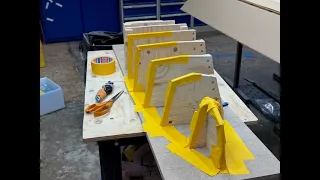
Duplex stainless steel. Very corrosion resistant very strong and magnetic in this application good.

Sven Yrvind
At 86, Sven Yrvind is still pushing the limits of small-boat design. Discover the philosophy and technical grit behind his 'Exlex' series.
Channel Information:
Social Media Links:
Support Sven Yrvind
At WeBoating.com, we profoundly acknowledge the unwavering dedication that Sven Yrvind invests in crafting each and every video or voyage. Their passion for delivering exceptional ocean content shines through every frame, and it's a labor of love that deserves your attention.
We invite you to watch their captivating videos here and actively engage with their content, including their social media links above. Liking, commenting, and sharing their work goes a long way in fueling their creative fire.
We're also inviting you to explore the gear, sponsorships, and boat partnerships highlighted in the "Duplex stainless steel. Very corrosion resistant very strong and magnetic in this application good." video description, or directly on YouTube. By engaging with these offerings or purchasing services and items, you directly support Sven Yrvind, their collaborators, and the brands they're associated with.
To ensure you never miss an offshore update, consider visiting their official YouTube Channel to subscribe, like, and join their community directly.
If you have any feedback, corrections, or additional information about Sven Yrvind or their videos, please use the comment form below to share your thoughts with us.
Thank you for being a part of our community and supporting the creators we cherish. Your time and support truly matter!
Across the street, I am lucky, Grönitz do buiseness in steel. Today I found duplex stainless steel. I was looking for something else a weight that drags the chain through the PVC lined hawse pipe but luck favors the prepared mind.
Below is somthing about Duplex.
Duplex stainless steels[1][2][3][4][5] are a family of stainless steels. These are called duplex (or austenitic-ferritic) grades because their metallurgical structure consists of two phases, austenite (face-centered cubic lattice) and ferrite (body centered cubic lattice) in roughly equal proportions. They are designed to provide better corrosion resistance, particularly chloride stress corrosion and chloride pitting corrosion, and higher strength than standard austenitic stainless steels such as Type 304 or 316. The main differences in composition, when compared with an austenitic stainless steel is that the duplex steels have a higher chromium content, 20–28%; higher molybdenum, up to 5%; lower nickel, up to 9% and 0.05–0.50% nitrogen. Both the low nickel content and the high strength (enabling thinner sections to be used) give significant cost benefits. They are therefore used extensively in the offshore oil and gas industry for pipework systems, manifolds, risers, etc. and in the petrochemical industry in the form of pipelines and pressure vessels. In addition to the improved corrosion resistance compared with the 300 series stainless steels duplex steels also have higher strength. For example, a Type 304 stainless steel has a 0.2% proof strength in the region of 280 N/mm2, a 22%Cr duplex stainless steel a minimum 0.2% proof strength of some 450 N/mm2 and a superduplex grade a minimum of 550 N/mm2.
For more see Yrvind.com there you can also support my project by donations via Pay pal and Swish 0706 200 550
Latest Episodes from Sven Yrvind
Explore the most recent voyages. Subscribe to the channel to never miss an update!
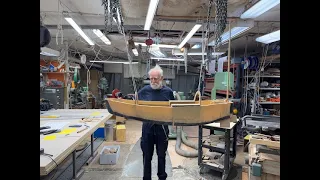
One Daggerboard, Two Bilgeboards and One Rudder.
This Youtube channel is about me Sven Yrvind. I am87 year and 5 months old dyslectic solo sailor. I am building a high-latitude cruiser. She is 5.6 meter 18 feet 4 inches long. Her beam is 1.45 meter. She is a three masted lugger with a total sail area of 9 square meter. She has a bow centerboard...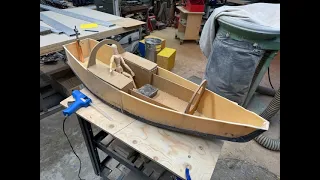
Starting the Interior – 1/5 Scale Model.
This Youtube channel is about me Sven Yrvind. I am87 year and 5 months old dyslectic solo sailor. I am building a high-latitude cruiser. She is 5.6 meter 18 feet 4 inches long. Her beam is 1.45 meter. She is a three masted lugger with a total sail area of 9 square meter. She has a bow centerboard...
Why I Added 40 cm.
This Youtube channel is about me Sven Yrvind. I am87 year and 5 months old dyslectic solo sailor. I am building a high-latitude cruiser. She is 5.6 meter 18 feet 4 inches long. Her beam is 1.45 meter. She is a three masted lugger with a total sail area of 9 square meter. She has a bow centerboard...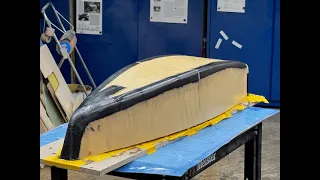
Shaping the 1/5 Scale Model.
This Youtube channel is about me Sven Yrvind. I am87 year and 5 months old dyslectic solo sailor. I am building a high-latitude cruiser. She is 5.6 meter 18 feet 4 inches long. Her beam is 1.45 meter. She is a three masted lugger with a total sail area of 9 square meter. She has a bow centerboard...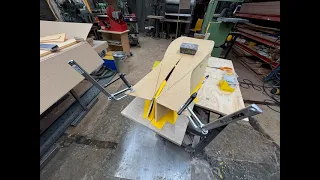
The Model Is Planked – It Was Easy.
This Youtube channel is about me Sven Yrvind. I am87 year and 5 months old dyslectic solo sailor. I am building a high-latitude cruiser. She is 5.2 meter 17 feet long. Her beam is 1.45 meter. She is a three masted lugger with a total sail area of 9 square meter. She has a bow centerboard. I am p...