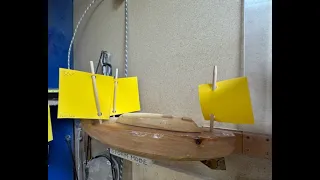
Designing and cutting sections for the bilge keels.

Sven Yrvind
At 86, Sven Yrvind is still pushing the limits of small-boat design. Discover the philosophy and technical grit behind his 'Exlex' series.
Channel Information:
Social Media Links:
Support Sven Yrvind
At WeBoating.com, we profoundly acknowledge the unwavering dedication that Sven Yrvind invests in crafting each and every video or voyage. Their passion for delivering exceptional ocean content shines through every frame, and it's a labor of love that deserves your attention.
We invite you to watch their captivating videos here and actively engage with their content, including their social media links above. Liking, commenting, and sharing their work goes a long way in fueling their creative fire.
We're also inviting you to explore the gear, sponsorships, and boat partnerships highlighted in the "Designing and cutting sections for the bilge keels." video description, or directly on YouTube. By engaging with these offerings or purchasing services and items, you directly support Sven Yrvind, their collaborators, and the brands they're associated with.
To ensure you never miss an offshore update, consider visiting their official YouTube Channel to subscribe, like, and join their community directly.
If you have any feedback, corrections, or additional information about Sven Yrvind or their videos, please use the comment form below to share your thoughts with us.
Thank you for being a part of our community and supporting the creators we cherish. Your time and support truly matter!
Most builders use NACA sections for keels.
Not me.
Bescause NACA sections are made for airplanes and the NACA sections have infinite aspect ratio far from my bilge keels that have a cord of 1.5 meter and a lenght of 0.25 meter that is an aspect ratio of 0.167.
The inducet resistance, the creation of tip vortecis is very different.
Also the Reynolds number is different.
Also my keels have an important function not considered by airplanes. That is to let the product rest on its tip at low water.
I used parabolic sides.
Many twin keeled boats angle the keels toe in that way they hope to make less lee way. But there is two keels on a twin keeled boat. The othe one will create more drag.
Also most cruisers spend much time sailing down wind now toe in is just more drag. I am not using toe in.
The builders of twin keeled boats also design with the lee keel vertical when heeled. The lee keel will not lose so much projected area that way but the windward keel will lose much. Angling the keels makes the boat lose projected keel area in total. That is a function of the cosine of the angel and the cosine function is not linear.
For more see Yrvind.com
There you can support the keels by donations via Pay pal and Swish 0706 200 550
Latest Episodes from Sven Yrvind
Explore the most recent voyages. Subscribe to the channel to never miss an update!
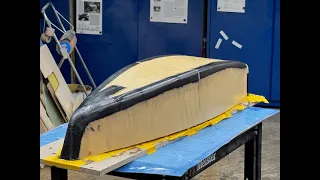
Shaping the 1/5 Scale Model.
This Youtube channel is about me Sven Yrvind. I am87 year and 5 months old dyslectic solo sailor. I am building a high-latitude cruiser. She is 5.6 meter 18 feet 4 inches long. Her beam is 1.45 meter. She is a three masted lugger with a total sail area of 9 square meter. She has a bow centerboard...
The Model Is Planked – It Was Easy.
This Youtube channel is about me Sven Yrvind. I am87 year and 5 months old dyslectic solo sailor. I am building a high-latitude cruiser. She is 5.2 meter 17 feet long. Her beam is 1.45 meter. She is a three masted lugger with a total sail area of 9 square meter. She has a bow centerboard. I am p...
Here Is the Next Iteration.
This Youtube channel is about me Sven Yrvind. I am87 year and 5 months old dyslectic solo sailor. I am building a high-latitude cruiser. She is 5.2 meter 17 feet long. Her beam is 1.45 meter. She is a three masted lugger with a total sail area of 9 square meter. She has a bow centerboard. I am p...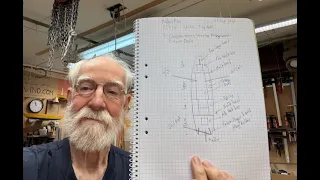
3 Compartment Interior Arrangement — Below Deck.
This Youtube channel is about me Sven Yrvind. I am87 year and 5 months old dyslectic solo sailor. I am building a high-latitude cruiser. She is 5.2 meter 17 feet long. Her beam is 1.45 meter. She is a three masted lugger with a total sail area of 9 square meter. She has a bow centerboard. I am p...
A Dyslexic Yacht Designer.
This Youtube channel is about me Sven Yrvind. I am87 year and 5 months old dyslectic solo sailor. I am building a high-latitude cruiser. She is 5.2 meter 17 feet long. Her beam is 1.45 meter. She is a three masted lugger with a total sail area of 9 square meter. She has a bow centerboard. I am p...