
My dream Dutch Barge that ticks every box!
Walking through the quiet autumn forest near Neetze on the outskirts of Lüneburg, Germany, Nike Steiger of WhiteSpotPirates scours the damp moss alongside her dog Bobby and her mother. Two days after an unexpected haul of edible mushrooms in the area, the walk provides space to articulate her specific technical criteria for acquiring and converting a historic Dutch barge.
Having surveyed several vessels across the Netherlands and Belgium, Steiger is narrowing down what functions she actually requires aboard a steel vessel. Rather than settling on early compromises, she compiles an unconstrained list of layout priorities, sustainable systems, and physical dimensions that must eventually square with European inland navigation regulations and real refit costs.
Layout Requirements and Living Space Afloat
Steiger approaches the barge concept as what Germans colloquially term an impossible all-in-one combination—a vessel that fulfills residential, professional, and educational functions without becoming unwieldy. The floating home must function as a primary living quarters and working office in Europe for herself and her dog Bobby.
To accommodate visitors and potential short-term rentals, the proposed layout specifies two separate cabins sleeping four people comfortably, with each cabin paired with its own private bathroom. A pullout couch in the main saloon provides sleeping space for two additional guests. The living quarters require a large galley built to prepare meals for groups of friends, alongside open floor space dedicated to daily morning yoga sessions.
Work needs also dictate the interior division. Steiger plans for a permanent onboard workshop for maintenance projects, exterior space for an herb and vegetable garden, and a flexible multipurpose area capable of hosting plastic recycling workshops for six to eight participants. Abundant natural light remains non-negotiable throughout the design, requiring numerous windows to keep the living spaces bright and open.
Hull Sizing and European Licensing Boundaries
Accommodating the complete list of interior spaces directly dictates the vessel’s exterior footprint. Steiger calculates that fitting two private en-suite cabins, a workshop, and communal teaching areas requires an overall length between 23 and 25 meters.
Crucially, the vessel must not exceed 25 meters. Under European inland waterway regulations, craft measuring over 25 meters trigger higher-tier commercial licensing requirements that Steiger does not hold. While she currently lacks the recreational certificate for vessels between 20 and 25 meters, she views that certification as an achievable qualification step during the acquisition phase:
“It needs to be like 23 to 25 m long to fit all that stuff obviously, but it must not exceed 25 m because then I already need a different license.”
While pausing along the trail to inspect an edible cauliflower mushroom (Krause Glucke), Steiger outlines the vessel’s desired aesthetic. The barge itself should be an authentic historic hull dating from the early 1900s, paired with a contemporary interior that preserves a distinctly gemütlich—cozy and homey—atmosphere.
Off-Grid Systems and ES-TRIN Certification Hurdles
Sustainability forms the core of the planned conversion. Steiger aims to source recycled, upcycled, and secondhand materials wherever feasible, insulating the steel hull with natural building products such as hemp to optimize thermal efficiency.
Beyond standard solar and battery setups, the vessel is envisioned as a self-sufficient floating tiny home capable of generating its own power, producing freshwater, and purifying greywater on board. While electric propulsion remains a secondary aspiration contingent on refit funding, self-containment takes priority:
“Basically a floating off-grid eco tiny house. That’s what I want.”
Mobility across European canals and rivers introduces the project’s most demanding regulatory hurdle: compliance with the ES-TRIN (European Standard laying down Technical Requirements for Inland Navigation vessels) certificate. For an inland craft to legally navigate across multiple European waterways rather than sit tied to a permanent berth, the historic steel hull and its systems must pass rigorous technical inspections.
Steiger acknowledges that while her budget is larger than the minimal funds that launched her refit of the sailboat Karl, she has not won half a million in a lottery. Financing the conversion will require balancing major structural upgrades against essential technical systems.
Forest Mishaps and Refit Parallels
As the walk continues through thick moss, Steiger’s secondary camera battery exhausts its charge, and she realizes she has misplaced her camera tripod somewhere in the undergrowth. After a brief search, her dog Bobby locates the equipment in the brush:
“It’s good that I have my head fixed to my neck cuz probably otherwise I’d lose that, too.”
Momentarily disoriented on the trail back toward Neetze, Steiger draws a parallel between foraging and the ongoing boat search. While attempting to photograph sunlight reflecting in a spiderweb, she abruptly spotted a cluster of four, five, six, seven, and eight mushrooms directly in front of her. The discovery reinforces that finding the appropriate steel barge will require patience rather than forcing an immediate compromise.
| Specification Parameter | Conversion Requirement |
|---|---|
| Target Hull Length | 23 to 25 meters (not to exceed 25 meters) |
| Hull Construction Era | Historic steel build from the early 1900s |
| Sleeping Capacity | 4 berths in 2 separate en-suite cabins, plus 2 berths on pullout couch |
| Workshop Hosting Capacity | 6 to 8 participants for plastic recycling workshops |
| Regulatory Standard | ES-TRIN European inland navigation certification |
Frequently Asked Questions
Steiger is targeting a historic steel barge between 23 and 25 meters in length. The vessel must not exceed 25 meters to avoid requiring a commercial inland skipper license.
The proposed layout accommodates four people in two separate cabins with private bathrooms, plus two additional guests on a pullout couch in the saloon.
Planned ecological systems include natural insulation materials, solar power generation, self-contained freshwater production, onboard greywater purification, and potential electric propulsion.
Compliance with the ES-TRIN technical certificate is required for the historic barge to cruise legally across European canals and inland waterways rather than remaining permanently moored.
The interior layout includes flexible workshop space designed to host on-board plastic recycling workshops for six to eight participants.
Book a trip where this was filmed — near Amsterdam
Support WhiteSpotPirates
At WeBoating.com, we profoundly acknowledge the unwavering dedication that WhiteSpotPirates invests in crafting each and every video or voyage. Their passion for delivering exceptional ocean content shines through every frame, and it's a labor of love that deserves your attention.
We invite you to watch their captivating videos here and actively engage with their content, including their social media links above. Liking, commenting, and sharing their work goes a long way in fueling their creative fire.
We're also inviting you to explore the gear, sponsorships, and boat partnerships highlighted in the "My dream Dutch Barge that ticks every box!" video description, or directly on YouTube. By engaging with these offerings or purchasing services and items, you directly support WhiteSpotPirates, their collaborators, and the brands they're associated with.
To ensure you never miss an offshore update, consider visiting their official YouTube Channel to subscribe, like, and join their community directly.
If you have any feedback, corrections, or additional information about WhiteSpotPirates or their videos, please use the comment form below to share your thoughts with us.
Thank you for being a part of our community and supporting the creators we cherish. Your time and support truly matter!
liked this video? Hit subscribe to help me crack the 100k subs ❤
What would my perfect Dutch barge look like if money, space and practicality did not matter?
After visiting several very different Dutch barges in the Netherlands and Belgium, I am beginning to understand what works for me, what does not and what I actually need from my future floating home.
So in this episode, we are taking a break from reality and dreaming big.
From a cosy living room with large windows and a wood-burning stove to separate guest accommodation, a proper workshop and enough space for my plastic recycling machine, I am putting together the wishlist for my ideal barge conversion.
But this dream goes beyond a beautiful interior. I also want to explore whether an old steel barge could become a more sustainable home on the water, with solar power, natural insulation materials such as hemp, and systems for treating grey water and black water on board.
Could one historic Dutch barge really combine comfortable canalboat life, practical boat work, space for guests and a more sustainable way of living on the water? And how much of this dream will survive once budgets and reality enter the conversation?
After more than a decade of solo female boat life aboard my sailboat Karl, I am searching for a different kind of adventure: an old Dutch barge that I can transform into my long-term floating home. Roots on Water follows the boat search, the barge conversion and eventually the enormous DIY boat restoration ahead.
ROOTS ON WATER | Episode 7
⚓ FOLLOW THE JOURNEY & SUBSCRIBE:
If you're new here, welcome aboard! I’m Nike, and after years of solo sailing, I'm searching for an old steel boat to convert into a floating tiny home. Hit Subscribe and turn on the bell so you don't miss the next chapter of the search, the decision, and the renovation adventure ahead
⇩ FOLLOW THE FREE WEEKLY REFIT UPDATES ⇩
Want to follow the messy reality of refitting a 100-year-old steel boat as it happens? Every Wednesday, I release a raw and unedited update on Patreon, sharing what I’m working on aboard Anna Maria right now. All the problems, progress and decisions that haven’t made it into the finished episodes yet.
► https://www.patreon.com/collection/2211250
⇩ JOIN THE SUPPORT CREW ⇩
Want to skip ahead by a few episodes and find out what happens next? Join the support crew for early and ad-free access to the finished films, behind-the-scenes stories and monthly online Galley Chats. Join the lovely community that makes these videos possible!
► PATREON:
http://www.patreon.com/WhiteSpotPirates
► YOUTUBE CHANNEL MEMBERSHIP:
https://www.youtube.com/channel/UCkYfFeySHGN4DPrOc9So7PA/join
► OR CHIP IN FOR A COLD ONE FOR ME OR A TREAT FOR BOGA via PAYPAL:
https://www.paypal.me/whitespotpirates
ABOUT ROOTS ON WATER
Roots on Water begins with a search: for the right Dutch barge, but also for the kind of life afloat I want to create next. The series follows me, a woman in her mid-40s, as I try to understand what I’m looking for, explore very different historic boats and eventually find Anna Maria, a 21-metre Dutch tjalk built in 1913.
After buying her, I have to learn how to handle this massive old canal boat and bring her through the narrow waterways, bridges and locks of the Netherlands to Germany. Anna Maria was converted into a liveaboard barge in the 1970s, and I originally believed I could keep much of her existing interior. But as more and more problems reveal themselves, that plan begins to unravel and I make the slightly terrifying decision to tear everything apart and take on an enormous DIY boat refit.
From searching for a floating home to navigating Anna Maria and rebuilding her from the steel hull up, this is an honest, developing story of canal boat life: difficult decisions, new skills, unexpected setbacks and the small victories that keep me moving forward.
⇩ FOLLOW THE JOURNEY ⇩
► INSTAGRAM:
http://www.instagram.com/WhiteSpotPirates
► FACEBOOK:
http://www.facebook.com/WhiteSpotPirates
► WEBSITE:
http://www.whitespotpirates.com
⇩ START AT THE BEGINNING OF MY SOLO-SAILING STORY ⇩
Before Anna Maria, there was Karl: the sailboat I bought, rebuilt and eventually sailed away on alone. Untie The Lines follows more than a decade of solo sailing, DIY boat repairs and life aboard, including the fear, freedom, breakdowns and beautiful encounters that shaped both my journey and this channel.
► BINGE-WATCH UNTIE THE LINES FROM EPISODE ONE:
https://youtube.com/playlist?list=PLXRq1t-_HOXvL6L6lGac5YAloge4jiLRA
Thank you to everyone who watches, comments, shares these films or supports their creation. Many of you have been travelling alongside me for years, and I’m incredibly grateful that you are here for this very different adventure on the water, too.
And always remember: if I can do it, you can do it, too.
Lots of ocean love and rusty smiles,
Nike 🧜♀️
#DutchBarge #BoatSearch #CanalBoatLife #Houseboat #TinyLiving #AlternativeLiving
WhiteSpotPirates
Nike Steiger documents the high-authority restoration of 'KARL' and her 2026 Atlantic crossing aboard 'Santana'. Join the mission for ocean plastic recycling in Colombia.
Channel Information:
Social Media Links:
My dream Dutch Barge that ticks every box! Location
- Neetze, Landkreis Lüneburg, Lower Saxony, Germany (53.265,10.58)
Latest Episodes from WhiteSpotPirates
Explore the most recent voyages. Subscribe to the channel to never miss an update!
The boat surveyor said: “DON’T DO IT!”
Nike Steiger drives 1,500 km across Europe to inspect Phoebe Grace, confronting severe surveyor warnings, high engine overhaul costs, and inland vessel certification limits.
My dream Dutch Barge that ticks every box!
Nike Steiger outlines her practical wishlist for a historic Dutch barge conversion, balancing a 23 to 25-meter hull, off-grid systems, guest cabins, and strict ES-TRIN compliance against realistic refit budgets.
My canal boat search in the Netherlands ends here: visiting the final Dutch Barge on my list
liked this video? Hit subscribe to help me crack the 100k subs ❤ It’s the final stop on my Dutch barge "shopping tour" in the Netherlands! In this episode, I head to the last viewing across the Netherlands and Belgium to tour "De Hoop" (The Hope), a historic 22-meter Steilstev...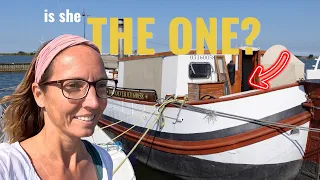
My secret FAVORITE! Walkthrough of a 25m Tjalk: is she THE ONE to start canalboat life in Europe?
Join me for a full walkthrough of a beautiful 25m Tjalk, a traditional Dutch barge and my secret favorite so far in my search for a new floating home. After more than a decade living aboard my sailboat, I’m exploring canal boat life as a way to stay connected to the water while enjoying more stabili...
Exploring Canalboat Life: 3 Days Living on a Dutch Barge in the Netherlands
What is it like to pack your bags and move onto a canalboat in the Netherlands? For the next 3 days, I’m testing out canalboat life for real to see if this way of living really brings me joy or if it doesn't feel right. In this episode, I move aboard, give you a tour of the canalboat, take a ...