My 1st Solo Crossing: GIANT Fish broke my rod, Catch & Cook
With only his blind dog Koda aboard the Bali 4.1 catamaran Zola, Banner Sullivan of Sailing Zola sets out on a two-day solo run in the Bahamas: a full day of offshore jigging and reef diving followed by a 4:00 a.m. departure for the passage back to Florida. Wearing Koda’s hat for extra sun protection on the way out to his first fishing mark, Banner spots a large fever of spotted eagle rays cruising through the clear water and launches his drone before dropping a jig over the side.
Recalling how watching Nellie Cronen make large jigging strokes in the water had spooked fish on a previous trip, Banner works smaller movements with the rod tip and watches a fish chase the lure up from the bottom. When the first mark fails to show the surface activity he looks for, he calls a quick audible and moves Zola to a second wreck site as a dark storm builds on the horizon.
Strong Current, Shark Sighting, and Snapped Rod on an 80-Foot Wreck
At the second spot, fish stack up thickly beneath the hulls. Banner gets a strike on the drop while the reel bail is still open, with the fish running hard astern into a building current. Right as he prepares to slip into the water to inspect the bottom, a shark surfaces beside the catamaran and snaps at prey on the top of the water. After waiting for the shark to clear, Banner grabs his dive gear and drops in anyway to check the school.
Beneath the boat, hundreds of fish hold in the current, including a dense school of heavy yellow jacks. Having speared several yellow jacks recently, Banner holds his fire and kicks back to the surface—only to find the current has already swept him an alarming distance behind Zola.
“The current was really kicking. That is not good while you’re solo.”
Banner Sullivan
Realizing that fighting a speared fish while swimming back against the current alone would be dangerous, Banner rules out spearfishing at the deep mark and switches back to vertical jigging. Now knowing exactly how the fish are positioned below, he drops a jig to the bottom and hooks up immediately on a massive fish that buries the drag and heads straight into a shipwreck in 80 feet of water with 3 knots of current.
“I feel like I freaking hooked a truck, guys.”
Banner Sullivan
Trying to stop the fish from reaching the wreck structure, Banner pulls too hard and snaps his favorite rod cleanly, leaving the fish still on the line inside the wreck. Calling his heavy-handed pressure a rookie mistake, he slips back into the water holding the line so he does not leave 100 feet of fishing line trailing from the fish’s mouth inside the wreck.
“I knew I was pulling too hard on that. I was stupid. That was a rookie move.”
Banner Sullivan
Looking down through the ripping 3-knot current, Banner spots a free-swimming Goliath grouper that he estimates at 2 or 300 pounds cruising outside the wreck structure. Seeing that fish unhooked convinces him that an even larger Goliath grouper has taken his jig underneath the front side of the wreck. Because diving solo to 80 feet in a 3-knot current to cut the line is too hazardous, he climbs back aboard and works the line from the broken rod, hoping the knot will pull free or the leader will chafe through near the hook. Seconds later, the grouper spits the hook on its own, allowing Banner to reel back his entire rig and lure intact. Before leaving the deep spot, he hooks and releases his first-ever chub after a strong fight.
Shallow Reef Lobster Double and Garlic Butter Catch and Cook
On the run back toward the marina before lunch, Banner stops over a shallow reef in 25 to 30 feet of flat-calm water. A quick freedive pays off with a two-for-one lobster catch for his final lunch in the Bahamas, followed by another pass from the fever of spotted eagle rays, which he films from overhead with the drone.
Working quickly on deck in the midday heat, Banner removes the spear tip still lodged inside both lobsters. Both crustaceans had recently molted, leaving their shells soft though still spiny. Just 30 minutes after the lobsters were walking on the reef, he cuts around the carapace edges, twists the tails free, pulls the digestive tract, splits the backs of the shells, and drops the tails into boiling water until they turn bright orange. He melts a big chunk of butter with minced garlic and salt for dunking the fresh tails, then trims off the chewier orange-red pieces and feeds them to Koda, giving his blind dog extra time to locate the lobster meat on deck.
Single-Handed Marina Undocking and a 3:30 a.m. Bat Stowaway
After losing track of time on the water that morning, Banner spends the afternoon rushing through boat chores and customs checkout to prepare Zola for departure. Right as he finishes up, cruising friends John and Hannah arrive and drop anchor outside the harbor in their power catamaran. Because the marina basin and exit channel are narrow and shallow—and the big catamaran has limited low-speed thrust—Banner decides to leave his dinghy tied to the dock rather than tow it out single-handed.
Thinking carefully through the dock line sequence so the wind does not pin the hull back against the pier, Banner pushes the bow out manually before stepping aboard, clears the back corner of the slip with just a light touch on a fender, and backs into the open center of the basin. Once clear of the surrounding docks, he splits the twin engine throttles to rotate Zola 360 degrees on her own axis and drives out through the shallow channel. He drops anchor outside near John and Hannah so he can weigh anchor easily in the dark at 4:00 a.m., then rides over in their tender for a sunset dinner cooked by Hannah before retrieving his dinghy for the night.
At 3:30 a.m., loud smacking sounds against the side of the hull wake Banner up early. Running outside, he finds a school of jacks in a predawn feeding frenzy right against the catamaran. Moments later, a small winged shape approaches from the starboard side, flies past his head, dips down to touch the water, and climbs onto the boat. Initially thinking a tired bird had missed the deck and fallen in the sea, Banner realizes it is a live bat when it hangs upside down right above his head before crawling underneath the halyards and lines at the base of the mast. Concerned about rabies, he takes Koda downstairs into the cabin and leaves the bat undisturbed on deck.
4:00 a.m. Solo Crossing to Florida: Meteor Shower, Cargo Ships, and Five Barracuda
Weighing anchor at 4:00 a.m. for an estimated 11-hour crossing back to Florida, Banner motors across flat-calm water under an intense overnight meteor shower. Between 4:00 a.m. and dawn, he watches hundreds of meteors streak across the sky every few seconds—sometimes two or three simultaneously—while mysterious multi-colored lights that he calls alien lights move in sporadic formations before vanishing and reappearing over the horizon.
As sunrise illuminates a dark squall line ahead, cruise ships and massive container ships converge along the shipping lanes. Banner notes that after picking a calm weather window, the second hardest part of crossing between Florida and the Bahamas is avoiding commercial ships that do not alter course. When one container ship closes to an uncomfortable distance, he turns Zola off course to avoid rubbing shoulders as rain begins falling, leaving raindrops beaded on the ears of Mr. Bat under the mast lines.
Banner raises the sails for about an hour, making roughly 3 knots with the engines brought back to idle before the wind dies completely and leaves the ocean like glass. Trolling fishing lines astern across the calm water, he gets a heavy strike close to the towed dinghy and battles a steady stream of predators—joking at one point that he has caught 27 barracuda before tallying his actual catch for the passage.
“I caught five fish throughout the crossing, and all five were barracuda. I could not believe it.”
Banner Sullivan
As midday sun peaks over the glassy water, Banner notices his bat stowaway losing shade at the base of the mast and carefully drapes a towel over the lines to keep the animal cool without spooking it into the sea. Shortly afterward, Florida’s coastline rises on the horizon, wrapping up the solo passage as Banner reflects on the behind-the-scenes workload of filming 90% of the footage and editing every full-length video himself while Nellie manages her own projects.
| Voyage & Fishing Metric | Recorded Detail |
|---|---|
| Vessel & Solo Crew | Zola (2020 Bali 4.1 catamaran) sailed solo by Banner Sullivan with blind dog Koda |
| Deep Wreck Conditions | 80 ft water depth with 3 knots of current; rod snapped on hooked wreck fish |
| Goliath Grouper Sighting | Estimated 2 to 300 lb free-swimming grouper outside wreck; 100 ft of line recovered intact |
| Shallow Reef Lobster Dive | 25 to 30 ft depth; 2 recently molted lobsters speared and boiled within 30 minutes |
| Departure & Stowaway Timeline | 360-degree solo marina turn; woke at 3:30 a.m. to jacks and live bat; departed at 4:00 a.m. |
| Florida Crossing Log | Estimated 11-hour passage; 1 hour under sail at 3 knots; 5 barracuda caught trolling |
Frequently Asked Questions
While vertical jigging over a shipwreck in 80 feet of water with 3 knots of current, Banner hooked a massive fish on the bottom that buried the drag and pulled into the wreck. Pulling hard to stop the fish—which he called a rookie move—snapped his fishing rod, though the fish eventually spit the hook and allowed him to recover all 100 feet of line and his lure.
After spotting a shark feeding on the surface and making a freedive drop on a school of large yellow jacks, Banner surfaced to find the 3-knot current had pushed him far behind the boat. Realizing that fighting a speared fish against the strong current while solo in 80 feet of water would be dangerous, he switched back to rod-and-reel jigging.
Because the marina channel was narrow and shallow, Banner left his dinghy tied at the dock instead of towing it out. He released his lines in sequence, manually pushed the bow off the dock before stepping aboard, backed into the open basin, split the twin engine throttles to rotate 360 degrees, and anchored outside near friends John and Hannah, who later ferried him back to pick up his dinghy.
After waking at 3:30 a.m. to jacks feeding against the hull, Banner saw what looked like a tired bird approach from the starboard side, dip to the water, and land on the boat. When it hung upside down overhead and crawled under the lines at the base of the mast, he realized it was a live bat, moved his dog Koda downstairs out of caution for rabies, and later draped a towel over the lines to give the bat shade during the 11-hour crossing to Florida.
Book a trip where this was filmed — near New Providence Island
Support Sailing Zola
At WeBoating.com, we profoundly acknowledge the unwavering dedication that Sailing Zola invests in crafting each and every video or voyage. Their passion for delivering exceptional ocean content shines through every frame, and it's a labor of love that deserves your attention.
We invite you to watch their captivating videos here and actively engage with their content, including their social media links above. Liking, commenting, and sharing their work goes a long way in fueling their creative fire.
We're also inviting you to explore the gear, sponsorships, and boat partnerships highlighted in the "My 1st Solo Crossing: GIANT Fish broke my rod, Catch & Cook" video description, or directly on YouTube. By engaging with these offerings or purchasing services and items, you directly support Sailing Zola, their collaborators, and the brands they're associated with.
To ensure you never miss an offshore update, consider visiting their official YouTube Channel to subscribe, like, and join their community directly.
If you have any feedback, corrections, or additional information about Sailing Zola or their videos, please use the comment form below to share your thoughts with us.
Thank you for being a part of our community and supporting the creators we cherish. Your time and support truly matter!
My 1st Solo Adventure, stick around to see an unexpected stowaway 😳
BUFFALO GEAR FISH BAG LINK
Use Code - banner10
https://alnk.to/28VNHvi
FOLLOW US ON SOCIALS❤️⛵️
Instagram - https://www.instagram.com/sailingzola
- https://www.instagram.com/captbanner
- https://www.instagram.com/nautinellie
Facebook - https://www.facebook.com/profile.php?id=100064845617659
#Sailing
#Catchandcook
#spearfishing
#fishing
#Catamaran
#Bahamas
#SailingLife
#SailingTheBahamas
#BoatLife
#Liveaboard
#CatamaranLife
#Exumas
#SailingAdventure
#CruisingLife
#LifeAtSea
#OffGridLiving
#CouplesWhoSail
#SailboatLife
#oceanlife
Sailing Zola
Join Banner and Nellie of Sailing Zola as they document their 2026 Bahamas odyssey and 'Cruiser Fest' shakedown aboard their Bali 4.1 catamaran, Zola 2.0.
Channel Information:
Social Media Links:
My 1st Solo Crossing: GIANT Fish broke my rod, Catch & Cook Location
- Exumas, Bahamas (24.25,-76.5)
- Florida, USA (26.1224,-80.1043)
Latest Episodes from Sailing Zola
Explore the most recent voyages. Subscribe to the channel to never miss an update!
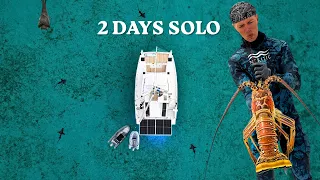
My 1st Solo Crossing: GIANT Fish broke my rod, Catch & Cook
Banner Sullivan takes catamaran Zola on a two-day solo run from the Bahamas to Florida, snapping a rod on a wreck grouper in 80 feet of water, spearing two lobsters, undocking single-handed, and crossing with a live bat stowed under the mast lines.
Her FIRST fish while Jigging #fishing #bahamas #sushi
She was so excited!!! BUFFALO GEAR FISH BAG LINK Use Code - banner10 FOLLOW US ON SOCIALS❤️⛵️ Instagram - - - Facebook - #Sailing #Catchandcook #spearfishing #fishing #Catamaran #Bahamas #SailingLife #SailingTheBahamas #BoatLife #Liveaboard #CatamaranLife #Exumas #SailingAdventure #C...