The Keel Moved When He Pushed It. They BOUGHT IT ANYWAY.
In a live technical consultation hosted by James Evenson on Sailing Zingaro, Annapolis marine surveyor Steven Uhthoff reviewed pre-purchase haulout footage where pushing against a bolt-on keel caused the joint to deflect and squirt trapped water. The structural deflection revealed extensive internal cracking across the vessel’s laminated floor timbers and severe balsa core rot radiating outward from the keel sump.
Despite the structural failure and high moisture readings across the hull laminate, the prospective buyers moved forward with the purchase after summoning an on-site yard technician to estimate structural repairs. Grounded in Steven’s 24 years of surveying and 43 years of boat repair, the session expanded into an examination of bolt-on versus encapsulated keels, wooden boat refits, offshore skeg designs, and marine diesel longevity.
The Wobbly Keel: Floor Timber Cracking and Saturated Balsa Core
Reviewing the haulout footage, Steven demonstrated the diagnostic technique he now applies to every bolt-on keel inspection. When he shoved against the ballast bulb, the joint visibly flexed, pumping water from the seam between the lead and the fiberglass hull. Inside the bilge, the vessel featured glassed-in floors rather than a secondary drop-in pan laminate, yet the structural floor timbers had cracked cleanly across the top due to the flexing keel bolts.
“I looked at the keel and I said, you know, I’m going to wiggle this one. And yeah, water was squirting out of the keel joint and everything else.”
Moisture meter readings on the external hull indicated widespread saturation where the balsa core ended and transitioned into the solid keel sump. Sounding tests confirmed that water ingress between the structural fiberglass skins had rotted the balsa core across a two-foot radius surrounding the entire keel stub. The prospective buyers called an on-site yard technician who inspected the separation alongside Steven and quoted a major repair bid to drop the keel, cut out the rotten core, and rebuild the sump. The buyers accepted the quote and completed the purchase.
Restoring Steadfast: A Purple Heart Stem Rebuild
Steven joined the stream from aboard his personal vessel, Steadfast, a 1934 56-foot William Hand ketch displacing 88,000 pounds, or 44 tons. Moored in Urbanna, Virginia, while preparing to cruise south toward Florida and the Bahamas with his wife Janice Wheeler, Steven detailed the two-year refit required to rebuild the vessel’s forward stem. Decades of rainwater seepage down an original heartwood check in the white oak stem had rotted the wood core and softened the forward ends of 37 hull planks.
To restore structural integrity, Steven shaped and fitted a replacement stem made from Purple Heart, a dense tropical hardwood weighing between 6 and 700 pounds. Alongside the stem timber, the rebuild involved replacing the stem knee and replanking the forward hull sections. Just three days after relaunching from the two-year restoration, Steadfast entered the St. Michaels Antique and Classic Boat Show and won Best of Show honors.
| Specification | Details |
|---|---|
| Vessel model and rig | 1934 56-Foot William Hand ketch (*Steadfast*) |
| Total displacement | 88,000 Pounds (44 Tons) |
| Refit project duration | 2 Years |
| Planking replaced | 37 Planks |
| Stem timber material | Between 6 and 700-Pound Purple Heart |
| Post-refit recognition | Best of Show (St. Michaels Antique and Classic Boat Show) |
Encapsulated vs. Bolt-On Keels and Heavy Impact Resistance
Comparing hull designs for offshore voyaging, Steven explained his strong preference for fully encapsulated ballast keels over bolt-on configurations. In an encapsulated structure, the lead ballast sits sealed entirely inside the primary fiberglass hull laminate, removing the mechanical vulnerability of stainless steel keel bolts, internal backing plates, and external bedding joints.
“you’re going to have to tear the entire hull apart in order to lose that keel”
To illustrate the durability of encapsulated keels, Steven recounted a 1980 incident where an old 44-foot cruiser went aground on a rocky reef. The vessel pounded against the rocks for three continuous days and floated off with minor gelcoat abrasions, exhibiting zero structural fractures around the keel trunk. James noted that during violent storms with steep six-foot surges, mooring lines can snap or pull cleats through the deck, slamming vessels against rocks. On modern production cruisers built with secondary drop-in pans, such repeated ground impacts often tear the structural grid loose from the outer hull laminate, creating catastrophic failures that require complete hull retabbing.
Skeg Engineering, Heavy Seas, and Marine Diesel Longevity
The discussion moved from keels to rudders and skeg construction. Examining robust bluewater platforms like Kraken yachts, which integrate a heavy internal stainless steel framework down through a fully glassed skeg to shield the rudder, Steven contrasted this design with a pre-purchase survey he conducted on a Shannon 43. When he shoved against the Shannon’s rudder skeg by hand, the entire skeg assembly deflected. The builder claimed the deflection was engineered into the design, though Steven questioned the structural wisdom of flexing rudder supports.
Offshore impacts often occur without warning. James recalled striking a large submerged tree offshore Costa Rica following heavy torrential rains, which drove the timber across the keel until it wedged tightly between the rudder skeg and the propeller. In home waters along the Chesapeake Bay, floating debris and crab pot warps dragging 20 feet astern present constant entanglement hazards for cruisers.
Addressing auxiliary powerplants, Steven and James examined diesel engine longevity and common failure modes: – Volvo Penta: Steven avoided Volvo diesels after experiencing degraded O-rings throughout cooling circuits and fuel injection pumps, alongside galvanic corrosion from dissimilar metals in the heat exchangers. – Yanmar and Perkins: Both technicians noted that properly maintained Perkins and Yanmar engines regularly surpass 10,000 operating hours. – Cylinder Sleeves: Engines featuring replaceable cylinder sleeves, including the Perkins 4-108 and 4-236, can be rebuilt to stock factory tolerances in-frame without requiring machine shop boring or oversized pistons. – Beta Marine: Beta engines utilize marinized tractor blocks with accessible raw water impellers and standard consumable layouts, easing ongoing maintenance.
Blister Failures, Structural Retrofits, and Pre-Purchase Realities
Evaluating specific cruising designs, Steven noted that the Valiant 42 possesses an exceptionally strong keel stub that resists deflection and joint separation. However, early Valiant 40 hulls built by Uniflite were molded with fire-retardant resins that generated severe osmotic blisters. These voids expanded to 8, 10, and 12 inches in diameter and penetrated a quarter-inch into the structural laminate, triggering expensive warranty claims under the builder’s 10-year hull guarantee that contributed to the company’s downfall.
Structural flexing under heavy sailing loads can also deform hull shapes. Steven described past offshore passages aboard a Tartan 37 where pounding through the Gulf Stream caused bulkheads to creak and outer hull topsides to oil-can. Investigation revealed that the builder had cut away a structural chainplate knee to make clearance for a head sink. Working alongside naval architects Rob Ladd and Mick Price, Steven engineered and glassed custom structural knees into cabin houses to counter mast compression and rigging tension.
When salvaging hardware, breaking an intact keel joint can prove remarkably difficult. Steven detailed removing a lead keel from a scrap hull, where a crew of four spent 16 hours driving oak wedges, swinging sledgehammers, and using a travel lift before the joint separated. For sailors shopping on a sub-50k budget, Steven recommended proven hulls like the Pearson 365, older Sabres, and Bristol yachts, while emphasizing that buyers must reserve capital for necessary refits.
“the people that fall in love with the boat before they own it and before we’ve taken the survey. And it doesn’t matter what we tell them about the boat. They’ve made up their mind just like that. That keel. They made up their mind.”
Docking full-keel vessels presents distinct handling challenges due to limited steerage in reverse. Rather than fitting feathering propellers, Steven advised skippers of heavy full-keel boats to retain standard fixed three-blade propellers to harness prop-walk when maneuvering inside tight marina slips.
Frequently Asked Questions
Pushing against the keel caused the hull and keel stub to flex, revealing that the internal floor timbers had cracked across the top. External moisture testing showed that water ingress had rotted the balsa core hull across a two-foot radius around the keel sump.
Encapsulated keels house all ballast internally within the continuous fiberglass hull laminate, eliminating external keel bolts and bedding joints. Steven noted that losing an encapsulated keel would require tearing the entire hull structure apart.
An original heartwood check ran down the center of the white oak stem from initial construction. Over nine decades, rainwater seeped down the check, rotting the oak heartwood and softening the forward ends of 37 hull planks.
Perkins 4-108 and 4-236 engines feature replaceable cylinder sleeves. Mechanics can replace worn sleeves and install standard pistons to restore factory clearances without machining, boring out the block, or sourcing oversized piston rings.
Early Valiant hulls produced by Uniflite were molded with fire-retardant resin that formed large laminate blisters measuring 8 to 12 inches across and penetrating a quarter-inch into the fiberglass. Extensive warranty repairs under a 10-year hull guarantee severely damaged the builder financially.
Full-keel vessels have sluggish rudder response in reverse. Steven recommended using a fixed three-blade propeller rather than a feathering propeller so the skipper can utilize prop-walk to steer the stern during tight slip docking.
Book a trip where this was filmed — near New York City


Support Sailing Zingaro
At WeBoating.com, we profoundly acknowledge the unwavering dedication that Sailing Zingaro invests in crafting each and every video or voyage. Their passion for delivering exceptional ocean content shines through every frame, and it's a labor of love that deserves your attention.
We invite you to watch their captivating videos here and actively engage with their content, including their social media links above. Liking, commenting, and sharing their work goes a long way in fueling their creative fire.
We're also inviting you to explore the gear, sponsorships, and boat partnerships highlighted in the "The Keel Moved When He Pushed It. They BOUGHT IT ANYWAY." video description, or directly on YouTube. By engaging with these offerings or purchasing services and items, you directly support Sailing Zingaro, their collaborators, and the brands they're associated with.
To ensure you never miss an offshore update, consider visiting their official YouTube Channel to subscribe, like, and join their community directly.
If you have any feedback, corrections, or additional information about Sailing Zingaro or their videos, please use the comment form below to share your thoughts with us.
Thank you for being a part of our community and supporting the creators we cherish. Your time and support truly matter!
Get my award-winning book, Be The Captain: https://bethecaptain.com/
Contact Steve: https://stevenuhthoff.com/
Steve has been surveying boats for about 24 years and fixing them since he was 14. In the clip, he shoves a keel and the joint moves, squirting water. The owners bought the boat anyway and got a repair bid right away.
Live from the studio: Steve walks through keel failures, what he checks at the keel joint on every bolt-on keel, and the boats he has walked away from. We also take questions from chat on engines, encapsulated keels, and buying on a budget.
Chapters
0:00 Cold open: having a boat is like owning an old truck
0:37 Welcome and introductions
2:12 Steve's background: surveying, fixing boats, growing up aboard
2:49 The keel video
4:45 Saturated core and the keel sump
7:00 Book reprint note and giveaway rules
8:03 Steadfast: his 1934 wooden boat and the stem rebuild
10:51 Why the stem rotted
12:30 Q&A: time change, shirts, and merch
14:52 Pushing bolt-on keels: what Steve checks every time
18:03 Encapsulated vs bolt-on keels
19:00 Keel strikes and offshore scares
21:01 Mooring lines in a big sea
23:44 Fully encapsulated keels, grid designs, and a Shannon 43 skeg that flexed
25:30 Hitting a tree offshore
26:55 Engine brands: Volvo, Perkins, Beta
29:00 Sleeved engines and rebuilds
30:59 Hybrid engines
32:09 Book winner and a Steadfast cabin tour
35:30 Retirement plans on the boat
37:00 Valiant 42: are the keels a problem?
39:40 Blisters and hull warranties
41:50 Split-mold hulls and a boat that cracked
43:52 Scrapping a keel: 16 hours to free it
45:47 Favorite boats
49:40 Chainplate knees and structural repairs
53:20 Buying on a budget
54:46 Buyers fall in love before the survey
55:40 Golden Globe boats
58:25 Fishers and older boats
1:00:00 Fleming trawlers and what surveyors see
1:01:00 Hylas, and how builders stand behind their boats
1:02:08 Buying new: resale and aftermarket support
1:04:40 Owning a boat long term
1:05:50 Pick the boat by how you'll use it
1:07:01 Corbin 39
1:08:10 Full keels and maneuvering in a slip
I've sailed over 90,000 miles offshore, with great captains and bad ones. This channel is about what actually keeps you alive out there.
Sailing Zingaro
Join James Evenson of Sailing Zingaro as he documents his 2026 technical refit of his Crowther Spindrift 38 in Colombia and his 'Sailing Truth' mission.
Channel Information:
Social Media Links:
The Keel Moved When He Pushed It. They BOUGHT IT ANYWAY. Location
- Annapolis Marine Surveys, Annapolis, Maryland, USA (38.9784,-76.4922)
- Urbanna, Virginia, USA (37.6354,-76.5744)
Latest Episodes from Sailing Zingaro
Explore the most recent voyages. Subscribe to the channel to never miss an update!
Don’t Fall in Love With a Boat Before You Survey It
Buying a sailboat is about more than falling in love with its appearance or interior. Before making a decision, understand what you're getting into and have the boat properly evaluated. Steve Uthoff brings approximately 24 years of experience surveying boats and has been fixing them since he wa...
The Mutiny Was Only the Beginning | The Bounty Story
James sails a 37-foot catamaran to Pitcairn Island to uncover the documented maritime truth behind HMS Bounty, meeting Fletcher Christian's descendants at Bounty Bay to examine the 1789 mutiny, Bligh's open-boat survival, and island oral history.
What Makes a Great Offshore Sailboat?
What makes a sailboat a good choice for offshore sailing? Steve shares his preference for classic designs, including the S&S 43, and what he appreciates about their construction. With approximately 24 years of experience surveying boats and a lifetime of fixing them since he was 14, Steve brings...
Why an Encapsulated Keel Is Worth Understanding
Understanding how a sailboat's keel is constructed is an important part of evaluating a boat. Steve brings a valuable perspective to the discussion, drawing on approximately 24 years of experience surveying boats and a lifetime of working on them since he was 14. Experience like that can make a...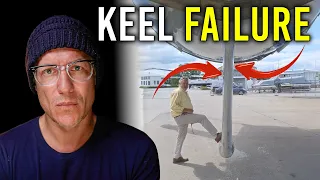
The Keel Moved When He Pushed It. They BOUGHT IT ANYWAY.
Marine surveyor Steven Uhthoff joins James Evenson on Sailing Zingaro to analyze haulout footage of a wobbly bolt-on keel, balsa core sump rot, encapsulated keel durability, diesel engine maintenance, and offshore structural checks.