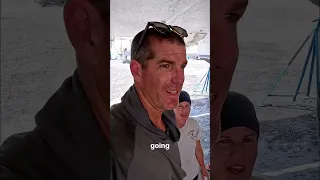
Hull Repair Surprise: The Epoxy Filler Failed #shorts
Kris Fothergill inspects the underwater surfaces of the Leopard 46 catamaran Happy Days after discovering unexpected structural defects along the centerline seam. Having previously hauled out the vessel at Rebak, Malaysia to strip the hull back to the gelcoat and check for osmotic blistering, the crew of Sailing with six did not expect to find spongy hollows in the fiberglass laminate.
Discovering Soft Spots in the Hull
While checking the underwater profile, Kris discovered that a household butter knife could penetrate directly into the seam. He admitted, “I’ve just dug a hole in our hull with a butter knife, and that should not happen.” A closer look confirmed deep voids where the seam filler had completely lost adhesion to the fiberglass cloth underneath.
Confronted with the structural flaw, the team assessed the depth of the void along the centerline. Observing the flaking material, Kris remarked, “That is not good what we just saw.” The filler peeled away cleanly from the laminate instead of remaining bonded, exposing the underlying hull seam to potential water penetration.
Identifying Improper Filler and Grinding Back
The failure stemmed from the material applied during their previous yard visit. The yard had mistakenly used an improper fairing compound rather than true marine-grade epoxy. As Kris explained, “Below the waterline, epoxy filler is the standard because it bonds properly to the fiberglass and keeps water out.” Standard fairing compounds may appear smooth upon initial application, but they deteriorate over time in submerged conditions.
To rectify the issue, the crew engaged boatyard professionals to buzz back the centerline seam with grinders. The team planned to lay glass in sections where needed and rebuild the seam with G-Flex marine epoxy, ensuring an impenetrable bond along the hull.
Frequently Asked Questions
The filler used during a previous haul out in Rebak, Malaysia was not marine-grade epoxy, preventing it from adhering to the fiberglass and causing it to flake off.
The boatyard ground back the centerline seam with power tools and applied G-Flex epoxy to create a proper watertight bond below the waterline.
Below the waterline, epoxy filler is essential because it bonds properly to the fiberglass laminate and keeps water out, whereas other fillers lose adhesion over time.
Support Sailing with six
At WeBoating.com, we profoundly acknowledge the unwavering dedication that Sailing with six invests in crafting each and every video or voyage. Their passion for delivering exceptional ocean content shines through every frame, and it's a labor of love that deserves your attention.
We invite you to watch their captivating videos here and actively engage with their content, including their social media links above. Liking, commenting, and sharing their work goes a long way in fueling their creative fire.
We're also inviting you to explore the gear, sponsorships, and boat partnerships highlighted in the "Hull Repair Surprise: The Epoxy Filler Failed #shorts" video description, or directly on YouTube. By engaging with these offerings or purchasing services and items, you directly support Sailing with six, their collaborators, and the brands they're associated with.
To ensure you never miss an offshore update, consider visiting their official YouTube Channel to subscribe, like, and join their community directly.
If you have any feedback, corrections, or additional information about Sailing with six or their videos, please use the comment form below to share your thoughts with us.
Thank you for being a part of our community and supporting the creators we cherish. Your time and support truly matter!
What was meant to be a routine check turned into a repair nightmare. After discovering soft spots in the hull caused by improper filler usage, the team had to grind back the seam and re-apply marine-grade epoxy to prevent water damage. A critical lesson in boat maintenance. #BoatMaintenance #SailingLife #HullRepair #MarineEpoxy #DIYBoatWork

Sailing with six
Meet the Fothergills: An Australian family of six living a life of radical adventure aboard their Leopard 46 catamaran, Happy Days, across the Indian Ocean.
Channel Information:
Social Media Links:
Hull Repair Surprise: The Epoxy Filler Failed #shorts Location
- Rebak Marina, Langkawi, Malaysia (6.2969,99.6968)
Latest Episodes from Sailing with six
Explore the most recent voyages. Subscribe to the channel to never miss an update!
The Team’s Finally Free: A Perfect Finish #sailingfamily #sailinglife #boatjobs
The moment of release arrives with confidence and gratitude. Teamwork concludes, goodbyes are exchanged, and the journey toward true freedom begins. #NewBeginnings #Freedom #EmotionalJourney #MovingOn
Anchor Chain Keeps Jumping? We’re Replacing It at Last #sailingfamily #sailinglife #boatjobs
After years of struggling with a chain that kept jumping the gypsy—from re-galvanizing in Malaysia to replacing windlass motors—it is time for a permanent solution. A fresh chain is the last hope to end the frustration. #SailingLife #BoatMaintenance #Anchoring #Cruising #BoatRepair
Hauling our home out of the water… a bit stressful ⛵️ 😬 #sailingfamily #sailinglife
Precision matters when every millimeter counts. The crew pushes limits to execute their tightest spinnaker hoist yet, surpassing even their previous bests. Mastery on the water happens in the details. #SailingLife #SailingSkills #OceanRacing #Yachting
Nerve-racking haul out, it’s stressful pulling your home out of the water ⛵️ #sailingfamily
High stakes meet unexpected challenges on set. Despite communication gaps and being off the mark, intense preparation pays off for a flawless final result. #BehindTheScenes #ProductionLife #FilmSet #OnLocation
Replacing Our Boat Transducer: Fixing Speed and Water Temperature #sailingfamily #sailinglife
Swapping out a faulty transducer to restore speed readings and water temperature data. A tricky deep-sea repair mission turned into a successful upgrade. #MarineEngineering #BoatMaintenance #SonarRepair #OceanTech