I Finally Escape the Doldrums and Cross the Equator
A solitary seabird perched upon the genoa furling line brought deck operations to an abrupt standstill on day 30 of Oliver Widger’s solo circumnavigation aboard SV Phoenix do Mar. Trapped in the volatile calms of the doldrums, Widger needed to unfurl the headsail immediately to ride an incoming squall, yet he hesitated to disturb the exhausted bird sheltering against the lines. Compounding the delay, Widger was nursing a rolled ankle suffered four days earlier while climbing the mast, repeatedly banging the tender joint against deck fittings as he moved about the boat.
With no breeze to drive the vessel and thick cloud cover screening the sun, neither the hydrogen generator nor the solar panels could charge the onboard battery banks. After motor-sailing for an hour to inject power into the system, Widger resigned himself to waiting out the bird, observing the creature resting quietly on deck as the doldrums shifted between oppressive lulls and sudden showers.
Squalls, Calms, and Watermaker Maintenance on Day 31
By day 31, Phoenix do Mar drifted through coordinates 5° 14′ N and 116° 10′ W. The visiting seabird finally departed in the morning, leaving a mess on deck. With the forward freshwater tank running low and the reverse-osmosis membranes requiring preservation flushes, Widger turned his attention to desalination. Bleeding air out of the pump, he diverted the initial flow until the pungent rotten-egg odor of sulfur dissipated before sampling the output.
A digital salinity reading registered 186 parts per million, well below the 500 parts per million limit for drinkable water. After confirming the water tasted clean, Widger switched the output valve to replenish the forward tank. Later that afternoon, while documenting his progress for Sailing With Phoenix | Oliver, he landed a fish from the stern line. The evening brought calm waters beneath a distant electrical storm, its lightning flashes illuminating the horizon throughout the night.
Midnight Squall Attacks and Interior Bulkhead Damage
Rest proved elusive on day 32. After staying awake all night watching the lightning storm, Widger endured six consecutive squalls that repeatedly shifted wind velocity and direction. Each convective cell demanded 30 minutes to an hour of constant sail trimming, followed immediately by dead calms that left the sails flogging.
In the afternoon, the deceptively quiet surface gave way to an explosive blast. After sailing under full genoa in light air, the vessel was abruptly hammered by sustained winds of 25 knots, with gusts topping 30 to 35 knots. In the chaos of running downwind to relieve pressure on the rig, the unsecured heavy refrigerator lid went airborne, slamming into the cabin wall and leaving deep dents in the bulkhead. Widger hand-steered through the tempest until spotting a brief lull, instantly engaging the autopilot and rolling in the genoa in record time to bring the vessel under control.
Sail Swaps and Nocturnal Storm Petrels
Having remained awake for 24 hours straight during the squalls, Widger managed 10 hours of restorative sleep before resuming maintenance on day 33. The light-air mainsail had begun flapping violently along the leech and tack in higher winds, threatening to tear the fabric. Widger doused the lightweight canvas and hoisted the primary mainsail, subsequently repairing the remote adjustment cord on his Hydrovane self-steering system.
By day 34, positioned one degree north of the equator, the ocean returned to an absolute calm. Widger took advantage of the stillness to wrap the solar panel mounting poles with duct tape to prevent the brackets from sliding downward. When darkness fell, the boat’s navigation lights attracted two disoriented storm petrels that collided with the rigging and became entangled in the jib sheets. As Widger gently untangled the birds to toss them back into the sea, one pecked sharply at his fingers before flying back toward the glow. Recognizing that the navigation lights were disorienting them, Widger doused all deck and navigation lights, allowing the small pelagic wanderers to depart into the night. Regarding their nocturnal ocean wandering, Widger remarked, “They are solo sailors in their own right for sure.”
Ballast Reconfiguration and the Equator Crossing
Day 35 brought a focused effort to improve the fore-and-aft trim of the Pacific Seacraft 40. Having moved the heavy anchor previously, Widger relocated seven laundry loads of provisioning food supplies from the forward cabin to the low aft lockers, effectively eliminating excess bow weight. He consolidated vacuum-sealed waste into empty forward bins, optimizing stowage for the impending Southern Ocean passage.
Under freshening breezes 25 nautical miles north of the line, a sudden equipment failure struck aloft. While tucking in a second reef, an intermediate car dislodged from the mast track under excessive sail load. Postponing the track repair until daylight, Widger prepared for the crossing. At 4:00 AM on day 36, Phoenix do Mar crossed the Equator into the Southern Hemisphere at latitude 0° 00′.
Standing on deck as he crossed the line, Widger commemorated the milestone: “One, to celebrate and two, offer a gift to Poseidon for safe passage.” He poured libations into the ocean and sprinkling drops across the deck for his vessel, Widger toasted: “This one’s for Poseidon. This one’s for my ship. Drink up. You’ve done well.” As the boat punched into steep waves and stiff southeast trade winds, he squared his focus toward Cape Horn, recognizing that “It truly is the the point of no return.”
| Passage metric | Recorded value | Operational context |
|---|---|---|
| Water test | 186 ppm | Potable output tested below 500 ppm limit |
| Peak squall wind | 35 knots | Afternoon gust striking under full genoa |
| Sustained squall wind | 25 knots | Wind holding during heavy downpour on day 32 |
| Watch duration | 24 hours | Hours awake managing six consecutive squalls |
| Rebalanced food | 7 loads | Laundry loads of food shifted aft |
| Equator crossing time | 4:00 AM | Day 36 crossing into Southern Hemisphere |
Frequently Asked Questions
An exhausted seabird landed directly on the genoa sheet and furling lines to rest, prompting Oliver Widger to delay unfurling the sail until the bird was safe.
The reverse-osmosis desalinator produced freshwater testing at 186 parts per million, well within the safe potable limit of 500 parts per million.
A sudden gust of 30 to 35 knots hit the boat under full genoa, causing violent motion that launched an unsecured refrigerator lid into the cabin bulkhead.
The birds were disoriented and attracted by the vessel’s bright navigation lights, prompting Oliver to extinguish all illumination so they could safely fly away.
Phoenix do Mar crossed the Equator into the Southern Hemisphere at approximately 4:00 AM on day 36 of the circumnavigation.
Support Sailing With Phoenix | Oliver
At WeBoating.com, we profoundly acknowledge the unwavering dedication that Sailing With Phoenix | Oliver invests in crafting each and every video or voyage. Their passion for delivering exceptional ocean content shines through every frame, and it's a labor of love that deserves your attention.
We invite you to watch their captivating videos here and actively engage with their content, including their social media links above. Liking, commenting, and sharing their work goes a long way in fueling their creative fire.
We're also inviting you to explore the gear, sponsorships, and boat partnerships highlighted in the "I Finally Escape the Doldrums and Cross the Equator" video description, or directly on YouTube. By engaging with these offerings or purchasing services and items, you directly support Sailing With Phoenix | Oliver, their collaborators, and the brands they're associated with.
To ensure you never miss an offshore update, consider visiting their official YouTube Channel to subscribe, like, and join their community directly.
If you have any feedback, corrections, or additional information about Sailing With Phoenix | Oliver or their videos, please use the comment form below to share your thoughts with us.
Thank you for being a part of our community and supporting the creators we cherish. Your time and support truly matter!
On October 2nd, 2026, I began a 30,000 mile solo nonstop circumnavigation of the planet aboard my Pacific Seacraft 40, "Phoenix do Mar", meaning Phoenix of the Sea in Portuguese. Departing from Port Townsend, Washington, this voyage will cross the world’s most remote oceans in one continuous passage and take up to eight months to complete. Follow along as I attempt one of the greatest challenges in sailing.
GoFundMe - Sailing around the world for Klippel-Feil syndrome (KFS)
https://gofund.me/fa5f4f2f7
📍 Live Tracker
https://www.predictwind.com/gps-tracking/sailing-with-phoenix
👕 Official Merch
https://sailingwithphoenix.myspreadshop.com/
🌐 All My Links
https://beacons.ai/sailing_phoenix
https://www.twitch.tv/sailing_with_phoenix
https://instagram.com/sailing_with_phoenix
https://tiktok.com/@sailing_with_phoenix
https://facebook.com/sailing.with.phoenix
#Sailing #Nonstop #AroundTheWorld
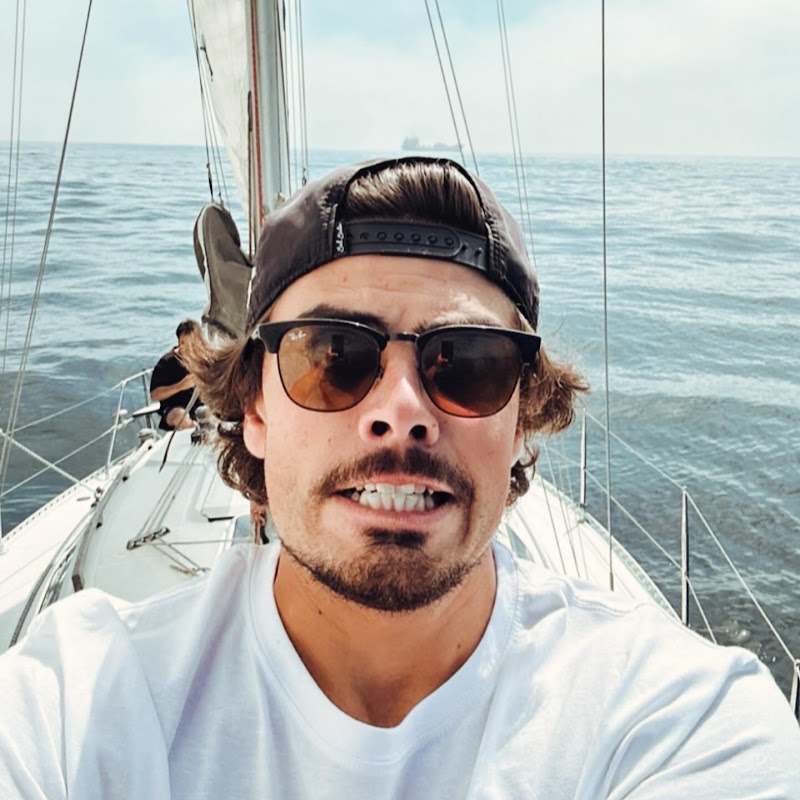
Sailing With Phoenix | Oliver
From liquidating his 401(k) to solo global loops, join Oliver and his cat Phoenix as they prepare for a 30,000-mile non-stop circumnavigation.
Channel Information:
Social Media Links:
I Finally Escape the Doldrums and Cross the Equator Location
- Equator Crossing Point (0.0001,-116.1802)
- Day 31 Doldrums Position (5.2367,-116.1802)
- Day 35 Pre-Equator Approach (0.9968,-116.1802)
Latest Episodes from Sailing With Phoenix | Oliver
Explore the most recent voyages. Subscribe to the channel to never miss an update!
Day 47 at sea sailing around the world without stopping
On Day 47 of his solo nonstop circumnavigation, Oliver Widger addresses offshore discipline, sea conditions, and why personal feelings cannot dictate actions during 30 knots of wind.
Day 46 at sea sailing around the world without stopping
On Day 46 of his solo nonstop circumnavigation, Oliver Widger manages a sudden sea state change as a 32-knot squall strikes offshore, prompting sail adjustments.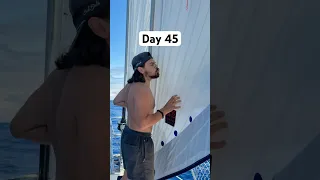
Day 45 at sea sailing around the world without stopping.
Oliver logs Day 45 of his non-stop solo circumnavigation aboard Phoenix, inspecting gear, starting his engine, and waiting out calm seas at sunset.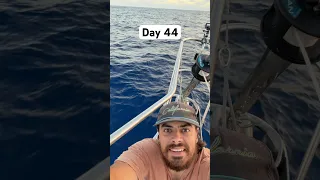
Day 44 at sea. Dolphins!
On Day 44 of his solo nonstop circumnavigation, Oliver Widger welcomes a fast-moving pod of dolphins alongside SV Phoenix do Mar during an offshore sunset.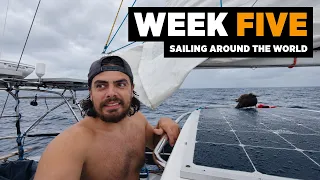
I Finally Escape the Doldrums and Cross the Equator
Oliver Widger navigates grueling squalls, seabird visitors, and watermaker maintenance across the Pacific Doldrums before crossing the equator aboard SV Phoenix do Mar.