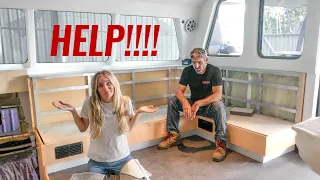
We're SO CLOSE....
Inside an Auckland boatyard positioned along the maritime gateway of New Zealand’s Hauraki Gulf, the multi-year construction of Delos 2.0 has crossed a defining psychological and operational threshold. For Brian Trautman and Karin Syrén of Sailing SV Delos, the relentless rhythm of cutting, bending, and welding 5083 marine-grade aluminum plate is finally yielding to the warmth and habitability of a true ocean-going home. Building a one-off expedition catamaran demands extraordinary patience, where months of heavy structural shipwrighting often appear absorbed by the vast metallic geometry of the twin hulls.
Shipwrighting operates on compounding increments. Weeks of concealed infrastructure work—running tinned marine wiring, welding framing tabs, and plumbing water lines—suddenly coalesce when finished living components arrive on site. With the delivery of precision interior wall paneling, the energizing of overhead living area lighting, the mechanical commissioning of galley appliances, and the mounting of heavy-duty deck sailing hardware, the 53-foot aluminum catamaran has decisively transitioned from a raw shipyard build into a functional floating residence.
From Bare Aluminum to Habitable Living Space
For the crew of Sailing SV Delos, Brian and Karin stand at a momentous turning point as their custom 53-foot aluminum catamaran Delos 2.0 transitions from a raw industrial hull into an insulated home at the Auckland boatyard, where interior domestic systems and finished wall paneling are fundamentally altering the vessel’s character. For over two years, every sightline within the bridge deck salon was dominated by bare longitudinal stringers, ring frames, and pale primer coatings. The arrival of custom salon wall panels marks the physical boundary between structural fabrication and liveaboard architecture.
Installing wall linings on an aluminum expedition vessel requires meticulous acoustic and thermal isolation. Securing interior joinery directly to the alloy structure would create thermal bridges, transferring external temperature extremes directly into the living quarters and causing interior condensation. The build team utilizes specialized isolation battens and composite fasteners to decouple paneling from the alloy structure. As the first salon panels slotted into position, the acoustic environment of the bridge deck shifted immediately, dampening hollow metallic echoes into the quiet ambiance of a finished offshore yacht.
Simultaneously, the crew activated the primary interior lighting circuits. Moving away from harsh construction floodlights, the energization of warm recessed LED fixtures bathes the salon in balanced illumination, validating the vessel’s 24-volt electrical distribution circuits, branch breakers, and dimming controls across the main living areas.
Commissioning the Galley: Marine Refrigeration and Thermal Testing
Within the central bridge deck of Delos 2.0, Sailing SV Delos navigators Brian and Karin are bringing the core domestic systems of their aluminum catamaran to life at the Auckland boatyard, prioritizing the galley as the domestic heartbeat of upcoming ocean voyaging. The galley of an expedition yacht serves as the caloric and social engine sustaining crew stamina through grueling ocean passages. Moving this space from dry joinery mockups to operational appliances represents a critical milestone toward voyaging autonomy.
The primary technical focus centered on commissioning the marine refrigeration system. In remote high-latitude anchorages and tropical transits, reliable cold food preservation is essential. Brian and Karin initiated the cooling cycle on the high-efficiency DC compressor, monitoring electrical current draw from the central battery bank and observing evaporator plates drop rapidly to freezing temperatures. Opening the sealed door to feel crisp, sub-zero air verified that hermetic seals, refrigerant pressures, and thermostat loops were functioning perfectly.
Following refrigeration checks, the crew installed and thermally tested the marine oven and cooktop range. Firing the oven burner enabled the team to verify combustion stability, chimney venting, and thermal clearances against adjoining cabinetry and aluminum bulkheads. Confirming that baking temperatures do not radiate into surrounding bulkheads is vital for offshore fire safety. Concurrently, plumbing technicians advanced the vessel’s freshwater infrastructure, pressure-testing storage tanks and delivery manifolds that will supply filtered potable water throughout the hulls.
Joinery Precision: Engineering the Custom Companionway Door
Addressing one of the most mechanically demanding domestic systems aboard Delos 2.0, Sailing SV Delos creators Brian and Karin tackled the complex companionway door fitting on their aluminum catamaran within the Auckland boatyard. While companionway doors on production fiberglass catamarans are typically built from standardized modular molds, custom aluminum hulls demand bespoke engineering. Minute millimeter variations inherent to structural plate welding and fairing require painstaking adjustment of every sliding and swinging entryway.
The salon companionway door must satisfy stringent seaworthiness criteria: it must glide effortlessly along its tracks, maintain absolute watertight integrity against breaking following seas, resist structural racking when the catamaran flexes under sail, and accommodate varying thermal expansion rates between aluminum bulkheads and composite frames. Brian and Karin methodically shimmed tracks and adjusted multi-point compression latches, achieving an airtight weather seal that glides smoothly to merge indoor salon living with the outdoor cockpit.
Deck Sailing Hardware: Winches, Clutches, and Rigging Controls
On the topsides of Delos 2.0, Sailing SV Delos skippers Brian and Karin shifted focus from interior domestic systems to the sailing nerve center of their aluminum catamaran, bolting down heavy-duty offshore deck hardware at the Auckland boatyard. Transforming an aluminum hull into an ocean-crossing voyager requires positioning winches, line clutches, Genoa sheet tracks, and turning blocks with uncompromising precision so that high-load halyards align smoothly with the mast and cockpit winches.
Mounting stainless steel deck gear to an aluminum deck requires rigorous galvanic isolation protocols. Direct contact between 316 stainless steel fasteners and 5083 aluminum in a saltwater environment initiates rapid galvanic corrosion. Brian and the shipyard crew meticulously bedded each mounting fastener in Tef-Gel barrier paste and installed non-conductive synthetic backing plates beneath the deck, ensuring structural resilience without alloy degradation.
The deck configuration prioritizes short-handed family sailing safety. With halyards, reefing lines, and mainsheet controls led back to protected cockpit stations, the crew can manage sail trim and reefing maneuvers securely without stepping onto exposed side decks in heavy seas. Testing the manual and electric operation of these winches brings the vessel one major step closer to sea trials.
Delos 2.0 Fit-Out Milestones & Galley Systems Commissioning Log
Documenting the tangible progress of Delos 2.0, Sailing SV Delos partners Brian and Karin have established a systematic log tracking the completion of critical domestic systems and deck hardware on their aluminum catamaran at the Auckland boatyard. This structured record summarizes key engineering milestones, installed components, commissioning statuses, and technical specifications achieved during this pivotal build phase.
| Category / System | Components Installed | Commissioning Status | Technical & Operational Specifications |
|---|---|---|---|
| Salon Wall Paneling | Precision acoustic wall liners & isolation battens | Mounted & Aligned | Decoupled from 5083 alloy to eliminate thermal bridging and dampen interior sound |
| Marine Refrigeration | DC compressor unit, evaporator plates & thermostat | Operational (Cold Confirmed) | Low-draw marine system engineered for deep freezing and tropical off-grid autonomy |
| Galley Oven & Range | Marine gimbaled oven & multi-burner cooktop | Tested (Hot Confirmed) | Combustion verified; thermal shielding inspected for zero heat transfer to adjacent bulkheads |
| Companionway Door | Custom heavy-duty sliding door frame & seals | Fitted & Latched | Engineered to accommodate hull flex, thermal expansion, and watertight blue-water integrity |
| Interior Lighting | Overhead recessed LED strips & task illumination | Energized & Tested | Low-power DC warm white illumination wired to central distribution bus and dimmer controls |
| Fresh Water Storage | Baffled aluminum water tanks & distribution manifold | Plumbing Advanced | Integrated hull tanks connected to pressurized variable-speed delivery pumps and filtration |
| Deck Sailing Hardware | Primary winches, line clutches & turning blocks | Bolted & Isolated | 316 stainless hardware bedded with Tef-Gel and synthetic backing plates to prevent galvanic corrosion |
Frequently Asked Questions
The following frequently asked questions address the technical, structural, and domestic systems milestones accomplished on Delos 2.0 by Sailing SV Delos voyagers Brian and Karin as their custom aluminum catamaran nears completion in the Auckland boatyard.
Recent fit-out milestones aboard Delos 2.0 include installing acoustic salon wall panels, energizing recessed interior LED lighting circuits, commissioning the marine refrigerator down to freezing temperatures, testing the galley oven for thermal safety, and mounting primary offshore deck winches.
The marine refrigeration system utilizes an energy-efficient DC compressor powered by the vessel’s large lithium battery bank. During testing at the boatyard, the system successfully pulled down evaporator temperatures to freezing, verifying refrigerant charges, thermostat accuracy, and airtight door seals.
Installing the companionway door on a custom aluminum catamaran requires engineering for structural welding tolerances, thermal expansion variations between alloy and framing materials, and hull racking under sail loads, all while maintaining absolute watertight integrity against ocean waves.
To prevent galvanic corrosion between 316 stainless steel winches and the 5083 aluminum deck, the crew isolates all metal-to-metal contacts using Tef-Gel anti-corrosive barrier paste, non-conductive composite backing plates, and nylon isolation washers on all mounting through-bolts.
Delos 2.0 is being constructed and fitted out in a specialized marine boatyard in Auckland, New Zealand, situated strategically on the Hauraki Gulf, a world-renowned hub for high-performance multihull construction and boatbuilding craftsmanship.
Transitioning from structural fabrication to functional domestic amenities like cold refrigeration, a working oven, quiet acoustic paneling, and fresh water storage transforms the vessel from a metal shell into a safe, sustainable floating home for Brian, Karin, and their daughter Sierra.
Book a trip where this was filmed — near Auckland
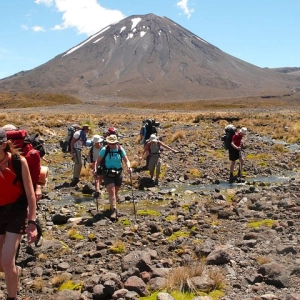
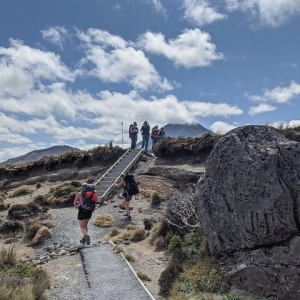
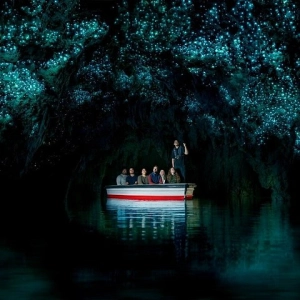
Auckland to Rotorua via Waitomo Caves Small Group Tour (One Way)
Sold by Cheeky Kiwi Travel
Auckland Region | Island Hopper Package Tour (2 Guests Minimum)
Sold by Auckland Seaplanes
Support Sailing SV Delos
At WeBoating.com, we profoundly acknowledge the unwavering dedication that Sailing SV Delos invests in crafting each and every video or voyage. Their passion for delivering exceptional ocean content shines through every frame, and it's a labor of love that deserves your attention.
We invite you to watch their captivating videos here and actively engage with their content, including their social media links above. Liking, commenting, and sharing their work goes a long way in fueling their creative fire.
We're also inviting you to explore the gear, sponsorships, and boat partnerships highlighted in the "We're SO CLOSE...." video description, or directly on YouTube. By engaging with these offerings or purchasing services and items, you directly support Sailing SV Delos, their collaborators, and the brands they're associated with.
To ensure you never miss an offshore update, consider visiting their official YouTube Channel to subscribe, like, and join their community directly.
If you have any feedback, corrections, or additional information about Sailing SV Delos or their videos, please use the comment form below to share your thoughts with us.
Thank you for being a part of our community and supporting the creators we cherish. Your time and support truly matter!
Watch the full episode here: https://youtu.be/w_u_PJO5jOQ
It's alllllll starting to come together after years of hard work. Building a boat is such a slow process, and each day you chip away at the tiniest little fraction of the whole project....but those microscopic fractions add up slowly over time, and one day you take a look at what you've made and it just hits you all at once, like WOW we're actually getting CLOSE 🤯 In this week's episode we tackle some very cool projects that really propel the build forward in a bunch of different areas- we put up the first wall panels in the salon, we get more of the sail hardware online, make progress with the water tanks, get the fridge and oven online, and lots of other very cool milestones that we can't wait to share with you! We hope you enjoy this one!
Watch the full episode here: https://youtu.be/w_u_PJO5jOQ

Sailing SV Delos
Brian, Karin, and Sierra: The 'Delos Tribe' is pioneering the future of hybrid expedition sailing with Delos 2.0, a custom 53ft aluminum catamaran currently completing its build in Australia.
Channel Information:
Social Media Links:
We're SO CLOSE.... Location
- Delos 2.0 Shipyard & Boatyard, Auckland, New Zealand (-36.8485,174.7633)
- Waitematu0101 Harbour & Hauraki Gulf Approaches, Auckland, New Zealand (-36.83,174.82)
Latest Episodes from Sailing SV Delos
Explore the most recent voyages. Subscribe to the channel to never miss an update!
FIRST SOLAR TEST….Too Good To Be True???
Watch the full episode here: This is an episode that I couldn't be happier to share with you guys. Our solar system has been one of my favorite projects of the whole build. I just find this technology so incredibly fascinating, and it's been such a joy to bring it all together. We'v...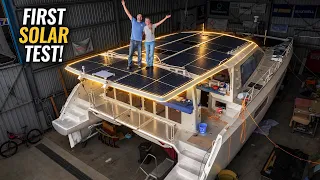
FIRST SOLAR TEST….Too Good To Be True??? (Pt. 2) Aluminum Catamaran Build 93
Brian Trautman, Karin, and Open Water Solar complete and test the 6,000-watt flexible solar roof on Delos 2.0, achieving 175 volts on bench testing and cutting array weight to 160 kilos.
You’ve NEVER Seen Solar Like This! INSTALL BEGINS 🛠️
Brian Trautman initiates the Delos 2 solar panel installation, outlining ambitious plans to maximize off-grid power on the catamaran roof without drilling mounting holes.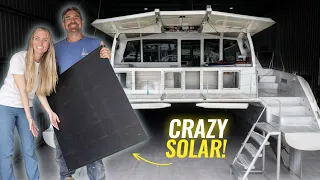
Our MASSIVE Solar Installation Begins! (Pt. 1) Aluminum Catamaran Build 92
Want to get behind the scenes of the build with early & ad free content, meetups, and more? Join the inner tribe at We've got a DOOZIE of a project for ya in this week's episode! I know that so many of you are curious about this topic, and it's one that I have THOROUGHLY geeked...
Salon TRANSFORMATION 🤯….BUT….
Watch the full episode here: This week's episode is another huuuuge milestone that feels pretty unreal. The salon is really passing the tipping point from construction site vibes to holy cow this is actually where we're going to live 🤯 We're starting to be able to picture a cozy nig...