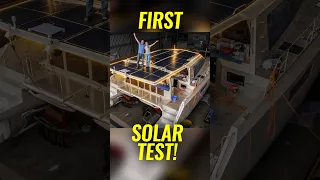
We Turned It On…THIS HAPPENED 🤪 Building Our Own Aluminum Catamaran Pt. 96
During shipyard fit-out of their custom fifty-three-foot aluminum catamaran Delos 2.0, Brian Trautman, Kazz, and shipwright Bill prepared to commission the vessel’s central climate control system. Documenting the milestone on Sailing SV Delos, the initial live test of the high-capacity chiller revealed a critical plumbing error that sent a waterfall of raw water into the starboard hull bilges.
With the unlaunched vessel blocked ashore in the boatyard, the crew simulated the ocean by piping a large freshwater drum to the sea chest intake. As soon as the raw water circulation pump energized, discharge volume overwhelmed the through-hull skin fitting, backing up into the shared manifold and overflowing the internal compressor drain pans:
“And we turned on the air conditioners and it all worked, but then the whole bilge had flooded, so we found a little plumbing issue. Like little or pretty big? Oh, it was pretty big. It was, it was like a waterfall. We should have been filming Kazz! We just had water gushing out of the fill trays of the AC units, and that is not as designed.”
Hydronic Chilled-Water Engineering vs Traditional Direct Systems
Standard marine air conditioning routes raw seawater hoses through interior accommodations to individual cabin compressors, carrying persistent flood risks if a hose clamp fails offshore. For Delos 2.0, Brian engineered a centralized closed-loop hydronic system commonly specified on commercial vessels and superyachts.
All seawater circulation and refrigerant cycles are confined entirely to the starboard engine room machinery space:
“So we also don’t have any salt water loop running through the accommodation space of the boat because whenever we left Delos, it was always in the back of my mind like we’re like one broken hose clamp away from that pump just continually filling the boat with salt water. And so I wanted to do a system that’s called a hydronic heating and cooling system. You normally see it on larger boats. These are the compressors, two 25,000 B2 compressors.”
The two twenty-five-thousand BTU compressors chill or heat a closed freshwater-glycol loop. Insulated supply lines run forward into living spaces, feeding quiet fan-coil air handlers situated in the main salon and sleeping cabins without mechanical compressor vibration. The only mechanical sound in the living quarters is a gentle air fan, while thermal mass in the liquid loop maintains stable cabin temperatures without rapid compressor cycling.
Resolving Drainage Plumbing and Seawater Pump Priming
Tracing the flood path through the machinery compartment, Brian discovered that tying the compressor condensation tray drains into the main cooling discharge created a hydraulic backflow loop when the pump pushed high volume against through-hull backpressure:
“So that’s actually the tube for the drain, for the condensation drain for the compressors. And I didn’t think about it, but even having that much height difference between the hot sea water coming out and it’s hooked to the same pipe as the drain, it was literally backfilling that pipe and filling the drains of the compressors.”
Brian separated the lines, re-plumbing the condensation line to an independent gravity drain. To resolve pump priming cavitation ashore, the crew hoisted the supply barrel onto elevated scaffolding above the sea strainer waterline. Energizing the system again, the centrifugal pump primed automatically, coolant flowed through the chiller barrel, and the salon air handler blew steady chilled air across the unfinished interior. The successful commissioning confirmed that both reverse-cycle heating and cooling modes function reliably before structural deckhead panels are permanently installed.
To ensure long-term reliability under severe offshore conditions, the installation incorporates heavy-duty bronze shutoff seacocks and double-clamped marine hose throughout the machinery room. Isolating raw saltwater plumbing exclusively within the mechanical spaces eliminates the vulnerability of interior cabin bilge flooding while voyaging in remote waters.
Frequently Asked Questions
The compressor condensation drain was plumbed into the high-volume raw water discharge line, causing backpressure from the through-hull to flood back into the compressor drain pans.
Hydronic systems keep all raw seawater and noisy compressors in the engine room, circulating a closed freshwater-glycol loop through quiet cabin fan coils rather than pumping seawater through living quarters.
The system utilizes two 25,000 BTU reverse-cycle chiller compressors installed in the starboard engine room machinery space.
The crew filled a large water barrel on elevated staging above the sea strainer waterline to gravity-feed and prime the seawater circulation pump.
Book a trip where this was filmed — near Auckland
Support Sailing SV Delos
At WeBoating.com, we profoundly acknowledge the unwavering dedication that Sailing SV Delos invests in crafting each and every video or voyage. Their passion for delivering exceptional ocean content shines through every frame, and it's a labor of love that deserves your attention.
We invite you to watch their captivating videos here and actively engage with their content, including their social media links above. Liking, commenting, and sharing their work goes a long way in fueling their creative fire.
We're also inviting you to explore the gear, sponsorships, and boat partnerships highlighted in the "We Turned It On…THIS HAPPENED 🤪 Building Our Own Aluminum Catamaran Pt. 96" video description, or directly on YouTube. By engaging with these offerings or purchasing services and items, you directly support Sailing SV Delos, their collaborators, and the brands they're associated with.
To ensure you never miss an offshore update, consider visiting their official YouTube Channel to subscribe, like, and join their community directly.
If you have any feedback, corrections, or additional information about Sailing SV Delos or their videos, please use the comment form below to share your thoughts with us.
Thank you for being a part of our community and supporting the creators we cherish. Your time and support truly matter!
We're kicking off our Black Friday Sale TODAY! Get our deepest discounts of the year on all our Delos 2.0 gear including our brand new hats, sunshirts, bottle openers, insulated mugs, flags, and lots more! http://svdelos.com/shop
Welp, things didn't exactly go according to plan on this one 😂 After designing and chipping away at our heating and cooling system the last months, the big day had finally arrived to test this baby. Since the system relies on raw water to circulate through, it's something that's normally done when the boat is in the water. But we had an idea for a work-around that seemed pretty clever at the time. Things did go a bit sideways, but it revealed an issue in our design that we're very happy to have found before putting her in the water. And besides, a proper boat job can never be complete without a few curveballs! We hope you enjoy this one, and as always drop any questions in the comments below!
Want to get behind the scenes of the build with early & ad free content, meetups, and more? Join the inner tribe at http://patreon.com/svdelos
Our 3d printer we're obsessed with: https://amzn.to/45ONHxH
Interested in getting your own Delos Explorer 53?
https://svdelos.com/delos2
You can find all the camera gear we use, our must have cruising essentials, tools, recommended reading, safety gear, and more at our amazon storefront!
https://svdelos.com/amazon
Watch our 4 part docu-series:
https://80northseries.com
Protect yourself from the sun!
https://svdelos.com/rashguards
Support Our Videos- Send Us Love
http://svdelos.com/beer
http://patreon.com/svdelos
We're completing our sail around the world, so there's plenty more to see! Your support will fund better camera gear, internet to upload videos, and of course creative lubricants to smooth the editing process :)
http://svdelos.com/newsletter - Subscribe to our free newsletter
http://instagram.com/svdelos - Behind the scenes.
http://facebook.com/svdelos - Like us on Facebook
http://svdelos.com/gear/ - Support us buy a sweet Delos T-shirt!

Sailing SV Delos
Brian, Karin, and Sierra: The 'Delos Tribe' is pioneering the future of hybrid expedition sailing with Delos 2.0, a custom 53ft aluminum catamaran currently completing its build in Australia.
Channel Information:
Social Media Links:
We Turned It On…THIS HAPPENED 🤪 Building Our Own Aluminum Catamaran Pt. 96 Location
- Auckland, North Island, New Zealand (-36.848,174.763)
Latest Episodes from Sailing SV Delos
Explore the most recent voyages. Subscribe to the channel to never miss an update!
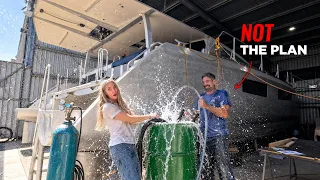
We Turned It On…THIS HAPPENED 🤪 Building Our Own Aluminum Catamaran Pt. 96
Brian Trautman tests Delos 2.0's hydronic chilled-water air conditioning, troubleshooting an engine room plumbing backflow and bilge flooding.
The TRANSFORMATION We’ve Been Waiting For 😱
Watch the full episode here: If you've been following along for a few years, you'll remember one of our first longer experiences on a catamaran with our friends Warren & Erica. It was great to get a feel for life onboard, but there was one thing that solidified the decision for Sierr...
The TRANSFORMATION We’ve Been Waiting For 😱 Building Our Own Aluminum Catamaran Pt. 95
Brian Trautman and Karin Syrén install custom 3/8-inch offshore trampolines on Delos 2.0 in Queensland, configure galley digital switching on CAN bus keypads, and inspect custom electro-polished standing rigging adapters.
Is This Completely Ridiculous?
Brian Trautman and Karin Syrén expand their custom lighting installation aboard Delos 2.0, balancing the KISS sailing mantra against playful design creativity.
Is This Completely Ridiculous? Building Our Own Aluminum Catamaran Pt. 94
Brian Trautman and Karin Syrén advance the Delos 2.0 catamaran build in Queensland, Australia, installing addressable Lumitec RGBW lighting, custom 3D printed Starlink deck mounts, polished galley pot clamps, and Rutgerson escape hatches.