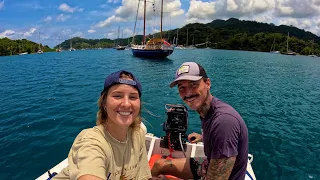
Sailing to an uninhabited island with a stranger! | Sailing Sitka Ep 113
Gale Winds Strike San Evaristo
Northerly gale winds blast through the remote anchorage of San Evaristo, pinning Sailing Sitka at anchor for a 24-hour period. While crew members Jay and Kenna remain huddled below deck aboard their 1976 Cheoy Lee Offshore 41 ketch, Sitka, wind gusts climb into the 40s. A sudden shudder rocks the boat as a violent draft sweeps across the deck. Rushing out through the companionway hatch, the sailors discover that their 100-pound dinghy has been ripped from its deck chocks, tumbling violently onto the starboard cabin side where it hangs dangerously over the water.
During the violent flip, both oars slip free from the tender interior and plummet into the sea. The vessel sits in 25 feet of water, making retrieval impossible in choppy, murky gale conditions. As Kenna surveys the sudden loss, the practical consequence of missing oars becomes clear: “we lost both ores inside the dinghy it’s a nightmare cuz like we need these ores for everything”. Without oars to guide beach landings through surf, dinghy operations face severe constraints. Jay recalls an earlier misadventure near Salt Spring Island alongside crewmate John Waaga, where a sudden 45-knot squall lifted an unlashed inflatable tender 50 feet into the air past the main mast like a runaway balloon. Determined not to suffer another airborne tender, the crew secures the dinghy firmly to the deck hardware.
Landing Without Oars at San Evaristo
Because the tender had already dropped onto the waterline during the mishap, Jay and Kenna decide to motor ashore to scout the small settlement and local tienda. Clipping into safety lanyards, they run the outboard engine toward the exposed sandbar, bracing against heavy sand blasting their bare legs. Moving inland past the concrete building of the local desalination plant, the small fishing village appears deserted and completely inactive.
Walking along the shoreline, the crew finds little human activity and sparse supplies. At the southern terminus of the sand spit, they discover a dead and severely inflamed eel washed up on the tide line. The peculiar sight, combined with heavy wind squalls that offer no reprieve from offshore conditions, prompts them to return to the mothership and prepare for immediate departure once conditions ease.
Taking on a Sea Hitchhiker
Dawn brings calmer waters and clearing skies across the bay, allowing the sailors to finally prepare their ground tackle for transit south. Before raising the anchor, a neighboring vessel, SV Where She Goes, hails Sitka with an unexpected proposition. A traveling crew member named Thomas needs passage south toward La Paz to catch a scheduled airline flight. Embracing traditional cruiser camaraderie, Jay and Kenna agree to welcome the guest aboard.
Welcoming an extra hand transforms the rhythm of life underway. Cruising between 6 and 9 months each cruising season can gradually cause extraordinary coastal environments to feel routine. Experiencing the passage through the eyes of someone stepping aboard from outside the cruising community revitalizes their perspective. Kenna reflects on welcoming Thomas for the transit: “having someone who isn’t a cruiser come aboard and experience this lifestyle firsthand you sort of live through their eyes and notice again just how amazing this alternative lifestyle really is”.
Rigging the Pole and Running the Channel
With the hook stowed, Sitka enters the open channel under steady breezes. Jay guides Thomas to the foredeck to demonstrate rigging the whisker pole, sharing practical seamanship that Jay has long hoped to teach aboard classic offshore hulls. As the vessel settles onto a broad reach, the wind angle shifts enough that poling out the genoa is no longer required. Under full working canvas, Sitka glides cleanly across the sea at over 5 knots.
Down in the galley, Jay fires up the stove while underway to prepare a signature batch of Quebec crepes for the crew. Sailing provides an efficient alternative to burning diesel; pushing the auxiliary engine past 2400 RPM consumes disproportionate fuel reserves to gain modest speeds of 5 to 6 knots. Running cleanly under canvas allows the crew to preserve fuel while maintaining solid headway through offshore chop.
Handline Strike and Commercial Shipping
While tracking south, Thomas keeps watch over a simple handline trailing behind the transom. A sharp strike signals a fish on the line, and Thomas quickly alerts the cockpit. Jay and Kenna haul in a thrashing skipjack tuna. Observing the distinctive lateral stripes that distinguish the skipjack from prized bonito or yellowfin, the sailors choose to release the fish unharmed back into the channel waters.
Traffic soon interrupts the open horizon as a large commercial Mexican vessel, the Jose Maria Morelos, approaches on a converging heading. Although rules of the road grant sailing vessels technical right-of-way over motor vessels under normal navigation, Jay wastes no time altering course to pass well clear of the commercial freighter: “we got out of his way yeah even though you have right away on their sale like we don’t want to win that race”. Yielding to commercial tonnage ensures safe passage across busy maritime corridors.
Arrival at Isla Espiritu Santo
As Sitka nears Isla Espiritu Santo, rolling swells build into sporty breaking seas. Jay takes manual control of the helm to steer through the breaking crests, balancing the heavy hull as the island topography funnels the wind. Approaching Ensenada de la Raza—a secluded bay set along the western shore of Isla Espiritu Santo—the crew furls the genoa and motors into the cove. The surface transitions instantly into clear turquoise water revealing the sandy seabed below.
Dropping the hook in shallow sand, the crew secures the ketch for the night. In true maritime tradition, they celebrate arrival in the secluded haven: “once anchored we cracked a cold one as most Sailors do when the hook is dropped and admire one of the most intense sunsets we’ve ever seen”. The evening sky transitions into brilliant crimson over the jagged volcanic cliffs. Down in the salon, the crew prepares a hot dinner of fresh mahi-mahi to share with Thomas, completing a memorable transit through the Sea of Cortez.
Frequently Asked Questions
Severe wind gusts climbing into the 40s broke the 100-pound dinghy free from its foredeck storage, flipping it onto the side of the cabin and dumping both oars into 25 feet of water.
Thomas, a crew member from the neighboring vessel SV Where She Goes, joined Jay and Kenna in San Evaristo to hitch a ride south toward La Paz to catch a scheduled flight.
Even though Sitka had right-of-way under sail, skipper Jay altered course away from the commercial cargo ship Jose Maria Morelos because competing with large commercial tonnage poses unnecessary risk.
Using a simple trailing handline, the crew hooked and landed a skipjack tuna, which they identified by its distinct stripes and released unharmed into the ocean.
Book a trip where this was filmed — near San Jose del Cabo
Support Sailing Sitka
At WeBoating.com, we profoundly acknowledge the unwavering dedication that Sailing Sitka invests in crafting each and every video or voyage. Their passion for delivering exceptional ocean content shines through every frame, and it's a labor of love that deserves your attention.
We invite you to watch their captivating videos here and actively engage with their content, including their social media links above. Liking, commenting, and sharing their work goes a long way in fueling their creative fire.
We're also inviting you to explore the gear, sponsorships, and boat partnerships highlighted in the "Sailing to an uninhabited island with a stranger! | Sailing Sitka Ep 113" video description, or directly on YouTube. By engaging with these offerings or purchasing services and items, you directly support Sailing Sitka, their collaborators, and the brands they're associated with.
To ensure you never miss an offshore update, consider visiting their official YouTube Channel to subscribe, like, and join their community directly.
If you have any feedback, corrections, or additional information about Sailing Sitka or their videos, please use the comment form below to share your thoughts with us.
Thank you for being a part of our community and supporting the creators we cherish. Your time and support truly matter!
Sailing to an uninhabited island with a stranger! In this episode, we sail from San Evaristo to Ensenada De La Raza on Espirtu Santo Island in Mexico. When doing so, we got asked by a stranger (a former crew member on a boat we shared the anchorage with) if he could tag along and sail south with us to catch a flight out of La Paz. Our instincts told us to say yes and he ended up becoming a very good friend of ours ever since!! Crazy what life throws at you.
Sailing Sitka
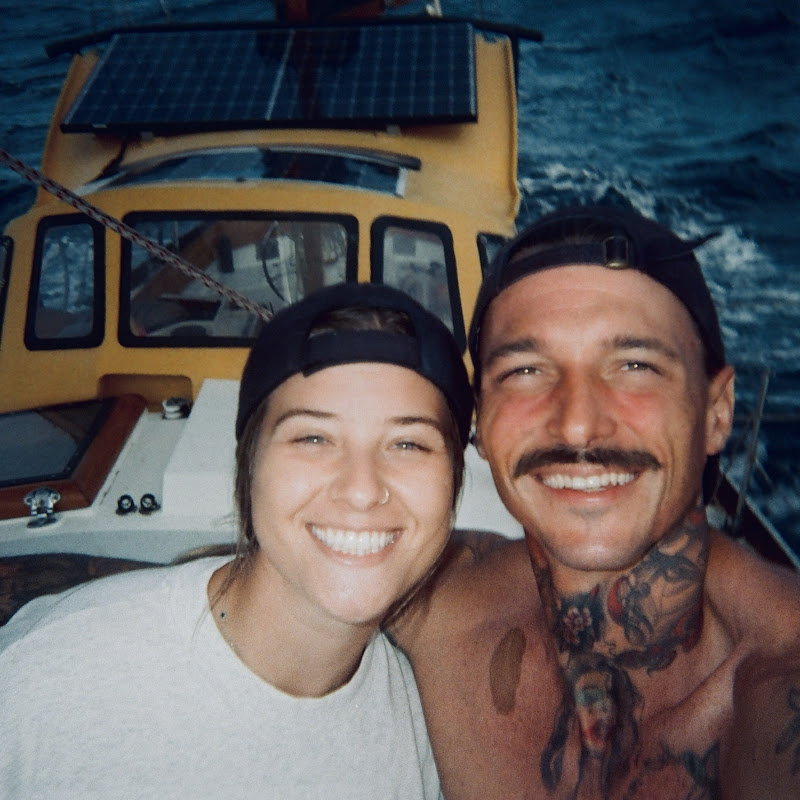
Sailing Sitka follows Canadian sailors Jay and Kenna, who spent ten years restoring and cruising their classic 1976 Cheoy Lee Offshore 41 ketch/sloop, Sitka. Sailing over 8,000 nautical miles from Victoria, British Columbia, through the Sea of Cortez and Panama Canal to Bocas del Toro, the couple shared authentic boatyard refits and heavy weather seamanship. In 2026, with Sitka listed for sale in Panama, the couple has relocated to Nova Scotia to establish an off-grid homestead on land.
Channel Information:
Social Media Links:
Latest Episodes from Sailing Sitka
Explore the most recent voyages. Subscribe to the channel to never miss an update!
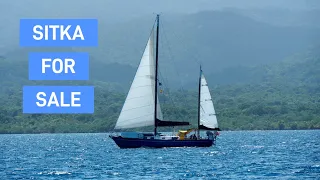
We’re selling our boat. (full tour, explanation + update)
LISTING LINK AND PRICE 👉 Our Email: [email protected] Life has a special way of keeping you moving, evolving, shifting, and changing direction… and this is one of those moments. Yes, it’s true, Sitka our 1976 Cheoy Lee Offshore 41' is for sale. And no, this isn’t clickbait or an April...
An update you’re not expecting!
Thats right! We're starting a private charter business with Sitka in the San Blas Islands!! Click the link here to check out our website and inquire about booking ➡️ Thank you to everyone who watches, supports and has contributed to our journey. We love and appreciate you all.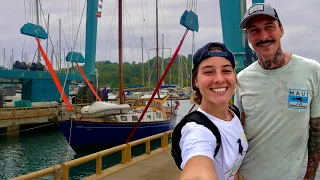
Haul-out day (end of a chapter) | Sailing Sitka Ep 186
That’s it, that’s all. We hauled out our sailboat in Linton Bay, Panama. Watching 25,000 pounds of fiberglass, rigging, wood and belongings lifted slowly from the water is a strange mix of awe and anxiety. Boats are meant to float, not hang suspended in the air, yet here she is, cradled by straps an...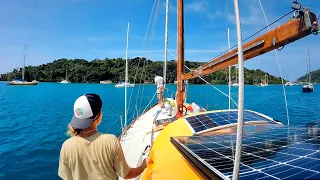
Haul Out Prep on Panama’s Caribbean Coast (the countdown is on) | Sailing Sitka Ep 185
As Jay and Kenna spend their final week at anchor in Linton Bay, Panama, they prepare their Cheoy Lee Offshore 41’ for life on the hard. It’s never easy saying goodbye to this chapter—long days of work, tough decisions, and the bittersweet feeling of stepping away. But it’s all part of what keeps th...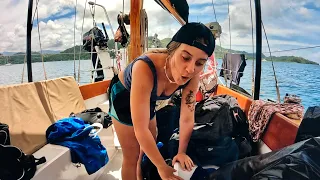
“The unspoken parts of boat life” | Sailing Sitka Ep 184
Jay and Kenna are anchored in Linton Bay on the east coast of Panama, steadily chipping away at their long list of pre-haul out projects before Sitka spends 6 months on the hard—though some of those jobs involve evicting a few unwanted freeloaders who decided to move aboard uninvited.