The Rigging Mistake That Could Have Cost Us Our Mast Ep 82 #sailingcatamaran
Shawn prepares to ascend the mast at Annapolis, Maryland, conducting a pre-departure rigging survey before Sailing Roam gets underway. Suiting up in his climbing harness, the inspection serves a vital purpose: verifying cotter pins, checking loose hardware, and scouting secure tie-off locations before taking down damaged standing rigging. Several months earlier in June, an accidental halyard wrap around the headstay created an alarming structural hazard. When attempting to clear the fouled jib halyard with a cordless drill fitted with a winch bit, excessive mechanical force unlaid and unwound approximately 12 inches of 1×19 stainless wire at the upper swage terminal. The damage compromised the forestay, forcing the crew to stabilize the spar with temporary support lines while sourcing replacement parts on a tight budget.
Coastal Transit to Deale
With replacement rigging components sourced directly, the catamaran departed Annapolis on Halloween morning to meet professional riggers. Cruising under a chilly north wind, the crew experienced their first truly cold passage of the season. A steady following breeze made conditions comfortable as the vessel ran south under power with the autopilot steering. The transit covered a run of 10 nautical miles down to the harbor channel at Deale, Maryland.
Upon arriving in Deale, Shawn carefully warped and adjusted the dock lines along the finger pier. Lining up the mast squarely with the wooden dock walkway was essential, providing an unobstructed surface to lay out the full length of the wire and furling extrusion without needing a marina crane. With the rigger scheduled to assist on Monday, Shawn went aloft once more to organize halyard runs and inspect the damaged furler connection, ensuring every step was prepared for a rapid teardown.
Rigging Teardown Without a Crane
Lowering a heavy forestay and furling extrusion without a crane demands careful load distribution and coordinated deck handling. To brace the mast column once the primary stay was disconnected, four halyards were rigged forward to deck cleats and winched bar-tight. The professional crew from East Coast Marine Rigging arrived at the dock early in the morning to lead the unstepping procedure.
Working with practiced precision, four riggers tensioned the forward halyards to carry the rig loads before slacking off the lateral shrouds. Loosening the shrouds relieved standing tension on the headstay clevis pins, allowing the crew to tap them out cleanly without binding. Describing the efficiency of the rigging team, Geri noted: “In 40 minutes, they arrived, brought their tools on board, set up, loosened the shrouds, tightened the extra halyards, and brought down the forestay.” With the headstay unpinned aloft and lowered via halyard, the team guided the long foil assembly safely onto the finger dock.
Dockside Furler Teardown and Marina Mishaps
Work quickly transitioned to dismantling the damaged furling system and prepping new wire along the dock. While Shawn handled the lower furler extrusions, an unexpected mishap occurred when a camera mounted on a mini-tripod was bumped and tumbled off the pier into the harbor basin. While Shawn was an experienced diver, recovering the submerged electronics was ruled out immediately due to the severe hazard of stray electrical currents in the marina water. Setting the equipment loss aside, full attention returned to the mechanical rebuild.
The crew slid the aluminum foil extrusions onto the fresh wire, preparing to terminate the lower wire with a mechanical Sta-Lok fitting. Drawing inspiration from technical videos by rigger Steve at The Yacht Rigger, Shawn adapted a workshop method using the sole of a sneaker to unlay and spread the outer wire strands evenly over the Sta-Lok wedge. Seating the wedge inside the wire core required careful positioning, pushing the outer strands back until the center core extended 1 centimeter beyond the wedge shoulder. Shawn adjusted the individual strands by hand so the outer wires formed a symmetrical basket around the cone.
Terminal Assembly and Furler Rebuild
Assembling mechanical standing rigging terminals requires following precise assembly sequences. To form the outer wire strands around the internal wedge without risking thread damage, Shawn coated the fitting with Tef-Gel anti-seize before completing the initial dry torque. Addressing the thread lubricant, Shawn explained: “It does get Loctite, but we’re going to use Tef Gel first to make sure we don’t gall the threads.”
Wrenching the terminal body down by hand required substantial effort using a short wrench without a 6 foot cheater pipe available on the dock. Once the initial compression seated the internal wedge cleanly, Shawn backed the terminal body off to inspect the strand pattern. Confirming the wire lay was uniform, the Tef-Gel was thoroughly cleaned from the mating surfaces. For permanent assembly, the threads received threadlocker while the inner terminal cavity was filled with 4200 polyurethane adhesive sealant to prevent water ingress and internal crevice corrosion.
Rebuilding the roller furling mechanism presented additional challenges. Inspecting the drum revealed warped metal on the drum halves from the original halyard incident. Working through the replacement inventory, Shawn installed a fresh split bearing, top bearing carrier, new foil stopper, and a specialized 38 dollar shoulder bolt designed for the assembly.
Hoisting the Headstay and Restoring Mast Security
With the mechanical terminal cured and the furling components secured top and bottom, East Coast Marine Rigging returned to the dock on their second morning of work. The riggers hauled the assembled forestay back aloft, guided the upper terminal into the mast tang, and inserted the clevis pin. At the deck, the lower turnbuckle was pinned into the stemhead chainplate and brought up to proper working tension.
Once the headstay carried the rig load, the lateral shrouds were re-tensioned to spec and the temporary halyards were finally released. Standing on the foredeck after months of anxiety, Shawn reflected on the completed repair: “For the first time since June, I feel like our mast is safe.” Geri shared the profound relief, adding: “I can taste it. I can taste the relief.” With the standing rigging fully restored and inspected, the catamaran was cleared to collect its serviced headsail from the sail loft and continue the voyage south.
Frequently Asked Questions
The crew and riggers secured the mast by tensioning four forward halyards to deck cleats. Loosening the lateral shrouds relieved tension on the headstay clevis pins, allowing the forestay to be unpinned and lowered directly to the finger dock.
In June, the jib halyard wrapped around the forestay. When attempting to free the wrap using a cordless drill fitted with a winch bit, the excessive torque unlaid approximately 12 inches of wire at the top swage fitting, compromising its structural strength.
Tef-Gel was applied during the initial dry fitting to prevent the stainless steel threads from galling while torquing down the fitting to seat the internal wedge. Once the wire lay was verified, the Tef-Gel was cleaned off and replaced with Loctite and 4200 sealant.
The crew chose not to dive for the dropped camera because of the dangerous risk of stray electrical currents running through marina waters, prioritizing crew safety over lost equipment.
Book a trip where this was filmed — near New York City


Support Sailing Roam
At WeBoating.com, we profoundly acknowledge the unwavering dedication that Sailing Roam invests in crafting each and every video or voyage. Their passion for delivering exceptional ocean content shines through every frame, and it's a labor of love that deserves your attention.
We invite you to watch their captivating videos here and actively engage with their content, including their social media links above. Liking, commenting, and sharing their work goes a long way in fueling their creative fire.
We're also inviting you to explore the gear, sponsorships, and boat partnerships highlighted in the "The Rigging Mistake That Could Have Cost Us Our Mast Ep 82 #sailingcatamaran" video description, or directly on YouTube. By engaging with these offerings or purchasing services and items, you directly support Sailing Roam, their collaborators, and the brands they're associated with.
To ensure you never miss an offshore update, consider visiting their official YouTube Channel to subscribe, like, and join their community directly.
If you have any feedback, corrections, or additional information about Sailing Roam or their videos, please use the comment form below to share your thoughts with us.
Thank you for being a part of our community and supporting the creators we cherish. Your time and support truly matter!
Our forestay has been damaged since June, and it’s finally time to tackle one of the biggest and most important repairs we’ve faced since leaving the boatyard.
Back in June, we accidentally wrapped our jib halyard around the forestay. In trying to free it, we used a drill with a winch bit, but the force unwound about 12 inches of the wire at the top of the forestay. That left us with a serious rigging problem and the need for temporary support to keep our mast secure.
With a tight budget, we sourced and ordered the replacement parts ourselves. Now, we’re leaving Annapolis and heading south to Deale, Maryland, where we’ll work with a rigger to replace the forestay and get our roller furling system back in shape.
And we’re doing it without a crane!
The plan is to manually bring the forestay down to the dock, remove the old furler, cut the new forestay to length, and install new Sta-Lok terminals. We’ll also replace several damaged furler components, including the extrusion, bearing, and bearing carrier. Then comes the big moment: getting the new forestay back into position, securing everything, and having the work inspected.
It’s a substantial job, and one we need to get right before continuing our journey south.
Join us as we make the cautious trip to Deale, tackle this major rigging repair, and hopefully put this problem behind us once and for all!
⚓ Thanks for following our adventures aboard ROAM! If you enjoy our videos, please give us a thumbs-up, subscribe to Sailing ROAM, and turn on notifications so you don’t miss what’s next.
Keep roaming!
00:00 Pre-departure rigging inspection
01:23 Channel Intro
01:34 Up the mast
3:16 Leaving Annapolis
05:48 Arrival in Deale
06:14 Prep for the big job
07:26 Removing the forestay
10:27 Prep the new forestay
20: 24 Install new forestay
21:57 Wrap up
23:58 End card
☝More about us, our adventures, and how we do all this on our website.More about Roam here
⛵️https://sailingroam.com/our-sailboat/
📲 Keep up with us on social
FACEBOOK: https://facebook.com/sgsailingroam
INSTAGRAM: https://instagram.com/sailing_roam
-----------------------------------------------------------
WE'RE GERI AND SHAWN. A couple travelers out chasing the horizon, meeting the people, and capturing it to share with you.
We’ve chosen to Roam the world by boat because, let’s face it, the most interesting path is rarely a straight line.
As we learn to let go of our American drive to finish, and embrace the meandering routes across islands, oceans, continents, and people, we hope to gain a better sense of our world and our place in it.
The path won’t always be comfortable or easy to find but, it will always #roam
East Coast Marine Rigging Deale, MD
https://ecmrigging.com
Sta-Loc
https://www.stalok.com
The Yacht Rigger
https://theyachtrigger.com/?gad_source=1&gad_campaignid=21418785116&gbraid=0AAAAADDuRImm5NpNV9qNJpN_kSC5AYQEM&gclid=Cj0KCQiAh9vXBhDKARIsAMooYhfFsRxs1bAbFLsCwD8LcGzbTdB5JcvH32VeBPnTvPnVmODEHn4cyeAaAgSkEALw_wcB

Sailing Roam
👋 Hi, we’re Geri 👩🏻⚕️(a retired nurse) and Shawn 🤓 (a not retired technologist). We’ve gone on the greatest adventure of our lives instead of living the comfortable and predictable suburban world we left behind. Living aboard Roam, our cruising catamaran, we explore and immerse ourselves in new cultures, do boat repairs in exotic places, and get up to all kinds of shenanigans. Roam isn’t just the name of our boat, it’s kind of a philosophy. We’re not taking the shortest routes or using a formula to sail around the world. We’re not in a hurry either. We’re meeting the people, seeing the places and getting distracted by things we find interesting along the way. We’re unconventional and we’re living the best life we can imagine! Join us as we turn our 11-year old catamaran into our perfect adventure platform and see what’s over the next horizon. We can’t wait to meet you wherever you are! Clamptite Tools link: https://clamptitetools.com/?sld=syroam 10% discount: gerischaffer10
Channel Information:
Social Media Links:
The Rigging Mistake That Could Have Cost Us Our Mast Ep 82 #sailingcatamaran Location
- Deale, Maryland (38.7765055,-76.5552359)
Latest Episodes from Sailing Roam
Explore the most recent voyages. Subscribe to the channel to never miss an update!
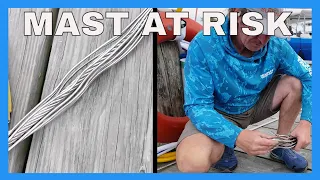
The Rigging Mistake That Could Have Cost Us Our Mast Ep 82 #sailingcatamaran
Geri and Shawn sail from Annapolis to Deale, Maryland, executing a crane-free forestay replacement and rebuilding their damaged roller furler aboard Roam.
Live update! On our way south…
Underway off the North Carolina coast, Geri on Sailing Roam contends with unexpected 25-knot winds, rolling swells, and a rogue wave that overturned their refrigerator, forcing route changes between Hatteras, Beaufort, and Wrightsville Beach.
We Asked Sailors What They Bought at the Boat Show Ep 81 #annapolisboatshow
Geri and Shawn walk the docks at the Annapolis Sailboat Show to ask sailors what they bought, check out the Jonbuoy recovery module and Sea Level 11 tank monitors, and share their own Spinlock and Arco 48V upgrades for Roam.
Sailing Roam Live at Annapolis Sailboat Show 2026
At the Annapolis Sailboat Show, Geri and Shawn of Sailing Roam tour the busy docks, connect with exhibitors and fellow cruisers, and outline preparations to migrate south.
How We Explored Annapolis for Little or No Money Ep80
One of our favorite things about cruising is exploring the places we visit without spending a fortune. So while we’re in Annapolis, we set out to see how much of this historic city we could experience for little or no money. First up was a self-guided walking tour of the U.S. Naval Academy. Seeing ...