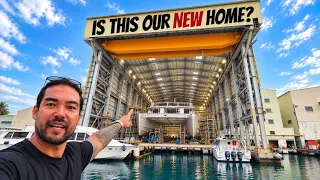
How am I going to afford to build a 62ft CATAMARAN? - (Episode 384)
In the bustling roadstead of Chalong Bay off southern Phuket, former superyacht chief engineer Colin MacRae stood on the deck of his battle-hardened vessel, contemplating a transition that will redefine his maritime career. For eight relentless years, the central saga of Sailing Parlay Revival has followed the salvage, structural rebuild, and worldwide circumnavigation of a hurricane-devastated Lagoon 450. Having resurrected the multihull from a total loss in the British Virgin Islands, MacRae steered her across the South Pacific, around New Zealand, and through Southeast Asia. Now, as the yacht readies to depart Thailand for Malaysia and the Indian Ocean, MacRae has unveiled preliminary blueprints for an even more audacious endeavor: designing and constructing a custom 62-foot expedition catamaran from the ground up.
Stepping away from a proven, debugged voyaging home to commission a blank-slate multihull is a daunting financial and logistical undertaking. While production catamarans dominate global charter fleets, their fixed keels and lightweight interior fitouts often fall short of the structural invulnerability demanded for high-latitude voyaging, deep-ocean exploration, and commercial expeditions. MacRae’s transparent breakdown of build costs, capital sourcing, and shipyard operations offers an unprecedented case study in asset liquidation, equipment syndication, and heavy shipyard project management.
The Capital Blueprint: Deconstructing the Build Budget
When structuring the financial mechanics of this ambitious endeavor, Colin MacRae recognized that transitioning from SV Parlay into world-class Catamaran Construction required an exhaustive audit of modern commercial Boatbuilding. Documented openly on Sailing Parlay Revival, this Custom Catamaran project relies on balancing upfront capital reserves against the unforgiving financial demands of contemporary Marine Architecture.
Multihull fabrication reveals severe industrial cost thresholds. In soliciting competitive quotes from shipyards across South Africa, Australia, and New Zealand, MacRae determined that bare aluminum structural welding alone ranges from $300,000 to over $700,000 USD. This baseline covers solely the hull shell, crossbeams, bridge deck plating, and bulkheads before mechanical systems, engines, wiring, or rig extrusions are placed. With raw 5083/5086 alloy plating and engineering overhead included, the bare shell represents only the initial stage of a multi-million-dollar capital commitment.
To fund the build without institutional private equity, MacRae established a four-pillar capital strategy: strategic commercial hardware partnerships, asset liquidation, structured marine debt, and media monetization. Technical partnerships with premier suppliers—such as Precision Sails for high-performance sail wardrobes, Highfield Tenders for aluminum support craft, and Cromox for stainless steel anchor chains—yield major capital savings. At the METSTRADE marine equipment trade show in Amsterdam, MacRae opened direct negotiations with electronics and deck hardware suppliers. To provide liquid capital, MacRae will liquidate personal savings earned from three seasons as chief engineer on Bravo’s Below Deck, combined with the bittersweet sale of SV Parlay. Because the vessel serves as his permanent primary residence rather than a recreational luxury, MacRae is securing a commercial marine mortgage while dedicating all media revenue from brands like Surfshark VPN directly into build escrow.
Naval Architecture and Performance Engineering
Developing an uncompromising transoceanic voyaging platform forced Colin MacRae to integrate eight years of hard-won lessons aboard SV Parlay directly into the vessel’s foundational Marine Architecture. On Sailing Parlay Revival, every structural calculation for this Custom Catamaran reflects how advanced Catamaran Construction and cutting-edge Boatbuilding can eliminate the vulnerabilities inherent in mass-market multihulls.
The engineering philosophy behind the 62-foot platform tackles the compromises common to production catamarans: bridge deck slamming, excess displacement, and structural flexing under torsional sea loads. Having executed structural repairs on fractured forward bulkheads in Panama and addressed secondary tabbing rot in Thailand, MacRae favors a heavy-duty marine-grade aluminum hull or a vacuum-infused epoxy composite sandwich reinforced with unidirectional carbon fiber on critical load-bearing bulkheads.
Hydrodynamic efficiency is centered on retractable carbon fiber daggerboards rather than fixed low-aspect keels. Fully deployed, these high-aspect foils enable close-winded 30-degree pointing angles while minimizing leeway. In downwind tradewind conditions, retracting the boards dramatically cuts wetted surface area and drag, yielding effortless double-digit speeds while reducing draft under four feet for shallow atolls. For power autonomy, the yacht expands upon the 2,160Ah (26 kWh) lithium bank from SV Parlay into a 48V DC bus architecture charged by dual Integrel engine generators and a massive solar hardtop.
The Coomera and Gold Coast Shipyard Nexus
Identifying the ideal industrial fabrication facility became a paramount milestone for Colin MacRae, as realizing this Custom Catamaran required anchoring Sailing Parlay Revival within an elite center of Marine Architecture. Looking past the maintenance limitations of SV Parlay, committing to heavy Catamaran Construction demanded access to world-class Boatbuilding yards equipped for multi-year industrial refits.
While evaluating bids from Cape Town to Auckland, the Gold Coast City Marina & Shipyard (GCCM) along the Coomera River in Queensland, Australia, emerged as a premier build site. GCCM offers an integrated maritime precinct spanning 175,000 square meters, equipped with travel lifts up to 300 metric tons and more than 90 on-site trades, encompassing master aluminum fabricators, composite laminators, and certified marine electricians.
The geography of the Gold Coast corridor provides unmatched staging advantages. Protected deep-water access along the Coomera River leads past the Southport Yacht Club into the Broadwater fairway, offering sheltered waters for pier-side systems commissioning. Once mechanical and electrical trials conclude, the Gold Coast Seaway provides immediate access into the open Pacific for rigorous ocean trials. Building within the Australian framework ensures construction adheres directly to Australian Maritime Safety Authority (AMSA) domestic commercial vessel survey standards and CE Ocean Category A certification, enabling high-end expedition charters and passenger voyages.
Deck Chores and Transit Prep from Chalong to Langkawi
Even as vision documents and structural plans for future Boatbuilding progress, Colin MacRae remains bound to the relentless maintenance schedule required to keep SV Parlay seaworthy. On Sailing Parlay Revival, the crew recognizes that master-level Catamaran Construction and long-term Marine Architecture aspirations mean nothing if the existing Custom Catamaran systems fail on passage.
In Chalong Bay, Phuket, the crew focused on vital maintenance before embarking on the 140-nautical-mile passage south to Langkawi, Malaysia. Fueling was the first priority; having recently cut open and rebuilt aluminum fuel tanks damaged by diesel bug, MacRae bunkered 650 liters of diesel at 45 Thai Baht per liter (~$1.60 USD/L), filling both 500-liter wing tanks to their 1,000-liter (264-gallon) capacity to prevent condensation in the tropical heat.
Simultaneously, the crew tackled an unglamorous head overhaul. Crew member Steve, a former Florida construction company owner, dismantled the starboard toilet to clear heavy calcium carbonate encrustations—a reaction between uric acid and saltwater minerals that had choked the discharge line. The team cleared the deposits and installed heavy-duty sanitation hoses from local Phuket chandleries. Steve also fabricated companionway shelving from salvaged marine laminated countertop, while Benji cleaned and rebuilt the tender’s carburetor seals and jets ruined by degraded shore fuel. After shedding 500 pounds of spare pumps and cables with local charter operator Marcus, the crew welcomed Delaware broker and Platinum Patron Michael Davis aboard for the six-day passage into Malaysian waters.
| Program Parameter | Engineering Specification | Commercial Strategy |
|---|---|---|
| Overall Length & Beam | 62 ft LOA (18.90 m) / 30.5 ft Beam (9.30 m) | Expedition charter stability and high-latitude payload capacity |
| Hull Construction | 5083/5086 Aluminum Plating or Infused Sandwich | High collision resistance and structural stiffness |
| Structural Reinforcement | Carbon Fiber Bulkheads & Composite Ring Frames | Eliminates structural flex and bulkhead separation issues |
| Hydrodynamic Foils | Retractable Carbon Fiber Daggerboards | 30° upwind pointing; draft under 4.0 ft when fully retracted |
| Bare Fabrication Cost | $300,000 – $700,000 USD (Welding & Plating) | Quotes sourced from shipyards in South Africa and Australia |
| Total Estimated Budget | $1,800,000 – $2,500,000 USD Commissioned | Fully equipped with commercial propulsion, rig, and systems |
| Primary Equity Sourcing | SV Parlay Liquidation & Below Deck Savings | Reinvesting earnings from 3 TV seasons and vessel equity |
| Debt & Media Financing | Commercial Marine Mortgage & Brand Sponsorships | Primary residence loan backed by dedicated Surfshark escrow |
| Equipment Partners | Precision Sails, Highfield Tenders, Cromox Marine | Technical sponsorships expanded via METSTRADE Amsterdam |
| Shipyard Facility | Gold Coast City Marina (GCCM), Coomera, QLD | Access to 90+ marine trades, 300t travel lift, Broadwater trials |
| Survey Standards | AMSA Commercial Survey & CE Ocean Category A | Certified for global passenger and luxury adventure charters |
Frequently Asked Questions
As Colin MacRae outlines the engineering roadmap for his next flagship, followers of Sailing Parlay Revival have raised vital questions regarding how lessons from SV Parlay translate into Custom Catamaran fabrication. Understanding how modern Catamaran Construction, commercial Boatbuilding, and cutting-edge Marine Architecture intersect provides invaluable insight into this ambitious undertaking.
Building a custom 62-foot expedition catamaran typically costs between $1.8 million and $2.5 million USD fully commissioned. The bare structural metal welding and hull fabrication alone ranges from $300,000 to over $700,000 USD depending on regional shipyard labor rates, before accounting for rigging, propulsion, electronics, and interior fitout.
Colin MacRae is financing the build through four integrated capital streams: savings accrued from three seasons as chief engineer on Below Deck, the sale of his restored Lagoon 450 SV Parlay, a commercial marine mortgage treating the boat as his primary residence, and equipment sponsorships alongside dedicated media revenue from brands like Surfshark VPN.
Production catamarans are engineered for mass charter fleets, featuring fixed low-aspect keels and lighter hull scantlings that suffer under heavy ocean conditions. A custom 62-foot design allows MacRae to incorporate retractable daggerboards for superior upwind pointing, carbon-reinforced bulkheads, and off-grid electrical autonomy tailored for remote global voyages.
While international yards in South Africa and New Zealand have submitted competitive quotes, the Gold Coast City Marina & Shipyard (GCCM) in Coomera, Queensland, Australia, is a primary candidate. Coomera provides over 90 specialized marine trades, heavy travel lifts, and sheltered deep-water access through the Broadwater fairway and Gold Coast Seaway for sea trials.
Having rebuilt fractured forward bulkheads in Panama and repaired secondary tabbing rot in Thailand, MacRae is prioritizing structural rigidity, continuous weld penetration or vacuum-infused epoxy carbon reinforcement, oversized commercial plumbing to prevent calcium blockage, robust fuel filtration, and high-voltage 48V DC lithium systems.
A custom 62-foot multihull build typically spans 24 to 36 months from initial lofting and hull plating to final interior fitout, rigging, and sea trials. The project timeline is structured around sequential progress draws and equipment deliveries, aligning with MacRae’s sailing itinerary to conclude his circumnavigation on SV Parlay.
The catamaran is being engineered to commercial survey standards (such as AMSA Domestic Commercial Vessel and CE Ocean Category A). This allows MacRae to operate high-end blue water charter expeditions, sail training passages, and scientific exploration voyages, creating an ongoing revenue model to amortize capital costs while hosting supporters onboard worldwide.
Support Sailing Parlay Revival
At WeBoating.com, we profoundly acknowledge the unwavering dedication that Sailing Parlay Revival invests in crafting each and every video or voyage. Their passion for delivering exceptional ocean content shines through every frame, and it's a labor of love that deserves your attention.
We invite you to watch their captivating videos here and actively engage with their content, including their social media links above. Liking, commenting, and sharing their work goes a long way in fueling their creative fire.
We're also inviting you to explore the gear, sponsorships, and boat partnerships highlighted in the "How am I going to afford to build a 62ft CATAMARAN? - (Episode 384)" video description, or directly on YouTube. By engaging with these offerings or purchasing services and items, you directly support Sailing Parlay Revival, their collaborators, and the brands they're associated with.
To ensure you never miss an offshore update, consider visiting their official YouTube Channel to subscribe, like, and join their community directly.
If you have any feedback, corrections, or additional information about Sailing Parlay Revival or their videos, please use the comment form below to share your thoughts with us.
Thank you for being a part of our community and supporting the creators we cherish. Your time and support truly matter!
Go to https://surfshark.com/SPR or use code SPR at checkout to get 4 extra months of Surfshark VPN!
In this episode I break down how I am actually going to afford to build a new 62ft aluminum catamaran. We then get stuck into some last minute jobs before we set sail from Thailand to Malaysia!
SV Parlay is a hurricane damaged Lagoon 450 catamaran, which Colin rebuilt with friends and has started sailing around the world. They found bulkhead damage on their catamaran in Panama, so have fixed her up, and are now sailing through Asia and planning to cross the Indian Ocean!!
To join us on Patreon and get exclusive content and a chance to come sailing with us click here!
https://www.patreon.com/parlayrevival
To buy Parlay Revival merchandise click here!!
https://parlayrevival.com/collections
All music is from Epidemic sound! Sign up here and get a free month's trial to see if you like it!
https://www.epidemicsound.com/referral/ym5nvt
Follow me on instagram for daily updates!
https://www.instagram.com/parlayrevival_colin/
Facebook page:
https://www.facebook.com/parlayrevival
Camera we use: https://amzn.to/3vAtCfR
Lens we use: https://amzn.to/3RPTxaI
Microphone we use: https://amzn.to/3RYenoH
Drone we use: https://amzn.to/41XXuPq
Gopro we use: https://amzn.to/47CIrff
Edited by Brittany and Colin!
Sailing Parlay Revival
Superyacht engineer Colin MacRae resurrected a hurricane-damaged Lagoon 450 and took it around the world. Discover the technical grit of Parlay Revival.
Channel Information:
Social Media Links:
How am I going to afford to build a 62ft CATAMARAN? - (Episode 384) Location
- Gold Coast City Marina & Shipyard, Coomera, Queensland, Australia (-27.868,153.332)
- Southport Yacht Club & Broadwater Fairway, Main Beach, Queensland, Australia (-27.978,153.424)
Latest Episodes from Sailing Parlay Revival
Explore the most recent voyages. Subscribe to the channel to never miss an update!
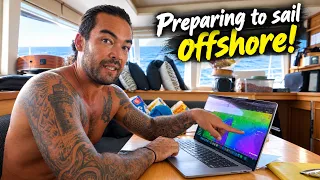
Passage Planning During MONSOON SEASON Ain’t Easy! – (Episode 387)
It is our last few days in Langkawi, Malaysia before we set sail across the Malacca strait to Indonesia, during the SW monsoon season, which makes it difficult to sail SW! We have to take a low route towards Sumatra, then head up the coast towards Sabang. SV Parlay is a hurricane damaged Lagoon 450...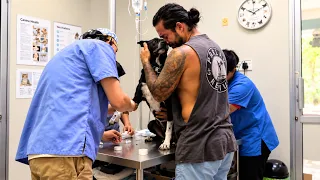
CRAZY WEEK! – 20ft Shark + Emergency Surgery! – (Episode 386)
In this episode we sail from Thailand to Malaysia, and have one of the wildest marine encounters when a 20ft shark pops up right beside the boat in the middle of nowhere. But the excitement soon fades when we have to take my best friend in for an emergency surgery. SV Parlay is a hurricane damaged ...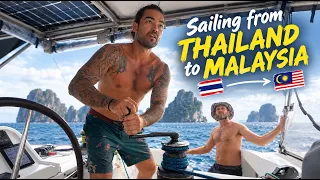
Nervous First Sail After 6 Month Refit in Thailand! – (Episode 385)
Colin MacRae and the crew of Sailing Parlay Revival launch a high-stakes sea trial across Phang Nga Bay, Thailand, testing their rebuilt Lagoon 450 catamaran following an intensive six-month Phuket refit.
How am I going to afford to build a 62ft CATAMARAN? – (Episode 384)
Colin MacRae details the financial strategy, engineering requirements, and shipyard logistics behind funding and constructing a custom 62-foot expedition catamaran on Sailing Parlay Revival.
When Sailors Let Their Egos Takeover 🤣 – (Episode 383)
In this episode our friend Ryan comes over, and things end up getting way too competitive as usual when he's around 😂. But we also do some sailing in Phuket, Thailand with some old friends of mine, who I haven't seen in over 10 years 🥲 SV Parlay is a hurricane damaged Lagoon 450 catamaran...