Ep 111 The water way to Rome and sightseeing without the crowds 4K
For Swedish voyagers Anders and Gitte, stepping away from demanding executive careers in 2020 was not merely an early retirement, but a deliberate transformation into full-time ocean nomads aboard their 2006 Wauquiez 47 Pilot Saloon, Fridá af Wisby. Documenting their methodical journey through Sailing Frida af Wisby, the couple combines rigorous seamanship, Scandinavian pragmatism, and an authentic appreciation for cultural history. Joined by their unflappable Devon Rex cat Litza—affectionately dubbed the “Cattain”—they have established a reputation for balancing technical boat maintenance with immersive inland explorations across the Mediterranean.
Having navigated the rugged Atlantic coastlines of western Europe and completed an extensive offshore diversion into the open Atlantic, their 2024–2025 cruising campaign brought them deep into Italian waters. Following an extensive exploration of Sardinia, Corsica, and the Tuscan archipelago, the crew found themselves staging in southern Tuscany at Poggio Pertuso, anchored in the lee of Monte Argentario. With calm weather settling across the Tyrrhenian Sea and the Mediterranean summer heat building rapidly, Anders and Gitte prepared for a distinctive inland passage: navigating the historic River Tiber to establish a secure summer river berth just twenty kilometers outside the eternal city of Rome.
Transiting from open saltwater into a shallow, dynamic river estuary requires calculating draft clearances, bar conditions, and river currents—demands that test any 15-ton bluewater cruiser drawing nearly eight feet. Yet the rewards of river berthing at Blue Dolphin Marina on Isola Sacra extend far beyond shelter from coastal gales. With Fridá safely secured in fresh water, the couple rented a car to embark on a series of unhurried land excursions through the Roman countryside, discovering the aviation treasures of Lake Bracciano and the monumental imperial architecture of Emperor Hadrian’s Villa at Tivoli without the suffocating tourist crowds that inundate central Rome.
Bluewater Provenance: From the Solent to the Mediterranean
To understand the technical foundation of Sailing Frida af Wisby, one must trace the extensive voyage that brought Anders and Gitte aboard Frida, their Wauquiez 47 Pilot Saloon, from the tidal waters of northern Europe into the central Mediterranean. Their blue-water journey commenced in late 2019 in Yarmouth on the Isle of Wight, where the couple acquired the Berret/Racoupeau-designed performance cruiser. In the spring of 2020, they embarked on a rigorous shakedown passage, sailing the 47-foot yacht across the English Channel and the North Sea to their home island of Gotland, Sweden, establishing their permanent hailing port of Visby.
Following upgrades in the Baltic Sea, Anders and Gitte turned Frida’s bow south for an open-ended lifestyle at sea. Their first major offshore season tested both vessel and crew across the English Channel and the notorious Bay of Biscay. Overwintering in the Normandy port of Dieppe, they became intimately acquainted with extreme tidal dynamics, experiencing the eight-to-ten-meter “tidal elevator” that requires locking through massive sea gates to protect moored vessels from being grounded on hard chalk bottoms twice a day. This early exposure reinforced Anders’s meticulous attention to mooring lines, tidal offsets, and mechanical fail-safes.
By the following season, Frida had transited down the Atlantic coast of Portugal to Lagos on the Algarve. There, Anders oversaw significant engineering enhancements, most notably the fabrication and installation of a massive custom stainless-steel solar arch over the stern. Equipped with high-output photovoltaic panels and networked to a Victron Energy battery monitoring suite, the arch transformed the yacht into an energy-autonomous platform capable of powering induction appliances, navigation computers, and domestic systems without regular reliance on shore power or auxiliary diesel generators.
However, their planned transit through the Strait of Gibraltar encountered an unforeseen marine obstacle: a surge in Iberian orca interactions targeting sailboat rudders along the Portuguese continental shelf and Cadiz coastline. Rather than risking catastrophic rudder failure in shallow coastal corridors, Anders and Gitte executed a bold strategic diversion. Altering course westward into the open Atlantic Ocean, they sailed hundreds of miles offshore to Madeira and onwards through the Azores archipelago. Only after two years of Atlantic cruising did they round the Rock of Gibraltar to enter the Mediterranean, spending the subsequent seasons cruising Sardinia, Corsica, the Ionian Sea in Greece, and ultimately returning to the Tyrrhenian coast of Italy.
Underway from Monte Argentario: Deck Work and Helm Diagnostics
Setting out for the River Tiber, Sailing Frida af Wisby initiated their departure at dawn as Anders and Gitte readied Frida, their Wauquiez 47 Pilot Saloon, from their sheltered anchorage at Poggio Pertuso beneath the headlands of Monte Argentario. Tucked into the sandy bight between the tombolo beaches and the rugged promontory, the anchorage had provided exceptional holding and tranquil shelter from northerly and westerly swells. The financial calculus of anchoring out was compelling: with neighboring Tuscan marinas demanding peak-season rates of 240 euros per night, remaining on their own ground tackle for two nights preserved nearly 500 euros in the cruising kitty.
Anchor recovery on Fridá is a quiet, choreographed operation facilitated by Sena Bluetooth headsets. By utilizing two-way duplex audio communication, Anders at the windlass controls on the foredeck and Gitte at the helm pedestal maintain continuous, conversational contact without raising their voices or relying on misinterpreted hand signals. As the Mantus anchor broke free from the sandy bottom caked in seabed mud, Gitte motored the 15-ton displacement hull gently ahead, allowing Anders to wash down the ground tackle before setting the safety bridle and securing the bow roller.
Once clear of the coastal headlands, Anders prepared to unfurl the genoa while Gitte managed morning galley duties, brewing hot coffee and baking fresh pastries in the Force 10 marine oven. While the early morning breeze offered an enticing 12 to 13 knots of apparent wind, the offshore breeze rapidly disintegrated into glassy Mediterranean calms. As Frida settled into motor-sailing mode under the steady thrust of her 110-horsepower Yanmar diesel, the crew addressed an intermittent technical annoyance that had lingered across several passages: an unexplained autopilot dropout glitch.
The helm issue presented as a sudden, silent disengagement of the primary autopilot drive, accompanied by only a faint audio chime. If the watchkeeper was preoccupied or failed to hear the brief tone, the Wauquiez’s balanced spade rudder would track off center, sending the yacht into an uncommanded circular turn. Gitte vividly remembered the terrifying initial occurrence of this fault during her first offshore night watch in the North Sea, when Fridá began spinning rapidly in dark, rolling seas. Having diagnosed the phenomenon as a temporary communication latency within the sensor network, Anders and Gitte maintained vigilant manual oversight along the Lazio shipping lanes, tracking their position via redundant multifunction displays and radar.
Navigating the River Tiber Bar: Shoals, Approaches, and River Currents
Approaching the historic mouth of the river, Sailing Frida af Wisby confronted the navigational crux of their passage as Anders and Gitte brought Frida, their Wauquiez 47, across the notorious river bar of the Fiumara Grande between Fiumicino and Ostia. The transition from the open Tyrrhenian Sea into the River Tiber presents a dramatic bathymetric cliff. Operating in depths of 40 to 50 meters just a mile offshore, the seabed shoals precipitously as the river’s alluvial silt cone creates a shallow sandbar where soundings plummet to barely six meters, then shelf abruptly to three meters across the outer entrance channel.
With Fridá drawing 2.35 meters (7.7 feet) on her lead fin keel, navigating the river mouth demands absolute precision and favorable sea state conditions. Even moderate westerly swells rolling in from the Mediterranean steepen and break unpredictably as they interact with the outgoing freshwater current. Gitte throttled the Yanmar diesel to maintain positive steerage against the current, strictly honoring the green starboard navigation beacons to avoid the shifting underwater shoals extending out from Ostia Lido. As the depth sounder dipped to a hair-raising 3.0 meters beneath the keel, the yacht negotiated the roller coaster swells of the outer bar before entering the calmer waters of the river channel, where depths stabilized into a secure four-meter fairway.
Entering the River Tiber is a passage through maritime history. To port lay the modern Porto Turistico di Roma at Ostia, situated adjacent to Ostia Antica, the legendary harbor city founded in the fourth century BCE to serve as ancient Rome’s primary commercial gateway. For centuries, grain ships from Alexandria and military triremes navigated these very river waters to supply the heart of the Roman Empire. Today, that antiquity juxtaposes sharply with contemporary infrastructure: Frida’s mast passed directly beneath the approach threshold of Rome’s Leonardo da Vinci–Fiumicino International Airport (FCO).
Commercial jetliners roared overhead on final approach every two minutes, descending mere hundreds of feet above Frida’s masthead. While the aviation noise was striking, the strategic proximity of Italy’s premier international airport represented a major logistical triumph. Located less than fifteen minutes by car from their intended berths, the airport provided effortless connections for upcoming family travel and crew rotations, while the river basin itself offered berthing rates dramatically lower than the luxury marinas of coastal Civitavecchia or central Naples.
Summer River Berthing: Blue Dolphin Marina and Freshwater Stewardship
Securing their vessel for the hot Mediterranean summer, Sailing Frida af Wisby maneuvered Anders and Gitte’s Frida, the Wauquiez 47, into Blue Dolphin Marina, an established boatyard and marina facility situated along the banks of Isola Sacra on the River Tiber. This triangular island, formed by the bifurcation of the Tiber and the artificial Fiumicino canal excavated by Emperor Trajan, provides a tranquil, protected sanctuary sheltered from the violent summer thunderstorms and relentless swells of the open sea. Mooring bows-to along the finger pontoons, the couple doubled their spring lines and deployed heavy chafe gear to accommodate the steady river outflow.
For a blue-water cruiser spending months in saltwater, river berthing offers an exceptional biological advantage: natural biofouling eradication. Immersing a marine vessel in fresh river water alters osmotic pressure, rapidly killing off saltwater algae, barnacles, tubeworms, and crustaceans that foul underwater running gear and hull bottoms. Within days of entering the Tiber, the heavy marine growth accumulated across Frida’s Gori folding propeller and hull laminate began detaching naturally, cleansing the running gear without requiring expensive diver fees or mid-season haul-outs.
Combating the oppressive Italian summer heat became the crew’s primary onboard focus. With cockpit temperatures climbing past 30 degrees Celsius (86 degrees Fahrenheit), Anders rigged extensive canvas shade awnings stretching from the mast across the pilot saloon coachroof and over the cockpit coamings. These thermal barriers shielded the teak decks and prevented the raised deckhouse windows from turning the yacht’s interior into an oven, creating a cool, shaded cockpit living area where the couple could dine, work on passage planning, and observe the local river wildlife.
The river environment introduced charming local interactions, including a resident family of mute swans that regularly patrolled the pontoons. Drawn by breadcrumbs and freshwater rinses from the swim platform, the swans became daily companions alongside Litza the cat, who monitored their movements with regal detachment from the safety of the pilothouse windows. With the boat securely tied down, refrigerators emptied and defrosted, and shore power connected to maintain the battery banks, Anders and Gitte prepared for the second half of their itinerary: exploring the historical wonders of Lazio by car.
Technical Specifications and Voyage Log: Wauquiez 47 Pilot Saloon
A comprehensive assessment of Sailing Frida af Wisby underscores why Anders and Gitte chose Frida, their Wauquiez 47 Pilot Saloon, as their permanent oceanic home and navigating platform. Engineered by the venerable French shipyard Chantiers Wauquiez and drawn by the naval architecture studio of Berret/Racoupeau, the Pilot Saloon series represents a pinnacle of blue-water cruising design. Built with solid GRP below the waterline for puncture resistance and a balsa-cored sandwich topside for thermal insulation and rigidity, the vessel couples heavy-weather seakeeping with remarkable interior volume.
The hallmark of the Wauquiez 47 is its raised deck saloon, featuring panoramic wraparound windows that provide genuine 360-degree visibility from the navigation station and elevated dining settee. For passage-makers transiting cold or tempestuous waters like the North Sea or English Channel, this design allows watchstanders to monitor AIS traffic and radar without remaining exposed to hypothermic conditions in the cockpit. Combined with an expansive owner’s stateroom aft, an ensuite head compartment, and a sea-berth layout forward, Fridá provides the structural integrity and liveability required for multi-year voyaging.
| Category / Milestone | Technical Specification / Passage Detail | Operational & Nautical Notes |
|---|---|---|
| Vessel Model & Builder | Wauquiez 47 Pilot Saloon (2006) / Chantiers Wauquiez (France) | Hull # constructed in Mouvaux, France; solid fiberglass underwater hull |
| Naval Architects | Berret / Racoupeau Yacht Design | Optimized for blue-water tracking, stiff stability, and single-watch ergonomics |
| Dimensions (LOA / LWL / Beam) | 14.36 m (47.1 ft) / 12.00 m (39.4 ft) / 4.61 m (15.1 ft) | Generous 4.61 m beam carried aft provides immense living volume and initial form stability |
| Draft & Keel Configuration | 2.35 m (7.7 ft) / Deep Fin Keel with Lead Bulb | Deep draft delivers superior upwind performance but requires caution across river bars |
| Displacement & Ballast | 14,500 kg (~32,000 lbs) / 4,500 kg Lead Ballast (~31% ratio) | Heavy displacement provides comfortable motion in high-amplitude ocean seas |
| Main Propulsion | Yanmar 4JH4-HTE 110 hp Turbo Diesel | Shaft drive with Gori 3-blade folding propeller; authority for river currents |
| Energy & Solar System | Custom Lagos Stainless Solar Arch + Victron MPPT Suite | High-wattage solar generation supporting off-grid induction cooking and domestic 12V/240V |
| Ground Tackle | Mantus M2 Anchor + High-Tensile All-Chain Rode | Proven holding power across mud, weeds, and sand at Poggio Pertuso and Aegean anchorages |
| Original Port of Purchase | Yarmouth, Isle of Wight, United Kingdom (2019) | Commissioned by Anders and Gitte; initial delivery across North Sea to Gotland |
| Home Port & Flag | Visby, Gotland, Sweden (Swedish Flag) | Registered under Swedish transport agency; MMSI: 265008530 |
| Tidal Extremes Milestone | Dieppe, Normandy, France (Winter 2020–2021) | Navigated 8–10 m tidal elevator; mastered high-range tidal locking protocols |
| Atlantic Diversion Route | Lagos, Portugal to Madeira and the Azores (2022) | Executed strategic offshore passage to bypass Iberian killer whale (orca) encounters |
| River Tiber Bar Depth | 3.0 m (9.8 ft) minimum chart sounding at low river stage | Requires strict transit within green beacon alignment; danger of standing shoaling waves |
| Summer Mooring Facility | Blue Dolphin Marina, Isola Sacra, Fiumicino, Rome | Freshwater river berth; natural biofouling mitigation; <20 km from Rome historical center |
Rome Hinterland Excursions: Papal Hills and Aviation Heritage
Transitioning from nautical passage-making to overland cultural touring, Sailing Frida af Wisby saw Anders and Gitte depart Frida, their Wauquiez 47, to collect a rental vehicle from nearby Fiumicino Airport and strike out into the hills encircling Rome. Operating an automobile along the bustling autostradas of Lazio required an immediate acclimation to assertive Italian driving customs. Yet leaving the coastal plain rapidly brought them into the tranquil landscapes of the Castelli Romani and the volcanic crater rim of Lake Albano.
Their first destination was Castel Gandolfo, the picturesque hilltop village renowned for centuries as the summer residence of the Roman Catholic Pope. Perched high above the azure volcanic waters of Lake Albano, the Apostolic Palace and its terraced gardens offered panoramic vistas over the crater basin. However, the oppressive midday sun quickly drove temperatures toward 30 degrees Celsius, rendering extended uphill walks exhausting and prompting the couple to retreat to the air-conditioned shelter of their vehicle. Continuing their loop, they redirected their course north toward Lake Bracciano, acting on an enthusiastic recommendation from a cruising follower.
At Vigna di Valle on the southern shore of Lake Bracciano, Anders and Gitte arrived at the Historical Museum of the Italian Air Force (Museo Storico dell’Aeronautica Militare). Entering the installation proved unique: because the museum occupies an active Italian military base—the oldest aviation installation in Italy, functioning continuously since 1904—visitors must clear armed military checkpoints and security gates before entering the hangar complex. Having secured official clearance from base authorities, the Swedish voyagers stepped inside one of the most significant aeronautical collections in the world.
Lake Bracciano served as an epicenter for seaplane development throughout the early twentieth century, making the museum a pilgrimage site for aviation enthusiasts. Anders marveled at the vast hangars housing early twentieth-century hydroplanes, fragile fabric-winged WWI bombers, and legendary Schneider Trophy racing seaplanes engineered to claim global speed records. Among the historic fighters, they encountered the original fuselage marking of Count Francesco Baracca, Italy’s premier WWI fighter ace: a rearing black stallion (Cavallino Rampante). Following Baracca’s death in action, his mother Countess Paolina presented the stallion emblem to Enzo Ferrari as a good-luck talisman, forever cementing its status as the iconic logo of Scuderia Ferrari.
What struck the couple most profoundly was the absolute absence of tourist crowds. While thousands of visitors were enduring multi-hour queues at the Colosseum in central Rome, Anders and Gitte walked virtually alone through aircraft hangars spanning a century of aerospace engineering. Concluding their museum tour, they drove to the nearby medieval lakeside village of Trevignano Romano. Wandering through labyrinthine cobblestone alleys framed by stone arches and blooming bougainvillea, they searched out artisanal gelato and enjoyed peaceful vistas across Lake Bracciano before driving back to their river berth.
Emperor Hadrian’s Villa: Imperial Architecture at Tivoli
Venturing east toward the Sabine Hills on their next road excursion, Sailing Frida af Wisby followed Anders and Gitte as they left Frida, their Wauquiez 47, to explore the extraordinary UNESCO World Heritage site of Villa Adriana (Hadrian’s Villa) outside Tivoli. The drive wound through the rugged valleys of Poli and Palestrina, where ancient Roman aqueducts still bridge dramatic ravines with multi-tiered stone arches. Arriving at the imperial estate in early June, the Swedish cruisers discovered an archaeological park that was virtually deserted, providing an intimate window into classical antiquity.
Constructed between 117 and 138 CE by Roman Emperor Hadrian, the complex served not merely as a country villa, but as an alternative imperial capital from which the emperor ruled the Roman world during the twilight of his reign. Disliking the political intrigue of the Palatine Hill in Rome, Hadrian designed an sprawling 120-hectare retreat that incorporated architectural marvels inspired by his travels across Greece, Egypt, and Asia Minor. Walking along paths flanked by ancient, gnarled olive trees whose twisted trunks had weathered centuries, Anders and Gitte entered the great peristyle garden known as the Pecile.
As experienced boatbuilders and technical minds, the couple was captivated by the architectural engineering preserved across the imperial ruins. Examining the towering remains of the Grand Thermae (imperial baths), Anders inspected the massive brick barrel vaults and arched doorways that stood nearly ten meters tall. He noted the distinctive opus spicatum—herringbone brick flooring patterns remarkably similar to traditional Scandinavian parquet woodwork. Close inspection of the Roman bricks revealed stamped maker insignias (figlinae), the imperial quality-control marks placed by Roman brickworks to verify manufacture dates and workshop origins two millennia ago.
The centerpiece of the visit was the famous Canopus, an evocative reflection pool designed to evoke the ancient canal connecting Alexandria to Canopus in Egypt. Framed by Corinthian colonnades, marble arches, and replicas of classic Greek caryatid statues, the pool terminates at the semi-domed Serapeum, an imperial outdoor dining hall. Today, the tranquil waters of the Canopus are populated by giant catfish and green terrapins, while hundreds of Italian wall lizards bask along the warm marble plinths. For Anders and Gitte, experiencing the condensed architectural genius of imperial Rome in complete solitude—surrounded only by the rustle of olive leaves and singing cicadas—stood out as one of the finest cultural highlights of their Mediterranean cruising tenure.
River Protocols and Seasonal Layup Preparations
Returning to their tranquil mooring at Blue Dolphin Marina, Sailing Frida af Wisby shifted Anders and Gitte’s focus back to Frida, their Wauquiez 47, as they carried out the methodical protocols required to decommission their yacht for seasonal layup. Berthing in a moving river presents unique maintenance responsibilities distinct from salt-water marina slips. River currents carry seasonal debris and flotsam, requiring spring lines to be adjusted with heavy-duty rubber snubber dampeners to absorb mechanical shock loads caused by passing river barges and changing hydrographic levels.
Anders executed a comprehensive engineering inspection of the Yanmar turbo diesel. Running the engine under fresh river water naturally flushed the heat exchangers, oil coolers, and exhaust elbows, removing corrosive salt deposits from the raw-water cooling circuit. Fuel tanks were treated with biocide to prevent microbial growth during the hot summer layover, while sea cocks and ball valves were exercised, greased, and closed throughout the engine bay. Topside, halyards were moused out and secured away from the mast to eliminate irritating rigging slap in heavy winds, while sails were rolled, protected by UV covers, and lashed down.
Inside the pilot saloon, Gitte managed the domestic decommission: defrosting the refrigeration units, isolating freshwater pressure systems, and stowing safety equipment. With Litza settled in her travel carrier and the yacht’s systems shut down into standby mode, the Swedish voyagers prepared to lock the companionway and catch their flight north from nearby Fiumicino Airport. Their summer river layover on the Tiber stands as a testament to the Swedish philosophy of Lagom—a disciplined balance between meticulous nautical engineering, economical passage planning, and deep historical exploration.
Frequently Asked Questions
The following frequently asked questions address the technical, nautical, and logistical considerations encountered by Sailing Frida af Wisby as Swedish sailors Anders and Gitte navigated Frida, their 2006 Wauquiez 47 Pilot Saloon, along the River Tiber into their summer berth near Rome.
Cruising vessels approaching the River Tiber (Fiumara Grande) must navigate across an outer sandbar that shoals from 40-50 meters offshore down to approximately 3.0 meters at the river mouth. Skippers must strictly favor the green starboard navigation beacons to avoid shifting silt shoals off Ostia Lido and execute the bar transit during calm sea states to prevent breaking onshore rollers.
Fridá af Wisby is a 2006 Wauquiez 47 Pilot Saloon designed by Berret/Racoupeau and built in Mouvaux, France. She measures 14.36 meters (47.1 ft) LOA with a beam of 4.61 meters, a deep fin keel drawing 2.35 meters (7.7 ft), a displacement of 14,500 kg with 4,500 kg of lead ballast, and is powered by a 110 hp Yanmar 4JH4-HTE turbo diesel.
Anders and Gitte altered their route westward into the open Atlantic to avoid frequent Iberian killer whale (orca) interactions targeting sailboat rudders along the Atlantic coasts of Portugal and Spain. Cruising offshore to Madeira and the Azores allowed them to safeguard their rudder while experiencing spectacular open-ocean passages before entering the Mediterranean two years later.
Berthing in the River Tiber at Blue Dolphin Marina offers significant cost savings compared to expensive coastal Italian marinas, provides sheltered protection from Mediterranean summer gales, lies within 15 minutes of Rome Fiumicino Airport for crew travel, and naturally eradicates marine biofouling like barnacles and saltwater algae due to the freshwater immersion.
Located on an active military base at Vigna di Valle, the Museo Storico dell’Aeronautica Militare showcases a century of Italian aviation history, including pioneering hydroplanes, Schneider Trophy racing seaplanes, WWI Caproni bombers, and the original rearing black stallion (Cavallino Rampante) emblem of WWI ace Francesco Baracca, later adopted by Ferrari.
The raised pilot saloon layout provides true 360-degree panoramic sightlines from the interior navigation desk and saloon settee, allowing watchstanders to navigate in foul weather or rough seas from inside a warm, dry cabin. It also creates exceptional interior headroom, abundant natural light, and immense bilge and storage capacity for offshore provisioning.
Villa Adriana is a massive UNESCO World Heritage site featuring surviving imperial bath complexes, the iconic Canopus reflection pool framed by caryatid statues, ancient olive groves, and Roman herringbone brickwork (opus spicatum). Located east of Rome, it offers an uncrowded cultural experience compared to high-density tourist sites like the Colosseum.
The crew utilizes Sena Bluetooth duplex wireless headsets, allowing Anders at the foredeck windlass and Gitte at the helm to communicate in calm, continuous conversational tones without shouting or misinterpreting hand signals, significantly enhancing deck safety during anchoring and marina berthing.
Support Sailing Frida af Wisby
At WeBoating.com, we profoundly acknowledge the unwavering dedication that Sailing Frida af Wisby invests in crafting each and every video or voyage. Their passion for delivering exceptional ocean content shines through every frame, and it's a labor of love that deserves your attention.
We invite you to watch their captivating videos here and actively engage with their content, including their social media links above. Liking, commenting, and sharing their work goes a long way in fueling their creative fire.
We're also inviting you to explore the gear, sponsorships, and boat partnerships highlighted in the "Ep 111 The water way to Rome and sightseeing without the crowds 4K" video description, or directly on YouTube. By engaging with these offerings or purchasing services and items, you directly support Sailing Frida af Wisby, their collaborators, and the brands they're associated with.
To ensure you never miss an offshore update, consider visiting their official YouTube Channel to subscribe, like, and join their community directly.
If you have any feedback, corrections, or additional information about Sailing Frida af Wisby or their videos, please use the comment form below to share your thoughts with us.
Thank you for being a part of our community and supporting the creators we cherish. Your time and support truly matter!
In this episode we sail the water way to Rome up into the River Tibern where our summer berth are but we also rent a car to do some sightseeing in the surroundings of Rome of the beaten turist track we visit an amazing aviation museum and Emperor Hadrians villa without the normal crowds at the turist hotspots in central Rome.
We are a middle aged couple that has left our hectic business lives to go sailing with our sailboat Fridá af Wisby and our cat Litza. Our goal is sail the Mediterrainean Sea and really enjoy life.
Anders has been at the sea most of his life and sailed for the Swedish national dingy sailing team as a young man. Gitte has also grown up with boats and spent every summer sailing with her father as a teenager. Onboard we also have our cat Litza a 4 year old Devon Rex we call her the cattain because cats always decide over their humans.
Fridá af Wisby is a Wauquiez 47 pilot saloon that we Gitte and Anders bought in UK in 2019
Find us on Noforeignland
https://www.noforeignland.com/boat/fridaafwisby?sid=6095395836919808&tc=1713725044164

Sailing Frida af Wisby
Meet Anders and Gitte: A Swedish couple trading the boardroom for the helm of a Wauquiez 47, navigating the Mediterranean with their Devon Rex cat, Litza.
Channel Information:
Social Media Links:
Ep 111 The water way to Rome and sightseeing without the crowds 4K Location
- River Tiber Summer Berth (Blue Dolphin Marina), Fiumicino, Rome, Italy (41.7375,12.2536)
- Italian Air Force Museum (Museo Storico dell'Aeronautica Militare), Vigna di Valle, Lake Bracciano, Italy (42.0833,12.2167)
- Emperor Hadrian's Villa (Villa Adriana), Tivoli, Italy (41.9422,12.7753)
Latest Episodes from Sailing Frida af Wisby
Explore the most recent voyages. Subscribe to the channel to never miss an update!

Ep 111 The water way to Rome and sightseeing without the crowds 4K
Anders and Gitte navigate their 2006 Wauquiez 47 Pilot Saloon up the River Tiber to their summer berth near Rome, followed by uncrowded excursions to Emperor Hadrian's Villa in Tivoli and the Italian Air Force Museum at Lake Bracciano.
Busstout to Delfi to see Temple of Apollon and the Oracle
We took the buss from Itea up to Delfi where we visited the archilogical site of Delfi Temple of Apollon the Oracle in Delfi and the Museum. #Greece #Delphi #templeofapollo #OracleDelfi
Ep 110 Lightning protection, cosy town, great sail and windy anchoring 4K
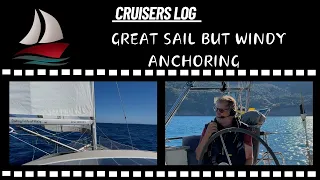
This episode starts right after a night with thunder and lightning and we share what we do to protect ourselves. We visit the cosy town Azure on Elba before we set course towards the Italian mainland and what we thought was going to be a day of motoring turned into a fantastic sail but as we approac...