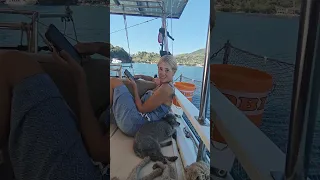
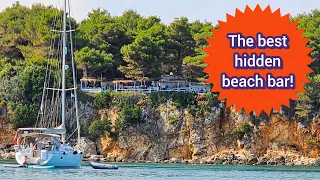
Sailing to Corfu, my new Favourite City!
Entering the busy Corfu Channel on the third day of a three-day passage, the crew of Sailing Electra steered their solar electric catamaran toward Corfu town. Cruising between mainland Greece near Igoumenitsa and Corfu, the waterway presented ferry traffic and shifting channel winds. With their solar AIS beacon transmitting position data and collision alarms running, propulsion monitors registered 2 kW feeding twin electric outboards, holding 4.5 to 4.6 knots with 3 hours 49 minutes remaining.
Early on the morning run, the skipper observed channel traffic filling up quickly: “I got my AIS alarm running today because we are in the Corfu channel, which is a very busy channel.” To track surrounding vessels without draining house batteries, the crew relied on the standalone solar transponder mounted on deck.
Hoisting the Foresail and Balancing Electric Drive
A light beam wind arrived at 6 knots, offering a chance to motor sail. The crew hoisted their light foresail, letting the canvas fly freely without shading the solar array. Under combined sail and motor power, boat speed rose from 4.7 knots to 5 knots with power draw holding just above 2 kW.
Setting the headsail proved quick and simple, prompting the skipper to note: “the foresail is lovely. It almost never blocks the solar panels and it’s quick to put up and quick to put down.” The coastal terrain soon altered the breeze. After 20 minutes of sailing, the crosswind swung 90 degrees directly onto the bows.
With the wind on the nose, the crew furled the sail and resumed electric motoring at 2160 W, cruising between 4.6 and 4.7 knots. Instruments confirmed 7 miles completed, leaving 12 and a half miles to reach Corfu. Underway communications remained active through a local SIM card costing 13 euro 50, avoiding satellite fees that rose from 72 to 89 or 90 euros.
Solar Generation and Channel Traffic Maneuvers
At 12:00, overhead solar output from dirty panels reached 2400 W. The outboards consumed 2200 W total, drawing 1.1 kW on each motor, roughly one sixth of rated power. Running against channel chop, speed averaged 4.6 knots, ranging from 4.5 to 4.8 knots.
Vigilance remained necessary. A fast speedboat crossed on an intercept course, prompting the helm to alter 10 degrees to starboard before turning minus 10 degrees back on course. Soon after, an unidentified gray naval vessel lacking AIS passed alongside, followed by a 76 m motor yacht registered in Monaco doing 12.6 knots, rolling wake across the hulls. Nearing the bay, a fresh 15-knot headwind greeted the boat near the 146 m yacht Opera resting at anchor.
| Passage Phase | Solar Input | Motor Power Draw | Boat Speed | Propulsion Setup |
|---|---|---|---|---|
| Morning channel passage | Solar deck beacon active | 2 kW total power | 4.5 to 4.6 knots | Twin electric outboards under motor power |
| Beam wind motor sailing | Unobstructed solar deck | Just over 2 kW | 5 knots | Hoisted light foresail with motor assist |
| Midday headwind passage | 2400 W solar generation | 2200 W (1.1 kW per motor) | 4.6 knots average | Twin electric outboards running at one sixth power |
Dropping Anchor Beneath the Venetian Fort
After dropping anchor off the harbor, an overnight wind shift caused the boat to swing, showing displacement between 0.9 and 1.1 m on the anchor watch. The crew reset anchor directly beneath the Venetian fort, finding clear water over sand.
For tender trips into town, the crew found a shortcut through the fortifications: “take your dinghy, go through the moat to the other side and all the way to Mandraki Marina where they’ve got a fantastic restaurant where you should have dinner.” The tender transit through the moat provided calm access to Mandraki Marina, allowing the crew to walk the fort grounds at dusk.
Pedestrian Trails and Architecture in Corfu Old Town
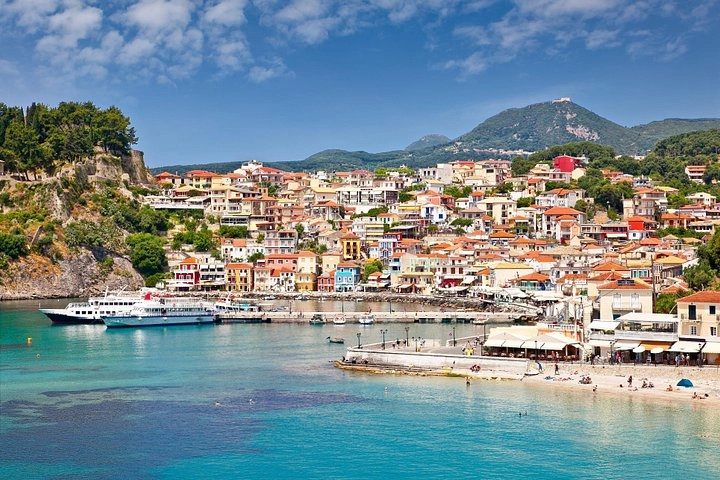
Ashore in Corfu town, the crew explored pedestrianized streets defining the historic center. Venetian construction from the 13th century remains visible across fort structures and town buildings, beneath the tall Saint Spyridon clock tower.
Following transitions from Venetian to French control, the British governed the Ionian Islands, building the palace for the British Lord High Commissioner. A traditional cricket pitch remains in active use out front, where matches continue beside cars parked along the boundary. With traffic excluded, pedestrian walkways offered evening strolls for ice cream, completing a passage powered by the sun.
Frequently Asked Questions
The catamaran drew between 2 kW and 2200 W across twin electric motors, with each motor taking 1.1 kW, or roughly one sixth of rated capacity, achieving an average cruising speed of 4.6 knots into head chop.
Hoisting the light foresail in a 6 knots beam wind increased boat speed from 4.7 knots to 5 knots without shading the solar panels, before a 90 degrees wind shift onto the bows required furling after 20 minutes.
The helm altered heading 10 degrees to starboard and then minus 10 degrees back onto course to avoid a fast speedboat approaching on an intercept path.
From their anchorage beneath the Venetian fort, the crew navigated their dinghy through the fort sea moat directly into Mandraki Marina on the northern side.
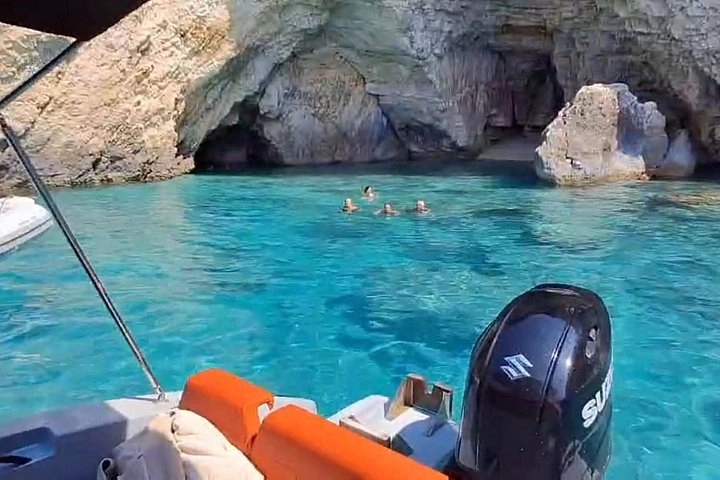
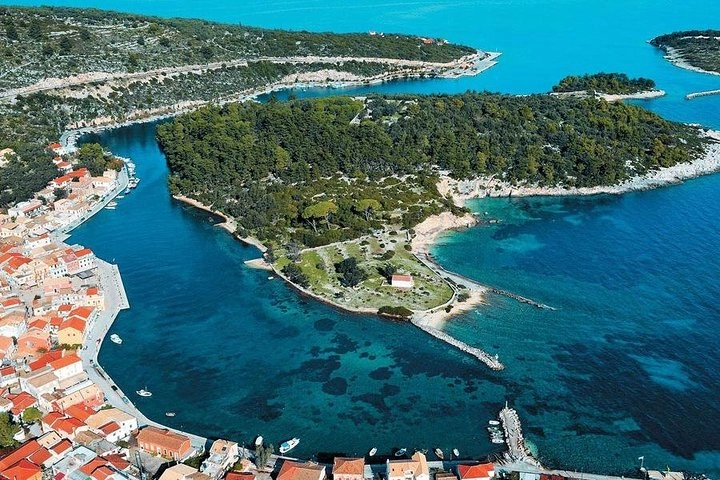
Book a trip where this was filmed — near Corfu
Support Sailing Electra
At WeBoating.com, we profoundly acknowledge the unwavering dedication that Sailing Electra invests in crafting each and every video or voyage. Their passion for delivering exceptional ocean content shines through every frame, and it's a labor of love that deserves your attention.
We invite you to watch their captivating videos here and actively engage with their content, including their social media links above. Liking, commenting, and sharing their work goes a long way in fueling their creative fire.
We're also inviting you to explore the gear, sponsorships, and boat partnerships highlighted in the "Sailing to Corfu, my new Favourite City!" video description, or directly on YouTube. By engaging with these offerings or purchasing services and items, you directly support Sailing Electra, their collaborators, and the brands they're associated with.
To ensure you never miss an offshore update, consider visiting their official YouTube Channel to subscribe, like, and join their community directly.
If you have any feedback, corrections, or additional information about Sailing Electra or their videos, please use the comment form below to share your thoughts with us.
Thank you for being a part of our community and supporting the creators we cherish. Your time and support truly matter!
In this episode, we take our solar electric yacht to Corfu, one of the Ionian's most beautiful destinations.
With its winding old streets, Venetian architecture and all the great walks, it's a place that quickly got under my skin.
We're cruising the Ionian Islands our DIY solar electric catamaran, using the power of the sun to explore Greece using no fuel and lots of creature comforts!
Come along for the journey and see why Corfu has earned the title of my favourite city anywhere.
#SailingGreece #Corfu #SolarElectricBoat #ElectricBoat #IonianIslands #SailingLife #Greece #Liveaboard
Sailing Electra
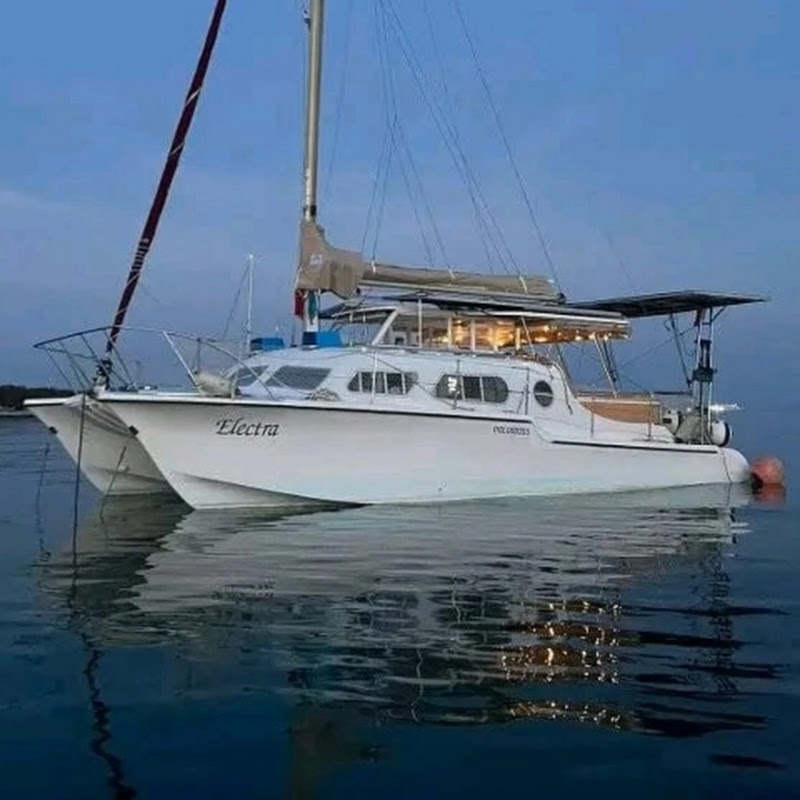
In 2026, Patrick and Candice continue cruising the Mediterranean aboard Electra, their restored 1976 Catalac 9M catamaran. Completely converted to 100% solar-electric propulsion with twin 6kW outboards and 3,200W of solar panels, the duo has sailed over 2,340 nautical miles through Italy, Croatia, and Greece without shore power. Their channel highlights sustainable DIY marine engineering and off-grid living.
Channel Information:
Social Media Links:
Sailing to Corfu, my new Favourite City! Location
- Corfu Old Fortress Anchorage (39.619,19.928)
- Mandraki Marina (39.626,19.9265)
- Corfu Channel Transit (39.52,20.08)
Latest Episodes from Sailing Electra
Explore the most recent voyages. Subscribe to the channel to never miss an update!
Boatlife Unfiltered: Sometimes it Sucks!
Facing steep Ionian headwinds and aerating outboards on Sailing Electra, the crew aborts an 18-mile passage to Paxos, rerouting to Syvota before racing back to Corfu for urgent ENT medical treatment.

Sailing to Corfu, my new Favourite City!
Cruising the Corfu Channel on day three of passage, Sailing Electra balances electric motor power and foresail trim against headwinds before dropping anchor under Corfu Old Fortress.
A Typical Day on Our Electric Boat | Two Rock Bay to Sivota
What does a typical day look like when your boat runs on sunshine? In this episode, we leave our new favourite anchorage, Two Rock Bay, and head for Sivota, another of the Ionian treasure, but for completely different reasons. We motor the whole way using power generated by the sun, then settle in...