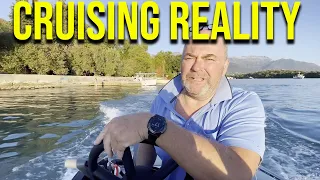
Light WIND SAILING in Montenegro… Then the Dinghy Fuel Problem RETURNED! The reality of cruising.
Gliding through the steep, fjord-like canyon of the Bay of Kotor in Montenegro, John and Sharon of Sailing Clewless Crew encounter the majestic stillness of the southern Adriatic Sea. Aboard their cruising sailboat 23 Pioneer, the retired couple has voyaged northward from Greece through Albania into Boka Kotorska. Ringed by vertical limestone peaks plunging into tranquil waters, the landlocked bay offers Europe’s most dramatic cruising shelter. Yet behind the scenic vistas lies the unvarnished reality of voyaging: fickle mountain breezes that demand constant sail adjustments, coupled with persistent tender mechanical gremlins that require hands-on technical solutions.
For liveaboard cruisers, voyage success depends on two indispensable assets: versatile light-air sail handling and an utterly reliable dinghy outboard to reach provisions and town quays. As John and Sharon ready their cruising sailboat for an upcoming open-sea Adriatic passage to Italy, their stay in Montenegro becomes a classic study in cruising self-reliance. From hoisting a continuous-line furling sail beneath Balkan cliffs to executing surgical deck-side diagnostics on a fuel-starved outboard engine, their journey reflects the authentic balance between maritime discovery and constant boat maintenance.
Navigating Boka Kotorska: Light-Air Tactics Beneath Balkan Peaks
Sailing Clewless Crew navigates their cruising sailboat 23 Pioneer through the towering mountain corridors of the Bay of Kotor in Montenegro, where the Adriatic Sea cuts deep into the rugged Balkan interior. Boka Kotorska’s sheer topography creates isolated microclimates governed by thermal mountain breezes. With winds forecast at 5 to 10 knots, John and Sharon seize the opportunity to hoist their massive light-wind cruising headsail. Rigged to an extended bowsprit, the voluminous nylon sail is specifically tailored to generate boat speed in subtle airs that leave standard heavy-cloth headsails hanging limp.
Deploying a light-air foresail on a shorthanded cruising vessel requires careful rigging protocol. John leads the dedicated green sheets completely around the vessel’s perimeter, routing them outside the shrouds, stanchions, and lifelines back to turning blocks and cockpit winches near the helm station. Stopper knots are secured in each line to prevent runaway sheets. The sail is controlled via a continuous-line furler on the bowsprit, unrolling smoothly when trimmed from the cockpit.
As the boat ghosts across the glassy water, the thermal breeze suddenly drops below four knots. Rather than letting the lightweight sail flog uselessly, the crew promptly douses it. Sharon manages halyard tension on the foredeck while John gathers the fabric directly into the forward deck locker, all while their electronic autopilot maintains heading and vessel steerage.
The Anatomy of Dinghy Fuel Starvation: Contamination and Phase Separation
While anchored along the scenic Montenegrin coastline of the Bay of Kotor aboard their cruising sailboat 23 Pioneer, Sailing Clewless Crew confronts the sudden return of tender engine trouble on the Adriatic Sea. Their tender, powered by a 20-horsepower outboard engine, is their primary lifeline for ferrying crew and their dog Cleo ashore. Returning across the anchorage, the motor began sputtering, starving for fuel under acceleration, and stalling abruptly just as they reached the mother ship.
Fuel starvation is a persistent hazard in Mediterranean waters, where pump fuel often contains ethanol blends. In humid marine environments, ethanol readily absorbs moisture from ambient air, triggering phase separation where water and alcohol decouple from the fuel and collect at the tank bottom. Additionally, dockside jerry-can transfers frequently introduce fine particulates that clog microscopic fuel passages.
John began diagnostics at the fuel supply line. Having previously replaced the inline filter, he discovered salt buildup and corrosion on the tank-to-engine quick-connect fitting, preventing an airtight seal. Using emery cloth, he polished the connector contacts until the fitting locked securely. He also serviced the stiff throttle and gear assembly, clearing grime, applying fresh waterproof marine grease, and adjusting internal linkages so reverse gear engaged effortlessly.
Carburetor Forensics: Precision Jet Cleaning on Deck
Anchored beneath the steep Balkan mountains of the Bay of Kotor in Montenegro, the crew of Sailing Clewless Crew turns the cockpit of their cruising sailboat 23 Pioneer into an open-air workshop above the Adriatic Sea. Despite connector repairs, the 20 hp outboard stalled again during subsequent runs. Recognizing internal fuel delivery failure, John assembled his metric hand tools and aerosol carburetor cleaner to dismantle the unit on deck.
Working over a protective towel to prevent hardware from bouncing overboard, John detached the air intake valve, unclipped the throttle rod, and unbolted the twin 10mm bolts securing the carburetor to the intake manifold. Removing the lower float bowl revealed a decisive clue: the float chamber was bone dry. In a functional carburetor, this chamber holds a steady reservoir of fuel regulated by the float needle. A dry bowl proved fuel was blocked before entering the chamber.
John removed the float pivot pin, float needle, and brass metering jets. Dried ethanol gum had seized the needle firmly in its seat, choking off fuel inflow under vacuum. Blasting aerosol solvent through the inlet gallery dissolved the gummy obstruction until cleaner flowed freely. After verifying unobstructed orifices in the main and pilot jets, John reassembled the carburetor. A test run under load proved immediate success, with the outboard delivering smooth, uninterrupted acceleration.
Boka Kotorska Cruising Heritage: Anchorages, Fortresses, and Shore Life
Cruising the sheltered waters of the Bay of Kotor in Montenegro aboard their cruising sailboat 23 Pioneer, Sailing Clewless Crew balances vessel maintenance with cultural exploration across the historic Adriatic Sea. Cruising through Tivat Bay, they pass the Island of Flowers (Ostrvo Cvijeća / Miholjska Prevlaka), home to the 6th-century Monastery of St. Michael the Archangel, an ancient spiritual center that weathered centuries of Venetian and Ottoman maritime conflict.
Heading toward Herceg Novi, the crew confronts domestic cruising realities: their fresh water is nearly exhausted, and the reverse-osmosis watermaker is offline awaiting new membranes. John and Sharon utilize the galley’s saltwater foot pump to wash dishes and conserve potable supplies. Entering Herceg Novi marina, they skillfully moor using slime lines (permanent seabed lazy lines) led forward outside the fenders to the bow, securing the stern neatly off the quay.
Ashore, the couple enjoys local gastronomy, dining on grilled sea bass with Swiss chard and beef steak. They undertake a vigorous hike up to the 16th-century Španjola Fortress (the Spanish Castle), taking in sweeping strategic views over the bay entrance. Returning downward, they walk Cleo through historic Austrian naval barracks nestled among fragrant pine groves, savoring the stillness of shore before open-water voyaging resumes.
Montenegro Cruising Telemetry & Outboard Troubleshooting Matrix
For Sailing Clewless Crew voyaging aboard their cruising sailboat 23 Pioneer through the Bay of Kotor in Montenegro, cruising the Adriatic Sea demands systematic maintenance routines and passage planning. The matrix below outlines the critical mechanical diagnostics, fuel remediation procedures, and navigational waypoints recorded during their journey through Boka Kotorska.
| Cruising Metric & System | Observation & Telemetry | Technical Remediation & Procedure |
|---|---|---|
| Vessel & Crew | Sailing Clewless Crew / 23 Pioneer | John & Sharon shorthanded cruising coastal Montenegro |
| Light-Air Sail Handling | 5–10 kn forecast dropping below 4 kn | Continuous-line bowsprit furler; sheets run outboard; doused under autopilot |
| Outboard Tender Engine | 20 HP 4-stroke outboard motor | Fuel starvation under load; surging; stalling; flooding symptoms at idle |
| Fuel Supply Line | Quick-disconnect tank fitting | Polished corroded brass contacts with emery cloth; restored hermetic seal |
| Throttle & Shift Assembly | Stiff reverse gear engagement | Dismantled quadrant; cleared salt residue; applied waterproof grease; adjusted detent |
| Carburetor Diagnostics | Completely dry float bowl | Unbolted 10mm manifold bolts; removed float bowl, pivot pin, and float needle |
| Metering Jet Remediation | Ethanol varnish seized needle seat | Pressurized carburetor cleaner flushed through fuel inlet; cleared main & pilot jets |
| Freshwater Management | Watermaker offline awaiting membranes | Galley saltwater foot pump used for dishwashing to conserve potable tank water |
| Marina Mooring Technique | Herceg Novi quay mooring | Slime lines (lazy lines) routed outside fenders to bow cleats; stern tied to quay |
| Historical Landmarks | Tivat Bay & Herceg Novi | Miholjska Prevlaka (Island of Flowers), 16th-century Španjola Fortress |
The Reality of Voyaging: Preparing for the Adriatic Passage to Italy
Concluding their extended stay in the Bay of Kotor in Montenegro aboard their cruising sailboat 23 Pioneer, Sailing Clewless Crew prepares their cruising sailboat for an offshore passage across the southern Adriatic Sea to Italy. Transitioning from the protected inland fjords of Boka Kotorska to open sea requires rigorous preparation. John and Sharon top off their fresh water, charge deep-cycle battery banks, and scrub the decks after morning walks with Cleo.
A rigorous sea trial in the bay confirms the success of John’s deck-side mechanics: the 20 hp outboard starts instantly, accelerates smoothly to full plane, and delivers steady power without hesitation. With the tender dependable once more, the crew can confidently turn their attention to passage planning, customs clearance, and weather routing across the Adriatic.
Their voyage through Montenegro showcases the essence of liveaboard cruising: mastering technical challenges, adapting to wind shifts, and embracing maritime history. Through practical skill and patience, John and Sharon embody the self-reliant spirit that makes long-distance voyaging deeply rewarding.
Frequently Asked Questions
Fuel starvation is frequently caused by ethanol phase separation and fuel dock contamination. Ethanol absorbs atmospheric humidity, separating into a corrosive water-alcohol layer at the tank bottom, while sediment clogs quick-connect fittings and carburetor float needles.
A dry float bowl indicates fuel is blocked before entering the carburetor. Cruisers diagnose this by removing the carburetor from the intake manifold and taking off the float bowl. If dry, the float needle is seized in its seat by dried varnish or debris.
A light-air sail on a continuous-line furler requires long sheets routed completely outside standing rigging, stanchions, and lifelines back to cockpit winches. Stopper knots must be tied in sheet tails to prevent them from slipping through turning blocks.
Engaging an electronic autopilot maintains vessel heading and speed while shorthanded crew members work on the foredeck to ease halyards, operate furling lines, and flake lightweight sails directly into deck lockers without losing vessel control.
In Montenegrin ports like Herceg Novi, vessels moor stern-to using permanent seabed slime lines (lazy lines) picked up at the quay and led forward outside fenders to bow cleats, keeping the boat securely held off the stone quay without dropping anchor.
Cruisers utilize galley saltwater foot pumps for washing dishes and cookware, preserving potable freshwater tank supplies strictly for drinking, cooking, and essential hygiene until reaching a marina with shore water.
The 16th-century Španjola Fortress (Spanish Castle) sits high above Herceg Novi, offering panoramic views over the entrance of Boka Kotorska. It was built by Spanish troops in 1538 and later refortified by Venetian and Ottoman military forces.
Support Sailing Clewless Crew
At WeBoating.com, we profoundly acknowledge the unwavering dedication that Sailing Clewless Crew invests in crafting each and every video or voyage. Their passion for delivering exceptional ocean content shines through every frame, and it's a labor of love that deserves your attention.
We invite you to watch their captivating videos here and actively engage with their content, including their social media links above. Liking, commenting, and sharing their work goes a long way in fueling their creative fire.
We're also inviting you to explore the gear, sponsorships, and boat partnerships highlighted in the "Light WIND SAILING in Montenegro… Then the Dinghy Fuel Problem RETURNED! The reality of cruising." video description, or directly on YouTube. By engaging with these offerings or purchasing services and items, you directly support Sailing Clewless Crew, their collaborators, and the brands they're associated with.
To ensure you never miss an offshore update, consider visiting their official YouTube Channel to subscribe, like, and join their community directly.
If you have any feedback, corrections, or additional information about Sailing Clewless Crew or their videos, please use the comment form below to share your thoughts with us.
Thank you for being a part of our community and supporting the creators we cherish. Your time and support truly matter!
Cruising reality as we head out for a light-wind sail in the Bay of Kotor, but when the breeze dies completely we end up packing the sail away and carrying on under autopilot. Back in Montenegro, the dinghy outboard gets another proper strip-down and carb clean after fuel starvation problems, while we squeeze in dinner, a walk up to the Spanish Castle and a few more classic boat jobs before the big Italy passage.
#BayOfKotor #SailingMontenegro #CatamaranLife #BoatLife #23Pioneer
Hi and welcome, we are John and Sharon a mid 50's retired couple who brought a boat to live on and are currently sailing in the mediterranean.
Follow in real time:
https://www.facebook.com/share/1Pr6nAyvYx/?mibextid=wwXIfr
Watch here to see the how we got the boat ready for this adventure: https://www.youtube.com/playlist?list=PLCI_C7HtrLwA-ntPEbMfscVY0mU3rYc_f
Here you will be able to see how we navigated Greece: https://www.youtube.com/playlist?list=PLCI_C7HtrLwAgORYSmD1vj8moC7juhO55
We then moved on to Albania here: https://www.youtube.com/playlist?list=PLWdkx7QxO7EU
And now we are in Montengro: https://www.youtube.com/playlist?list=PLJ4Wjhaligv4

Sailing Clewless Crew
Midlife sailing adventure | Retired couple living on a catamaran | Full-time liveaboard sailing We’re John & Sha, a retired couple in our mid-50s preparing to move aboard our catamaran this April. After retiring from full-time careers, we’re transitioning to full-time liveaboard sailing and documenting the entire journey. Right now, we’re sailing the Ionian in Greece. Stunning anchorages, pretty fishing villages and gusty winds are all on the agenda here. In the near future we will head off to Albania and Montenegro. From catamaran living and liveaboard life to sailing adventures, slow travel, and going where the wind takes us — this is our next chapter. If you’re interested in sailing in your 50s, retirement adventures, boat life preparation, or leaving the 9–5 for freedom and travel, subscribe and join us.
Channel Information:
Social Media Links:
Light WIND SAILING in Montenegro… Then the Dinghy Fuel Problem RETURNED! The reality of cruising. Location
- Bay of Kotor (Boka Kotorska) & Kotor Marina, Montenegro (42.4247,18.7712)
- Perast Channel & Our Lady of the Rocks, Montenegro (42.4867,18.6917)
Latest Episodes from Sailing Clewless Crew
Explore the most recent voyages. Subscribe to the channel to never miss an update!
Our FIRST Overnight Sail! Montenegro to Italy 🇮🇹 Crossing the Adriatic.
It’s time to prepare for our Montenegro-to-Italy crossing! With engine checks, sail repairs and homemade bread sorted, we fuel up and clear out at Porto Montenegro before heading across the Adriatic. Light-wind sailing, fishing for tuna and mahi-mahi, sunset at sea and first-night-passage nerves all...
Tuna fishing
Tuna fishing in the Adriatic. Had a few of these of these today, watch tomorrows Longform video for more Tuna action. Hi and welcome, we are John and Sharon a mid 50's retired couple who brought a boat to live on and are currently sailing in the mediterranean. Follow in real time: Watch her...
Alberobella Italy
Step into Alberobello, Puglia—Italy’s fairytale town of whitewashed trulli: unique cone-roofed limestone homes built using traditional dry-stone techniques. This magical corner of southern Italy has been a UNESCO World Heritage Site since 1996, with more than 1,500 of these remarkable dwellings stil...
40 Knot Bora Hits Kotor Bay! We Escape the Marina + DIY Dyneema Upgrade
We arrive in Porto Montenegro only to find our berth is more bus stop than marina, then welcome Sharon's brother Sam and his friend Rich aboard 23 Pioneer for a chaotic long weekend in the stunning Bay of Kotor. From a dinghy mishap and a failed hike towards the Kotor castle to gusts of 40 knot...
Dyneema spliced low friction ring
Short video of splicing a low friction ring onto dyneema rope loop. ideal for rigging improvements et al. Hi and welcome, we are John and Sharon a mid 50's retired couple who brought a boat to live on and are currently sailing in the mediterranean. Follow in real time: Watch here to see the...