We Went Boat Shopping in France (and it's WAY Better than Car Shopping)
Departing the landlocked mountain valleys of Sun Valley, Idaho, Conor and Kelly Malone stepped into the damp, salt-laden Mediterranean air of southern France with their teenage children, Finn and Maddie. The journey marked the first leg of an ambitious two-week expedition spanning France, Spain, and the Virgin Islands to find a seaworthy catamaran capable of serving as their full-time home on the water. Documenting their voyage toward offshore self-reliance under the banner of Sailing Big Lost, the family confronted the immediate reality of balancing cruising aspirations with the technical demands of ocean-going yacht surveys.
Recent Mediterranean rain squalls had swept along the foothills of the Pyrenees, leaving the pontoons of Port de Canet-en-Roussillon glistening wet under heavy coastal skies. Waiting at the marina quayside was broker Catherine from Cat-Yachts, ready to show them Ocean Med, a 2004 Privilège 585 catamaran that had circulated through the Mediterranean brokerage market over several seasons. Long regarded by blue-water sailors as a benchmark for robust offshore construction, the French-built vessel offered the family their first hands-on benchmark for evaluating heavy-displacement multihulls against real-world cruising logistics.
Inside Ocean Med: Multihull Craftsmanship and Cabin Layouts
Equipping Finn and Maddie with handheld cameras to keep them occupied with documentary duties, Conor and Kelly stepped aboard to inspect the interior joinery and structural integrity of the Privilège 585. Designed by acclaimed naval architect Marc Lombard, the Privilège series earned its reputation through hand-laid fiberglass schedules, deep bridgedeck clearance, and durable interior cherry joinery built to endure open-ocean stresses rather than lightweight charter convenience.
Finn descended immediately into the crew quarters forward, sizing up the single berth, recessed overhead lockers, and modular auxiliary bunk setup. The compact berth proved an immediate talking point, highlighting how multi-cabin cruising layouts divide personal volume between master quarters and utility crew spaces. Throughout the passageways, heavy-duty push-button latches secured every cabinet door, floor locker, and deep under-mattress stowage bin—an essential safety feature that keeps gear firmly seated when punching into square Mediterranean swells.
Moving into the central saloon and galley, the crew discovered thoughtful offshore touches, including a bulkhead-mounted magnetic knife rack that keeps sharp chef knives securely stowed underway. For children transitioning from a spacious ranch house to a floating vessel, every latch, hidden locker, and convertible bunk represented a puzzle in spatial efficiency. Yet while the kids assessed private quarters and hideaways, Conor’s attention turned downward toward the underlying systems that keep a blue-water yacht operational far from shore.
Contractor Scrutiny: Battery Banks and Generator Lead Times
Drawing on decades of experience in residential construction and general contracting back in Idaho, Conor evaluated Ocean Med with a practical builder’s eye. While a previous owner had invested substantial capital into maintenance and mechanical refits, the yacht exhibited minor cosmetic flaws and wear on secondary woodwork that would require refurbishment before undertaking transatlantic voyaging. However, cosmetic blemishes proved secondary to the yacht’s vital energy architecture.
During the walk-through, broker Catherine disclosed that the vessel’s house battery bank had reached three years of continuous service. With standard marine lead-acid or AGM deep-cycle battery banks possessing an average working lifespan of three to five years before exhibiting severe capacity drop-off under heavy off-grid loads, an immediate battery replacement loomed as an unavoidable front-end expense.
Even more pressing was the operational status of the onboard auxiliary power plants. The vessel’s diesel generators exhibited accumulated engine hours and age that signaled impending overhaul or complete replacement. Cruising supply chain inquiries revealed that ordering new marine generators required an estimated one-year lead time from factory build to marina delivery. For a family eager to cast off dock lines without a twelve-month delay in European boatyards, long generator procurement timelines posed a critical hurdle in their acquisition calculations.
Exterior Ergonomics and Cockpit Lounging Comparisons
Moving up to the expansive aft cockpit and coachroof, the family stepped outside to assess topside workflow and helm station ergonomics. While the wide side decks and substantial stainless steel guardrails provided reassuring security for blue-water passages, the exterior lounging setup left room for critique when compared against other cruising catamarans they had experienced, such as Kai.
The topsides of Ocean Med lacked integrated coachroof cushion pads and upper-deck lounging bolsters. In warm-weather cruising grounds like the Mediterranean and Caribbean, exterior watchkeeping and family downtime center around elevated lounging areas sheltered from deck traffic. While custom marine upholstery and Sunbrella canvas can be fabricated at any reputable sail loft, assessing what a yacht lacks out of the box remains a vital exercise when estimating total out-of-pocket refit investments prior to departure.
| Evaluation Parameter | Ocean Med Specifications & Survey Observations |
|---|---|
| Vessel Model & Year | Privilège 585 (2004 Model Year) |
| Naval Architect | Marc Lombard (Privilège Marine, France) |
| Survey Location | Port de Canet-en-Roussillon, Pyrénées-Orientales, France |
| Listing Broker | Catherine / Cat-Yachts Brokerage |
| House Battery Condition | 3-year-old bank requiring replacement within 12–24 months |
| Auxiliary Power Plant | Aging marine diesel generators with ~1-year replacement delivery lead time |
| Interior Stowage Engineering | Push-button marine slam latches, deep under-berth bins, magnetic galley storage |
| Topside Ergonomics | Spacious aft deck; missing coachroof cushion pads noted relative to Kai |
Shoreside Hiccups Along Canet-Plage
Concluding their marine survey with Catherine, the family walked down to the waterfront at Canet-Plage to decompress and discuss the vessel’s balance of structural integrity against pending mechanical refits. International travel immediately introduced its own logistical frictions: having packed hastily in Idaho, the family realized they had neglected to bring European electrical wall plug adapters, leaving all four of their mobile phones hovering near complete battery shutdown.
With Conor coordinating logistics back at their room to retrieve essential supplies before scouring town for converter plugs and groceries at the local supermarket, the family experienced the familiar rhythm of cruising life—where small overland challenges constantly intersect with grand maritime plans. The brisk sea breeze and wide sandy beaches of Canet gave the crew a quiet space to reset before planning their subsequent inspections in Spain.
Family Science at Aquarium Oniria
While Conor caught up on much-needed sleep to shake off transatlantic jet lag, Kelly kept Finn and Maddie engaged by visiting Aquarium Oniria, located right along the Canet marina promenade. The public facility guides visitors through eighty-three interactive exhibits that trace the life cycle of a water droplet, descending from the Pyrenean snowmelt through freshwater rivers and coastal estuaries before plunging into the tropical open ocean.
The children moved eagerly through the dark galleries, marveling at large Pacific octopuses, serpentine moray eels, stealthy nurse sharks accompanied by leathery egg cases, lobsters, piranhas, and sea turtles. At the coral ecology station, the family observed scientists cultivating resilient coral fragments designed to withstand warming oceanic conditions—prompting the kids to recall the upside-down jellyfish (Cassiopea) they had previously encountered while exploring coastal waters in Panama.
The interactive doctor fish (Garra rufa) pool proved a standout favorite, with Maddie and Finn dipping their fingertips into the tank to let the gentle fish graze across their skin. As the tour wound down past historic maritime displays and aircraft carrier models, Finn lobbied for an aquarium gift shop souvenir, sparking a humorous family debate on whether tangible trinkets or indelible maritime experiences make the true souvenirs of ocean travel.
Frequently Asked Questions
Sailing Big Lost inspected Ocean Med, a 2004 Privilège 585 catamaran designed by Marc Lombard and built by Privilège Marine in France, listed for sale with broker Catherine from Cat-Yachts.
Conor noted that the house battery bank was three years old and approaching the end of its typical 3-to-5-year service life. Additionally, the aging diesel generators faced long replacement lead times of approximately one year, posing a major procurement hurdle for immediate cruising.
The Privilège 585 was designed by renowned French naval architect Marc Lombard, known for designing robust, blue-water offshore cruising catamarans with generous bridgedeck clearance and durable cherry joinery.
The crew noted that Ocean Med lacked integrated cushion pads and lounging bolsters on the coachroof and upper deck, an ergonomic feature they had previously appreciated aboard multihulls like Kai.
Kelly, Finn, and Maddie explored exhibits featuring moray eels, large octopuses, nurse sharks and egg cases, sea turtles, a coral ecology research laboratory, and an interactive pool with Garra rufa doctor fish.
The family scheduled an intensive two-week itinerary traveling from Idaho to inspect four candidate catamarans across France, Spain, and the Virgin Islands before selecting their full-time liveaboard vessel.
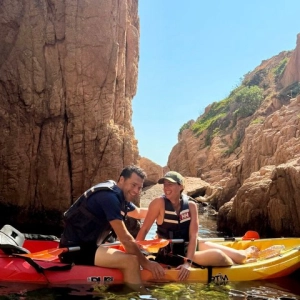
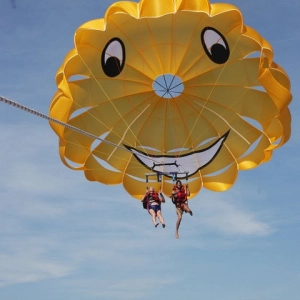
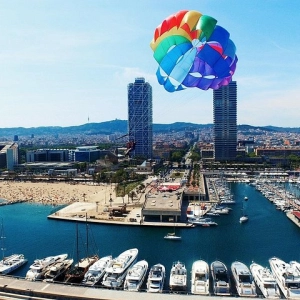
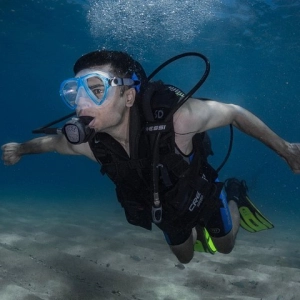
Book a trip where this was filmed — near Barcelona
Support Sailing Big Lost
At WeBoating.com, we profoundly acknowledge the unwavering dedication that Sailing Big Lost invests in crafting each and every video or voyage. Their passion for delivering exceptional ocean content shines through every frame, and it's a labor of love that deserves your attention.
We invite you to watch their captivating videos here and actively engage with their content, including their social media links above. Liking, commenting, and sharing their work goes a long way in fueling their creative fire.
We're also inviting you to explore the gear, sponsorships, and boat partnerships highlighted in the "We Went Boat Shopping in France (and it's WAY Better than Car Shopping)" video description, or directly on YouTube. By engaging with these offerings or purchasing services and items, you directly support Sailing Big Lost, their collaborators, and the brands they're associated with.
To ensure you never miss an offshore update, consider visiting their official YouTube Channel to subscribe, like, and join their community directly.
If you have any feedback, corrections, or additional information about Sailing Big Lost or their videos, please use the comment form below to share your thoughts with us.
Thank you for being a part of our community and supporting the creators we cherish. Your time and support truly matter!
Don't miss out on this incredible journey with our family as we embrace the unknown and embark on a quest to find our dream catamaran. We travel all the way from Idaho to France to check out the Ocean Med a Privilege 585. Like, share, and subscribe to our channel to stay updated on our latest escapades and join us on our pursuit of the extraordinary!
✨ Don’t forget to LIKE, COMMENT & SUBSCRIBE to follow our sailing journey!
📸 Follow us on Instagram for behind-the-scenes updates: https://www.instagram.com/sailingbiglost/
🗞️ Follow us on TikTok: https://www.tiktok.com/@sailingbiglost
⛵️ Check out our Website and Merch: https://www.sailingbiglost.com
🛥️ Support Our Journey on Patreon: https://www.patreon.com/c/Biglost
#caribbeansailing #sailingjourney #boating #sailingexperience #liveaboardlife #travel #bahamas #sailingwithkids #boatlife #catamaransailing #sailingfamily #travelvlog #boatinglife #travelfamilyvlog #France
#boatshopping

Sailing Big Lost
Sailing Big Lost follows Conor, Kelly, Finn, and Maddie Malone from Sun Valley, Idaho, living full-time aboard their South African Vision 444 ES catamaran, Big Lost. In 2026, their channel documents transiting the Panama Canal, completing a 3,000-mile Pacific crossing, diving Tuamotu atolls, and raising teenagers offshore.
Channel Information:
Social Media Links:
We Went Boat Shopping in France (and it's WAY Better than Car Shopping) Location
- Port de Canet-en-Roussillon, France (42.7015,3.0353)
- Aquarium Oniria, Canet-en-Roussillon, France (42.7019,3.0357)
- Canet-Plage, Canet-en-Roussillon, France (42.6936,3.0335)
Latest Episodes from Sailing Big Lost
Explore the most recent voyages. Subscribe to the channel to never miss an update!
We Finally Left Tahiti… Then I Made a Huge Mistake
After crossing from Tahiti to Moorea, a mistaken block release drops Big Lost's tender, fracturing the davit crossbar and forcing the crew to halt their Tuamotus voyage for emergency repairs.
The Ordinary Days Are the Ones We’ll Remember ❤️ #Shorts
Not every day sailing the world is an adventure. Some days it’s homeschooling, boat chores, baking, board games, and spending time with friends. These are the ordinary moments of raising a family aboard a sailboat in French Polynesia. And they might just be the ones we remember most. We’re Sailing...
What Living on a Sailboat Is REALLY Like ⛵ #sailingfamily
Living on a sailboat isn’t all beautiful anchorages and sunset sails. There’s plenty of cleaning, hauling groceries by dinghy, and everyday chores. But there’s also adventure, incredible friendships, and moments that remind us why we love this life. A little glimpse of what sailing around the worl...
We Left Idaho… To Come Home to This
The crew of Big Lost returns to their Vision 444 catamaran in Tahiti, navigating from Phaeton Bay past Marina Taina to Airport Anchorage.
This Never Gets Old ⛵ | Sailing in Tahiti #Shorts
There's nothing quite like raising the sails, turning off the engines, and letting the wind take over. ⛵ After a couple of weeks away from Big Lost, we're finally back sailing the beautiful waters of Tahiti, French Polynesia. Our next sailing adventure drops tomorrow! #SailingBigLost #S...