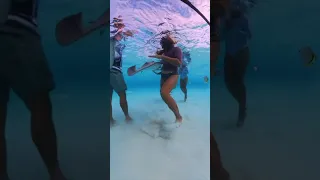
We Swam With Humpback Whales… Then Left Our Boat Behind
At six in the morning in Moorea, the crew aboard the Vision 444 catamaran Big Lost readied their snorkel gear for an offshore whale tour. After waiting a month for favorable weather, the family from Sailing Big Lost boarded an excursion vessel to locate humpback whales before their upcoming passage to Tahiti.
With ocean swells running offshore, Matthew took Dramamine to stave off seasickness as the boat motored out through the reef passage. Leaving the calm waters of the lagoon, the crew scanned the open sea where humpbacks gather following their 3,700-mile migration from feeding grounds in Antarctica to breed and raise calves in French Polynesia.
Regulated Encounters and Offshore Whale Watching
Marine mammal encounters around Moorea operate under strict environmental oversight because the whales are legally protected. Commercial regulations dictate vessel proximity, limit how many boats can approach a pod, and restrict how many swimmers enter the water simultaneously. Big Lost joined a small charter carrying six swimmers alongside a guide and a marine biologist, allowing Connor and the family to enter the water together as a complete group.
Their guide explained that Moorea attracts large numbers of humpbacks due to its multiple reef passages into the lagoon, whereas neighboring islands often feature only one or two breaks. While the lagoon provides protected water where whales can rest away from swimmers, the excursion vessel searched outside the barrier reef, hoping to spot humpbacks along with resident pilot whales, sperm whales, or dolphins.
Swimming With Humpbacks and a Singing Male
Over the course of the offshore search, the charter made three separate drops into deep water with humpbacks, in addition to encountering a group of pilot whales. Drifting over the oceanic drop-off, the family watched as massive whales glided directly beneath their fins:
“Did you see its eyeball?”
The final swim presented an entirely distinct encounter. Suspended motionless deep beneath the surface, a solitary male humpback hung vertically in the water column, emitting low-frequency songs associated with breeding behavior:
“When you were close enough, you could actually feel the vibrations of his song moving through your body.”
Floating above the singer in open water, the family felt acoustic pulses traveling through the ocean swell. Toward the end of the excursion, the boat came upon a mother and calf swimming alongside several other whales. Because the pair moved too quickly across the surface to permit swimmers in the water, the crew watched from the deck. After six hours on the water, the kids grew exhausted, wrapping up a seven-hour charter that the family described with deep appreciation:
“What a once in a-lifetime opportunity.”
Motoring Across Glassy Seas to Phaeton Bay
Following the whale excursion, the family returned to routine vessel maintenance aboard Big Lost, completing dinghy trash runs and scrubbing the waterline to prepare the catamaran for sea. The voyage required shifting the boat 46 nautical miles from Moorea to Phaeton Bay on Tahiti, where the vessel would remain anchored during an extended family visit to the States.
Weighing anchor in Moorea, Connor evaluated the prevailing conditions outside the lagoon:
“It’s going to be right on our nose. Very light, but it’s going to be no.”
With headwind too light to fill the sails and the sea completely flat, the crew motored the entire distance between the islands. With Tahiti visible on the port side and Moorea astern to starboard across glassy water, the family filmed the transit before approaching the southern coast of Tahiti. Near the approach to Phaeton Bay, conditions shifted rapidly as the breeze built and ocean swells threw breakers across the barrier reef. Guided by navigation markers through the pass, Big Lost motored safely through the reef cut into the calm anchorage.
Securing Big Lost With Muriel in Phaeton Bay
Selecting an anchorage to leave an unattended vessel for 30 days required careful logistical evaluation. Several cruising friends, including Lauren Landers, had advised the crew to base Big Lost in Phaeton Bay and retain Muriel, a trusted local boat caretaker. Commercial marinas around Tahiti quoted rates of approximately $100 per day plus 13 percent tax and mandatory auxiliary fees. In contrast, Muriel charged a flat rate of $400 for the month, providing weekly vessel inspections, photo updates, 30 minutes of running the diesel engines, bilges and boat cleaning, and monitoring anchor holding in case of squalls. Muriel also provided vehicle transportation to and from the international airport, saving a one-hour drive each direction.
After dropping anchor in the sheltered bottom of the bay, the crew veered out 150 meters of chain to ensure maximum holding. Securing the catamaran for a month of solitary storage involved deep cleaning across every cabin to eliminate standing moisture, emptying refrigerated food stores, shutting down the refrigeration units and freezers, pickling the reverse-osmosis watermaker membranes with protective solution, and securing freshwater pumps. Connor then conducted a comprehensive systems handover with Muriel before nightfall.
Decommissioning Systems and Traveling to Idaho
At 3:30 in the morning, the family completed final packing and watermaker pickling before Muriel arrived at 4:00 to transport them to the airport. Storing Big Lost on anchor with Muriel handling airport transit allowed the dinghy to remain locked in the davits rather than left exposed ashore. Boarding the eight-hour flight to Los Angeles brought welcome physical rest after continuous cleaning and decommissioning chores.
Navigating security checks and baggage logistics brought lighthearted family moments during transit:
“Matthew, why do you bring so much stuff?”
After landing in Los Angeles, the family spent two days in the city navigating traffic, visiting In-N-Out, and shopping for cold-weather clothing because the children had outgrown winter apparel while cruising. From Los Angeles, they caught connecting flights through Salt Lake City to Twin Falls, Idaho, where Connor’s father greeted them at the terminal. Stepping ashore in Idaho after two and a half years aboard Big Lost brought complex emotions, marking the milestone of leaving their floating home for the first time since their voyage began.
| Passage & Logistics Metric | Reported Figure |
|---|---|
| Humpback Whale Antarctic Migration | 3,700 miles |
| Charter Boat Whale Swimmers | 6 swimmers |
| In-Water Whale Encounters | 3 times |
| Offshore Whale Excursion Duration | 7 hours |
| Moorea to Phaeton Bay Motor Passage | 46 nautical miles |
| Anchor Chain Deployed in Phaeton Bay | 150 meters |
| Tahiti Marina Estimated Cost | $100 per day plus 13% tax |
| Phaeton Bay Caretaker Monthly Rate (Muriel) | $400 for the month |
| Weekly Engine Exercise Run Duration | 30 minutes |
| Drive Time to Airport From Phaeton Bay | 1 hour each way |
| Direct Flight Duration to Los Angeles | 8 hours |
| Time Lived Aboard Big Lost | Two and a half years |
Frequently Asked Questions
French Polynesia strictly regulates humpback whale interactions, requiring tourists to use licensed commercial operators who adhere to approach distances, vessel caps, and limits on the number of swimmers in the water.
Humpback whales complete a 3,700-mile migration from feeding grounds in Antarctica to breed and nurse calves in French Polynesia, where Moorea’s numerous reef passes provide calm lagoon waters for rest.
The 46-nautical-mile passage between Moorea and Phaeton Bay had completely glassy seas with light wind blowing directly on the nose, requiring the crew to motor the entire route.
Tahiti marinas cost approximately $100 per day plus 13% tax, whereas Phaeton Bay offered exceptional weather shelter and a local boat caretaker named Muriel who charged $400 for the month to inspect the boat weekly and run engines.
After setting anchor in the sheltered waters of Phaeton Bay, the crew veered out 150 meters of anchor chain to ensure maximum holding while left unattended.
The family cleaned the vessel, discarded perishable foods, shut down refrigerators and freezers, pickled the watermaker membranes, secured freshwater pumps, and had Muriel manage weekly checks and airport transportation.
Book a trip where this was filmed — near Tahiti
Support Sailing Big Lost
At WeBoating.com, we profoundly acknowledge the unwavering dedication that Sailing Big Lost invests in crafting each and every video or voyage. Their passion for delivering exceptional ocean content shines through every frame, and it's a labor of love that deserves your attention.
We invite you to watch their captivating videos here and actively engage with their content, including their social media links above. Liking, commenting, and sharing their work goes a long way in fueling their creative fire.
We're also inviting you to explore the gear, sponsorships, and boat partnerships highlighted in the "We Swam With Humpback Whales… Then Left Our Boat Behind" video description, or directly on YouTube. By engaging with these offerings or purchasing services and items, you directly support Sailing Big Lost, their collaborators, and the brands they're associated with.
To ensure you never miss an offshore update, consider visiting their official YouTube Channel to subscribe, like, and join their community directly.
If you have any feedback, corrections, or additional information about Sailing Big Lost or their videos, please use the comment form below to share your thoughts with us.
Thank you for being a part of our community and supporting the creators we cherish. Your time and support truly matter!
We’ve had some incredible experiences since moving aboard Big Lost, but this day in Moorea was one we’ll never forget.
We headed offshore hoping to find humpback whales—and what followed became one of the most extraordinary days we’ve had together as a family.
But while we were soaking in our final days in Moorea, something else was weighing on my mind.
For the first time since moving aboard Big Lost, we were preparing to leave her behind.
Before we could fly back to the States, we still had to sail to Tahiti, find a safe place for Big Lost, shut down the boat and walk away from the home we’ve lived aboard for the last two and a half years.
And then, after nearly two and a half years away, we were heading back to Idaho.
⚓ GEAR WE USE ABOARD BIG LOST
Find the sailing, camera, safety and everyday gear we actually use aboard our Vision 444 catamaran:
sailingbiglost.com
❤️ SUPPORT BIG LOST + WATCH EARLY
Patreon members get early access to our episodes plus more behind-the-scenes from life aboard:
patreon.com/c/Biglost
Thanks for watching and following along as our family sails Big Lost around the world.
00:00 Once in a Lifetime
00:28 Getting Ready for the Whale Tour
01:07 Searching for Whales in Moorea
02:58 Our First Swim With Humpback Whales
06:28 Swimming With Three Humpback Whales
12:24 Swimming With a Singing Humpback
14:02 Six Hours of Whale Watching
15:12 A Mother and Calf
16:40 Grateful for This Day
17:19 Back to Everyday Boat Life
18:19 Leaving Moorea
19:55 Glassy Seas to Tahiti
21:34 Arriving in Phaeton Bay
23:22 Why We Chose Phaeton Bay
24:30 Preparing Big Lost for a Month Alone
26:13 Leaving Big Lost Behind
27:35 Back in the USA
29:00 Heading Home to Idaho
29:42 What Does “Home” Mean Now?
#SailingBigLost #FrenchPolynesia #HumpbackWhales
Sailing Big Lost
Sailing Big Lost follows Conor, Kelly, Finn, and Maddie Malone from Sun Valley, Idaho, living full-time aboard their South African Vision 444 ES catamaran, Big Lost. In 2026, their channel documents transiting the Panama Canal, completing a 3,000-mile Pacific crossing, diving Tuamotu atolls, and raising teenagers offshore.
Channel Information:
Social Media Links:
We Swam With Humpback Whales… Then Left Our Boat Behind Location
- Phaeton Bay, Tahiti, French Polynesia (-17.733,-149.312)
- Moorea, French Polynesia (-17.5333,-149.8386)
Latest Episodes from Sailing Big Lost
Explore the most recent voyages. Subscribe to the channel to never miss an update!
One Mistake. Days of Sailboat Repairs. 😅
It only took a moment to break our dinghy davits. Fixing them was another story! Changing sailing plans, coordinating repairs, fabrication, and finally testing whether our solution worked. Just another day of living aboard our sailing catamaran, Big Lost. 🎥 Watch the full episode: We Broke It. No...
What Living on a Sailboat Has Taught Our Family ⛵
Living on a sailboat has taught our family lessons we never expected. From crossing oceans and learning to make our own repairs to worldschooling our kids and finding community in the most remote places. Turns out, some of life's greatest lessons happen outside your comfort zone. ⛵ We'r...
We Broke It Now We Have to Fix It
A lowering mishap between Tahiti and Moorea cracks the aluminum davits aboard Big Lost. Conor, Kelly, and the crew return to Tahiti for emergency metalwork, structural epoxy bonding, and provisioning before sailing for the Tuamotus.
We Finally Left Tahiti… Then Everything Changed #Shorts
We finally left Tahiti, French Polynesia, with plans to sail to the Tuamotus. But one mistake damaged our dinghy davits and changed everything. Now we're working together to make repairs and figure out our next move aboard our sailing catamaran, Big Lost. ⛵ Watch the full adventure: **We Fina...
Our Sailboat Had TWO Problems in One Morning 💩 #Shorts
Just another day living on a sailboat! 🙃 We'd finally left Tahiti for Moorea, preparing to sail to the Tuamotus in French Polynesia. Then one mistake lowering our dinghy damaged the aluminum davits, and we discovered our toilet was leaking onto the floor. Two boat problems. One very crappy mo...