Eventually, Life in the Pacific Felt Normal
Four days into their passage from the Galapagos to the Marquesas, the crew of Sailing Big Lost settled into the offshore rhythm of the Pacific Ocean aboard their catamaran. Logging 723 nautical miles during the initial 4 days at an average speed of 7 and a half knots, the vessel surged down ocean swells between 8 and a half and 9 knots, occasionally surfing waves at 10 to 12 knots. Wind and opposing current created an uncomfortable, confused sea state, yet domestic life persisted alongside the watch schedule with hot meals, schoolwork, and movie evenings.
By day 6, the logged distance exceeded 1,100 nautical miles, but persistent quarter-beam wind waves turned the passage into a rolling washing machine. Maintaining progress across the equatorial ocean demanded continuous tactical adjustments, active watchkeeping, and routine mechanical oversight as the crew navigated south toward stable easterly trade winds.
Quarter-Beam Swells and Offshore Passage Routines
Living aboard a catamaran underway across thousands of miles of open water reshapes daily priorities into watch rotations and domestic maintenance. Between log entries, dinner preparations continued in the galley with chicken tikka masala, white rice, and broccoli, followed by dishwashing in the sink while the hulls rolled across oncoming seas. The crew deployed offshore fishing lines trailing large lures behind the stern to break the monotony of continuous motion, tracking progress across nautical charts from the Galapagos toward the Marquesas.
By the sixth day at sea, consistent speeds of 9 knots and surf bursts reaching 10 to 13 knots kept the catamaran ahead of schedule. However, cross-swell action on the quarter beam made movement inside the cabin difficult. The crew focused on balancing boat speed with physical comfort while aiming for wind angles that would sustain their westward transit without excessive structural strain.
Troubleshooting the Furler and Code Sail Transitions
Mechanical complications arose when freshening winds prompted a sail change from the working jib. “The wind picked back up, so I woke Conner up to put up the code 55.” As the crew deployed the Code 55 sail, the furler encountered resistance during deployment and retrieval. Inspection revealed the sail sliding upward along its torsion cable, compromising proper luff tension and furling mechanics.
Rather than risking damage offshore, Conner and Kelly doused the sail to inspect the furler drum and decided to re-tension the tack and head fittings later under calmer conditions. They hoisted their Code 65 sail instead, avoiding unnecessary southward detours into rougher waters until the rig proved completely reliable.
Fourteen Sail Changes and Spinnaker Adjustments
Wind variability offshore dictated relentless deck work. “By day eight, we had already made 14 sail changes.” In an effort to ease the motion of the catamaran, the crew hoisted their spinnaker and headed further west. Immediately after the hoist, the true wind dropped to 5 or 6 knots, slowing boat speed down to 3.8 and 4 knots.
Recognizing the light-air penalty, the crew quickly doused the spinnaker, re-hoisted the full mainsail, and reset the Code 65. With 13 to 14 knots of true wind blowing across the beam, boat speed climbed back to 8 and a half knots. The crew chose to head back south, prioritizing passage speed over a gentler ride.
Early Morning Reefing Mishap and On-Deck Sail Bag Repair
During the early morning watch rotation between 2:00 a.m. and 6:00 a.m., conditions deteriorated. At 5:00 a.m., steady apparent winds reached 18 knots, prompting the watchstander to reef the Code 65 before taking a reef in the mainsail. Working forward while tired from interrupted sleep cycles, a communication mistake occurred regarding the reef line tension.
While adjusting the topping lift, a rope clutch was left open. The boom dropped abruptly onto the cabintop, parting the lazy jack lines and tearing a large gash along the port sail bag. After daylight broke, Kelly took the damaged canvas to the deck: “I used some basic tape and sewed a straight stitch.” Reinforced with an internal structural patch, she stitched the seam with a sail needle before Conner hoisted and re-tied the lazy jacks.
Dyneema Reefing Line Chafe and Downwind Run Under A-Sail
The following day brought another critical rigging repair when crew members discovered that the first reefing line had chafed completely through its outer protective jacket: “So, Connor had to cut the line shorter, milk the protective sheath back down over the Dyneema core, and re-tie everything back to the boom.” Shortening and resetting the high-modulus line restored mainsail reefing capability without compromising core strength.
When wind and sea conditions eventually eased, the crew engaged the onboard watermaker to replenish fresh water tanks. Hoisting the asymmetrical spinnaker (A-sail), the catamaran sailed downwind toward the Marquesas at 5 and a half to 6 knots, with instruments recording 5.96 knots through calm waters while dolphins crossed the horizon.
Pacific Ocean Crossing Passage Log
| Passage Milestone | Recorded Distance | Observed Speed or Wind | Operational Event |
|---|---|---|---|
| Day 4 Update | 723 nautical miles | 7 and a half knots average (8 and a half to 9 knots current) | Confused seas; wave surfing at 10 to 12 knots |
| Day 6 Update | 1,100 nautical miles | 9 knots sailing speed (10 to 13 knots surf) | Quarter-beam washing machine seas; heading south |
| Day 8 Update | 14 sail changes | 13 to 14 knots true wind | Doused spinnaker after wind fell to 5 to 6 knots |
| Watch Repair Leg | 18 knots apparent wind | 5.96 knots under A-sail | Repaired ripped sail bag, lazy jacks, and Dyneema reef line |
Frequently Asked Questions
The crew logged 723 nautical miles in the first 4 days and passed over 1,100 nautical miles by day 6 while maintaining an average speed of 7 and a half knots.
The Code 55 experienced furling issues and began sliding up the torsion cable, prompting the crew to refurl it until the tack and head could be properly re-tensioned.
During a 5:00 a.m. reefing maneuver under 18 knots of apparent wind, a clutch was left open while adjusting the topping lift, causing the boom to drop and tear the lazy jacks and sail bag.
After the outer sheathing chafed through, Conner cut away the damaged section, milked the protective sheath back down over the Dyneema core, and re-tied the line to the boom.
Support Sailing Big Lost
At WeBoating.com, we profoundly acknowledge the unwavering dedication that Sailing Big Lost invests in crafting each and every video or voyage. Their passion for delivering exceptional ocean content shines through every frame, and it's a labor of love that deserves your attention.
We invite you to watch their captivating videos here and actively engage with their content, including their social media links above. Liking, commenting, and sharing their work goes a long way in fueling their creative fire.
We're also inviting you to explore the gear, sponsorships, and boat partnerships highlighted in the "Eventually, Life in the Pacific Felt Normal" video description, or directly on YouTube. By engaging with these offerings or purchasing services and items, you directly support Sailing Big Lost, their collaborators, and the brands they're associated with.
To ensure you never miss an offshore update, consider visiting their official YouTube Channel to subscribe, like, and join their community directly.
If you have any feedback, corrections, or additional information about Sailing Big Lost or their videos, please use the comment form below to share your thoughts with us.
Thank you for being a part of our community and supporting the creators we cherish. Your time and support truly matter!
Eventually, life in the Pacific started to feel normal.
After more than a week at sea crossing the Pacific Ocean, the routines of offshore life slowly began to settle in. Night watches, sail changes, repairs, fishing, cooking, exhaustion, and family life all became part of our everyday rhythm somewhere between the Galapagos and the Marquesas.
But crossing an ocean isn’t just about sailing.
It’s about adapting to constant movement, solving problems far from land, and discovering what life feels like when the rushing finally stops.
This week aboard our catamaran, we deal with nonstop sail changes, a ripped sail bag, chafed reef lines, uncomfortable sea states, and the emotional reality of living offshore as a family for weeks at a time.
And somewhere out there in the middle of the Pacific… life started feeling simpler.
⛵ Join us as we continue sailing across the Pacific Ocean toward the Marquesas Islands.
—
⚓ FOLLOW THE JOURNEY
📍 Patreon (Early Releases & Behind the Scenes)
https://www.patreon.com/c/Biglost
https://www.instagram.com/sailingbiglost/
https://www.facebook.com/kellydmalone/
—
🎥 PLAYLISTS
Start Here | Our Story: https://www.youtube.com/watch?v=oFm5RsstJt4&list=PLMNeulw-KGLb8Owuvb9M0jBfIjNMXjIjC
The Pacific Chapter: https://www.youtube.com/watch?v=3sdgV5Zhr_s&list=PLMNeulw-KGLZn1phbbdHTcY3EFa6mwXLy
Life Aboard With Kids: https://www.youtube.com/watch?v=zLedXfe3Y-I&list=PLMNeulw-KGLZVVPRGn1t5x-HHE5h4QRD-
—
0:00 Life in the Pacific Begins to Feel Normal
0:32 Day 4 at Sea
1:44 Settling Into Offshore Life
2:12 Family Life Continues at Sea
3:20 Fishing Offshore
4:25 Day 6 Pacific Crossing Update
5:15 Life in the Pacific Trade Winds
5:56 Troubleshooting the Furler
7:23 14 Sail Changes in 8 Days
10:12 Sail Bag Disaster & Repair
13:46 Repairing the Reef Line Offshore
14:12 Back Under Sail
15:47 Making Water Offshore
16:13 Life Offshore in the Pacific
16:28 Settling Into the Pacific
16:58 Dolphins in the Open Ocean
17:29 Final Thoughts at Sea
17:45 End
—
🎵 Copyrighted music licensed from Lickd. https://lickd.co
Dreams by The Cranberries, https://t.lickd.co/l/5gPY7yGoLjb
🎵 Copyrighted music licensed from Lickd. https://lickd.co
Dreams by The Cranberries, https://t.lickd.co/l/5gPY7yGoLjb
—
#sailing #pacificcrossing #boatlife #sailingfamily #offshore #liveaboard #sailingyoutube #catamaran #familytravel #sailingadventure
Sailing Big Lost
Sailing Big Lost follows Conor, Kelly, Finn, and Maddie Malone from Sun Valley, Idaho, living full-time aboard their South African Vision 444 ES catamaran, Big Lost. In 2026, their channel documents transiting the Panama Canal, completing a 3,000-mile Pacific crossing, diving Tuamotu atolls, and raising teenagers offshore.
Channel Information:
Social Media Links:
Eventually, Life in the Pacific Felt Normal Location
- Pacific Ocean (-8.783195,-124.508523)
Latest Episodes from Sailing Big Lost
Explore the most recent voyages. Subscribe to the channel to never miss an update!
One Mistake. Days of Sailboat Repairs. 😅
It only took a moment to break our dinghy davits. Fixing them was another story! Changing sailing plans, coordinating repairs, fabrication, and finally testing whether our solution worked. Just another day of living aboard our sailing catamaran, Big Lost. 🎥 Watch the full episode: We Broke It. No...
What Living on a Sailboat Has Taught Our Family ⛵
Living on a sailboat has taught our family lessons we never expected. From crossing oceans and learning to make our own repairs to worldschooling our kids and finding community in the most remote places. Turns out, some of life's greatest lessons happen outside your comfort zone. ⛵ We'r...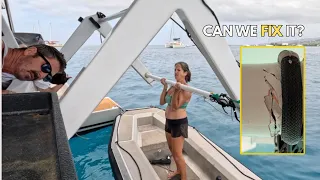
We Broke It Now We Have to Fix It
A lowering mishap between Tahiti and Moorea cracks the aluminum davits aboard Big Lost. Conor, Kelly, and the crew return to Tahiti for emergency metalwork, structural epoxy bonding, and provisioning before sailing for the Tuamotus.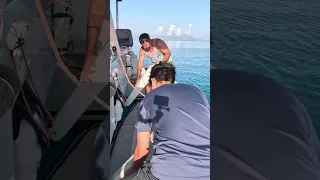
We Finally Left Tahiti… Then Everything Changed #Shorts
We finally left Tahiti, French Polynesia, with plans to sail to the Tuamotus. But one mistake damaged our dinghy davits and changed everything. Now we're working together to make repairs and figure out our next move aboard our sailing catamaran, Big Lost. ⛵ Watch the full adventure: **We Fina...
Our Sailboat Had TWO Problems in One Morning 💩 #Shorts
Just another day living on a sailboat! 🙃 We'd finally left Tahiti for Moorea, preparing to sail to the Tuamotus in French Polynesia. Then one mistake lowering our dinghy damaged the aluminum davits, and we discovered our toilet was leaking onto the floor. Two boat problems. One very crappy mo...