J Boats J/9 Sailboat Review and Boat Tour
Stepping aboard the 28-foot J/9 for an inspection and sea trial, Tim LaBute of Practical Sailor observes that not every vessel on the water needs to be a massive aft-cabin, full-keel world cruiser. As LaBute notes, “sometimes a Practical Sailor just wants to have fun,” and J Boats designed this modern day sailer specifically to deliver responsive performance without demanding an army of crew.
When talk turns to fun under sail, few names strike a chord like the Johnstone family. The J/9 is engineered with an emphasis on cockpit comfort and simple sail handling, prioritizing easy days on the water with friends and family over complex offshore systems.
From Garage Prototype to Global Racer-Cruiser Legacy
The origins of J Boats date back to 1975, when Rod Johnstone worked as an advertising salesman for the sailing trade magazine Soundings. An active one-design sailor who had completed a Westlawn yacht design correspondence course in the 60s, Johnstone set out to build a fast boat in his three-car garage in Stonington, Connecticut. Using $400 worth of fiberglass and wood, along with rigging and hardware borrowed from a Soling owned by his brother Bob Johnstone, Rod built the 24-foot-long, 9-foot-wide Ragtime.
During the summer of 1976, Rod sailed Ragtime with an all-family crew and dominated local competition. The boat’s speed caught the attention of Everett Pearson, owner of Tillotson-Pearson Incorporated in Warren, Rhode Island. Pearson agreed to produce the design on spec in exchange for United States building rights. Promoting the project through display advertisements in Soundings, the partners established a makeshift production facility inside an old textile mill in nearby Fall River, Massachusetts, and began manufacturing the J/24.
In 1977, Rod and Bob Johnstone officially went into business with a $20,000 investment. The J/24 quickly expanded into the most popular recreational offshore keelboat worldwide, eventually logging 5,500 hulls cruising the waves. Over subsequent decades, the company launched roughly 9,500 additional boats spanning from the international J/22 up to the J65, commanding prices from 10 grand on the used market to 2 million for flagship builds. Throughout that evolution, J Boats defined the racer-cruiser category: vessels capable of winning regattas while remaining comfortable and manageable for weekend family day sails.
Ergonomics and Layout of the 8.4-Foot Cockpit
In contrast to marketing one-liners that define the J70 as a one-design speedster or the J80 around sportboat thrills with stability, J Boats bills the J/9 as delivering the most comfortable J cockpit ever. The layout centers around a deep, secure 8.4-foot-long cockpit fitted with four distinct corner seats, allowing passengers to settle in securely during passages.
A swim platform positioned directly behind the cockpit enables walk-through boarding from the dock without requiring steps, while also allowing sailors to drag their feet in the water while sailing downwind. Steering relies on a direct tiller setup rather than a pedestal wheel, giving the helmsman fine control while seated on either the windward or leeward bench with feet braced across the cockpit. As LaBute highlights during the walkthrough, “the j9 responds instantly to your slightest touch.” Once secured at a dock or mooring, the tiller lifts upright out of the way to open up the entire aft cockpit as an expanded social lounge accommodating six adults.
Singlehanded Performance and Sail Plan Dynamics
Beneath its clean topsides, the 28-foot day sailer displaces 4,200 pounds and carries 2,050 pounds of low-slung ballast, representing a ballast ratio near 50 percent. The hull measures 8 feet 7 inches in beam and offers two keel configurations: a deep 4.9-foot draft keel and an optional 3.9-foot shoal-draft keel. When SAIL Magazine sea-trialed the boat in over 20 knots of wind off Rhode Island, the vessel stayed under complete control sailing under mainsail alone, charging along without needing headsail assistance.
The rig is deliberately optimized for shorthanded simplicity. Jeff Johnstone from J Boats explains the sail handling concept during a McMichael Yacht Yards test sail: “the real focus on this was mainsail only sailing and and um and also having a roller furling jib so you could sail main and jib the best downwind sail in the world is a big main.” Johnstone adds that on off-wind angles, a singlehanded sailor can “just let the boom all the way out and you have a wonderful downwind sail without having to have a you know a crew running around on the foredeck.”
From the helm, the sailing setup mirrors the direct responsiveness of a Laser dinghy, featuring a bridle traveler system mounted directly behind the skipper. A single sailor can hold the tiller in one hand and the mainsheet in the other, leaning against high protective coamings while retaining easy reach to unroll the roller-furling headsail when extra boat speed is desired. For reaching and light-air sailing, an optional carbon bowsprit can be fitted to fly a Code Zero.
Cabin Accommodations and Electric Pod Propulsion
Down below, the J/9 provides functional shelter from sun and spray with sufficient accommodations for overnight stays. The port settee pulls out to form a double-width berth, balanced by dedicated gear storage lockers on the starboard side. Forward of the main bulkhead on the port side sits a marine head equipped with a fabric privacy curtain. An optional forward V-berth package adds forepeak cushions, while access to the bow anchor locker is handled strictly through the interior cabin rather than an exterior deck hatch.
For auxiliary power, the J/9 marks the first production model where J Boats offers an electric motor package. The setup features a Torqeedo Cruise 4.0 pod drive fitted with a two-blade folding propeller, powered by a 48V lithium-ion battery bank. In calm conditions, the electric pod delivers an estimated operating range of 20 miles at 5 knots or roughly 12 miles at 6 knots, completely eliminating onboard fuel tanks, plumbing lines, and exhaust fumes. Sailors preferring conventional power can order the boat with an inboard Yanmar diesel engine or install a transom-mounted bracket for an outboard motor.
Acquisition Costs and Predecessor Value Dilemma
Pricing for a new J/9 reflects modern composite production standards. A base boat equipped with an inboard Yanmar diesel retails for approximately $125,000. Selecting common upgrades—including $2,500 for Flexiteek synthetic decking, $2,300 for the forward V-berth comfort package, and 3 grand for the carbon Code Zero bowsprit—elevates the typical sailaway price to roughly 150 grand.
That financial outlay prompts a practical comparison against its historic predecessor, the J/24. A well-maintained 1979 J/24 can be purchased on the used market for approximately 15 grand. Choosing the classic hull represents an immediate savings of 135 grand while granting access to active one-design racing fleets, established class associations, and extensive aftermarket parts support worldwide. While the 45-year-old J/24 demands more physical crew agility, the new J/9 delivers unmatched cockpit comfort, simplified singlehanded sail controls, and modern electric auxiliary options for sailors focused purely on effortless daysailing.
| Specification or Option | J/9 Day Sailer Data |
|---|---|
| Hull Length Overall | 28 feet |
| Maximum Beam | 8 feet 7 inches |
| Total Displacement | 4,200 pounds |
| Keel Ballast Weight | 2,050 pounds (near 50 percent) |
| Standard Keel Draft | 4.9 feet |
| Shoal Keel Draft | 3.9 feet |
| Cockpit Bench Length | 8.4 feet |
| Electric Motor Option | Torqeedo Cruise 4.0 pod drive (48V lithium-ion) |
| Electric Cruising Range | 20 miles at 5 knots (12 miles at 6 knots) |
| Base Price with Yanmar Diesel | $125,000 |
| Flexiteek Synthetic Decking | $2,500 |
| V-Berth Comfort Package | $2,300 |
| Carbon Code Zero Bowsprit | 3 grand |
| Typical New Sailaway Price | ~150 grand |
| Used 1979 J/24 Market Benchmark | 15 grand (Savings of 135 grand) |
Frequently Asked Questions
The J/9 measures 28 feet in length overall with a beam of 8 feet 7 inches. Total displacement is 4,200 pounds, with 2,050 pounds of low-slung ballast accounting for nearly 50 percent of its weight.
The J/9 comes with two fixed keel choices: a deep-draft 4.9-foot keel and a shoal-draft 3.9-foot keel.
The J/9 is designed to balance and sail under mainsail alone with a long boom and a Laser-style transom bridle traveler. A roller-furling headsail can be unrolled from the helm without crew on the foredeck.
J Boats offers a Torqeedo Cruise 4.0 pod drive paired with a dual-blade folding propeller and a 48V lithium-ion battery bank, delivering 20 miles of range at 5 knots or 12 miles at 6 knots.
A new J/9 starts at approximately $125,000 with a Yanmar diesel and reaches roughly 150 grand with optional packages. A classic 1979 J/24 costs about 15 grand on the used market, saving 135 grand.
The 9-foot cockpit features 8.4-foot bench seats with four corner seats accommodating six adults, along with an open transom swim platform for direct walk-through boarding from the dock.
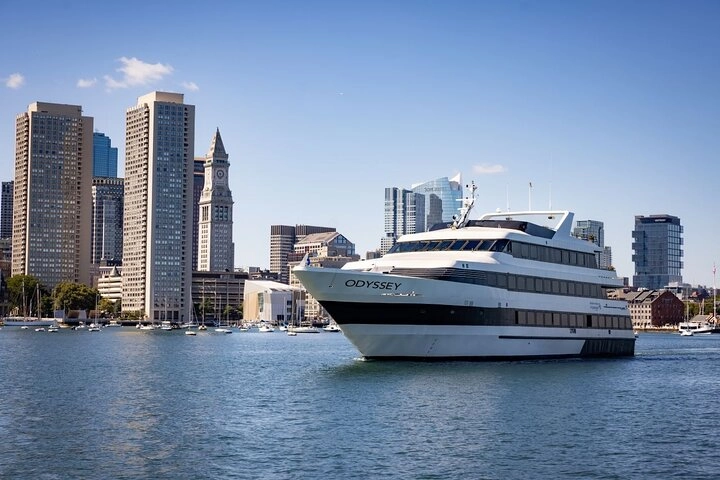
Book a trip where this was filmed — near Boston





Support Practical Sailor
At WeBoating.com, we profoundly acknowledge the unwavering dedication that Practical Sailor invests in crafting each and every video or voyage. Their passion for delivering exceptional ocean content shines through every frame, and it's a labor of love that deserves your attention.
We invite you to watch their captivating videos here and actively engage with their content, including their social media links above. Liking, commenting, and sharing their work goes a long way in fueling their creative fire.
We're also inviting you to explore the gear, sponsorships, and boat partnerships highlighted in the "J Boats J/9 Sailboat Review and Boat Tour" video description, or directly on YouTube. By engaging with these offerings or purchasing services and items, you directly support Practical Sailor, their collaborators, and the brands they're associated with.
To ensure you never miss an offshore update, consider visiting their official YouTube Channel to subscribe, like, and join their community directly.
If you have any feedback, corrections, or additional information about Practical Sailor or their videos, please use the comment form below to share your thoughts with us.
Thank you for being a part of our community and supporting the creators we cherish. Your time and support truly matter!
Are you interested in a fast day sailor? The 28 foot sailboat J/9 from J Boats boasts the most comfortable J cockpit ever on a fast and balanced sailboat with a cabin and toilet. An option bow sprit is available for the code 0, and two keel options are available including a shoal draft. Today we compare its value to its predecessor, the J/24. The J/24 is one of the world’s most well-known and best selling sailboats and fleet races are available all over the world. Check out this boat tour of the J/9 from J Boats.
Practical Sailor is your trusted resource for reviews of sailboats and sailing gear.
https://www.practical-sailor.com
Chat with us on Facebook! https://www.facebook.com/PracticalSailor/
Practical Sailor
Practical Sailor provides independent, subscriber-funded sailboat evaluations, technical systems testing, and used boat forensics without commercial advertising. Headquartered in Norwalk, Connecticut, under Belvoir Media Group, the publication expanded its investigative reach into digital video under Editor-in-Chief Tim Labute. In 2026, the channel leads critical investigations into older boat insurance underwriting, standing rigging life cycles, and used cruiser value across Long Island Sound and coastal North America.
Channel Information:
Social Media Links:
J Boats J/9 Sailboat Review and Boat Tour Location
- J/Boats Headquarters, Newport, Rhode Island, USA (41.4901,-71.3128)
- Stonington, Connecticut, USA (41.3359,-71.9059)
- Tillotson-Pearson, Warren, Rhode Island, USA (41.7301,-71.2828)
- Fall River, Massachusetts, USA (41.7015,-71.155)
Latest Episodes from Practical Sailor
Explore the most recent voyages. Subscribe to the channel to never miss an update!

What Happened to the Hallberg Rassy 400
Practical Sailor tours the Hallberg-Rassy 400 at the Annapolis Sailboat Show, analyzing its twin spade rudders, wide aft beam, Selden rig, and Swedish build quality for ocean voyaging.
Boat Insurance Explained: Is Age Really the Problem? #shorts
Marine insurance underwriters evaluate boat age and maintenance over the sailor's age, debunking rumors that senior mariners face systematic policy denials.
How Old Is Too Old for Standing Rigging?
Standing rigging failure can drop a sailboat's mast in seconds. Practical Sailor breaks down wire fatigue, swage corrosion, insurance requirements, and how to evaluate aging standing rigging.
Catalina 36: Why Its Long Production Run Matters #shorts
With over 2,300 boats produced, the Catalina 36 built an unmatched support ecosystem. From active owners associations to dedicated part suppliers, owning this classic means you never have to solve a mechanical mystery alone. #Catalina36 #SailboatMaintenance #SailingLife #BoatOwnership #ClassicYachts
Boat Keel Damage: Warning Signs I Never Ignore #shorts
Surface cracks at the keel joint are common, but internal structural damage is a dealbreaker. Inspect the bilge, keel bolts, and hull grid carefully before buying. When the structural support for the keel is compromised, it is time to walk away. #BoatBuying #SailingTips #MarineSurvey #BoatMaintenanc...