We Tore Apart Our Floating Home!
Freshly returned to the water in Grenada, the family aboard Finding Our Isla Sailing confronted a heavy workload of repairs and interior maintenance before resuming their Caribbean cruising season. Living aboard their Lagoon 450 catamaran Isla meant transforming living quarters into active work zones, beginning with the removal of worn interior floorboards and a comprehensive sanitation of the deep bilges.
While preparing for upcoming passages, skipper Kasey and the crew divided technical responsibilities across both hulls. The initial maintenance sprint focused on stripping aged flooring, cleaning contaminated bilge compartments, troubleshooting engine mechanicals, and installing new domestic hardware throughout the vessel.
Tearing Out Flooring and Deep Bilge Cleaning
The interior refit commenced with stripping out the aged composite flooring across the main salon and hulls. The original floor coverings had deteriorated over seasons of continuous use, requiring Kasey to pry up individual sections down to the fiberglass subfloor. As he worked through the cabin, Kasey explained the necessity of the overhaul: “I have been tearing up our floors, and if you saw them, you would know why.”
Concurrently, attention turned to the bilges and the recessed compartments underneath the cabin soles. Accessing the narrow voids behind the head cabinetry and around the freshwater holding tank required squeezing into restricted openings to scrape accumulated grime, rinse residue, and verify that the primary bilge pumps were operating without obstructions. After hours of physical scrubbing, the deep bilges were fully cleared of lingering gunk.
Engine Maintenance and Plumbing Troubleshooting
Mechanical maintenance took precedence inside both engine compartments. Cruising friend Matt joined Kasey to conduct routine engine servicing, demonstrating the procedure for loosening casing bolts and extracting raw water pump impellers. After draining and replacing the engine oil, an unexpected electrical fault arose when attempting to test run the propulsion unit. The engine refused to turn over, prompting Kasey to report, “It wants another starter battery.”
Plumbing complications surfaced immediately afterward in the freshwater delivery system. Following the installation of a replacement freshwater pump, turning on domestic water pressure revealed high-pressure water spraying across the cabin. Investigating the source of the flood, Kasey realized a hose connection had not seated properly, admitting, “I didn’t put the fitting back on all the way.” Once the plumbing fitting was firmly reattached, attention shifted to the sanitation system, where Kasey worked alongside the boys to overhaul the head toilet pump.
Wiring Underwater Lights Through the Hull
Upgrades continued with the installation of exterior underwater lighting fixtures below the waterline. Routing electrical lines through the catamaran required navigating tight internal chases and bulkheads. The narrator noted the intricate process: “The fun part about underwater lights, you get to wire it all through your boat.”
The wiring run started underneath Malachi’s bunk, feeding through an interior access conduit directly into the engine compartment. Kasey pulled the electrical leads through the machinery bay to connect them to the transom hull fittings. Lilly monitored the exterior stern area to test electrical continuity, confirming proper operation once darkness fell across the anchorage.
Kids Chores and Fabricating Custom Cushions
Maintaining order aboard the catamaran involved maintaining daily routines for the children. The crew established designated weekday workouts and structured chore schedules, assigning tasks such as scrubbing overhead headliners, washing dishes, and wiping down deck surfaces to keep the living areas manageable.
On deck, the narrator undertook the technical fabrication of new exterior cockpit cushions from scratch. Working without prior formal sewing experience, she used YouTube tutorials to measure patterns, cut heavy fabric, and seal raw edges with heat to prevent fraying. Complications arose when attaching the bottom zippers, resulting in inverted seams that required careful seam ripping and re-stitching. Inserting high-density foam into the tailored fabric shells proved physically demanding, prompting her to ask, “Have you ever wrestled foam?”
After adjusting the dimensions and fitting non-slip backing material beneath each seat base, the cockpit seating was completed and installed. The worn, deteriorated original cushions were permanently retired, as Kasey remarked, “Sold these for a thousand dollars.”
Grenada Chocolate Factory and Seasonal Preparations
Taking a planned break from boat projects, the crew joined neighboring cruising families to explore Grenada and observe traditional agriculture. A guided tour of a local chocolate shop illustrated the regional production process, from harvesting tropical cocoa pods to observing commercial conching machines. The children watched heavy stone wheels grind cocoa nibs continuously for 48 hours to produce refined chocolate before sweetening. The family celebrated Thanksgiving by baking biscuits with Lilly and sharing a potluck dinner aboard a cruising friend’s boat.
Returning to Isla, the family finalized their departure preparations and stowed all tools. After completing their extensive equipment repairs, the crew prepared for their first major offshore passage without Ashton, readying their 45-foot catamaran to resume cruising.
Frequently Asked Questions
The original cabin flooring on the catamaran had deteriorated over seasons of use, requiring Kasey to rip out the damaged panels down to the subfloor before laying new material.
After changing the engine oil and replacing the raw water pump impeller with assistance from friend Matt, the engine failed to start because the starter battery required replacement.
The electrical wiring was fed from beneath Malachi’s bunk through an access opening into the engine compartment, where Kasey pulled the lines through to the transom light fixtures.
The narrator had to heat-seal cut edges to prevent fraying, accidentally installed a bottom zipper backward requiring seam removal, and struggled to insert dense marine foam into tight tailored covers.
The family observed how regional cocoa pods are processed into chocolate, including watching heavy stone conching machines grind cocoa nibs continuously for 48 hours.
Book a trip where this was filmed — near Grenada
Support Finding Our Isla Sailing
At WeBoating.com, we profoundly acknowledge the unwavering dedication that Finding Our Isla Sailing invests in crafting each and every video or voyage. Their passion for delivering exceptional ocean content shines through every frame, and it's a labor of love that deserves your attention.
We invite you to watch their captivating videos here and actively engage with their content, including their social media links above. Liking, commenting, and sharing their work goes a long way in fueling their creative fire.
We're also inviting you to explore the gear, sponsorships, and boat partnerships highlighted in the "We Tore Apart Our Floating Home!" video description, or directly on YouTube. By engaging with these offerings or purchasing services and items, you directly support Finding Our Isla Sailing, their collaborators, and the brands they're associated with.
To ensure you never miss an offshore update, consider visiting their official YouTube Channel to subscribe, like, and join their community directly.
If you have any feedback, corrections, or additional information about Finding Our Isla Sailing or their videos, please use the comment form below to share your thoughts with us.
Thank you for being a part of our community and supporting the creators we cherish. Your time and support truly matter!
We finally got our sailboat back in the water… so WHY are we already tearing apart our floating home?! 😳⛵
Just when we thought we were getting closer to sailing away, the projects aboard Isla started piling up! Kasey's tearing into the floors, I'm learning how to sew brand-new exterior cushions from scratch, and our floating home is looking more like a construction zone than a tropical paradise. 😂
Welcome back to Season 2 of Finding Our Isla Sailing!
Living aboard a 45-foot Lagoon 450 catamaran with three kids means there's always something to fix, improve, or figure out. This week, we're tackling boat repairs, engine maintenance, a new toilet, underwater lights, and my very first attempt at making custom exterior boat cushions.
And because boat life isn't ALL work, we're also making time for dock workouts, exploring Grenada, learning how local chocolate is made, and celebrating Thanksgiving with our cruising friends.
Some days, living on a sailboat feels like paradise. Other days, it feels like one never-ending DIY project. But there's something pretty satisfying about stepping back, looking at everything we've accomplished, and knowing we did it ourselves.
The big question is… will we ever finish these projects and get back to sailing?!
🎬 **WATCH MORE FINDING OUR ISLA**
⛵ **Season 2, Episode 1 — The Hardest Part of Living in Paradise**
Before the projects could begin, we had to get Isla back in the water!
https://youtu.be/zvwMELGHljI
🌴 **Season 1 — We Sold Everything to Sail the Caribbean**
Start our family's adventure from the very beginning:
https://www.youtube.com/playlist?list=PLEU0_oZo3I4c
❤️ **JOIN THE ISLA CREW!**
We sold our home, left our careers behind, and moved our family aboard a sailing catamaran to explore the world. We're sharing the real adventures, unexpected challenges, and unforgettable memories of raising our kids at sea.
Subscribe and come along for the adventure!
#FindingOurIsla #SailingFamily #BoatLife

Finding Our Isla Sailing
We’re a family of five who left traditional life and moved full-time onto our sailboat, Isla. This channel shares the real side of family boat life. What it actually costs, how we homeschool while traveling, the challenges no one talks about, and the moments that make it all worth it. We live aboard full-time in the Caribbean and document life afloat with kids: • the finances behind this lifestyle • daily routines and homeschooling on the water • the hard days, the growth, and the joy • choosing time, connection, and freedom over stuff No highlight reels (okay... maybe a few) No pretending it’s perfect. Just honest life on the water. If you’ve ever wondered what it takes to make a big life change... or you’re dreaming of a different way to live, you’re in the right place. 🌊 Full sails. Full hearts. Full-time family life.
Channel Information:
Social Media Links:
We Tore Apart Our Floating Home! Location
- Grenada (12.004,-61.745)
Latest Episodes from Finding Our Isla Sailing
Explore the most recent voyages. Subscribe to the channel to never miss an update!
We Stopped Our Sailboat in the Middle of NOWHERE!
Sailing from Grenada to Martinique and St. Martin, the Isla crew installs a 5,600 W solar bimini, handles mid-passage calms, and tackles an anchor windlass failure aboard their Lagoon 450 catamaran.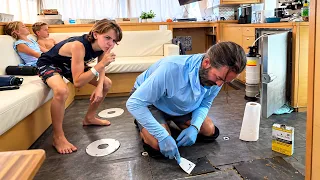
We Tore Apart Our Floating Home!
Finding Our Isla tackles an extensive list of catamaran repairs in Grenada, tearing out worn cabin floors, servicing engines, wiring underwater lights, and sewing custom cushions.
When Your Big Brother Has Your Back… 🥹❤️
Sometimes it's the smallest moments that mean the most. ❤️ While exploring the zoo, Miles couldn't quite see everything, so Krew stepped in and lifted him up for a better view. No big production. Just a big brother looking out for his little brother. 🥹 Of all the incredible things our k...
“There’s a Stray GOAT Over There…” 😂🐐
Just Miles enjoying his ice cream when suddenly… “There's a stray goat over there.” 🐐😂 No explanation. No context. Just a very important announcement in the middle of his ice cream break. Life with this kid is never boring. 🤣❤️ Please tell me your kids say completely random things like this...
He Calls This PARKOUR… 😂
Miles has apparently taken up parkour. 😂 Is it technically parkour? Debatable. Is he having the time of his life? Absolutely! 🤣 One thing about this kid… he's never short on confidence or entertainment. And we wouldn't have it any other way. ❤️ #Parkour #FunnyKids #BoatKids #FamilyAdv...