A Great Meter at a Low Price - Fluke 362 Review
Preparing for an upcoming lithium battery review before traveling to Europe, Clark sets up his electrical test bench aboard SV Temptress in Florida to evaluate a new compact multimeter for Emily & Clark’s Adventure (Clark’s Adventure). A friend in Luperon had recently purchased multiple LiTime batteries and requested a thorough internal inspection, prompting LiTime to deliver an evaluation pack just before Clark departure. Conducting a proper battery analysis required a clip-on clamp multimeter capable of reading direct current. Because his existing Klein meter remained stowed on the vessel, Clark purchased a Fluke 362 to handle DC amperage measurements.
Having tested numerous diagnostic tools across years of marine cruising, Clark immediately recognized the build standard of the unit. While bench meters provide exceptional precision for stationary laboratory work, Clark considers them far too delicate, sensitive, and costly for liveaboard life on a sailboat. Instead, marine diagnostic work requires rugged, portable tools that survive damp lockers and engine spaces. Having previously relied on the Fluke 17B+ and a Klein clamp meter aboard SV Temptress, Clark had grown frustrated with standard HVAC meters that prioritize alternating current over 12-volt marine circuits.
Marine Multimeters and the Asian Market Fluke 362
Clark explains that professional diagnostic tools carry steep price premiums in western markets, observing that “most all flukes are just God awful expensive” for working tradespeople and budget-minded cruisers. To serve technical markets abroad, Fluke manufactured dedicated models such as the Fluke 362 clamp meter and the Fluke 17B+ digital multimeter for the Asian market. These units deliver standard Fluke durability and internal circuit design at accessible price tiers.
Inflationary pressures recently altered the value equation between standard DIY tools and entry-level professional gear. Clark originally purchased his Klein CL800 clamp meter for roughly $75 to $78, representing a solid balance of cost and utility. However, subsequent price increases elevated that same Klein unit to $120. With the Fluke 362 selling for $140 and the Fluke 17B+ retailing at $160, the marginal savings of lower-tier alternatives disappeared. Clark notes that the Klein unit created routine friction during boat repairs because it “always comes up in AC mode and you constantly have to switch it to DC mode” whenever powered on. The Fluke 362 resolved that usability flaw, earning Clark praise: “this is now my favorite meter all around for a boat” because “they always hold up real well for a long time in the adverse conditions of the boat” without questionable readings.
| Meter model | System role in testing | Price or capacity limit |
|---|---|---|
| Fluke 362 clamp meter | primary DC and AC current diagnostic meter | $140 |
| Fluke 17B+ multimeter | General benchtop voltage and resistance meter | $160 |
| Klein CL800 clamp meter | boat HVAC meter with default AC boot | $120 |
| Voltage limit | High test envelope for voltage circuits | 600 volts |
| Current limit | continuous AC and DC current envelope | 200 amps |
Dial Controls and Interface Architecture
The physical layout of the Fluke 362 emphasizes simplicity over cluttered multi-function selectors. The rotary dial provides dedicated selections for AC volts, DC volts, resistance in ohms with a continuity buzzer, AC current, and DC current. On the front faceplate, two tactile pushbuttons handle zero calibration and display hold functions. Depressing the zero button immediately clears stray ambient offsets, resetting a baseline display of 0.1 amps back to zero before clamping around energized conductors.
Clark also examines the included test leads, which feature removable protective safety shrouds. While high-voltage commercial electrical work mandates that plastic safety caps remain installed for regulatory compliance, Clark removes the plastic tips to expose standard probe length for low-voltage marine DC troubleshooting. Although the factory test leads remain functional, Clark notes that specialized aftermarket leads offer greater flexibility and resist kinking during tight navigation station repairs.
Bench Testing Voltage and Resistance
To evaluate voltage measurement characteristics, Clark connects the Fluke 362 leads to a bench power inverter providing alternating current. The Fluke 362 registers the inverter output within expected operating ranges while a secondary reference meter indicates 112 volts. Clark points out that because the Fluke 362 is an averaging meter rather than an RMS instrument, alternating current readings fluctuate slightly depending on wave shape. For marine and camper applications, however, verifying that incoming shorepower or inverter output exceeds 100 volts is more than sufficient to confirm power integrity.
Switching the selector dial to DC volts, Clark probes the terminals of an unmounted lithium iron phosphate battery pack. The digital display settles at 13.2 volts, reflecting a normal resting state for a healthy 12-volt lithium storage bank. Transitioning to resistance mode, Clark tests the integrated audible buzzer, demonstrating how continuity beeping allows a solo sailor to trace mystery wiring across bulkheads and overhead headliners without line-of-sight visibility. He verifies circuit resistance against a 0.5 ohm component, observing the digital readout stabilize accurately at 0.5 ohms.
Measuring Direct Current and Multi-Turn Resolution
Demonstrating proper clamp technique, Clark highlights why clamping around paired appliance cords yields a reading of zero amps. Because alternating current flows through supply and return conductors in equal and opposite directions, opposing magnetic fields cancel each other completely. Current measurement requires isolating a single conductor inside the clamp jaw.
Turning on a benchtop power supply configured as a battery charger, Clark routes a charging cable through the meter. The power supply display registers 4.99 amps, while the Fluke 362 tracks the output close to 5 amps. Reversing the clamp orientation around the wire flips the displayed reading from positive to negative, illustrating how internal sensors register the direction of magnetic fields circulating around conductors. Clamping both positive and negative cables simultaneously inside the jaw restores the display to zero, proving the magnetic cancellation principle.
To overcome the 0.1 amp display resolution limit when diagnosing delicate electronic loads, Clark demonstrates a field-expedient multiplication technique. Looping a single energized wire through the clamp jaw creates an additive magnetic coil: – One single wire pass through the clamp measures the baseline 5 amps delivered by the bench supply. – Two passes of wire through the jaw double the field strength to display 10 amps. – A third wire loop advances the displayed measurement to 15 amps. – Four complete wire loops through the jaw produce a cumulative reading of 20.1 amps.
By dividing the measured 20.1 amps by 4 loops, a technician calculates a high-precision value that overcomes the single-decimal display constraint on low-amperage draws.
High-Load Inverter Testing and Alternator Diagnostics
Clark reviews the physical limits of the Fluke 362, noting that “voltage Wise It’s good up to 600 volts which is way more than I want to get near” during routine boat maintenance. On the amperage side, the unit accommodates up to 200 amps in both AC and DC modes. At a nominal 12 volts, 200 amps represents nearly 3000 watts of electrical throughput, easily covering typical house bank loads on cruising yachts.
To test heavy DC current draw, Clark clamps the meter around the main battery cable feeding a 12-volt DC inverter. Engaging a space heater load, current demand steadily climbs through 57, 58, 61, 62, and 65 amps before stabilizing at 73 amps DC. Clark highlights that this exact testing procedure applies directly to marine engine alternators, allowing sailors to clamp heavy output cables and instantly verify whether charging systems produce proper rated current under load.
Practical Cruising Verdict and Stowage Considerations
Clark concludes that the compact form factor and DC capability make the Fluke 362 an ideal diagnostic meter for cruising vessels and off-grid vehicles. Its narrow jaws fit into crowded marine electrical panels where bulky meters struggle to clamp individual conductors. Clark advises sailors to purchase a dedicated protective pouch to shield the instrument from saltwater spray, dinghy transfers, and humid boat environments. While Asian-market models are rarely stocked in local brick-and-mortar chandleries, obtaining the unit through online distributors provides blue-water sailors with authentic Fluke engineering at an accessible price.
Frequently Asked Questions
Clark found that the Klein CL800 always defaulted to AC mode upon powering on, requiring constant manual switching to DC mode on a 12-volt boat. Additionally, post-inflation pricing pushed the Klein to $120, making the $140 Fluke 362 a superior value.
The Fluke 362 and Fluke 17B+ were produced by Fluke for the Asian market, offering genuine Fluke build quality and circuit boards at accessible prices ($140 and $160 respectively) rather than the significantly higher prices typical of professional Fluke meters in the US market.
A paired cord carries current flowing in opposite directions through the supply and return conductors. Because the opposing magnetic fields cancel each other out, the net magnetic field measured by the clamp is zero amps until the conductors are separated.
Because the Fluke 362 reads current in tenths of an amp, looping a conductor through the clamp jaw four times creates an additive magnetic coil that quadruples the reading (for example, displaying 20.1 amps for a 5-amp load). Dividing that figure by 4 yields higher precision.
The Fluke 362 is rated for up to 600 volts and up to 200 amps AC or DC. On a 12-volt marine DC system, 200 amps corresponds to less than 3,000 watts, providing sufficient range for testing alternators, chargers, and standard inverter circuits.
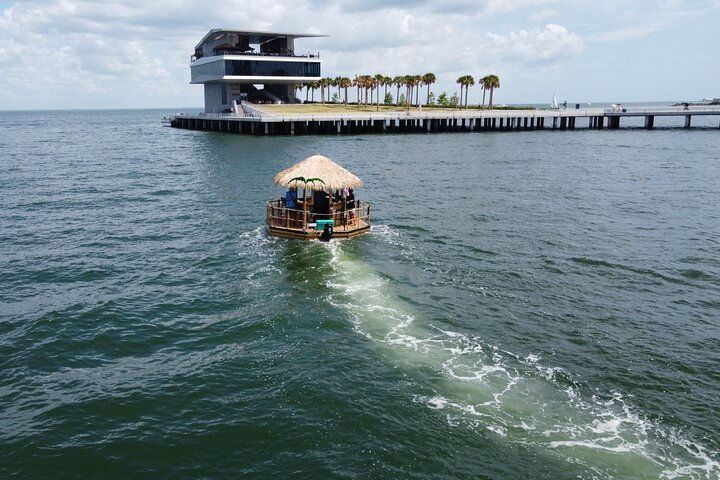
Book a trip where this was filmed — near St Petersburg

Support Emily & Clark’s Adventure (Clark’s Adventure)
At WeBoating.com, we profoundly acknowledge the unwavering dedication that Emily & Clark’s Adventure (Clark’s Adventure) invests in crafting each and every video or voyage. Their passion for delivering exceptional ocean content shines through every frame, and it's a labor of love that deserves your attention.
We invite you to watch their captivating videos here and actively engage with their content, including their social media links above. Liking, commenting, and sharing their work goes a long way in fueling their creative fire.
We're also inviting you to explore the gear, sponsorships, and boat partnerships highlighted in the "A Great Meter at a Low Price - Fluke 362 Review" video description, or directly on YouTube. By engaging with these offerings or purchasing services and items, you directly support Emily & Clark’s Adventure (Clark’s Adventure), their collaborators, and the brands they're associated with.
To ensure you never miss an offshore update, consider visiting their official YouTube Channel to subscribe, like, and join their community directly.
If you have any feedback, corrections, or additional information about Emily & Clark’s Adventure (Clark’s Adventure) or their videos, please use the comment form below to share your thoughts with us.
Thank you for being a part of our community and supporting the creators we cherish. Your time and support truly matter!
I needed a clamp meter for an upcoming video review and I left my Kline on the boat. I bought a Fluke 362. I Love This Meter. It's great and cheap as it was made for the Asian Market.
Here is a link to it on Amazon:
https://amzn.to/4eFf1RR
Have questions or comments? Leave them below! We do our best to read and answer all comments on our channel.
-----------
LINKS TO PRODUCTS WE LOVE (Affiliate links to things we actually own, use, and recommend. We are almost never paid by companies to endorse products. If we are, we will tell you in the video): https://www.amazon.com/shop/emilyclarksadventure
PLEASE SUBSCRIBE and click the BELL to see new videos every week, and more content like this.
CONNECT & SUPPORT OUR CHANNEL
Patreon: https://www.patreon.com/emilyandclark
PayPal: https://www.paypal.me/emilyandclark
Buy S/V Temptress shirts and swag: https://teespring.com/stores/emily-clarks-sailboat-swag
Check out our favorite products on Amazon: https://www.amazon.com/shop/emilyclarksadventure
#emilyandclark #emilyandclarksadventure #svtemptress

Emily & Clark’s Adventure (Clark’s Adventure)
Join Clark of Clark’s Adventure as he documents his 2026 return to solo offshore racing following a successful recovery from cancer aboard his Creekmore 45.
Channel Information:
Social Media Links:
A Great Meter at a Low Price - Fluke 362 Review Location
- Florida, United States (27.7676,-82.6337)
Latest Episodes from Emily & Clark’s Adventure (Clark’s Adventure)
Explore the most recent voyages. Subscribe to the channel to never miss an update!
Datou Boss 48v 100ah Rack Mount Battery Review
Clark tests and disassembles the budget Datou Boss 48V 100Ah server rack LiFePO4 battery, evaluating cell compression, BMS safety, and marine wiring.
LiThink 334ah Review
Clark conducts a bench test and full internal teardown of the LiThink 334 Ah LiFePO4 battery, measuring 347 Ah of usable capacity, verifying genuine EVE cells, and evaluating thermal performance under a 113-amp continuous discharge.
BLUETTI Apex 200 Review: The Best Power Station for RVs & Home Backup?
Clark from Emily & Clark’s Adventure reviews the Bluetti Apex 200 power station, evaluating its 3,600 W inverter, camper air conditioning loads, AC charging speeds, and 48 V bench solar input.
WirenTech 100ah 48v Rack Mount Review (second look)
Clark tests the WirenTech 48-volt 100Ah server rack battery in Florida, teardown inspecting REPT cells, verifying UL 1973 certification, diagnosing BMS balancing rates, and confirming 105.6Ah capacity under load.
WirenTech 100ah 48v Rack Mount Review
Clark puts two WirenTech 48V 100Ah rack mount lithium batteries through forensic bench testing, uncovering Grade B cells and slow balancing despite solid build quality.