Can Electric Actually Beat Gas?
The debate between internal combustion and battery propulsion across recreational boating often pivots on theoretical claims rather than empirical telemetry. For naval designer and technical analyst David Shih operating across marine engineering proving grounds aboard his catamaran SV Epic, evaluating tender propulsion demands rigorous data. Yacht tenders and cruising dinghies represent an unforgiving operational envelope: aggressive saltwater immersion, rapid acceleration demands to plane, variable payloads, and strict transom weight limits. Evaluating whether modern electric marine outboards can realistically replace four-stroke gasoline outboard engines requires an exhaustive head-to-head engineering shootout.
To establish a verifiable performance baseline, David Shih conducted an empirical comparison pitting a 10 kW Momentum M10 electric marine outboard (powered by a 6.4 kWh lithium battery) against a benchmark Tohatsu 20-horsepower four-stroke gasoline engine. Deployed on identical Mantus 104 dinghies, each propulsion package underwent controlled trials evaluating static bollard pull, time-to-plane acceleration, acoustic signatures, usable energy density, and total ownership costs in real-world coastal conditions.
Empirical Hydrodynamic Benchmarks: Static Bollard Pull and Instant Low-End Torque
At coastal marine engineering proving grounds, David Shih subjected modern electric marine outboards and traditional gasoline outboard engines to rigorous static bollard pull trials and high-load torque evaluations. Four-stroke internal combustion engines generate power along a progressive curve, requiring high crankshaft RPM to reach peak horsepower. In contrast, direct-drive electric marine outboards deliver maximum rotational torque at zero RPM, generating immediate stall-point thrust the moment electrical current energizes the stator windings.
During a stern-to-stern towline duel, the 10 kW Momentum M10 developed instantaneous hydrodynamic purchase, dragging the running Tohatsu 20 HP gasoline dinghy backward across the basin. The electric motor’s low-end torque overwhelmed the combustion engine before its cylinders spooled into their power band, pulling the gas dinghy’s transom underwater until the pull was halted. Propeller geometry magnified this advantage: the Momentum swung a 13.4-inch four-blade prop—yielding 109 percent more blade area than the Tohatsu’s 9.25-inch three-blade wheel—delivering superior low-speed thrust without cavitation.
Acceleration Dynamics, Time-to-Plane Metrics, and Hull Weight Distribution
Across rigorous marine engineering proving grounds, David Shih analyzed how electric marine outboards and gasoline outboard engines govern hull trim, acceleration velocity, and time-to-plane (TTP) telemetry. Achieving hydrodynamic plane is critical on small tenders. Applying full throttle to a stern-heavy craft induces severe bow rise, causing the hull to plow through water until dynamic lift overcomes displacement resistance.
Aboard the Mantus 104 tender, the electric powertrain achieved plane in just 2 to 3 seconds, whereas the 20 HP Tohatsu required 5 to 6 seconds. This acceleration gap stems directly from weight distribution. The Tohatsu concentrates 106 pounds of engine hardware on the transom, offset by only a 41-pound fuel tank forward. In contrast, the 154-pound electric setup places just 64 pounds at the stern while positioning the 82-pound 6.4 kWh battery in the bow. This forward ballast suppresses bow rise and levels trim instantly. In a quarter-mile sprint, the Tohatsu reached 18.0 to 18.5 mph, narrowly edging the electric motor’s 17.0 to 17.5 mph ceiling.
Acoustic Decibel Signatures and Marine Environmental Telemetry
Environmental telemetry captured at marine engineering proving grounds allowed David Shih to document the acoustic and chemical disparities between electric marine outboards and gasoline outboard engines. Marine acoustics directly influence crew fatigue and situational awareness. Internal combustion engines expose helmsmen to continuous mechanical clatter, exhaust resonance, and severe sound pressure levels across cruising RPM bands.
Calibrated sound pressure level (SPL) measurements registered a baseline of 80 dBA for the electric outboard at cruise, generated almost entirely by water displacement and wind noise, easily permitting normal cockpit conversation at 65 dBA. In contrast, the Tohatsu registered 110 dBA at wide-open throttle—comparable to thunder and exceeding safe auditory thresholds. Furthermore, electric propulsion eliminates storing volatile gasoline jerrycans aboard a diesel mother ship, preventing fuel spills, oily bilges, and noxious exhaust fumes in anchorages.
Energy Density Forensics, Usable Watt-Hours, and Off-Grid Solar Recharging
Investigating battery chemistry and fuel thermodynamics at marine engineering proving grounds, David Shih performed an in-depth energy density audit contrasting electric marine outboards against gasoline outboard engines. Chemical hydrocarbon gasoline stores 12,000 watt-hours of thermal energy per kilogram, whereas marine lithium iron phosphate (LiFePO4) and NMC batteries provide approximately 130 to 180 watt-hours per kilogram.
Crucially, mechanical conversion efficiency alters this balance. Four-stroke internal combustion outboards operate at only 20 to 25 percent thermal efficiency, wasting three-quarters of fuel energy as heat, while brushless electric motors convert over 90 percent of battery power into propulsive thrust. The 6.4 kWh battery provides 40 minutes of wide-open throttle running (10 to 12 nautical miles of range), extending to 80 minutes at half-throttle and 12 hours at displacement speeds. Aboard cruising catamarans like SV Epic equipped with 4,000-watt solar arrays, tender replenishment is entirely self-sustaining, requiring 6 hours on 120V AC or 4.5 hours on 220V AC.
Real-World Cruising Fleet Trials Across Varied Hull Geometries
To validate dynamic waterborne performance beyond controlled marine engineering proving grounds, David Shih organized multi-hull fleet trials comparing electric marine outboards and gasoline outboard engines across varied tender hull geometries. Tender performance fluctuates based on hull deadrise, construction materials, and lightship displacement. To verify his telemetry, Shih invited three liveaboard cruising skippers to test the 10 kW electric outboard on their craft.
David and Patricia from Bad Kitty (a Maverick 440 catamaran) installed the motor on an ultra-light 105-pound OC Tender 330, achieving 16 knots and instant planing with three adults and gear aboard. Liveaboard neighbor Wes on a Katana 42 catamaran mounted the unit to his 137-pound Highfield 310 aluminum RIB, noting that bow-weighted battery placement dramatically improved running trim compared to his customary 20 HP Tohatsu. Finally, Brad and Shishon tested the outboard on a 110-pound Amazon tender from their Carver 406 trawler, confirming immediate acceleration and whisper-quiet maneuvering.
Five-Year Total Cost of Ownership and Saltwater Maintenance Overhead
Evaluating long-term maritime economics at marine engineering proving grounds, David Shih compiled a rigorous five-year lifecycle cost and maintenance audit comparing electric marine outboards with gasoline outboard engines. Although four-stroke internal combustion outboards feature lower upfront sticker prices, their ongoing maintenance in aggressive saltwater environments imposes recurring labor, specialized spare parts, and mechanical downtime.
Four-stroke outboards require biannual crankcase and gear oil changes, filter replacements, spark plugs, carburetor servicing to combat ethanol varnishing, water pump impeller renewals, and routine freshwater flushing. Direct-drive electric outboards eliminate moving wear items, oil, carburetors, and cooling impellers, requiring only sacrificial anode replacement. While the $10,500 electric package demands a premium over the $3,600 Tohatsu, cruisers refueling via vessel solar panels and running frequent shore tenders achieve financial break-even within two to three years.
Marine Propulsion Engineering Telemetry & Cost Lifecycle Matrix
To synthesize performance telemetry captured across marine engineering proving grounds, David Shih organized key mechanical metrics comparing electric marine outboards against gasoline outboard engines into an empirical benchmark matrix. The telemetry clearly delineates how each propulsion system trades off initial capital investment, running weight distribution, acceleration capability, and acoustic comfort.
| Engineering Metric | Momentum M10 (10 kW Electric) | Tohatsu 20 HP (4-Stroke Gas) |
|---|---|---|
| Rated Mechanical Power | 10.0 kW (~13.41 HP equivalent) | 14.9 kW (20.0 HP rated) |
| Peak Torque Delivery | Maximum torque at 0 RPM (instantaneous) | Progressive curve peaking at 5,000+ RPM |
| Time-to-Plane (TTP – Mantus 104) | 2.0 – 3.0 seconds | 5.0 – 6.0 seconds |
| Maximum GPS Velocity | 17.0 – 17.5 mph | 18.0 – 18.5 mph |
| Propeller Geometry | 4-blade, 13.4-inch dia. (high-thrust) | 3-blade, 9.25-inch dia. (standard) |
| Total System Weight | 154 lbs (64 lbs transom / 82 lbs bow) | 151 lbs (106 lbs transom / 43 lbs tank) |
| Sound Pressure Level (WOT) | 80 dBA (hydrodynamic/wind baseline) | 110 dBA (severe auditory threshold) |
| Full-Throttle Runtime | 40 minutes (10–12 NM range) | 180 minutes (35–45 NM range) |
| Replenishment Source | Shipboard solar array / 120V-220V inverter | Marina fuel dock (gasoline jerrycans) |
| Routine Saltwater Service | Zero engine oil, filters, or impellers | Bi-annual oil, gear lube, plugs, impellers |
| Initial Turnkey Acquisition | ~$10,500 (motor + 6.4 kWh battery) | ~$3,600 (motor, tank, lines, lubricant) |
Frequently Asked Questions
The following technical questions analyze findings from David Shih at marine engineering proving grounds, clarifying operational limits, safety protocols, and lifecycle economics when comparing electric marine outboards against conventional gasoline outboard engines.
Electric marine outboards deliver 100 percent of their maximum torque at zero RPM from a dead stop, whereas a 20 HP four-stroke gasoline outboard requires thousands of crankshaft revolutions to spool up into its power band. In static bollard pull and towline tests conducted by David Shih, the 10 kW electric outboard immediately dragged the running gasoline tender backward, overpowering it with instantaneous rotational thrust.
At wide-open throttle, a 10 kW electric outboard discharges a 6.4 kWh battery pack in approximately 40 minutes, yielding 10 to 12 nautical miles of high-speed planing range. Reducing the throttle to half-power extends run time to 1 hour and 20 minutes, while low-speed harbor displacement cruising at 2 to 3 knots allows up to 12 hours of continuous operation.
While both systems weigh roughly 151 to 154 pounds, the electric setup places only 64 pounds on the transom and locates the heavy 82-pound battery in the bow. This forward ballast levels the dinghy trim angle, preventing the stern squatting and severe bow-rise that hampers heavy gas outboards, enabling the electric tender to plane in just 2 to 3 seconds.
Yes. Cruising vessels equipped with 2,000 to 4,000 watts of solar generation can easily replenish an electric dinghy battery using standard shipboard inverters. A full recharge from zero percent takes approximately 6 hours on a 120-volt circuit or 4.5 hours on 220-volt shore or inverter power, while routine short shore shuttles consume only 10 to 20 percent of daily battery capacity.
Direct-drive brushless electric outboards have no engine oil, gear filters, spark plugs, carburetors, or cooling impellers, requiring only periodic sacrificial zinc anode renewal and lower unit seal checks. In contrast, four-stroke gas engines require regular oil and filter changes, carburetor flushes, spark plug replacements, and freshwater flushes to survive harsh saltwater environments.
Modern marine lithium power packs feature robust IP67 or IP68 water-ingress protection ratings, hermetically sealed aluminum enclosures, integrated thermal management, and advanced Battery Management Systems (BMS) that prevent overcharge, short-circuits, and thermal runaway even in damp, salt-air environments.
A complete 10 kW electric outboard and 6.4 kWh battery package costs approximately $10,500, whereas a 20 HP Tohatsu gas outboard costs roughly $3,600. For full-time liveaboard cruisers using their tender daily and refueling via solar power rather than purchasing marina dock gas at six dollars per gallon, the operational savings compress the financial break-even period to between two and three years.
Support David Shih
At WeBoating.com, we profoundly acknowledge the unwavering dedication that David Shih invests in crafting each and every video or voyage. Their passion for delivering exceptional ocean content shines through every frame, and it's a labor of love that deserves your attention.
We invite you to watch their captivating videos here and actively engage with their content, including their social media links above. Liking, commenting, and sharing their work goes a long way in fueling their creative fire.
We're also inviting you to explore the gear, sponsorships, and boat partnerships highlighted in the "Can Electric Actually Beat Gas?" video description, or directly on YouTube. By engaging with these offerings or purchasing services and items, you directly support David Shih, their collaborators, and the brands they're associated with.
To ensure you never miss an offshore update, consider visiting their official YouTube Channel to subscribe, like, and join their community directly.
If you have any feedback, corrections, or additional information about David Shih or their videos, please use the comment form below to share your thoughts with us.
Thank you for being a part of our community and supporting the creators we cherish. Your time and support truly matter!
Here's the smallest 3kWh Power Station in existence: Use code *DAVID8OFF* for 8% off direct from Bluetti: https://bit.ly/4hxeqWY
Or Use code *DAVIDS5OFF* for 5% off at Amazon: https://amzn.to/4heT0f9
⚓︎ Here's the Momentum 10kw Outboard use code *DAVIDSHIH* for 8% off: https://electric-marine.com/ref/79/
Is it better than a 20HP gas outboard? What's the top speed? And how heavy is it anyways? Can it plane a big dinghy? And which one would win at tug of war? Is it even worth the cost? And what about maintenance? You'll have answers to all of these questions by the end of this video where we put this 10kWh motor head to head against a Tohatsu 20hp.
⚓︎ *Join the Patreon family* and the chat group https://www.patreon.com/davidshihsails
🧢 *Grab some merch!* https://davidshihsails.com/shop/
☕ *Buy us a coffee* to help keep the dream alive! https://paypal.me/davidshih
📱 https://www.instagram.com/david_shih_sails
We're at the Annapolis boat show this week! Come hangout with us at the booth.
⚓︎ Friday 10/16 at 2pm
⚓︎ Saturday 10/17 at 11am
⚓︎ Sunday 10/18 at 3pm.
Cool Stuff in This Video:
⚓︎ Here's the Momentum 10kw Outboard use code *DAVIDSHIH* for 8% off: https://electric-marine.com/ref/79/
⚓︎ @MantusMarine Model 104 Dinghy: https://www.mantusmarine.com/mantus-dinghy/?affiliates=152
music from https://share.epidemicsound.com/gpze6g and @Pondermusic
#Bluetti #Elite300 #SolarGenerator #BackupPowerLife

David Shih
From a corporate career in Houston to a multi-year bulkhead refit in Panama. Join David and Mary Shih aboard SV Epic as they conquer the Lagoon 450 crisis.
Channel Information:
Social Media Links:
Can Electric Actually Beat Gas? Location
- Marine Engineering Testing Basin & Marina, Newport Beach, CA, USA (33.6189,-117.9298)
- Coastal Testing Channel & Harbor, CA, USA (33.605,-117.88)
Latest Episodes from David Shih
Explore the most recent voyages. Subscribe to the channel to never miss an update!
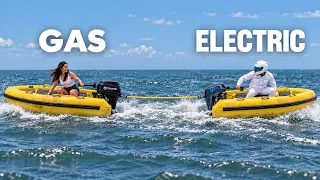
Can Electric Actually Beat Gas?
David Shih puts a 10 kW electric outboard head-to-head against a 20 HP Tohatsu four-stroke gas motor, analyzing bollard pull, time-to-plane, energy density, noise levels, and total ownership costs on yacht tenders.
The Unexpected Reality of Owning A Big Boat
Get your Plaud Note Pro with AI super powers here: and use code *DAVID* for 10% off. Want a FREE outboard? Momentum is giving away a *U2 Electric Outboard* Enter Here: Boatlife is NOT what it you see on instagram. This is what it's really like to own a boat...it's a daily domino effect...
Set Your Priorities
I wanted to play. Mary wanted me to do boatwork. She won. Watch me install the anchor here:
The Thing We Hate Most About Our Boat
If you're in the market for smarter kids you can get 30% off IXL for the 1st year or the 1st month here: It's amazing how much 1 little thing can affect your life. This little fridge has been the bane of our existence on the boat and it made my wife hate being aboard. Well I finally fix...
Tornado Turns Day of Sailing into Backbreaking Work
This is how quick an epic day of sailing can turn into an afternoon of backbreaking boatwork. Check out the full vid where we eventually make it into the gulf and hunt for giant tuna. Here’s the 360 camera I used to capture the proof so my wife can't say I never help clean: #insta3...